Public Opinion

Caregivers in the U.S.

Experiences of Unpaid Caregivers in the U.S.

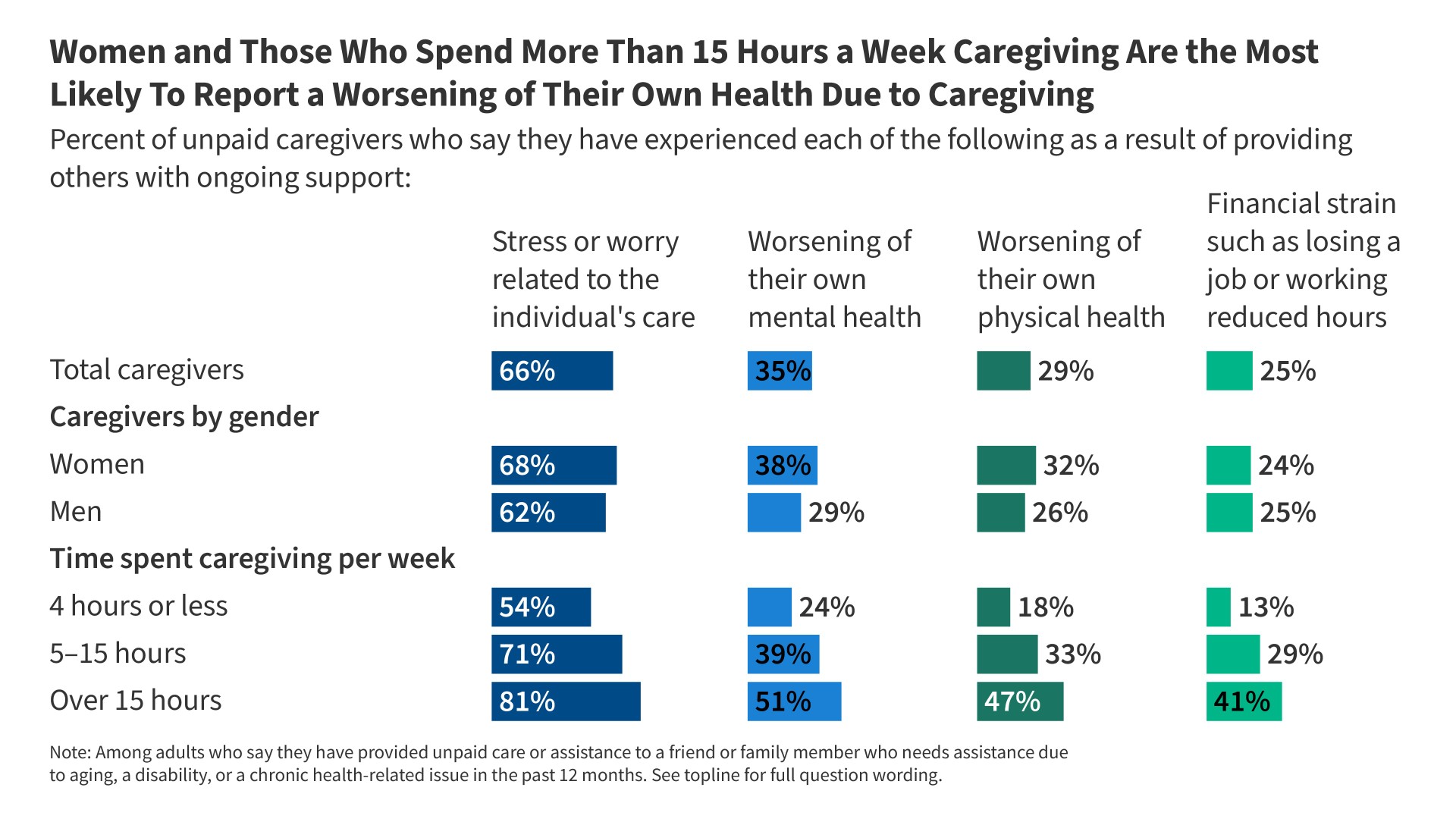
About 3 in 10 adults in the U.S. say they have provided unpaid care to a friend or family member who needs assistance due to aging, disability, or a chronic condition in the past 12 months. The median amount of time that such caregivers provide unpaid assistance is five hours per week, though the number of hours varies widely. Unpaid caregivers are disproportionately women. Read the news release.
HeaLTH in the Midterms

Health Care in the 2026 Midterm Election

This dashboard focuses on KFF’s analysis of the role health care costs and other health policy issues played in voters’ decisions in the 2026 midterm elections, including in key Senate races. It examines the role of rising health costs on voters’ decisions, views on the Trump administration’s health care policies, and opinions on the government’s role in health care amid discussions of Medicare for All.

Abortion on the Ballot in 2026: Polling Insights from Voters in Four States

This dashboard provides KFF’s analysis of the role abortion played in voters’ decisions in the 2026 midterm elections, with a focus on four states with abortion-related ballot measures: Idaho, Missouri, Nevada, and Virginia. It examines support for each of the measures across groups, including additional questions in Missouri.

What Do the Midterm Election Results Mean for Health Care? 

Event Date:

On November 5 at Noon ET, join KFF for a special post-election discussion and live “What the Health” podcast taping. Part of the discussion will focus on public opinion survey data on how voters weighed health care as they went to the polls nationally and in the four states with abortion-related ballot initiatives. 

Midterm Voters Give Democrats a Big Advantage to Handle Health Care

Quick Insights

KFF’s analysis of the 2026 Voter Poll by SSRS shows midterm voters gave Democrats a 19-percentage-point advantage on which party is better able to handle health care. Voters also gave Democrats a narrow edge on handling the economy (43% vs. 37%), a reversal from 2024, when Trump had a 10-point advantage over Harris. "In an election focused on affordability, Democrats’ messaging on health care costs appears to have resonated with voters and may have contributed to the party’s gains."

Health Information and Trust

About Half of Parents Mistakenly Believe Spacing Out Vaccines Is Healthier for Children; Half Say No Strong Evidence to Support Such a Claim

KFF Tracking Poll on Health Information and Trust: Fall 2026 Update on Vaccine Views

The latest KFF Tracking Poll on Health Information and Trust finds about half of parents mistakenly believe spacing out vaccines is healthier for children, while confidence in many long-standing childhood vaccines is high across partisans. These findings take on new relevance following President Trump’s recent executive order calling for changes in U.S. childhood vaccine recommendations, including splitting the measles, mumps, and rubella (MMR) vaccine—currently given as a single combined shot—into three separate vaccines across multiple visits.

Dashboard: Polling on Health Information and Trust

Drawing on KFF’s poll findings, this interactive dashboard tracks the public’s trusted sources for health information, attitudes toward vaccines, and use of news, social media, and AI for health-related information.

Health Tracking PollS

Democrats Hold a Nearly 2-to-1 Advantage Over Republicans on Handling the Cost of Health Care

Health Care Issues in the Lead-Up to the 2026 Midterm Election 

In the lead up to the midterms, health care costs remained tied with gas as voters’ top midterm concerns. Two-thirds of U.S. adults also favored Medicare-for-all, a new high in KFF Polling, but support shifts when competing claims from critics and proponents are heard.

Most Democratic Voters Want To Hear Candidates Discuss Health Costs and Future of Health Programs; More Republicans Focused on Fraud

Public Views on Fraud in Health Programs

As the 2026 midterms approach, health care costs remain voters’ top health priority, but fraud in government health programs, including Medicaid and Medicare, is resonating with Republican voters, 55% of whom say it’s extremely important for candidates to address.

Mifepristone and the Midterms

Amid an ongoing FDA re-review of mifepristone, awareness of the safety and prevalence of the abortion pill remains limited. This KFF poll also finds that the voters who say abortion policy is an important issue for 2026 midterm candidates to discuss are disproportionately Democrats.

MAHA and the Midterms

This KFF Health Tracking Poll finds that the cost of health care is a more prominent focus for Make America Healthy Again (MAHA) voters than issues like food and vaccine policy. Four in ten MAHA voters (42%) choose lowering health costs as the most important health priority, outranking other MAHA priorities.

the essentials

Health Tracking Poll

Our signature survey project provides up-to-date data on the public’s health care views, knowledge, and experiences.

Tracking the Public’s Views on the ACA

Tracking the Public’s Views on the ACA

This interactive tool tracks public opinion on the Affordable Care Act, from the inception of the law to the present, including trends based on party identification, income, age, gender, and race/ethnicity.

Health Information and Trust Tracking Poll

The Health Information and Trust Tracking Poll is part of KFF’s Health Information and Trust Initiative, which tracks health misinformation and analyzes its impact on the public.

Stay informed.

Stay informed.

Filter

621-630 of 1,870 results

  • Kaiser Health Tracking Poll – June 2018: Campaigns, Pre-Existing Conditions, and Prescription Drug Ads

    Feature

    The June 2018 KFF Tracking Poll examines the top issues voters want to hear candidates talk about during their 2018 congressional campaigns, including the importance of specific health care positions such as continuing protections for people with pre-existing conditions. The Kaiser poll also examines the public’s views and experiences with prescription drug advertisements and pricing.

  • Public Opinion on Chronic Illness in America

    Feature

    The April 2018 Kaiser Health Tracking Poll finds six in ten say they or someone in their immediate family have a chronic health condition that requires ongoing medical treatment, and a third of those dealing with a chronic condition requiring ongoing medical care say they or their household have had problems paying medical bills in the past 12 months. This poll finding also looks at how the public views policies aimed at preventing chronic disease…

  • KFF/EHF Poll: Texans’ Top State Health Priorities Include Lowering Out-of-Pocket Costs and Reducing Maternal Mortality

    News Release

    Most Texans Don’t Know their State has the Nation’s Highest Uninsured Rate Texans’ top health care priorities for the state revolve around making health care and prescription drugs more affordable, reducing maternal mortality and increasing access to health insurance coverage, finds a new statewide Kaiser Family Foundation/Episcopal Health Foundation survey on Texas health policy issues. Majorities say “top priority” should be given to lowering what people pay for health care (61%), reducing maternal mortality (59%),…

  • Texas Residents’ Views on State and National Health Policy Priorities

    Report

    As part of the new Kaiser Family Foundation/Episcopal Health Foundation 2018 Texas Health Policy Survey, this brief explores Texans’ views on health policy priorities at both the state and national level. It examines how Texas residents view state spending on health care and how they rank initiatives such as lowering health care costs, reducing maternal mortality, and funding for mental health care. It also explores Texans’ views on the Affordable Care Act and Medicaid, including…

  • Kaiser Health Tracking Poll: Preview of the Role of Health Care in the 2018 Midterm Campaigns

    Feature

    The latest KFF Health Tracking Poll finds health care ranking among the top issues voters want to hear candidates talk about during their congressional campaigns, with health care cost ranking as the top health care issue for voters across partisanship. However, for many voters, including one-third of Republican voters, a candidate’ position on President Trump will make the biggest difference in how they vote in 2018. This month’s poll also takes an in-depth look at…

  • Six Months ahead of the Midterm Elections, Democratic and Republican Voters’ Views about President Trump Outweigh their Views on Issues, Including Health Care

    News Release

    Who are the “Health Care Voters”? Mostly Women, and Mostly Planning to Vote Democratic As primary season for the 2018 midterm elections heats up, the latest Kaiser Family Foundation poll suggests the elections are shaping up more as a referendum on President Trump than on health care or any other issue. When asked what will make the biggest difference in how they vote in the Congressional elections, larger shares of Democrats and Republicans cite candidates’…

  • The Left is Getting More Active on Health Care

    From Drew Altman

    In this Axios column, Drew Altman discusses data from the new KFF/Washington Post survey on activism in America showing the role support for the ACA is playing in motivating political participation, and how, in a reversal from the last election cycle, political energy is shifting from right to left on health care as a new election looms.