Public Opinion

Health Information and Trust

Dashboard: Polling on Health Information and Trust

Drawing on KFF’s poll findings, this interactive dashboard tracks the public’s trusted sources for health information, attitudes toward vaccines, and use of news, social media, and AI for health-related information.

THE MIDTERMS

Most Democratic Voters Want To Hear Candidates Discuss Health Costs and Future of Health Programs; More Republicans Focused on Fraud

KFF Health Tracking Poll: Public Views on Fraud in Government Health Programs

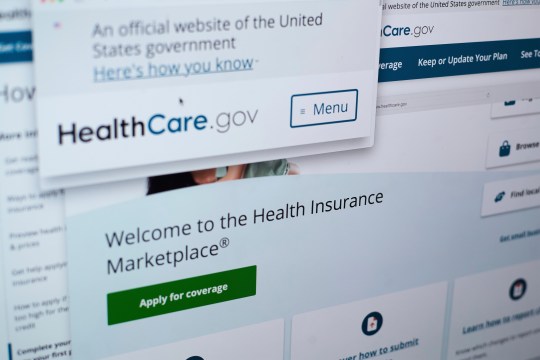
As the 2026 midterms approach, health care costs remain voters’ top health priority, but fraud in government health programs, including Medicaid and Medicare, is resonating with Republican voters, 55% of whom say it’s extremely important for candidates to address. Most voters say there is at least “some” fraud in government health programs, but larger shares say there is fraud in the tax system, defense, and foreign aid, while the smallest share sees fraud in the ACA Marketplaces.

Recent Polls

KFF Health Tracking Poll: Mifepristone and the Midterms

Amid an ongoing FDA re-review of mifepristone, awareness of the safety and prevalence of the abortion pill remains limited. This KFF poll also finds that the voters who say abortion policy is an important issue for 2026 midterm candidates to discuss are disproportionately Democrats.

Ebola Response and Pandemic Preparedness

Much of the public has yet to form an opinion on the U.S. government’s response to the Ebola outbreak in the Democratic Republic of the Congo, this poll finds. Four in ten adults say the U.S. is less prepared for a pandemic now than it was in 2020.

KFF/New York Times Survey of Immigrants

KFF-New York Times Survey: Immigrants Report Rising Fear, Negative Economic and Health Impacts, and Changing Political Views During the First Year of President Trump’s Second Term

The 2025 Survey of Immigrants, a partnership between KFF and The New York Times, takes an in-depth look at the experiences of immigrants during the first year of President Trump’s second term, including their worries related to increased immigration enforcement, their health and economic wellbeing, and the political views and preferences of immigrant voters. The survey paints a portrait of families under strain — where fear of detention and economic instability are negatively impacting immigrants’ health and reshaping immigrant families’ daily lives and views of U.S. political parties.

Read the News Release | Explore The New York Times’ Reporting

the essentials

Health Tracking Poll

Our signature survey project provides up-to-date data on the public’s health care views, knowledge, and experiences.

Tracking the Public’s Views on the ACA

Tracking the Public’s Views on the ACA

This interactive tool tracks public opinion on the Affordable Care Act, from the inception of the law to the present, including trends based on party identification, income, age, gender, and race/ethnicity.

Health Information and Trust Tracking Poll

The Health Information and Trust Tracking Poll is part of KFF’s Health Information and Trust Initiative, which tracks health misinformation and analyzes its impact on the public.

Polls in Health Policy

This chapter of our digital “textbook” explores why surveys are essential for understanding health policy issues. 

Stay informed.

Stay informed.

Filter

1,221 - 1,230 of 1,854 Results

  • Chartpack: Kaiser Health Tracking Poll – June 2009

    Poll Finding

    This document contains the chartpack from the June Health Tracking Poll. The survey was designed and analyzed by public opinion researchers at the Kaiser Family Foundation and was conducted June 1 through June 8, 2009, among a nationally representative random sample of 1,205 adults ages 18 and older. Telephone interviews conducted by landline (804) and cell phone (401, including 157 who had no landline telephone) were carried out in English and Spanish. The margin of…

  • Key Findings: Kaiser Health Tracking Poll? – June 2009

    Poll Finding

    This document contains the key findings from the June Health Tracking Poll. The survey was designed and analyzed by public opinion researchers at the Kaiser Family Foundation and was conducted June 1 through June 8, 2009, among a nationally representative random sample of 1,205 adults ages 18 and older. Telephone interviews conducted by landline (804) and cell phone (401, including 157 who had no landline telephone) were carried out in English and Spanish. The margin…

  • Data Note: Predictors of support for increased U.S. spending on global health

    Poll Finding

    One of the key questions explored in the Kaiser Family Foundation Survey of Americans on the U.S. Role in Global Health is the public’s level of support for U.S. government spending to improve health for people in developing countries. The survey found that about two thirds of Americans say current levels of U.S. spending in this area are too low (26 percent) or about right (39 percent). In this Data Note, we take a deeper…

  • Topline: Kaiser Health Tracking Poll – June 2009

    Poll Finding

    This document contains the toplines from the June Health Tracking Poll. The survey was designed and analyzed by public opinion researchers at the Kaiser Family Foundation and was conducted June 1 through June 8, 2009, among a nationally representative random sample of 1,205 adults ages 18 and older. Telephone interviews conducted by landline (804) and cell phone (401, including 157 who had no landline telephone) were carried out in English and Spanish. The margin of…

  • Kaiser Health Tracking Poll – June 2009

    Poll Finding

    The June Kaiser Health Tracking Poll finds remarkable stability in public opinion on health reform as Congressional committees begin to hone in on the details of their health reform bills and debate intensifies. A solid majority of the American people continue to believe that health reform is more important than ever given the country’s economic problems. A solid majority of the American people continue to believe that health reform is more important than ever given…

  • Pulling it Together: The Experts vs. The Public on Health Reform

    Perspective

    In repeated Kaiser polls, we see a divide between what experts believe and what the public believes about some of the key issues in health reform. They don’t disagree on everything; far from it. But there is a wide gulf on basic beliefs about what is behind the problems in the health care system and key elements of reform, especially delivery reform. Experts believe the health care system is full of unnecessary care and troubling…

  • Pulling it Together: About Kaiser Health News

    Perspective

    There is lots of apocalyptic talk these days about the collapse of the newspaper industry and the challenges facing news organizations.  There is even talk of the unimaginable, my hometown paper The Boston Globe shutting down. Surely they know that Red Sox Nation cannot exist without the Globe Sports pages. All kinds of solutions have been proposed, from micro-payments for news stories like songs on iTunes to foundation-endowed daily newspapers.  There is growing talk of…

  • Survey about U.S. Role in Global Health Reports That Americans Want Take Care of Problems at Home First in a Recession, But Say Don’t Cut Funding For Global Health and Development

    Poll Finding

    Two-thirds of the public supports maintaining (39%) or increasing (26%) U.S. government funding to improve health in developing countries, while fewer than a quarter (23%) say the government is spending too much on global health, according to this survey of the American people’s attitudes towards U.S. global health and development assistance. Levels of support are similar for spending to fight HIV/AIDS in developing countries, although the public’s sense of urgency about the HIV/AIDS epidemic around…

  • Survey of Americans on the U.S. Role in Global Health

    Poll Finding

    This report is based on a survey of Americans on the U.S. role in global health and was designed and analyzed by public opinion researchers at the Kaiser Family Foundation. It was conducted January 26 through March 8, 2009 (before the international outbreak of the H1N1 influenza A virus), among a nationally representative random sample of 2,554 adults ages 18 and older. Telephone interviews conducted by landline (N=1,951) and cell phone (N=603, including 214 who…