Public Opinion

Health Information and Trust

Dashboard: Polling on Health Information and Trust

Drawing on KFF’s poll findings, this interactive dashboard tracks the public’s trusted sources for health information, attitudes toward vaccines, and use of news, social media, and AI for health-related information.

THE MIDTERMS

Most Democratic Voters Want To Hear Candidates Discuss Health Costs and Future of Health Programs; More Republicans Focused on Fraud

KFF Health Tracking Poll: Public Views on Fraud in Government Health Programs

As the 2026 midterms approach, health care costs remain voters’ top health priority, but fraud in government health programs, including Medicaid and Medicare, is resonating with Republican voters, 55% of whom say it’s extremely important for candidates to address. Most voters say there is at least “some” fraud in government health programs, but larger shares say there is fraud in the tax system, defense, and foreign aid, while the smallest share sees fraud in the ACA Marketplaces.

Recent Polls

KFF Health Tracking Poll: Mifepristone and the Midterms

Amid an ongoing FDA re-review of mifepristone, awareness of the safety and prevalence of the abortion pill remains limited. This KFF poll also finds that the voters who say abortion policy is an important issue for 2026 midterm candidates to discuss are disproportionately Democrats.

Ebola Response and Pandemic Preparedness

Much of the public has yet to form an opinion on the U.S. government’s response to the Ebola outbreak in the Democratic Republic of the Congo, this poll finds. Four in ten adults say the U.S. is less prepared for a pandemic now than it was in 2020.

KFF/New York Times Survey of Immigrants

KFF-New York Times Survey: Immigrants Report Rising Fear, Negative Economic and Health Impacts, and Changing Political Views During the First Year of President Trump’s Second Term

The 2025 Survey of Immigrants, a partnership between KFF and The New York Times, takes an in-depth look at the experiences of immigrants during the first year of President Trump’s second term, including their worries related to increased immigration enforcement, their health and economic wellbeing, and the political views and preferences of immigrant voters. The survey paints a portrait of families under strain — where fear of detention and economic instability are negatively impacting immigrants’ health and reshaping immigrant families’ daily lives and views of U.S. political parties.

Read the News Release | Explore The New York Times’ Reporting

the essentials

Health Tracking Poll

Our signature survey project provides up-to-date data on the public’s health care views, knowledge, and experiences.

Tracking the Public’s Views on the ACA

Tracking the Public’s Views on the ACA

This interactive tool tracks public opinion on the Affordable Care Act, from the inception of the law to the present, including trends based on party identification, income, age, gender, and race/ethnicity.

Health Information and Trust Tracking Poll

The Health Information and Trust Tracking Poll is part of KFF’s Health Information and Trust Initiative, which tracks health misinformation and analyzes its impact on the public.

Polls in Health Policy

This chapter of our digital “textbook” explores why surveys are essential for understanding health policy issues. 

Stay informed.

Stay informed.

Filter

1,101 - 1,110 of 1,854 Results

  • Kaiser Health Tracking Poll — April 2011

    Feature

    As Congress and the president debate different approaches to reducing the deficit, the April Kaiser Health Tracking Poll indicates that initial public reaction is fairly evenly split when a premium support/voucher program like the one in House Budget Committee Chairman Paul Ryan’s "Path to Prosperity" proposal is described, but seniors prefer to keep the current Medicare system by a 2‐to‐1 margin. Meanwhile, public opinion on the health reform law remains remarkably steady. The April poll…

  • How Popular Is The Idea Of Changing Medicare To A Defined Contribution Plan?

    Poll Finding

    In March 2011, House Budget Committee Chair Paul Ryan released his "Path to Prosperity" budget plan, which included a proposal to change Medicare from a defined benefit program into one in which the government pays a specific amount towards the cost of private health insurance for each enrollee. Surveys conducted by five different polling organizations from March-April 2011 have attempted to gauge the level of public support for such a plan, and their results have…

  • The Digital Divide And Access To Health Information Online

    Poll Finding

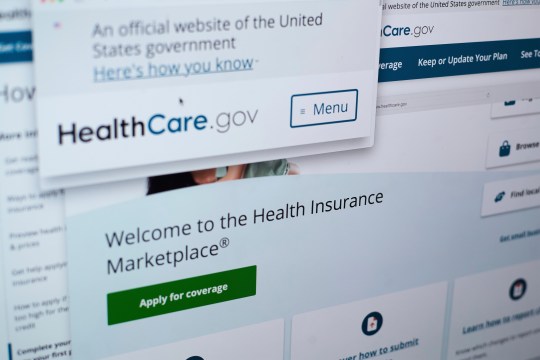
    The Affordable Care Act (ACA) calls for a number of web-based initiatives, including development of the website healthcare.gov which provides a variety of health information and helps individuals find coverage options. Therefore, understanding the level and quality of Internet access among those groups most likely to benefit from reform, such as the uninsured, those with lower incomes, and members of racial and ethnic minority groups, is an important consideration as health reform is implemented. A…

  • Trends in the Use of Hospital and Provider Quality Ratings

    Poll Finding

    With a renewed emphasis on health care quality driven by the Affordable Care Act, this polling data note examines historical trends in Americans' reliance on quality ratings and how their perceptions have changed over time. Data Note (.pdf)

  • Kaiser Health Tracking Poll — March 2011

    Feature

    Little has changed since President Obama signed the Patient Protection and Affordable Care Act (ACA) into law. The March Health Tracking Poll finds that the public continues to report that they are confused about the law, say they don’t have enough information on how the law will affect them, and remain divided in their views of the law. Further, the stark partisan gap persists. In terms of next steps for the law, Americans like the…

  • KFF March Health Tracking Poll: One Year Later, Views on Health Reform Remain Divided

    Perspective

    Health reform is a year old and the latest Kaiser Health Tracking Poll finds a basic division that has changed little during the last 12 months. This month, 42 percent of Americans hold favorable views of the law while 46 percent view it unfavorably. In April 2010, the month after passage, 46 percent had favorable views and 40 percent unfavorable ones, but both figures have ticked up and down over the last year. Opinion of…

  • KFF February Health Tracking Poll: Nearly Half Confused About Status of the Health Reform Law

    Perspective

    In the latest Kaiser Health Tracking Poll, nearly half of Americans say they are confused about the status of the health reform law. While 52 percent of the public is aware that health reform is still law, 22 percent think the law has been repealed and is no longer law and another 26 percent are not sure. Americans are still divided about what they want lawmakers to do on health reform. Three in ten say…

  • The Budget: What Would You Cut?

    Perspective

    As President Obama and Congress begin to hash out the 2012 budget, it is a good time to revisit results from our January 2011 survey showing that in spite of the fact that most Americans report being very concerned about the budget deficit, there is little public support for major reductions across a number of program areas. Majorities said they would not support any reductions in Social Security (64 percent), public education (63 percent), or…

  • Pulling it Together: Forget Math and Science, Teach Civics (Or Why We Need to Bring Back Schoolhouse Rock)

    Perspective

    I am seldom surprised by our poll findings, but this month’s tracking poll produced a doozy.  Twenty-two percent of the American people think the Affordable Care Act has been repealed, and another 26 percent aren't sure.  Those are surprisingly large numbers even with the 52 percent who still know it is the law of the land. How could a repeal "vote" in the House -- however dramatic but still, only symbolic -- be misunderstood as…

  • Kaiser Health Tracking Poll — February 2011

    Feature

    In the wake of the health reform repeal vote in the U.S. House and the ongoing legal challenges over the individual mandate, nearly half the country either believes that the Patient Protection and Affordable Care Act (ACA) has been repealed and is no longer law (22 percent) or doesn’t know enough to say whether it is still law (26 percent). Roughly half of Americans (52 percent) accurately report that the ACA is still the law…