Medicare

Medicare Open Enrollment

Medicare Advantage Plan Availability Varies Widely by County for 2027

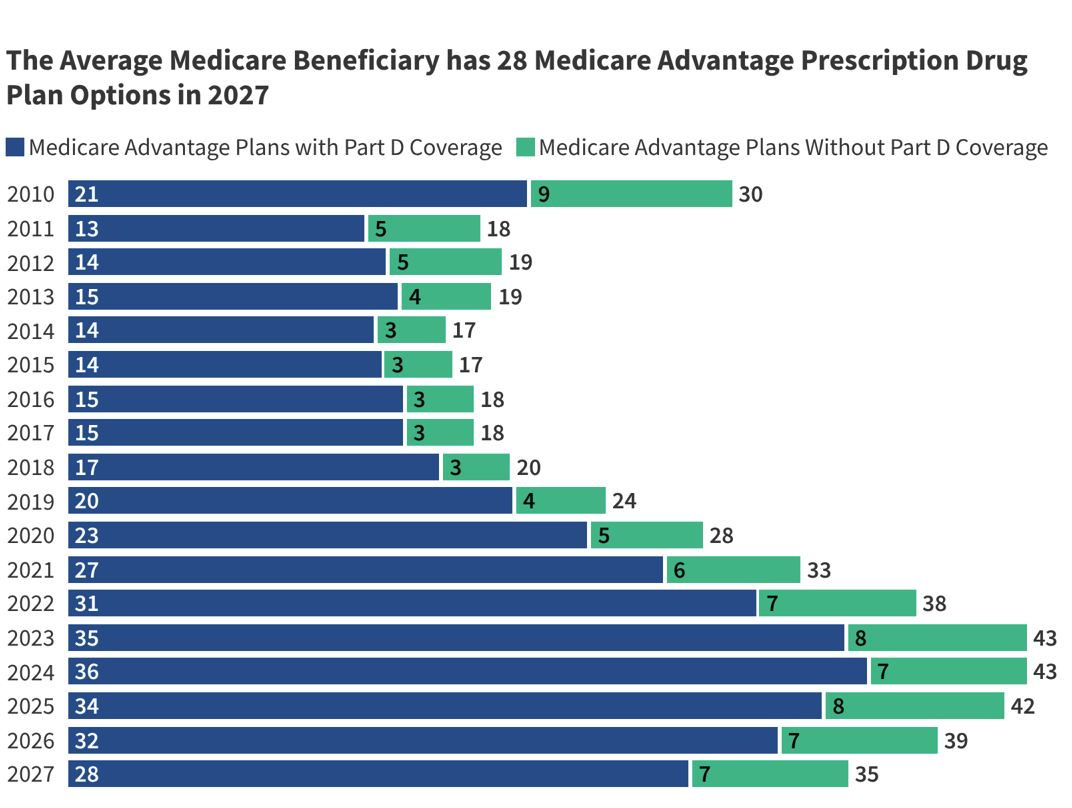
Medicare Advantage prescription drug plan (MA-PD) availability varies widely by county in 2027, with a modest reduction in the share of enrollees with more than 40 plans to choose from and some major insurers exiting many more counties than they are entering. 1 in 5 Medicare beneficiaries (20%) can choose from among more than 40 MA-PDs for 2027, down from 27% in 2026. 1% of all beneficiaries will have no plan option for 2027.
Medicare Open Enrollment and Coverage Options: Key Questions and Answers

Each year, Medicare beneficiaries have an opportunity to make changes to how they receive their Medicare coverage during the nearly 8-week annual open enrollment period, which runs from October 15 through December 7. This brief answers key questions about the Medicare open enrollment period and Medicare coverage options.

Medigap

Medigap Guaranteed Issue Requirements: An Overview of Federal and State Rules

This issue brief analyzes federal and state rules related to guaranteed issue requirements for Medigap policies and how they impact beneficiaries’ access to Medigap, including the implications for Medicare beneficiaries with pre-existing medical conditions and those under age 65 with long-term disabilities.

NEW AND NOTEWORTHY

Decoding Medicare Advantage Coding Intensity

Federal payments to Medicare Advantage plans, and adjustments for health status, have come under increased scrutiny. This brief answers key questions about coding intensity, recent steps taken by CMS, the effects on beneficiaries, and other proposals to improve payment accuracy.

Data Visualization

The Facts About Medicare Spending

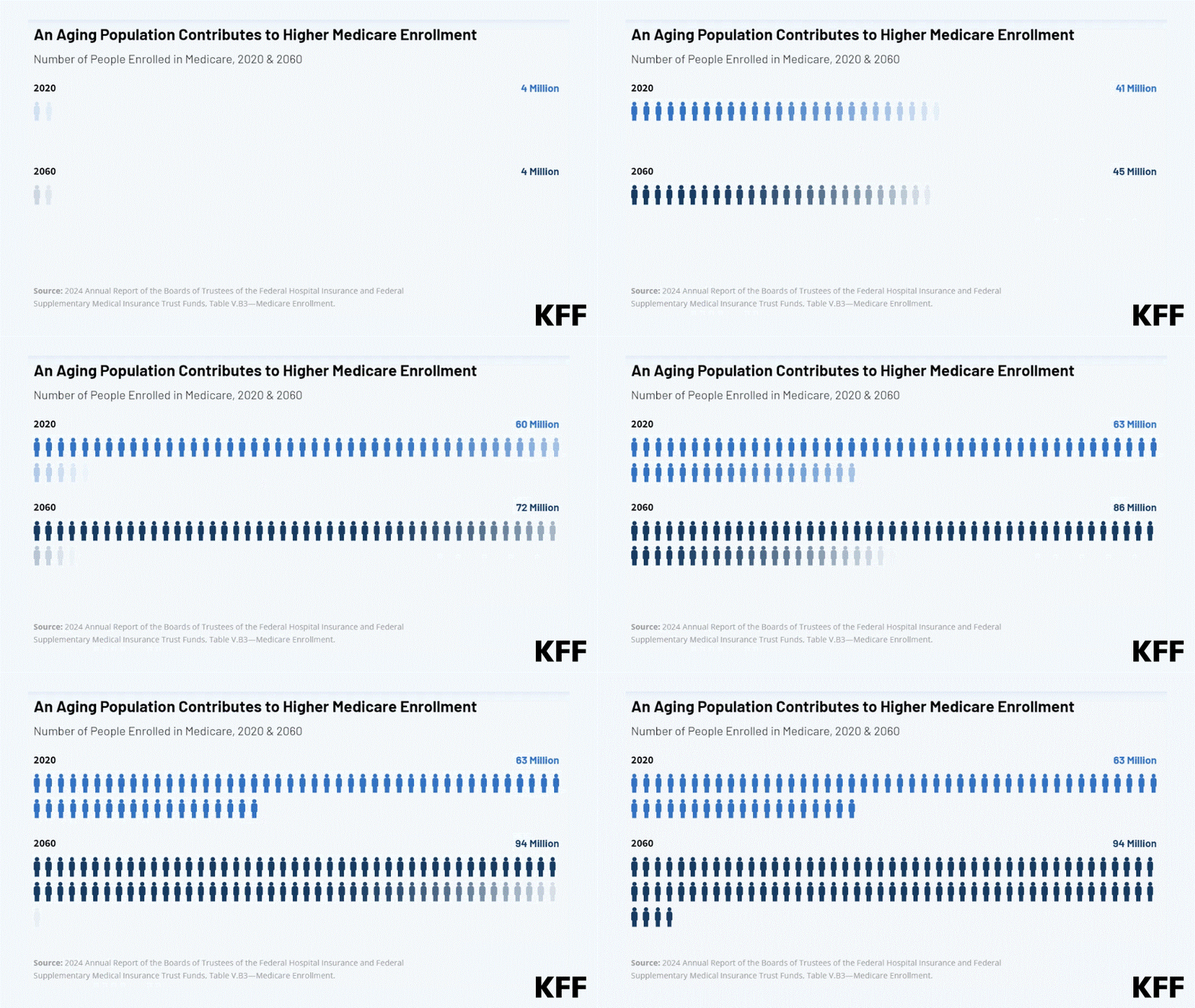
This interactive provides the facts on Medicare spending. Medicare, which serves 67 million people and accounts for 12 percent of the federal budget and 21 percent of national health spending, is often the focus of discussions about health expenditures, health care affordability and the sustainability of federal health programs. Explore data on enrollment growth, Medicare spending trends overall and per person, growth in Medicare spending relative to private insurance, spending on benefits and Medicare Advantage, Part A trust fund solvency challenges, and growth in out-of-pocket spending by beneficiaries.

Read More

Stay informed.

Stay informed.

Filter

921-930 of 1,623 results

  • With Government Funding Running Out, Americans Could Soon Face New Challenges in Accessing COVID-19 Treatments and Testing

    News Release

    A new KFF brief analyzes how the accessibility and cost of COVID-19 vaccines, treatments, and tests will change after the current government supply is depleted and the public health emergency ends. The Biden Administration has announced that it will have to end its purchase and distribution of COVID supplies as government funding is depleted. The public health emergency was recently extended for 90 additional days but is widely expected to end next year. These developments…

  • 10 Prescription Drugs Accounted for $48 Billion in Medicare Part D Spending in 2021, or More Than One-Fifth of Part D Spending That Year  

    News Release

    A new KFF analysis finds that the 10 top-selling prescription drugs under Medicare Part D comprised less than 1 percent of all covered drugs in 2021, but accounted for 22 percent, or $48 billion, of gross Medicare Part D drug spending that year. The analysis provides context for understanding the federal government’s new authority under the Inflation Reduction Act to negotiate prices for some high-spending drugs covered by Part D, Medicare’s outpatient prescription drug benefit…

  • As Debate Heats Up in Washington Over Possible Entitlement Cuts, A New KFF Analysis Details the 30% of Federal Spending That Goes to Health Care Programs

    News Release

    As some policymakers in Washington are pushing to reduce the federal deficit and debt, a new KFF resource provides a concise explanation of federal spending for domestic and global health programs and services, which could be part of any conversation about curbing federal spending. Federal spending on health programs and services accounted for 30 percent of net federal spending in fiscal year 2022 -- or $1.7 trillion out of a total of $5.9 trillion. Specifically,…

  • Medicare Beneficiaries Rarely Change Their Coverage During Open Enrollment

    Issue Brief

    During the Medicare open enrollment period for 2020, Medicare beneficiaries had an average of 24 Medicare Advantage prescription drug plans and 28 stand-alone Part D prescription drug plans to choose from for their coverage. Despite having so many Medicare options, relatively few Medicare private plan enrollees opted to switch their coverage.

  • Medicare Advantage 2023 Spotlight: First Look

    Issue Brief

    For 2023, the average Medicare beneficiary has access to 43 Medicare Advantage plans and can choose from plans offered by nine firms. Among the majority of Medicare Advantage plans that cover prescription drugs, 66 percent will charge no premium in addition to the monthly Medicare Part B premium. As in previous years, the vast majority of Medicare Advantage plans will offer supplemental benefits, including fitness, dental, vision, and hearing benefits. In addition, virtually all will…

  • The Typical Medicare Beneficiary Has Close to 70 Different Medicare Advantage and Medicare Part D Stand-Alone Plan Options for 2023

    Feature

    The Medicare open enrollment period that runs from October 15 to December 7 each year is an opportunity for Medicare beneficiaries in traditional Medicare and Medicare Advantage to evaluate their current coverage, compare plans, and decide whether to make a change for the coming year. Beneficiaries can compare Medicare Advantage plans, mainly HMOs and PPOs, which provide all Medicare-covered benefits, typically including Part D drug coverage, and may offer other benefits such as vision, dental,…

  • Medicare Part D: A First Look at Prescription Drug Plans in 2018

    Issue Brief

    This issue brief provides an overview of the 2018 Medicare Part D stand-alone prescription drug plan landscape, the largest segment of the Part D marketplace, It includes national and state-level data on plan availability, premiums, benefit design, cost sharing, information about premium-free plans for low-income beneficiaries, and information about the top ten Part D plans in 2018.

  • Medicare’s Income-Related Premiums Under Current Law and Proposed Changes

    Issue Brief

    Most people with Medicare pay the standard monthly premium for Part B and Part D coverage, which is set to cover 25 percent of Part B and Part D program costs, but a relatively small share of beneficiaries are required to pay higher premiums. This issue brief describes current requirements with respect to Medicare's Part B and Part D income-related premiums and proposed changes under House legislation being considered in November 2017.