Medicare

Medicare Open Enrollment

Medicare Advantage Plan Availability Varies Widely by County for 2027

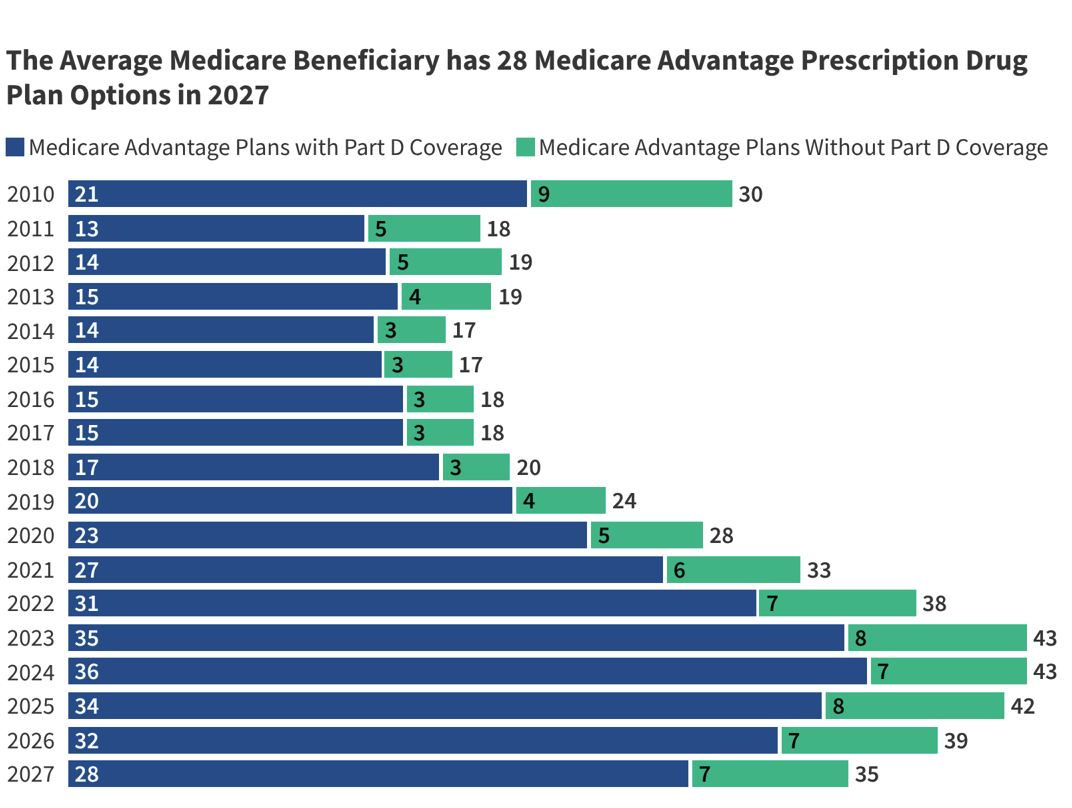
Medicare Advantage prescription drug plan (MA-PD) availability varies widely by county in 2027, with a modest reduction in the share of enrollees with more than 40 plans to choose from and some major insurers exiting many more counties than they are entering. 1 in 5 Medicare beneficiaries (20%) can choose from among more than 40 MA-PDs for 2027, down from 27% in 2026. 1% of all beneficiaries will have no plan option for 2027.
Medicare Open Enrollment and Coverage Options: Key Questions and Answers

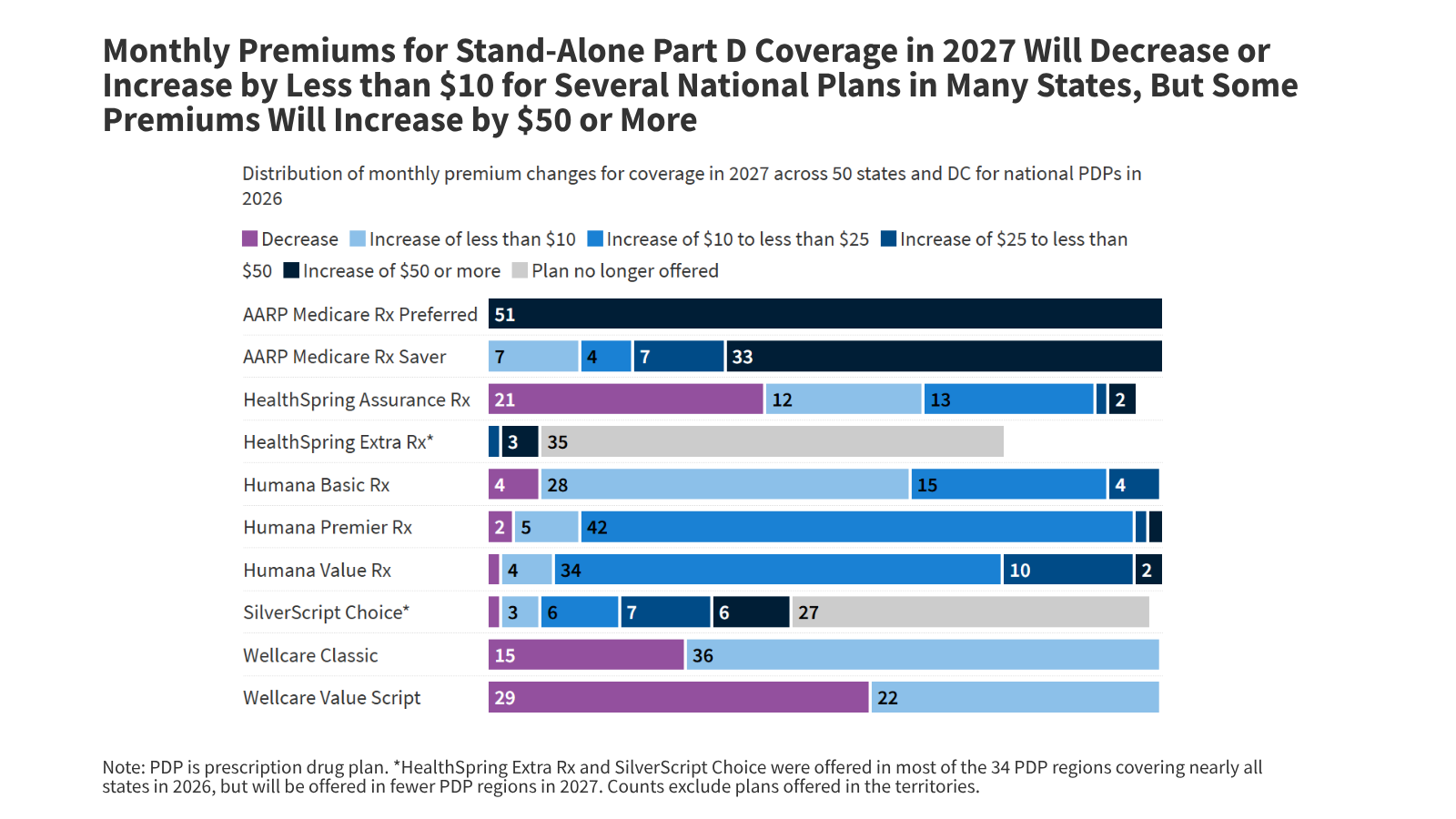
Each year, Medicare beneficiaries have an opportunity to make changes to how they receive their Medicare coverage during the nearly 8-week annual open enrollment period, which runs from October 15 through December 7. This brief answers key questions about the Medicare open enrollment period and Medicare coverage options.

Medigap

Medigap Guaranteed Issue Requirements: An Overview of Federal and State Rules

This issue brief analyzes federal and state rules related to guaranteed issue requirements for Medigap policies and how they impact beneficiaries’ access to Medigap, including the implications for Medicare beneficiaries with pre-existing medical conditions and those under age 65 with long-term disabilities.

NEW AND NOTEWORTHY

Decoding Medicare Advantage Coding Intensity

Federal payments to Medicare Advantage plans, and adjustments for health status, have come under increased scrutiny. This brief answers key questions about coding intensity, recent steps taken by CMS, the effects on beneficiaries, and other proposals to improve payment accuracy.

Data Visualization

The Facts About Medicare Spending

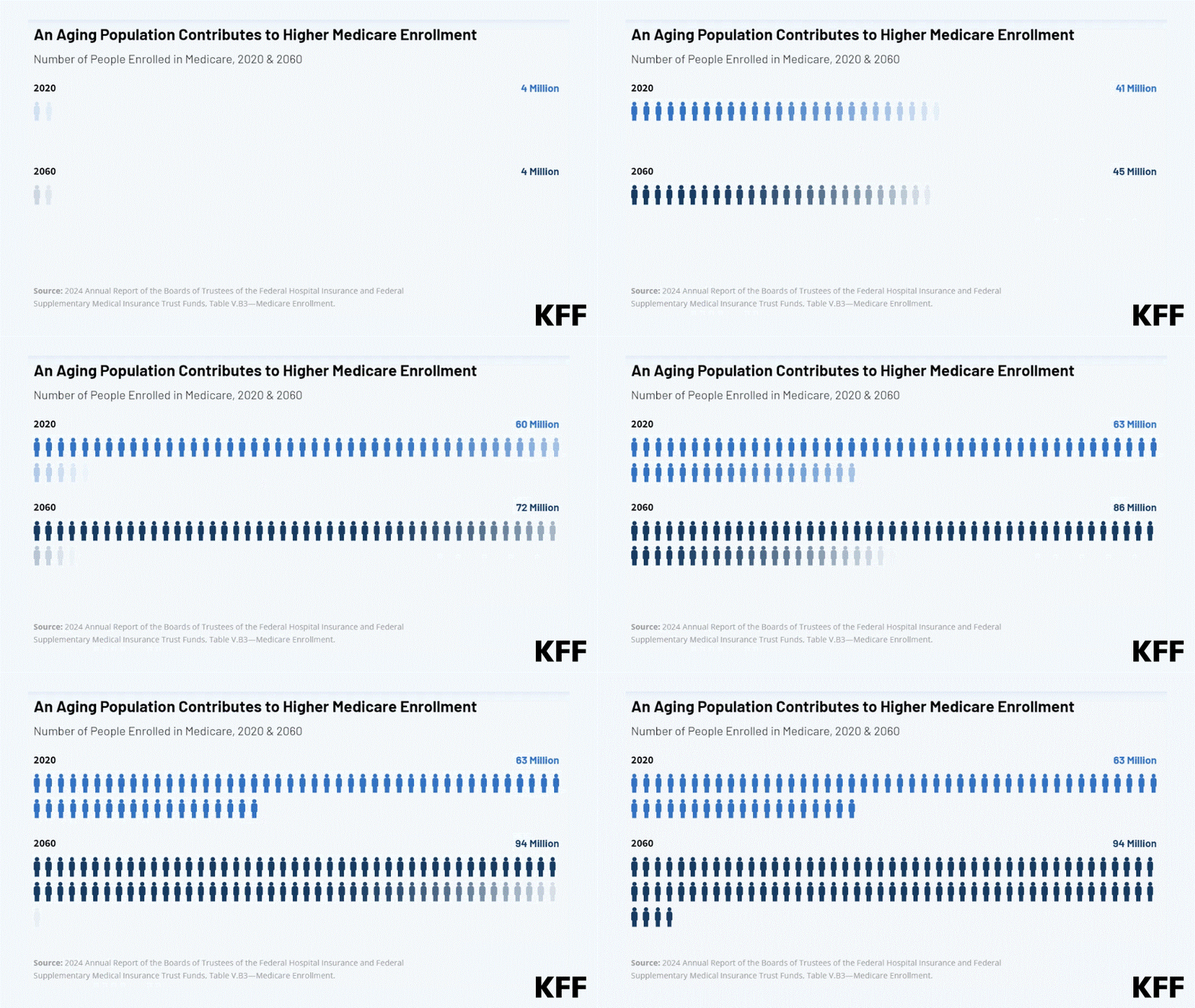
This interactive provides the facts on Medicare spending. Medicare, which serves 67 million people and accounts for 12 percent of the federal budget and 21 percent of national health spending, is often the focus of discussions about health expenditures, health care affordability and the sustainability of federal health programs. Explore data on enrollment growth, Medicare spending trends overall and per person, growth in Medicare spending relative to private insurance, spending on benefits and Medicare Advantage, Part A trust fund solvency challenges, and growth in out-of-pocket spending by beneficiaries.

Read More

Stay informed.

Stay informed.

Filter

901-910 of 1,623 results

  • Medicare Part D: A First Look at Prescription Drug Plans in 2017

    Issue Brief

    This issue brief provides an overview of the 2017 Medicare Part D stand-alone prescription drug plan marketplace, based on analysis of data from the Centers for Medicare & Medicaid Services. The brief focuses on data for 2017 and changes over time in plan availability, premiums, benefit design, cost sharing, and low-income subsidy plan availability.

  • Medicare Drug Plan Enrollees Would Face an Average 9 Percent Premium Increase Unless They Switch Plans During Open Enrollment, New Analysis Finds

    News Release

    Current enrollees in stand-alone Medicare Part D plans are projected to face an average 9 percent increase in premiums if they remain in their current plan for 2017, according to an analysis released today by the Kaiser Family Foundation. During Medicare’s 2017 open enrollment period, which runs from Oct. 15 through Dec. 7, Medicare beneficiaries in each state will have a choice of 22 stand-alone Part D drug plans (PDPs), on average. This is fewer…

  • What Paul Ryan’s Stance on 2016 Means for Health Care

    From Drew Altman

    In this column for The Wall Street Journal's Think Tank, Drew Altman discusses the implications of Paul Ryan’s decision to rule out being drafted as a Republican presidential candidate for the 2017 health care agenda and how it could focus greater attention on proposals to change Medicare and Medicaid along with the Affordable Care Act.

  • How High Drug Prices Weigh on the Sickest Americans

    From Drew Altman

    In this column for The Wall Street Journal's Think Tank, Drew Altman explores the data behind public concern about prescription drug costs and highlights that the people most in need are the most burdened by the problem.

  • Medigap Enrollment Among New Medicare Beneficiaries: How Many 65-Year Olds Enroll In Plans With First-Dollar Coverage?

    Issue Brief

    On March 26, 2015, the House of Representatives passed H.R. 2, the Medicare Access and CHIP Reauthorization Act of 2015, which would replace the Sustainable Growth Rate (SGR) formula, among other changes; the bill is currently pending in the U.S. Senate. H.R. 2 includes a provision that would prohibit Medicare supplemental insurance (Medigap) policies from covering the Part B deductible for people who become eligible for Medicare on or after January 1, 2020. This data…

  • Medicare: An Overview

    Feature

    This slideshow explains key elements of the Medicare program, which now provides health coverage to 55 million people — including 46 million people age 65 and older and another 9 million younger adults with permanent disabilities.

  • More Than 1 in 3 Nursing Homes Received Relatively Low Overall Ratings on Nursing Home Compare

    News Release

    More than one third of the nation’s 15,500 nursing homes, accounting for 39 percent of all nursing home residents, received relatively low ratings of 1 or 2 stars under the federal government’s recently revamped Five-star Quality Rating System, according to a new analysis by the Kaiser Family Foundation. The rating system, overseen by the Centers for Medicare and Medicaid Services, assigns ratings of 1 to 5 stars to all Medicare- and Medicaid-certified nursing homes based…

  • Mi esposo y yo estamos retirados. Él acaba de cumplir 65 años y ahora está cubierto por Medicare, pero yo tengo 62 años y no tengo seguro médico. Como cónyuge de un beneficiario de Medicare, ¿puedo insc...

    FAQs

    No. Aunque su esposo ahora califica para Medicare, usted no calificará para Medicare hasta que cumpla 65. Si ahora no tiene seguro de salud, puede considerar inscribirse en un plan a través del mercado de seguros. Si el ingreso de su hogar es de al menos 100% del nivel federal de pobreza (para comprar cobertura en el mercado para 2026, esto significa un ingreso de $21,150 para una pareja), puede calificar para recibir subsidios para…