Medicare

Medicare Open Enrollment

Medicare Advantage Plan Availability Varies Widely by County for 2027

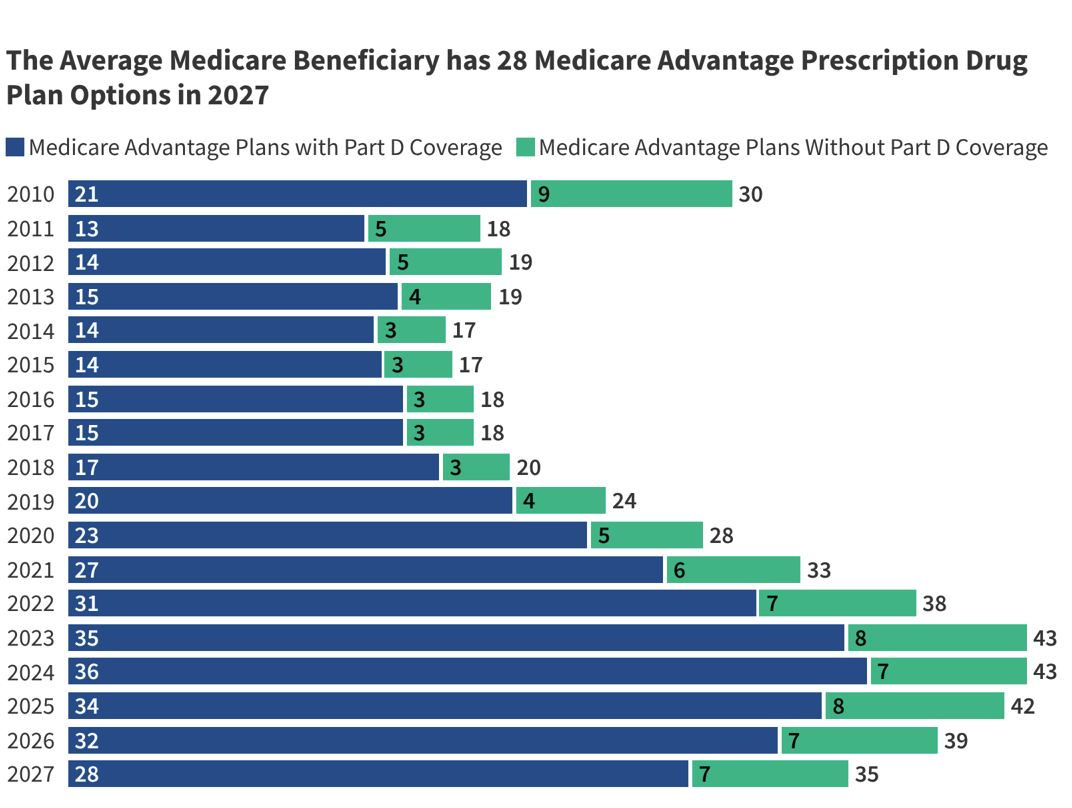
Medicare Advantage prescription drug plan (MA-PD) availability varies widely by county in 2027, with a modest reduction in the share of enrollees with more than 40 plans to choose from and some major insurers exiting many more counties than they are entering. 1 in 5 Medicare beneficiaries (20%) can choose from among more than 40 MA-PDs for 2027, down from 27% in 2026. 1% of all beneficiaries will have no plan option for 2027.
Medicare Open Enrollment and Coverage Options: Key Questions and Answers

Each year, Medicare beneficiaries have an opportunity to make changes to how they receive their Medicare coverage during the nearly 8-week annual open enrollment period, which runs from October 15 through December 7. This brief answers key questions about the Medicare open enrollment period and Medicare coverage options.

Medigap

Medigap Guaranteed Issue Requirements: An Overview of Federal and State Rules

This issue brief analyzes federal and state rules related to guaranteed issue requirements for Medigap policies and how they impact beneficiaries’ access to Medigap, including the implications for Medicare beneficiaries with pre-existing medical conditions and those under age 65 with long-term disabilities.

NEW AND NOTEWORTHY

Decoding Medicare Advantage Coding Intensity

Federal payments to Medicare Advantage plans, and adjustments for health status, have come under increased scrutiny. This brief answers key questions about coding intensity, recent steps taken by CMS, the effects on beneficiaries, and other proposals to improve payment accuracy.

Data Visualization

The Facts About Medicare Spending

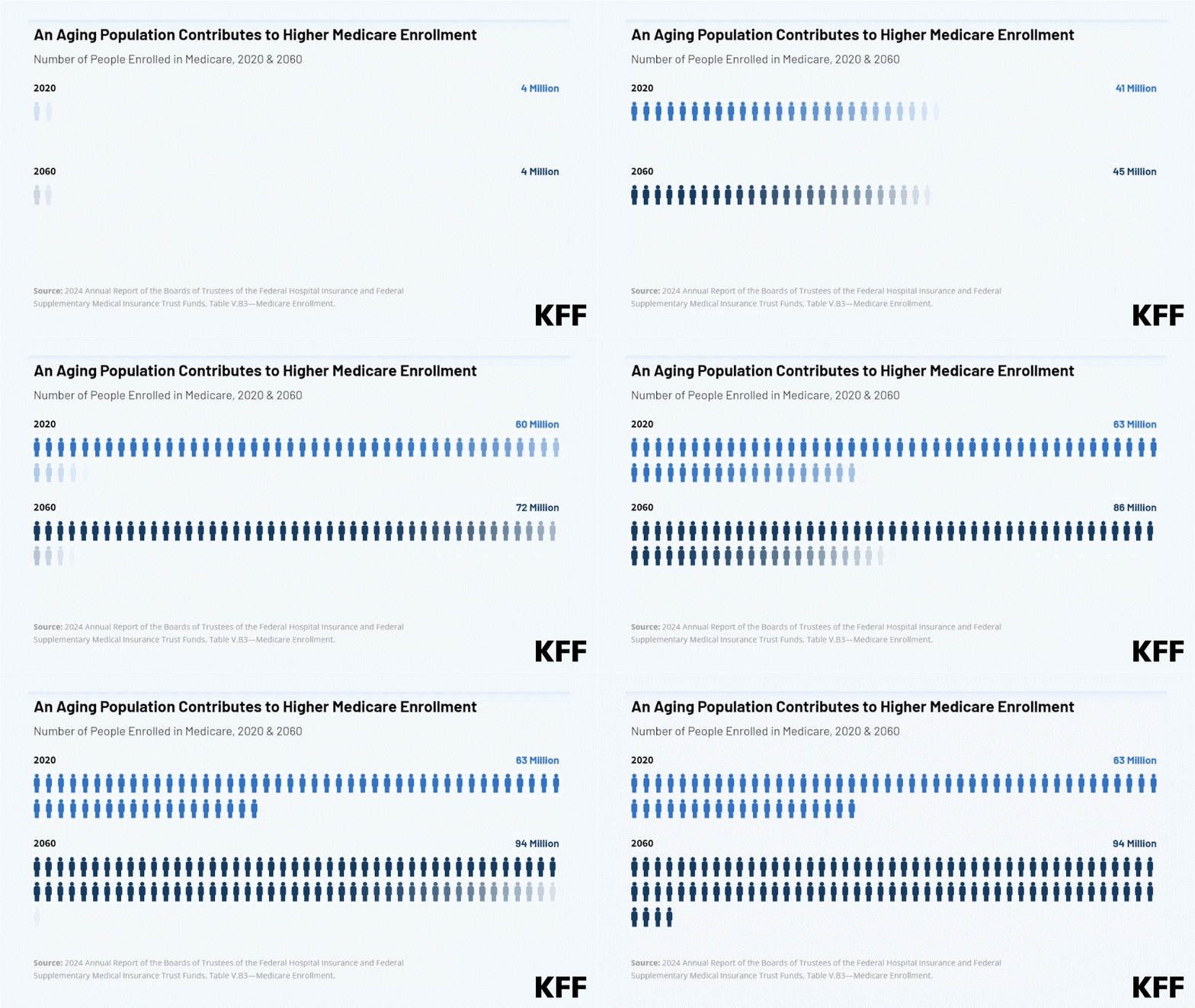
This interactive provides the facts on Medicare spending. Medicare, which serves 67 million people and accounts for 12 percent of the federal budget and 21 percent of national health spending, is often the focus of discussions about health expenditures, health care affordability and the sustainability of federal health programs. Explore data on enrollment growth, Medicare spending trends overall and per person, growth in Medicare spending relative to private insurance, spending on benefits and Medicare Advantage, Part A trust fund solvency challenges, and growth in out-of-pocket spending by beneficiaries.

Read More

Stay informed.

Stay informed.

Filter

781-790 of 1,623 results

  • Retired Steelworkers and Their Health Benefits: Results from a 2004 Survey

    Report

    This Kaiser survey report looks at how the bankruptcies of two steel companies, the LTV Corporation and Bethlehem Steel, affected health coverage for the companies' retirees and dependents. The bankruptcies left about 200,000 retirees and spouses without retiree health coverage in 2002 and 2003. The report provides insight into the impact of a tax credit enacted by Congress in 2002 to provide temporary assistance to workers and retirees in "distressed" industries, including the steel industry.…

  • National Survey of Pharmacists 2006: Full Topline Results

    Poll Finding

    National Survey of Pharmacists 2006: Full Topline Results These toplines provide additional findings from a 2006 national survey of pharmacists on their views and experiences on a wide range of health care issues. Toplines (.pdf)

  • Health Affairs Article Examines Enrollment in Medicare Drug Plans As The Benefit Approaches Its Second Year

    Report

    Health Affairs Article Examines Enrollment in Medicare Drug Plans As The Benefit Approaches Its Second Year An article by Kaiser Family Foundation researchers published as a Health Affairs Web Exclusive provides a comprehensive look at the 2006 private Medicare drug plan enrollment as the enrollment period for 2007 begins. The article examines organization- and plan-level market share, as well as enrollment by type of plan, benefit design, and gap coverage. Health Affairs Web Exclusive (free…

  • 2006 Kaiser/Hewitt Retiree Health Benefits Survey

    Report

    The 2006 Kaiser/Hewitt survey of large businesses that provide retiree health benefits to their workers assesses their evolving responses to the new Medicare drug benefit in 2006. It also looks at the rising costs and changing benefits of retiree health coverage overall in 2006, as well as the outlook for 2007 and beyond. The Kaiser/Hewitt study, the fifth joint survey since 2002, analyzes responses from a non-probability sample of 302 businesses with 1,000 or more…

  • Voices of Beneficiaries: Medicare Part D Insights and Observations One Year Later

    Report

    This report describes the views and experiences of 35 Medicare beneficiaries under the new drug benefit in advance of the 2007 open enrollment period. The report finds that drug plan enrollees generally say that they are satisfied with their drug coverage and have not encountered major difficulties using their plan. At the same time, many of them don't fully understand how their plan works even after almost a year of experience with this new benefit.…

  • Examining Sources of Supplemental Insurance and Prescription Drug Coverage Among Medicare Beneficiaries: Findings from the Medicare Current Beneficiary Survey, 2007

    Report

    This updated chartpack presents sources of supplemental and prescription drug coverage among Medicare beneficiaries in 2007, the most recent year for which national data are available. The chartpack looks at variations in supplemental and prescription drug coverage by income, race/ethnicity, age, urban/rural location, and health status. It also examines characteristics of Medicare beneficiaries with low incomes who are not enrolled in a Part D plan or receiving Part D low-income subsidies. Prepared by Kaiser Family…

  • The Public’s Health Care Agenda for the New President and Congress

    Poll Finding

      The Public's Health Care Agenda for the New President and Congress This survey captures the public's attitudes regarding the health care agenda for President Obama and the new Congress in 2009. It assesses the relative priority placed on health care by the American public as part of addressing the economic recession and as a large scale reform issue. The public's priorities for health care reform and their views on a range of other health…

  • Toplines — The Public’s Health Care Agenda for the New President and Congress

    Poll Finding

    Toplines -- The Public's Health Care Agenda for the New President and Congress This document contains the detailed toplines from The Public's Health Care Agenda for the New President and Congress poll. The poll involved a nationally representative random sample of 1,628 adults ages 18 and older who were interviewed by telephone between December 4 and 14, 2008. The margin of sampling error for the full sample is plus or minus 3 percentage points. For…