Medicare

Medicare Open Enrollment

Medicare Advantage Plan Availability Varies Widely by County for 2027

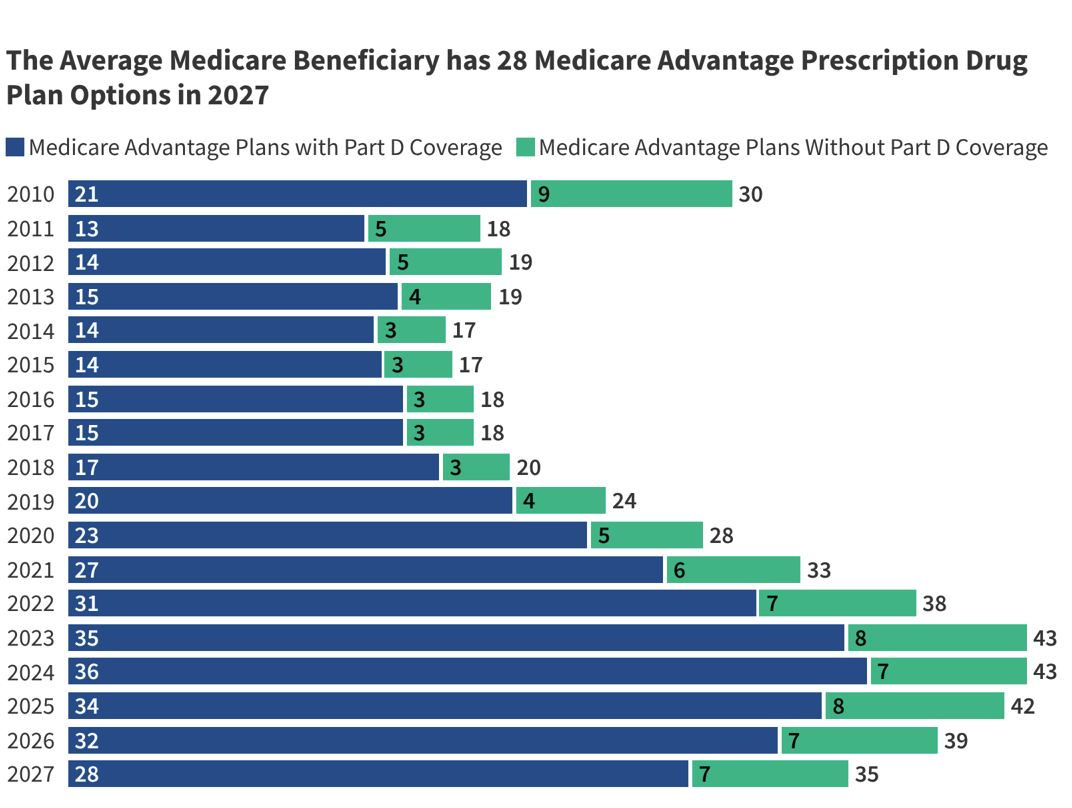
Medicare Advantage prescription drug plan (MA-PD) availability varies widely by county in 2027, with a modest reduction in the share of enrollees with more than 40 plans to choose from and some major insurers exiting many more counties than they are entering. 1 in 5 Medicare beneficiaries (20%) can choose from among more than 40 MA-PDs for 2027, down from 27% in 2026. 1% of all beneficiaries will have no plan option for 2027.
Medicare Open Enrollment and Coverage Options: Key Questions and Answers

Each year, Medicare beneficiaries have an opportunity to make changes to how they receive their Medicare coverage during the nearly 8-week annual open enrollment period, which runs from October 15 through December 7. This brief answers key questions about the Medicare open enrollment period and Medicare coverage options.

Medigap

Medigap Guaranteed Issue Requirements: An Overview of Federal and State Rules

This issue brief analyzes federal and state rules related to guaranteed issue requirements for Medigap policies and how they impact beneficiaries’ access to Medigap, including the implications for Medicare beneficiaries with pre-existing medical conditions and those under age 65 with long-term disabilities.

NEW AND NOTEWORTHY

Decoding Medicare Advantage Coding Intensity

Federal payments to Medicare Advantage plans, and adjustments for health status, have come under increased scrutiny. This brief answers key questions about coding intensity, recent steps taken by CMS, the effects on beneficiaries, and other proposals to improve payment accuracy.

Data Visualization

The Facts About Medicare Spending

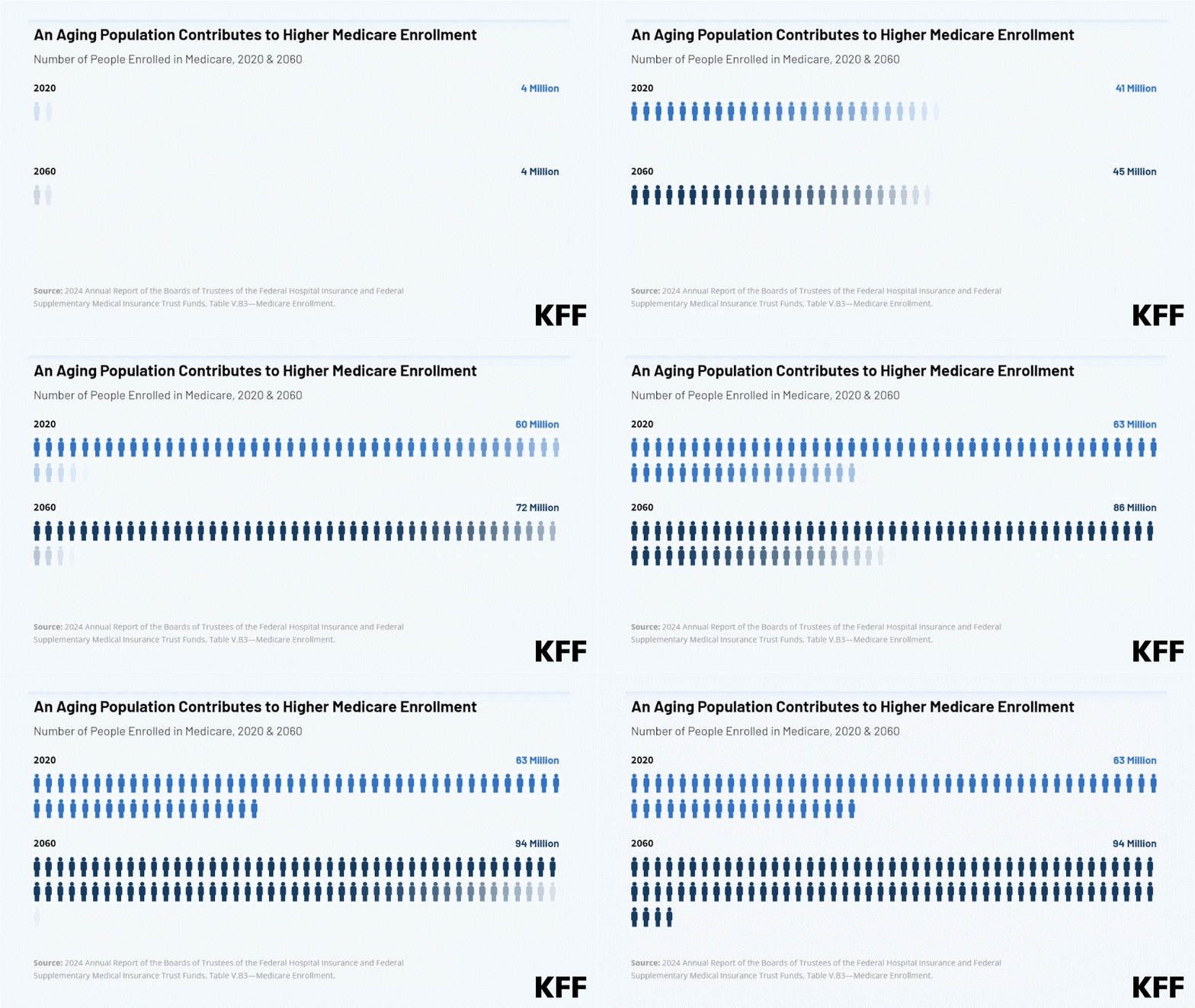
This interactive provides the facts on Medicare spending. Medicare, which serves 67 million people and accounts for 12 percent of the federal budget and 21 percent of national health spending, is often the focus of discussions about health expenditures, health care affordability and the sustainability of federal health programs. Explore data on enrollment growth, Medicare spending trends overall and per person, growth in Medicare spending relative to private insurance, spending on benefits and Medicare Advantage, Part A trust fund solvency challenges, and growth in out-of-pocket spending by beneficiaries.

Read More

Stay informed.

Stay informed.

Filter

761-770 of 1,623 results

  • Insights on Transitioning From Medicaid to the New Medicare Prescription Drug Benefit

    Report

    The Kaiser Commission on Medicaid and the Uninsured convened a focus group of state Medicaid officials in November 2005 to discuss the impact of the new Medicare drug program on states and Medicaid enrollees. State insights on the transition of dual eligibles and some beneficiary experiences are discussed in new material and an audio briefing. Podcast: December 19, 2005 Conference Call Briefing (Downloadable Audio File) Presentations from the December 19, 2005 Conference Call Briefing (.pdf)…

  • Kaiser Health Poll Report Survey – Selected Findings on Seniors’ Views of the Medicare Prescription Drug Benefit

    Poll Finding

    Kaiser Health Poll Report Survey – Selected Findings on Seniors' Views of the Medicare Prescription Drug Benefit This February 2006 Kaiser Family Foundation tracking poll finds that 45% of seniors say they have enrolled or plan to enroll in a drug plan, 29% say they do not intend to enroll in a drug plan and another 23% say they are uncertain. The majority of those who do not plan to enroll say they have another…

  • Issue Briefs Describe Changes in Private Plan Market and Effects on Medicare Beneficiaries

    Issue Brief

    These two issue briefs describe the different types of private plan options available to people on Medicare, identify key characteristics of the organizations offering the new Medicare drug benefit, and analyze how companies are positioning themselves to attract Medicare enrollees. The Growth of Private Plans in Medicare, 2006 The Landscape of Private Firms Offering Medicare Prescription Drug Coverage in 2006

  • Study Finds Advertising By Insurers Favors Medicare Advantage Over Stand-Alone Drug Plans

    Issue Brief

    As the marketing period for 2009 Medicare plans nears, the Kaiser Family Foundation Kaiser Family Foundation issued a report analyzing the content and frequency of television, print and radio advertisement for private Medicare plans that ran nationally or in one of three local media markets (Miami/Fort Lauderdale, Fla.; Phoenix, Ariz.; and Greensboro, N.C) during the marketing and enrollment period for 2008 plan offerings. The study finds that insurers last year placed three times more advertisements…

  • Pulling it Together from Drew Altman: Multiple Agendas for Controlling Health Care Costs

    Perspective

    In what would be a domestic policy trifecta, we may be headed for interconnected big debates about economic recovery, entitlement programs and health reform. A core issue in the entitlement and health reform debates is the problem of rising health care costs. President Obama, now apparently fully briefed on the economic, budget and health reform realities he faces, is talking conspicuously about hard choices that may lie ahead. In a short period of time the…

  • What’s in the Stars? Quality Ratings of Medicare Advantage Plans, 2010

    Issue Brief

    NEW: Foundation brief looks at implications of 2011 quality ratings for Medicare Advantage plans. The Centers for Medicare and Medicaid Services (CMS) rates the relative quality of the private plans that are offered to Medicare beneficiaries through the Medicare Advantage program as a way of aiding beneficiaries who are considering enrolling in such a private plan. CMS rates Medicare Advantage plans on a one to five-star scale, with five stars representing the highest quality. This…

  • Raising Medicare’s Age of Eligibility to 67 Would Achieve Significant Savings, But Shift Costs To 65- and 66-Year-Olds, Other Individuals, Employers and Medicaid, New Analysis Shows

    News Release

    Study Estimates Two in Three People Ages 65 and 66 Would Pay $2,200 More On Average For Health Care in 2014 Than They Would If They Remained in Medicare MENLO PARK, Calif. -- Raising Medicare’s eligibility age from 65 to 67 in 2014 would generate an estimated $5.7 billion in net savings to the federal government, but also result in an estimated net increase of $3.7 billion in out-of-pocket costs for 65- and 66-year-olds, and…

  • Inside Deficit Reduction: What It Means for Medicare

    Event Date:
    Event

    Proposals to generate Medicare savings abound, from the various commissions recommending change, members of Congress and others. Which proposals will, or should receive serious considerations by the Congressional super committee in its quest to find $1.2 trillion or more in savings by its November 23 deadline? What impact would these changes have on beneficiaries, providers and insurers? Would stakeholders prefer the automatic, but capped, Medicare reductions in the sequester rather than any recommendations on Medicare…

  • Polling on Medicare Premium Support Systems Over Time

    Poll Finding

    This data note reviews years of polling dating to 1995 to gauge public opinion on proposals to change Medicare to a premium support system, an idea embraced by GOP presidential nominee Governor Mitt Romney and rejected by President Obama. Under the proposed change, the federal government would provide people on Medicare a fixed amount of money that could be applied toward the cost of health insurance purchased either from private insurers or the traditional Medicare…

  • Medicare Beneficiaries & HMO’s:  A Case Study of the Los Angeles Market

    Other Post

    Medicare Beneficiaries & HMO's: A Case Study of the Los Angeles Market Note: This publication is no longer in circulation. However, a few copies may still exist in the Foundation's internal library that could be xeroxed. Please email order@kff.org if you would like to pursue this option.