Medicare

Medicare Open Enrollment

Medicare Advantage Plan Availability Varies Widely by County for 2027

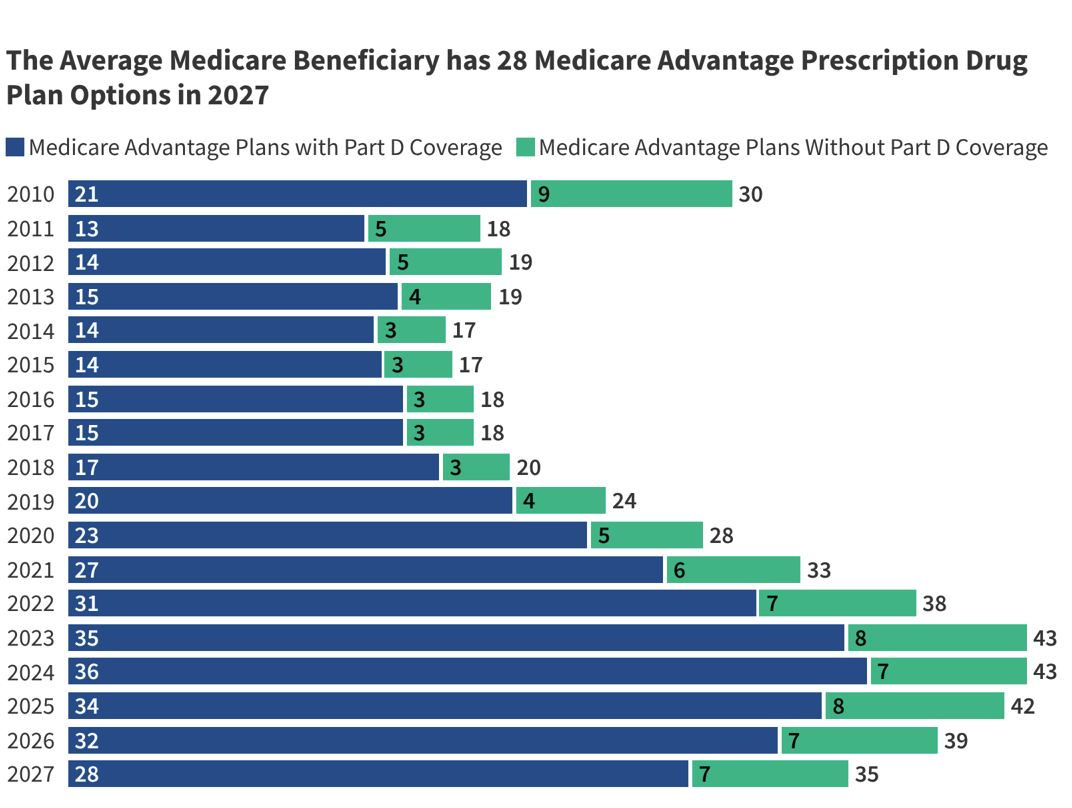
Medicare Advantage prescription drug plan (MA-PD) availability varies widely by county in 2027, with a modest reduction in the share of enrollees with more than 40 plans to choose from and some major insurers exiting many more counties than they are entering. 1 in 5 Medicare beneficiaries (20%) can choose from among more than 40 MA-PDs for 2027, down from 27% in 2026. 1% of all beneficiaries will have no plan option for 2027.
Medicare Open Enrollment and Coverage Options: Key Questions and Answers

Each year, Medicare beneficiaries have an opportunity to make changes to how they receive their Medicare coverage during the nearly 8-week annual open enrollment period, which runs from October 15 through December 7. This brief answers key questions about the Medicare open enrollment period and Medicare coverage options.

Medigap

Medigap Guaranteed Issue Requirements: An Overview of Federal and State Rules

This issue brief analyzes federal and state rules related to guaranteed issue requirements for Medigap policies and how they impact beneficiaries’ access to Medigap, including the implications for Medicare beneficiaries with pre-existing medical conditions and those under age 65 with long-term disabilities.

NEW AND NOTEWORTHY

Decoding Medicare Advantage Coding Intensity

Federal payments to Medicare Advantage plans, and adjustments for health status, have come under increased scrutiny. This brief answers key questions about coding intensity, recent steps taken by CMS, the effects on beneficiaries, and other proposals to improve payment accuracy.

Data Visualization

The Facts About Medicare Spending

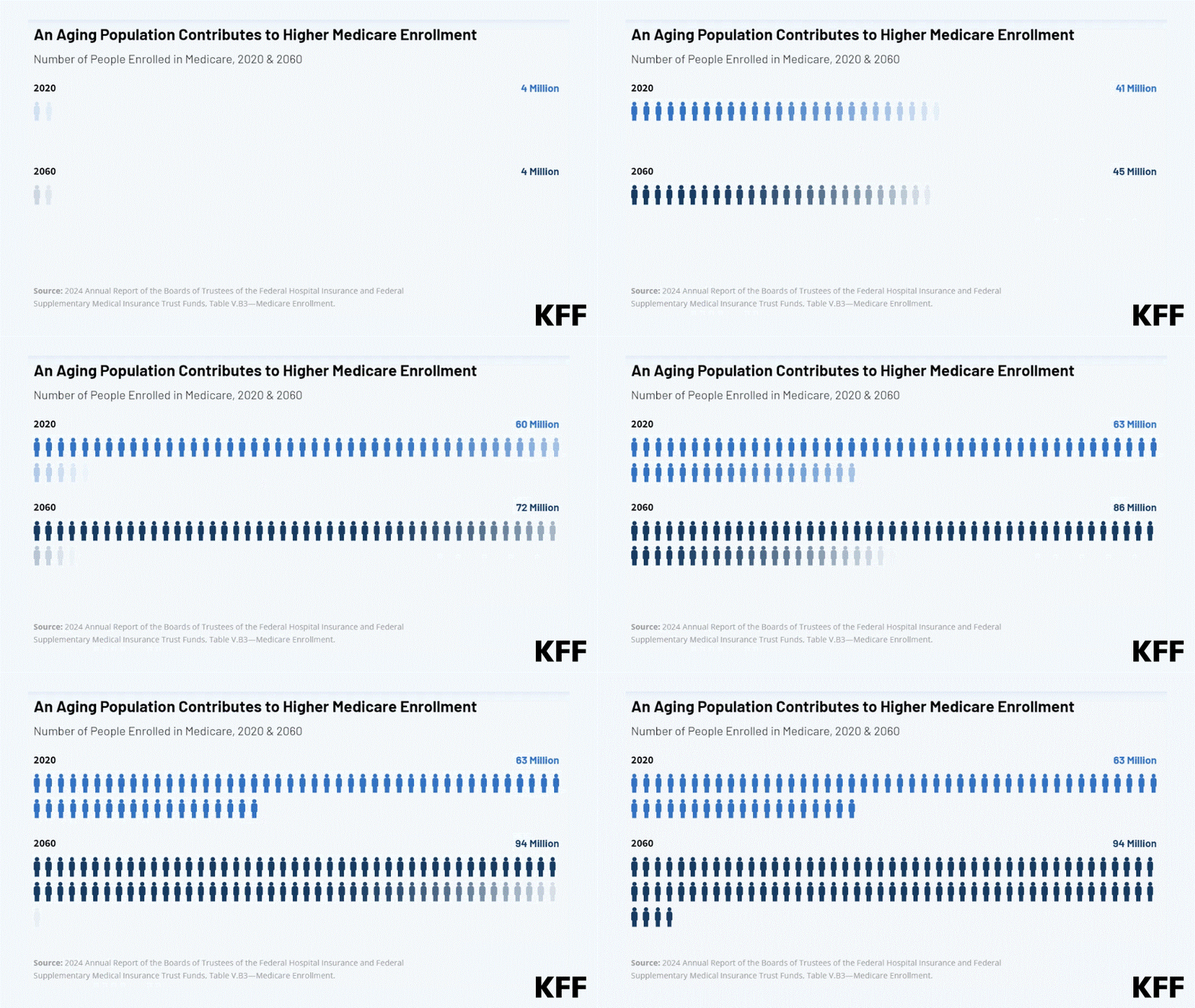
This interactive provides the facts on Medicare spending. Medicare, which serves 67 million people and accounts for 12 percent of the federal budget and 21 percent of national health spending, is often the focus of discussions about health expenditures, health care affordability and the sustainability of federal health programs. Explore data on enrollment growth, Medicare spending trends overall and per person, growth in Medicare spending relative to private insurance, spending on benefits and Medicare Advantage, Part A trust fund solvency challenges, and growth in out-of-pocket spending by beneficiaries.

Read More

Stay informed.

Stay informed.

Filter

411-420 of 1,623 results

  • Medicare Advantage 2012 Spotlight: Plan Availability and Premiums

    Report

    This brief highlights trends in the Medicare Advantage marketplace, including the choices available to Medicare beneficiaries in 2012, premium levels and other plan characteristics. The brief was authored by researchers at Mathematica Policy Research and the Kaiser Family Foundation. Data Spotlight (.pdf)

  • Medicare Part D 2012 Data Spotlights

    Report

    The Kaiser Family Foundation has issued this collection of analyses related to the Medicare Part D stand-alone drug plan options available to seniors in 2012. These spotlights focuses on key aspects of the drug plan choices available and relevant trends since the Medicare drug benefit took effect in 2006. They were prepared by a team of researchers at Georgetown University, NORC at the University of Chicago and the Kaiser Family Foundation. Analysis Of Medicare Prescription…

  • Oversight and Enforcement of Medicare Part D Plan Requirements:  Federal Role and Responsibilities

    Issue Brief

    Oversight and Enforcement of Medicare Part D Plan Requirements: Federal Role and Responsibilities This Issue Brief was commissioned by the Kaiser Family Foundation to gain insights into legal advocates’ views of how federal authorities enforce compliance with requirements of the new Medicare Part D prescription drug benefit. The report was prepared by Toby Edelman of the Center for Medicare Advocacy, Inc. The views expressed in this report are those of the author and not necessarily…

  • Implications of the New Medicare Law for Dual Eligibles:  10 Key Questions and Answers

    Issue Brief

    Implications of the New Medicare Law for Dual Eligibles: 10 Key Questions and Answers This publication is designed to provide a more detailed explanation of the change in drug coverage policy for dual eligibles under the new Medicare law, as well as explore its implications for the individuals affected by it. Issue Paper (.pdf)

  • Medicare Advantage Plan Star Ratings and Bonus Payments in 2012

    Report

    This report looks at the star ratings that have been used for many years to help consumers compare plans, and examines how Medicare Advantage quality scores will interact with plan payments, beginning in 2012. To encourage Medicare Advantage plans to provide quality care, the 2010 health reform law authorized Medicare to pay plans bonuses beginning in 2012 if they receive four or five stars on the program’s five-star quality rating system, or are unrated. Building…

  • Medicare Part D 2008 Data Spotlight: Benefit Design

    Issue Brief

    This Medicare Part D data spotlight examines the benefit design of Medicare Part D Prescription Drug Plans (PDP) in 2008, focusing on national plans. It shows that in 2008, as in previous years, only about 10 percent of national prescription drug plans offered the defined standard benefit. The spotlight also looks at cost sharing structures, the use of flat dollar copayments, the upward trend in cost sharing for non-preferred drugs, and recent changes in cost…

  • Medicare Part D 2009 Data Spotlight: The Coverage Gap

    Report

    This Medicare Part D data spotlight examines the coverage gap, or "doughnut hole," in Medicare drug plans available in 2009. While in the gap in coverage, Part D enrollees (other than those receiving low-income subsidies) are required to pay 100 percent of total drug costs until they reach the catastrophic coverage level. In 2009, nearly all Part D plans have a coverage gap, though one in four plans offer limited coverage in the gap --…

  • Low-Income Medicare Beneficiaries: How the House and Senate Prescription Drug Bills Address Their Drug Needs

    Report

    The House and Senate versions of a Medicare prescription drug bill treat the drug costs of those dually-eligible for Medicare and Medicaid and other low-income Medicare beneficiaries quite differently. The Kaiser Commission on Medicaid and the Uninsured cosponsored a policy briefing on the key issues in the two bills that would impact low-income beneficiaries and released a brief and background report on the topic. A Prescription Drug Benefit in Medicare: Implications for Medicaid and Low-Income…