Medicare

Medicare Open Enrollment

Medicare Advantage Plan Availability Varies Widely by County for 2027

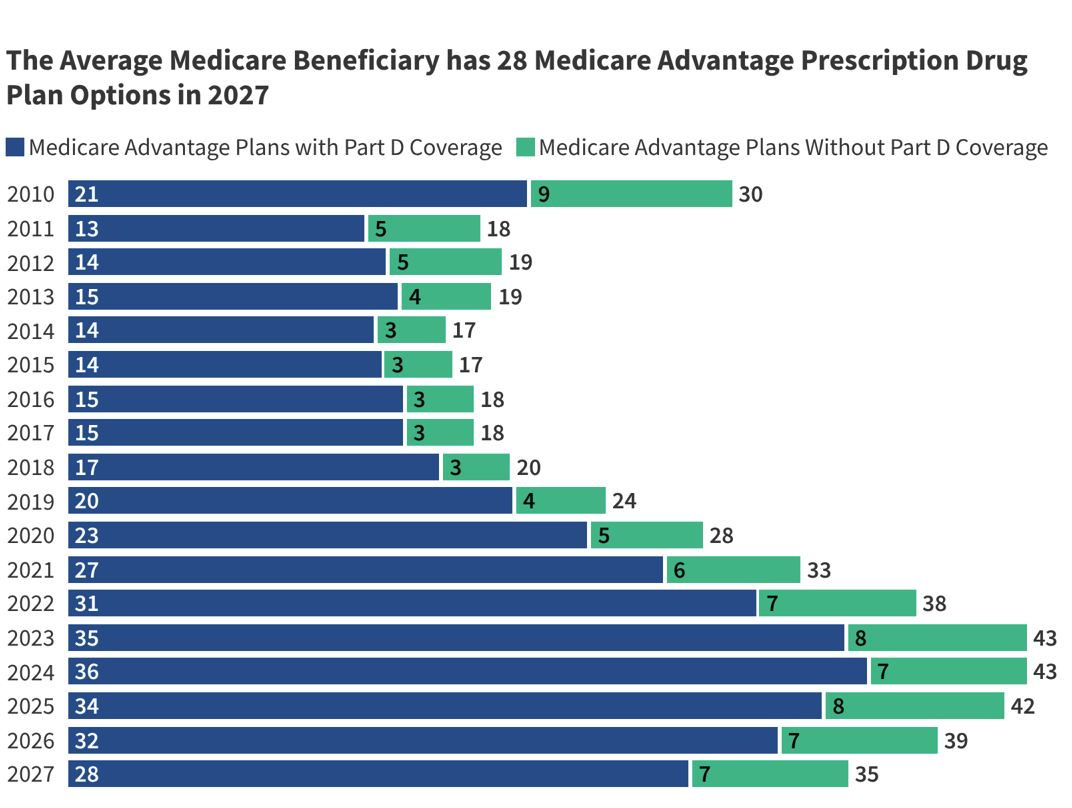
Medicare Advantage prescription drug plan (MA-PD) availability varies widely by county in 2027, with a modest reduction in the share of enrollees with more than 40 plans to choose from and some major insurers exiting many more counties than they are entering. 1 in 5 Medicare beneficiaries (20%) can choose from among more than 40 MA-PDs for 2027, down from 27% in 2026. 1% of all beneficiaries will have no plan option for 2027.
Medicare Open Enrollment and Coverage Options: Key Questions and Answers

Each year, Medicare beneficiaries have an opportunity to make changes to how they receive their Medicare coverage during the nearly 8-week annual open enrollment period, which runs from October 15 through December 7. This brief answers key questions about the Medicare open enrollment period and Medicare coverage options.

Medigap

Medigap Guaranteed Issue Requirements: An Overview of Federal and State Rules

This issue brief analyzes federal and state rules related to guaranteed issue requirements for Medigap policies and how they impact beneficiaries’ access to Medigap, including the implications for Medicare beneficiaries with pre-existing medical conditions and those under age 65 with long-term disabilities.

NEW AND NOTEWORTHY

Decoding Medicare Advantage Coding Intensity

Federal payments to Medicare Advantage plans, and adjustments for health status, have come under increased scrutiny. This brief answers key questions about coding intensity, recent steps taken by CMS, the effects on beneficiaries, and other proposals to improve payment accuracy.

Data Visualization

The Facts About Medicare Spending

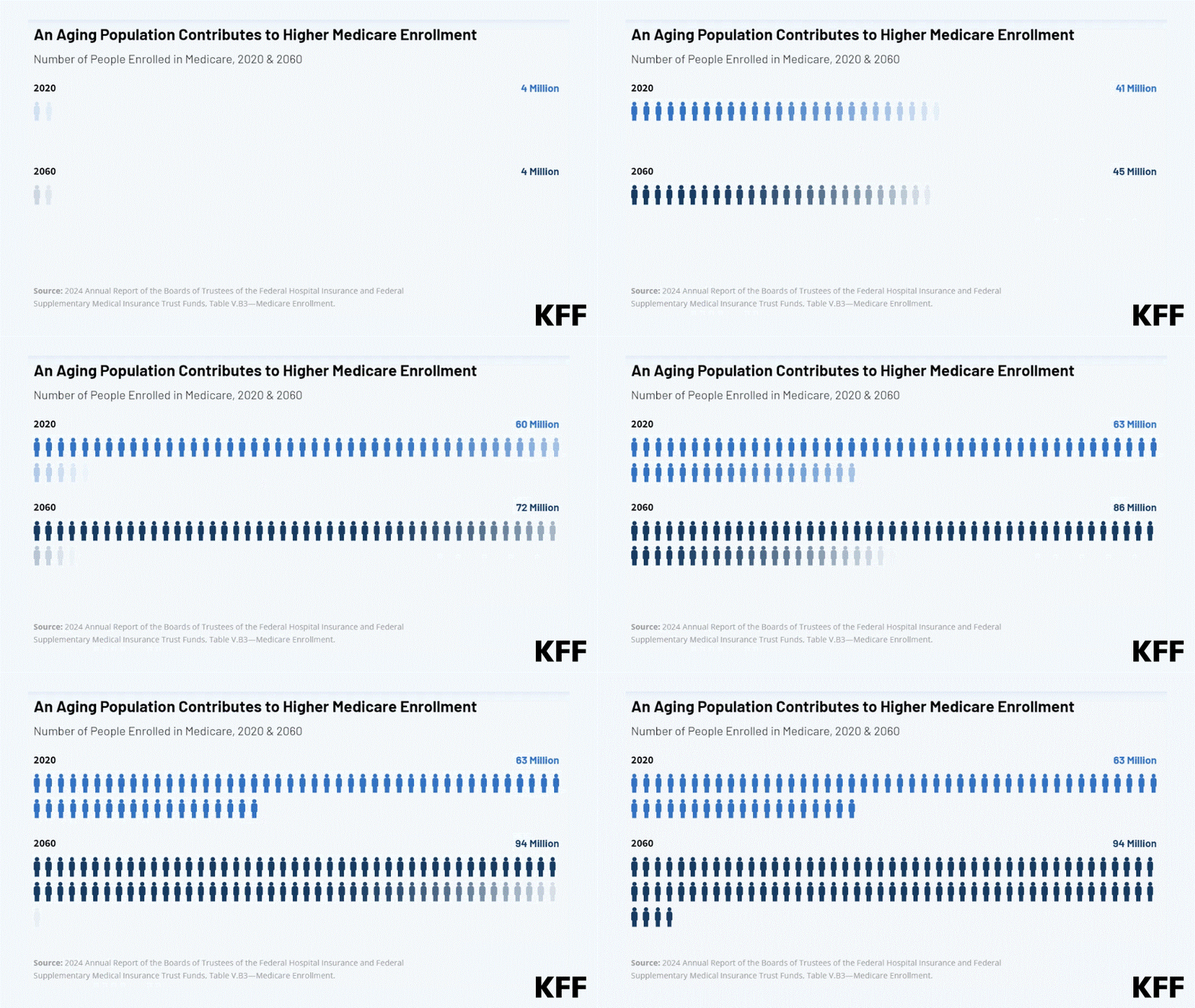
This interactive provides the facts on Medicare spending. Medicare, which serves 67 million people and accounts for 12 percent of the federal budget and 21 percent of national health spending, is often the focus of discussions about health expenditures, health care affordability and the sustainability of federal health programs. Explore data on enrollment growth, Medicare spending trends overall and per person, growth in Medicare spending relative to private insurance, spending on benefits and Medicare Advantage, Part A trust fund solvency challenges, and growth in out-of-pocket spending by beneficiaries.

Read More

Stay informed.

Stay informed.

Filter

301-310 of 1,623 results

  • March 30 Web Event: Unsung Heroes: The Crucial Role – and Tenuous Circumstances – of Home Care Workers During the Pandemic

    Event Date:
    Event

    Even as the pandemic took a devastating toll on health care workers and older adults in the United States, many home care workers continued to report to work and provide vital care to vulnerable people despite the health risks to themselves and their own families. KFF’s Kaiser Health News and The John A. Hartford Foundation held an interactive web event on March 30 to examine the crucial roles home care workers have played for families during…

  • Half of Admissions in the Large Group Market Are Paid Above 150% of Medicare Rates, Excluding Maternity Admissions

    Issue Brief

    This analysis looks at in-network payment rates for inpatient hospital stays, other than maternity/newborn admissions, among large employer plans relative to Medicare payment rates. We find that a cap of 150% of Medicare rates would affect 52% of in-network admissions and 36% of in-network spending, while a cap of 300% of Medicare rates would affect 13% of in-network admissions and 13% of in-network spending, with variation across types of admissions.

  • Payments to Medicare Advantage Plans Boosted Medicare Spending by $7 Billion in 2019

    News Release

    The federal government spent $321 more per person for beneficiaries enrolled in Medicare Advantage plans than for those in traditional Medicare in 2019, a gap that amounted to $7 billion in additional spending on the increasingly popular private plans that year, finds a new KFF analysis. The Medicare Advantage spending includes the cost of extra benefits, such as vision, dental and hearing coverage that are funded by rebates and not covered for beneficiaries in traditional…

  • Si mi empleador ofrece beneficios de salud para jubilados, ¿debo inscribirme en Medicare cuando cumpla 65 años?

    FAQs

    Para la mayoría de las personas con beneficios de salud para jubilados (o retirados), tiene sentido inscribirse en Medicare cuando sea elegible por primera vez. Los planes de salud para retirados generalmente están diseñados para complementar Medicare, y es posible que no paguen sus costos médicos durante cualquier período en el que fue elegible para Medicare pero no se inscribió en el programa. Debe revisar cualquier información provista por su empleador para asegurarse que entiende…

  • New Alzheimer’s Drugs Spark Hope for Patients and Cost Concerns for Medicare

    Policy Watch

    The Food and Drug Administration granted full approval to Leqembi, a new Alzheimer's drug, on July 6, 2023. This updated policy watch focuses on the implications of Medicare coverage of the drug for program spending as well as equity and affordability issues for beneficiaries, and the potential for the Inflation Reduction Act to address the spending impacts. It also covers additional details from the Centers for Medicare and Medicaid Services about patient registries.

  • How Do Dual-Eligible Individuals Get Their Medicare Coverage?

    Issue Brief

    People who are dually eligible for both Medicare and Medicaid coverage can get their Medicare coverage in a variety of ways. The brief breaks out the data for traditional Medicare, Medicare Advantage plans that are available to all Medicare beneficiaries, and plans that are designed specifically for dual-eligible beneficiaries.

  • A Review of 62 Studies Finds Few Big Differences Between Traditional Medicare and Medicare Advantage on a Variety of Measures

    News Release

    With the Medicare open enrollment period set to begin Oct. 15, a perennial decision faced by Medicare beneficiaries is whether to get their coverage through traditional Medicare or the private plans known as Medicare Advantage. A new KFF review of 62 studies published since 2016 that compares Medicare Advantage and traditional Medicare on measures of beneficiary experience, affordability, utilization, and quality finds few differences that are supported by strong evidence or have been replicated across…