Medicare

Medicare Open Enrollment

Medicare Advantage Plan Availability Varies Widely by County for 2027

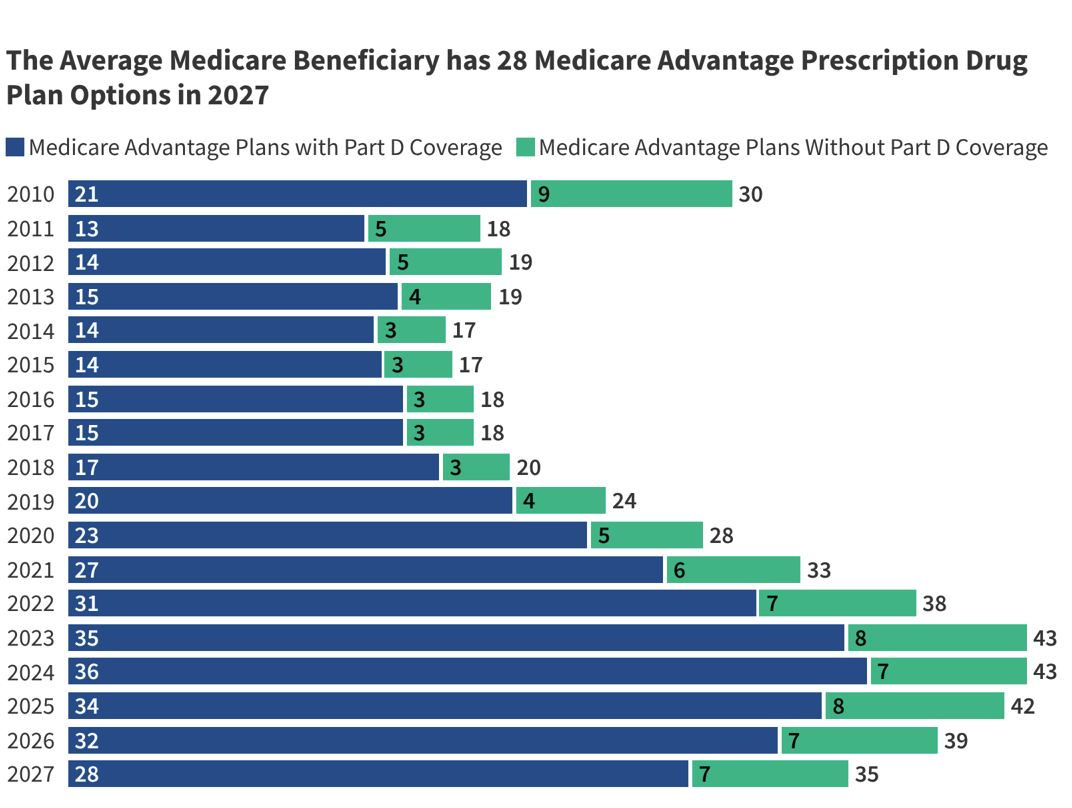
Medicare Advantage prescription drug plan (MA-PD) availability varies widely by county in 2027, with a modest reduction in the share of enrollees with more than 40 plans to choose from and some major insurers exiting many more counties than they are entering. 1 in 5 Medicare beneficiaries (20%) can choose from among more than 40 MA-PDs for 2027, down from 27% in 2026. 1% of all beneficiaries will have no plan option for 2027.
Medicare Open Enrollment and Coverage Options: Key Questions and Answers

Each year, Medicare beneficiaries have an opportunity to make changes to how they receive their Medicare coverage during the nearly 8-week annual open enrollment period, which runs from October 15 through December 7. This brief answers key questions about the Medicare open enrollment period and Medicare coverage options.

Medigap

Medigap Guaranteed Issue Requirements: An Overview of Federal and State Rules

This issue brief analyzes federal and state rules related to guaranteed issue requirements for Medigap policies and how they impact beneficiaries’ access to Medigap, including the implications for Medicare beneficiaries with pre-existing medical conditions and those under age 65 with long-term disabilities.

NEW AND NOTEWORTHY

Decoding Medicare Advantage Coding Intensity

Federal payments to Medicare Advantage plans, and adjustments for health status, have come under increased scrutiny. This brief answers key questions about coding intensity, recent steps taken by CMS, the effects on beneficiaries, and other proposals to improve payment accuracy.

Data Visualization

The Facts About Medicare Spending

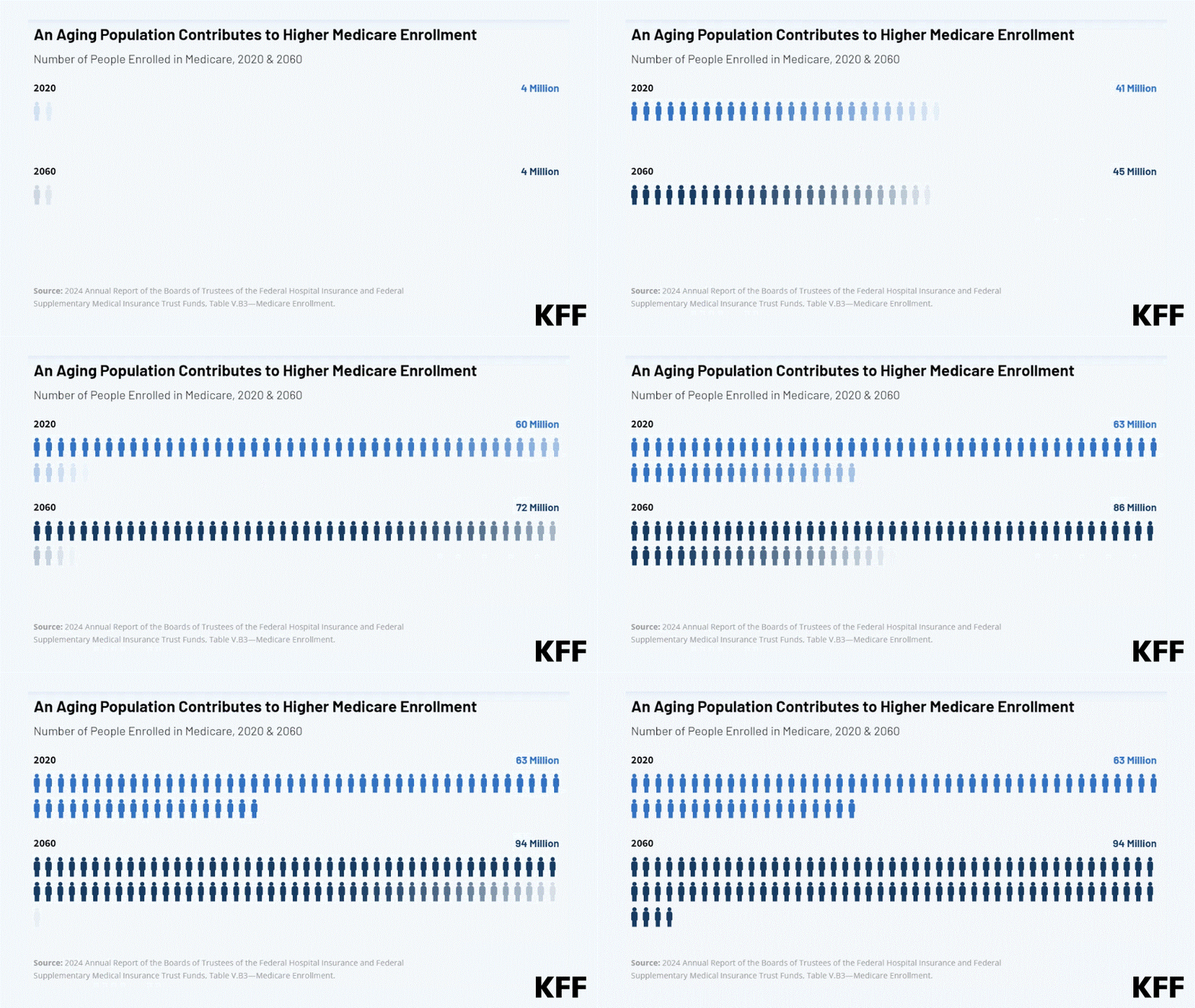
This interactive provides the facts on Medicare spending. Medicare, which serves 67 million people and accounts for 12 percent of the federal budget and 21 percent of national health spending, is often the focus of discussions about health expenditures, health care affordability and the sustainability of federal health programs. Explore data on enrollment growth, Medicare spending trends overall and per person, growth in Medicare spending relative to private insurance, spending on benefits and Medicare Advantage, Part A trust fund solvency challenges, and growth in out-of-pocket spending by beneficiaries.

Read More

Stay informed.

Stay informed.

Filter

261-270 of 1,623 results

  • Transforming Medicare into a Premium Support System: Implications for Beneficiary Premiums

    Report

    This study illustrates why geography would matter for Medicare beneficiaries under a premium support system that relies on a competitive bidding process envisioned under several key Medicare reform proposals. It examines potential changes in the premiums paid by Medicare beneficiaries under a payment approach that caps federal contributions per beneficiary based on the cost of the second lowest-bidding private plan or traditional Medicare, whichever is lower in their area. Under this approach, beneficiaries can choose…

  • Adding an Out-of-Pocket Spending Maximum to Medicare: Implementation Issues and Challenges

    Issue Brief

    In an effort to simplify Medicare’s cost-sharing requirements, provide beneficiaries with catastrophic protection, and achieve program savings, some have proposed to restructure Medicare’s benefit design. Several recent proposals would create a unified deductible for Medicare Parts A and B, simplify cost-sharing requirements above the deductible, and add an annual limit on beneficiary out-of-pocket spending—a benefit feature typical of larger employer plans, but lacking in traditional Medicare. This issue brief describes the options for adding an…

  • Medigap Reforms: Potential Effects of Benefit Restrictions on Medicare Spending and Beneficiary Costs

    Report

    As part of several debt-reduction and Medicare-reform proposals, some policymakers propose to prohibit Medicare supplemental insurance policies (known as Medigap) from covering all of enrollees' out-of-pocket Medicare costs, which some believe leads to higher use of services and higher Medicare spending. Such changes would expose Medigap enrollees – currently about one in six Medicare beneficiaries – to a larger share of Medicare's cost-sharing requirements. This analysis commissioned by the Kaiser Family Foundation examines three potential…

  • Retiree Health Benefits At the Crossroads

    Report

    This issue brief reviews recent trends and developments in employer-sponsored retiree health coverage and examines the impact of recent legislation, such as the Medicare drug benefit and the Affordable Care Act (ACA) on retiree health coverage. The report describes leading strategies employers have been pursuing or considering to limit costs for retiree health benefits. In addition, the report considers the potential implications of proposals aimed at reducing federal spending for retiree health coverage and costs.

  • Report Examines Current Role and Future Outlook of Retiree Health Coverage

    News Release

    A new Kaiser Family Foundation report examines the current role and future outlook of employer-sponsored retiree health benefits for pre-65 and Medicare-eligible retirees. Retiree Health Benefits At the Crossroads reviews recent trends and developments in employer-sponsored retiree health coverage and examines the impact of recent legislation, such as the Medicare drug benefit and the Affordable Care Act, on retiree health coverage. The report describes leading strategies employers have been pursuing to limit costs associated with…

  • What to Know About Medicare Part D Premiums

    Issue Brief

    Changes to the Medicare Part D benefit in the Inflation Reduction Act will mean lower out-of-pocket costs for Part D enrollees but higher costs for Part D plans overall, leading to concerns about possible premium increases. These FAQs provide context for understanding Part D premiums in 2025 and changes in recent years, and describe actions the Centers for Medicare & Medicaid Services (CMS) is taking to mitigate potential premium increases.

  • How Many Older Adults Live in Poverty?

    Issue Brief

    To provide context for understanding the financial needs and well-being of older adults, this brief analyzes the latest data on poverty rates among the 58 million non-institutionalized adults ages 65 and older in the U.S overall, based on both the official poverty measure and the Supplemental Poverty Measure.