Medicare

Medicare Open Enrollment

Medicare Advantage Plan Availability Varies Widely by County for 2027

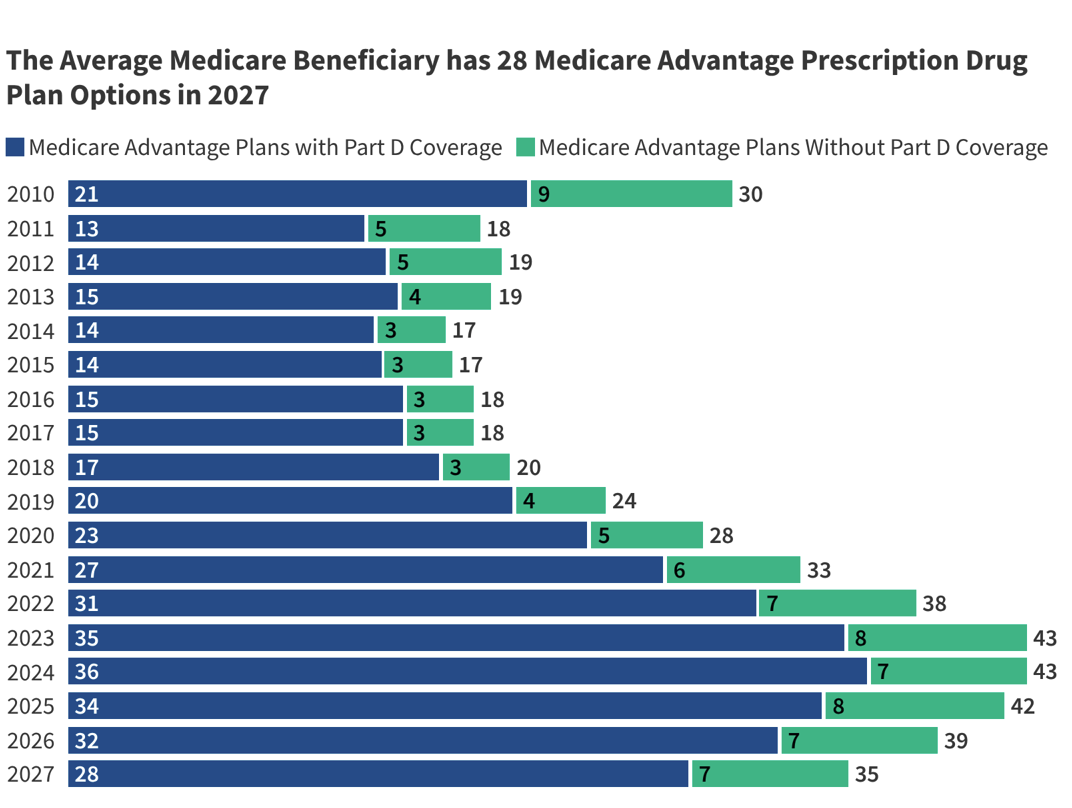
Medicare Advantage prescription drug plan (MA-PD) availability varies widely by county in 2027, with a modest reduction in the share of enrollees with more than 40 plans to choose from and some major insurers exiting many more counties than they are entering. 1 in 5 Medicare beneficiaries (20%) can choose from among more than 40 MA-PDs for 2027, down from 27% in 2026. 1% of all beneficiaries will have no plan option for 2027.
Medicare Open Enrollment and Coverage Options: Key Questions and Answers

Each year, Medicare beneficiaries have an opportunity to make changes to how they receive their Medicare coverage during the nearly 8-week annual open enrollment period, which runs from October 15 through December 7. This brief answers key questions about the Medicare open enrollment period and Medicare coverage options.

NEW AND NOTEWORTHY

Decoding Medicare Advantage Coding Intensity

Federal payments to Medicare Advantage plans, and adjustments for health status, have come under increased scrutiny. This brief answers key questions about coding intensity, recent steps taken by CMS, the effects on beneficiaries, and other proposals to improve payment accuracy.

Data Visualization

The Facts About Medicare Spending

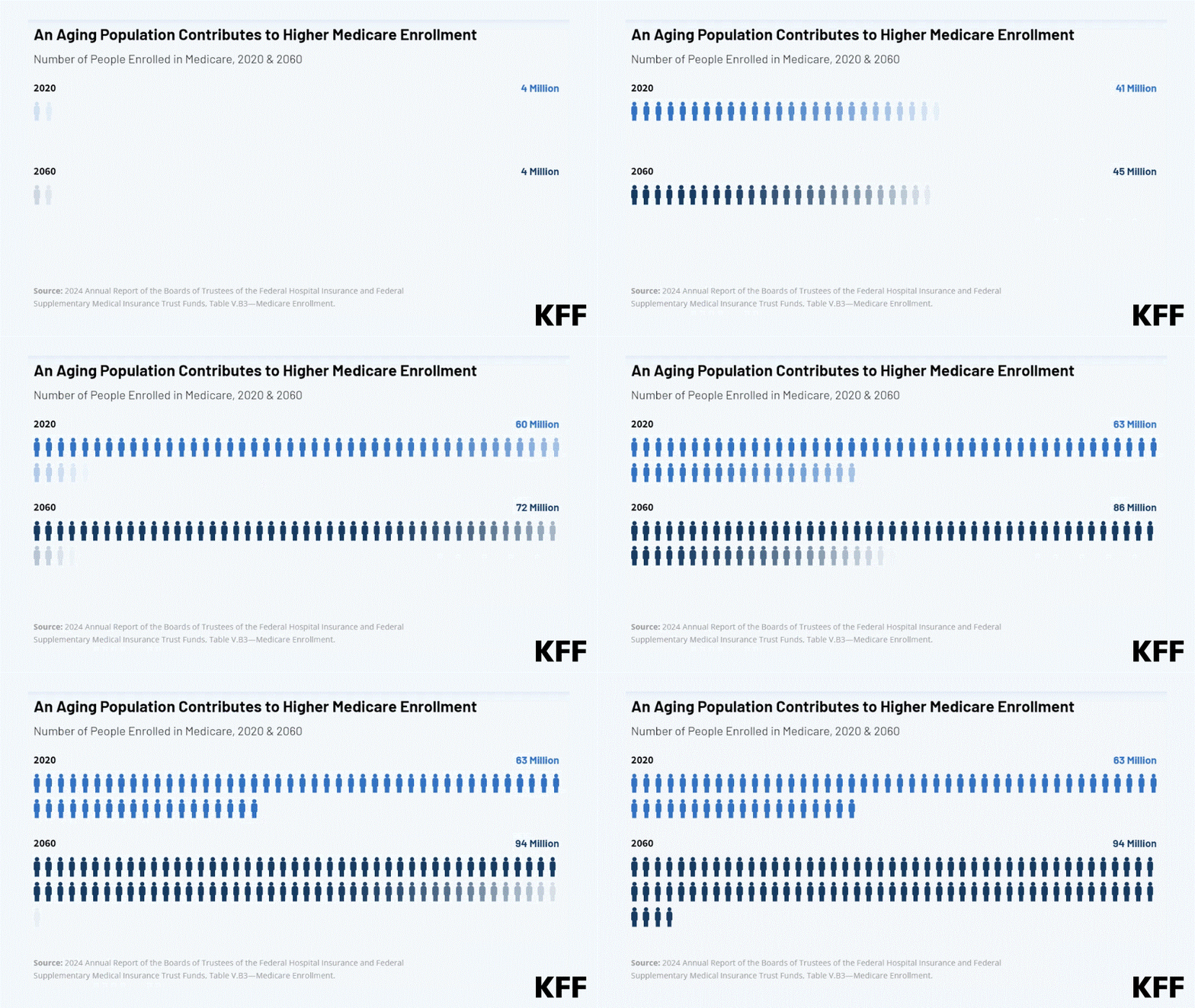
This interactive provides the facts on Medicare spending. Medicare, which serves 67 million people and accounts for 12 percent of the federal budget and 21 percent of national health spending, is often the focus of discussions about health expenditures, health care affordability and the sustainability of federal health programs. Explore data on enrollment growth, Medicare spending trends overall and per person, growth in Medicare spending relative to private insurance, spending on benefits and Medicare Advantage, Part A trust fund solvency challenges, and growth in out-of-pocket spending by beneficiaries.

Read More

Stay informed.

Stay informed.

Filter

1,611-1,620 of 1,622 results

  • Supreme Court Decision Limiting the Authority of Federal Agencies Could Have Far-Reaching Impacts for Health Policy

    Issue Brief

    On June 28, 2024, the U.S. Supreme Court overturned a longstanding legal precedent that required federal courts to defer to reasonable agency interpretation when statutes are ambiguous. The decision will shift many policy decisions from federal agencies to federal judges, with implications for health policy that will reverberate for years to come. This issue brief examines the decision and assesses what’s ahead.

  • Medicare Beneficiaries Are Not Luddites

    From Drew Altman

    In a new column, President and CEO Dr. Drew Altman discusses new KFF survey data that shows that a surprising share of older adults with Medicare are using health tech regularly, and a solid majority support many of CMS’ goals to make it more widely available. But there are also big income gaps in the use of health tech, and concerns about AI, privacy, and other barriers to rapid and more widespread adoption. “Apparently… a…

  • A Guide to the Role of Health in the Midterms

    From Drew Altman

    In a new column, President and CEO Dr. Drew Altman says health care costs are playing a significant role in the midterms as one dimension of voters’ concerns about cost of living, and explains why pollsters, analysts, and candidates should look at it that way, and not as a separate voting issue. He writes, “The ‘issue’ that matters most in this election is cost of living and the cost of health care is a central…

  • Implementation Dates for 2025 Budget Reconciliation Law

    Feature

    This searchable timeline shows the implementation dates for the health care provisions included in the 2025 federal budget reconciliation law, previously known as "One Big Beautiful Bill Act." It includes provisions related to Medicaid, the Affordable Care Act, Medicare and Health Savings Accounts (HSAs).