Medicare

Medicare Open Enrollment

NEW AND NOTEWORTHY

Decoding Medicare Advantage Coding Intensity

Federal payments to Medicare Advantage plans, and adjustments for health status, have come under increased scrutiny. This brief answers key questions about coding intensity, recent steps taken by CMS, the effects on beneficiaries, and other proposals to improve payment accuracy.

Data Visualization

The Facts About Medicare Spending

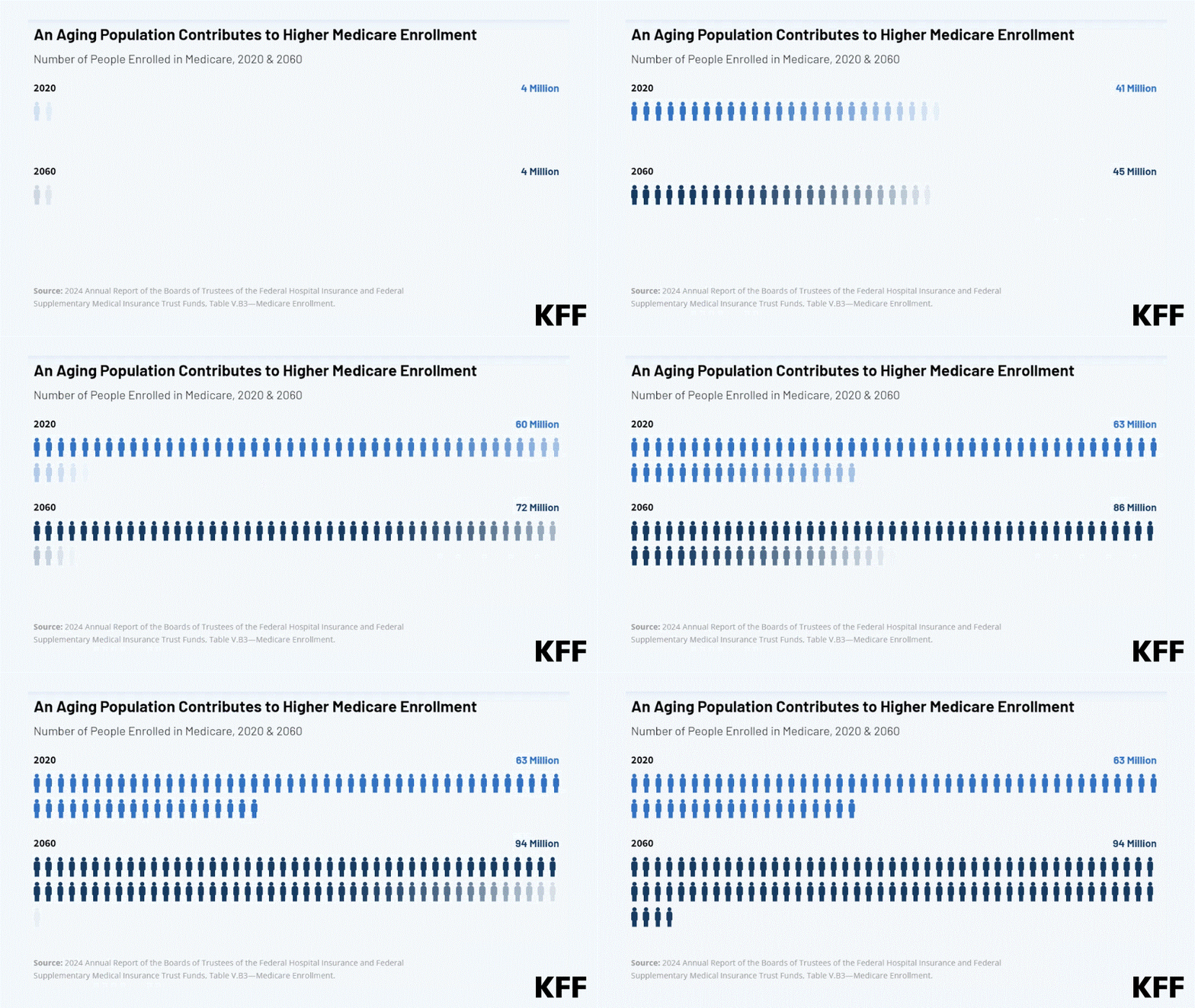
This interactive provides the facts on Medicare spending. Medicare, which serves 67 million people and accounts for 12 percent of the federal budget and 21 percent of national health spending, is often the focus of discussions about health expenditures, health care affordability and the sustainability of federal health programs. Explore data on enrollment growth, Medicare spending trends overall and per person, growth in Medicare spending relative to private insurance, spending on benefits and Medicare Advantage, Part A trust fund solvency challenges, and growth in out-of-pocket spending by beneficiaries.

Read More

Stay informed.

Stay informed.

Filter

1,591-1,600 of 1,622 results

  • What Could a Medicaid Per Capita Cap Mean for Low-Income People on Medicare?

    Issue Brief

    Policymakers are currently considering proposals that would fundamentally change the structure and financing of Medicaid, and potentially affect 11 million people on Medicare. This brief discusses the potential implications of Medicaid per capita cap or block grant proposals for the 11 million low-income seniors and people with disabilities on Medicare. It also describes how the per capita cap model proposed in the American Health Care Act could potentially affect low-income people on Medicare who receive…

  • State Profiles Highlight Variations in How Many Low-Income Medicare Beneficiaries Get Additional Help with Their Medicare Costs

    News Release

    Medicare beneficiaries with low incomes and modest assets can qualify for additional financial help with Medicare premiums and cost sharing through both the Medicare Savings Programs and Medicare’s Part D Low-Income Subsidy for prescription drug coverage. A new analysis and collection of interactive profiles highlight variations across states in the number and characteristics of beneficiaries who receive this additional financial assistance, including race and ethnicity, gender, and age. These findings reflect differences between states such…

  • Most Office-Based Physicians Accept New Patients, Including Patients With Medicare and Private Insurance

    Issue Brief

    This brief examines the share of non-pediatric office-based physicians accepting new patients with Medicare or private insurance and how these rates have changed over time and vary by physician specialties, geographic areas, and physician and practice characteristics across Medicare and private insurance. This analysis further examines the extent to which non-pediatric physicians are opting out of Medicare, by specialty and state.

  • Examining Prior Authorization in Health Insurance

    Policy Watch

    This post explains what's known about how insurers use prior authorization as a tool to control costs and encourage cost-effective care, the state and federal laws that govern it, and ongoing policy debates over efforts to impose standards to limit or regulate its use.

  • Amid the COVID-19 Pandemic, Medicare Spending on Skilled Nursing Facilities Increased More than 4% Despite an Overall Decline in Utilization

    Issue Brief

    Medicare spending for skilled nursing facilities increased in 2020 despite an overall decrease in the number of Medicare beneficiaries using SNF services. The higher spending is explained by longer and more expensive SNF stays in 2020 compared to 2019, both of which increased more sharply for Medicare beneficiaries under the age of 65 than for older Medicare SNF users.

  • Two New KFF Analyses Show That a Relatively Small Share of Medicare Beneficiaries Compared Plan Options Or Switched Plans During a Recent Open Enrollment Period

    News Release

    As Medicare’s annual open enrollment period gets underway, two new analyses from KFF suggest that a relatively small share of the nation’s 65 million Medicare beneficiaries will shop around among the many coverage options for 2023 or switch plans. That decision could have a significant impact on enrollees’ coverage and costs. Results from one new KFF analysis show that only 3 in 10 beneficiaries (29%) compared their current plan with other Medicare plans offered during…

  • Summary of Costs and Impact of the Prescription Drug Provisions in the Build Back Better Act

    News Release

    As the House-passed Build Back Better Act moves to the Senate, a new explainer from KFF summarizes the key prescription drug provisions within the broader budget reconciliation bill. These provisions would lower prescription drug costs paid by people with Medicare and private insurance and curb drug spending by the federal government and private payers. The Congressional Budget Office estimates federal budget savings from the drug pricing provisions would be $297 billion over 10 years. Although…

  • Medicare State Profiles

    Interactive

    These state profiles capture the variations across states in the number and characteristics of Medicare beneficiaries through the Medicare Savings Programs and Medicare’s Part D Low-Income Subsidy.

  • Are Medicare Advantage Insurers Covering the Cost of At-Home COVID-19 Tests?

    Policy Watch

    The Biden Administration's requirement for private insurers to cover the cost of at-home rapid COVID-19 tests for their enrollees does not apply to Medicare. Medicare Advantage plans (offered by private insurers) have the option to cover at-home tests but are not required to do so. This policy watch examines whether some of the largest private Medicare Advantage plans are covering the cost of at-home rapid tests for COVID-19.