Medicare

Medicare Open Enrollment

Medicare Advantage Plan Availability Varies Widely by County for 2027

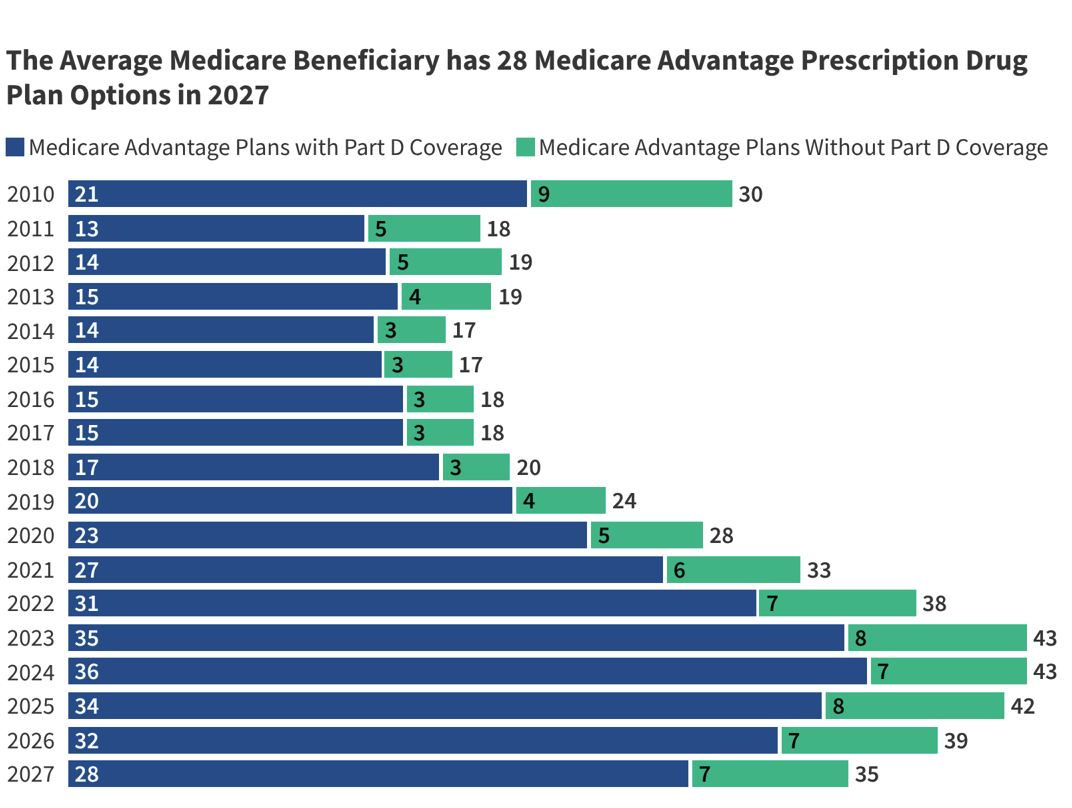
Medicare Advantage prescription drug plan (MA-PD) availability varies widely by county in 2027, with a modest reduction in the share of enrollees with more than 40 plans to choose from and some major insurers exiting many more counties than they are entering. 1 in 5 Medicare beneficiaries (20%) can choose from among more than 40 MA-PDs for 2027, down from 27% in 2026. 1% of all beneficiaries will have no plan option for 2027.
Medicare Open Enrollment and Coverage Options: Key Questions and Answers

Each year, Medicare beneficiaries have an opportunity to make changes to how they receive their Medicare coverage during the nearly 8-week annual open enrollment period, which runs from October 15 through December 7. This brief answers key questions about the Medicare open enrollment period and Medicare coverage options.

Medigap

Medigap Guaranteed Issue Requirements: An Overview of Federal and State Rules

This issue brief analyzes federal and state rules related to guaranteed issue requirements for Medigap policies and how they impact beneficiaries’ access to Medigap, including the implications for Medicare beneficiaries with pre-existing medical conditions and those under age 65 with long-term disabilities.

NEW AND NOTEWORTHY

Decoding Medicare Advantage Coding Intensity

Federal payments to Medicare Advantage plans, and adjustments for health status, have come under increased scrutiny. This brief answers key questions about coding intensity, recent steps taken by CMS, the effects on beneficiaries, and other proposals to improve payment accuracy.

Data Visualization

The Facts About Medicare Spending

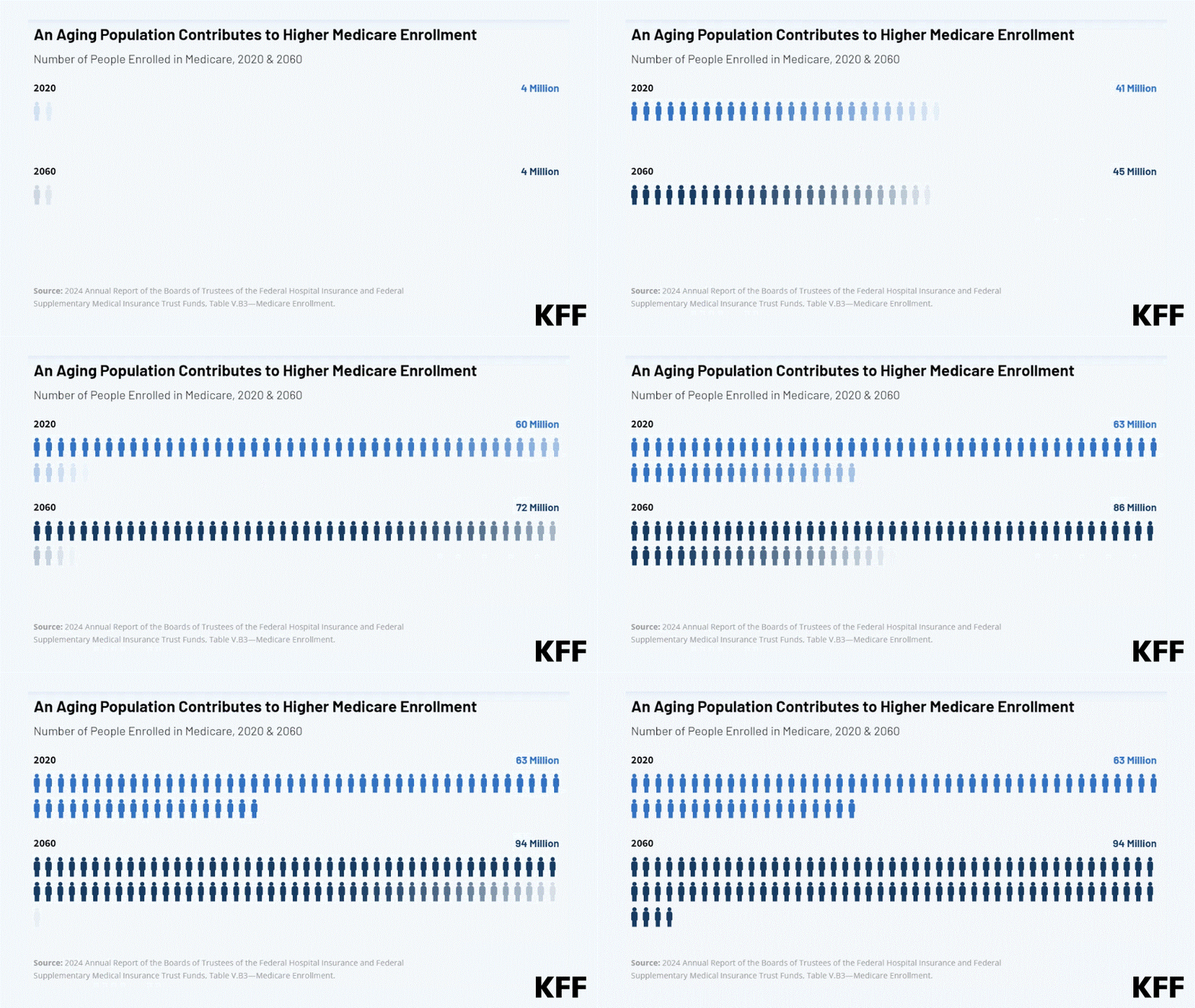
This interactive provides the facts on Medicare spending. Medicare, which serves 67 million people and accounts for 12 percent of the federal budget and 21 percent of national health spending, is often the focus of discussions about health expenditures, health care affordability and the sustainability of federal health programs. Explore data on enrollment growth, Medicare spending trends overall and per person, growth in Medicare spending relative to private insurance, spending on benefits and Medicare Advantage, Part A trust fund solvency challenges, and growth in out-of-pocket spending by beneficiaries.

Read More

Stay informed.

Stay informed.

Filter

1,491-1,500 of 1,623 results

  • FAQs: What’s the Latest on IPAB?

    Issue Brief

    The Independent Payment Advisory Board was authorized by the Affordable Care Act to help slow the growth in Medicare spending. These FAQs address common questions about IPAB, including how it was designed to operate and the implications of eliminating it.

  • Kaiser Health Tracking Poll – November 2017: The Politics of Health Insurance Coverage, ACA Open Enrollment

    Feature

    This month marks the start of the ACA's fifth open enrollment period and finds three in ten of the public saying they haven't heard anything at all about the current open enrollment period. Despite their overall views of the ACA, the majority of the public (61 percent) – including most Democrats (71 percent), independents (58 percent), and half of Republicans (52 percent) – say that because President Trump and Republicans in Congress are now in…

  • 1 in 3 People in Medicare is Now in Medicare Advantage, With Enrollment Still Concentrated Among a Handful of Insurers 

    News Release

    For the first time, 1 in every 3 people with Medicare is enrolled in Medicare Advantage, the private Medicare plans that have played an increasingly large role in the Medicare program over the past decade, according to a new analysis from the Kaiser Family Foundation. Medicare Advantage enrollment has more than tripled since 2004, reaching 19 million, or 33 percent of enrollees, in 2017, the analysis shows. That milestone is up from 17.6 million beneficiaries…

  • What Are the Implications for Medicare of the American Health Care Act and the Better Care Reconciliation Act?

    Issue Brief

    This issue brief highlights a major implication of the American Health Care Act and Better Care Reconciliation Act for Medicare. Both bills would repeal the Affordable Care Act provision to increase the payroll tax on high-income earners. Repealing this surtax would move up the insolvency date of the Medicare Part A trust fund by 2 years, from 2028 to 2026, and also worsens the program's long-term financial outlook.

  • Private Contracts Between Doctors and Their Medicare Patients:  Current Law, Proposed Changes and Implications for Beneficiaries

    News Release

    Under current law, physicians may choose to privately contract with their Medicare patients, though very few do.  Under such arrangements, doctors can charge their Medicare patients any amount they determine is appropriate for their services rather than be bound to Medicare’s set fees and balance billing limits, so long as the patients agree, and the contract complies with requirements in current law designed to protect consumers. Some Republicans in Congress have proposed to ease restrictions…

  • 10 Essential Facts About Medicare’s Financial Outlook

    Issue Brief

    Medicare, the nation’s federal health insurance program for 57 million people age 65 and over and younger people with disabilities, often plays a major role in federal health policy and budget discussions. Medicare is likely to be back on the federal policy agenda as Congress debates repealing and replacing the ACA, and also if policymakers turn their attention to reducing entitlement spending as part of efforts to reduce the growing federal budget deficit and debt.…

  • Do You Have the Facts About Medicare’s Financial Outlook for the Future?

    News Release

    Medicare is likely to be back on the federal policy agenda this year as Congress and President Trump pursue repealing and replacing the Affordable Care Act, and potentially consider options to reduce federal spending. When talking about Medicare, the nation’s federal health insurance program for 57 million people age 65 and over and younger people with disabilities, some policymakers often express concern that the program will soon be “bankrupt” and that rising spending is unsustainable.…

  • The Republican Health-care Plan the Country Isn’t Debating

    From Drew Altman

    In this Washington Post op-ed, Drew Altman discusses how Republicans' ideas to change Medicaid and Medicare and repeal the Affordable Care Act would fundamentally change the federal role in health, calling it: the biggest change in health we are NOT debating.

  • Medicaid’s Role for Medicare Beneficiaries

    Issue Brief

    This brief outlines Medicaid's role for Medicare beneficiaries. It describes the role that Medicaid plays for 10 million Medicare beneficiaries to help inform upcoming debates about proposals to restructure Medicaid financing in ways that could reduce federal funding.