Medicare

NEW AND NOTEWORTHY

Decoding Medicare Advantage Coding Intensity

Federal payments to Medicare Advantage plans, and adjustments for health status, have come under increased scrutiny. This brief answers key questions about coding intensity, recent steps taken by CMS, the effects on beneficiaries, and other proposals to improve payment accuracy.

Data Visualization

The Facts About Medicare Spending

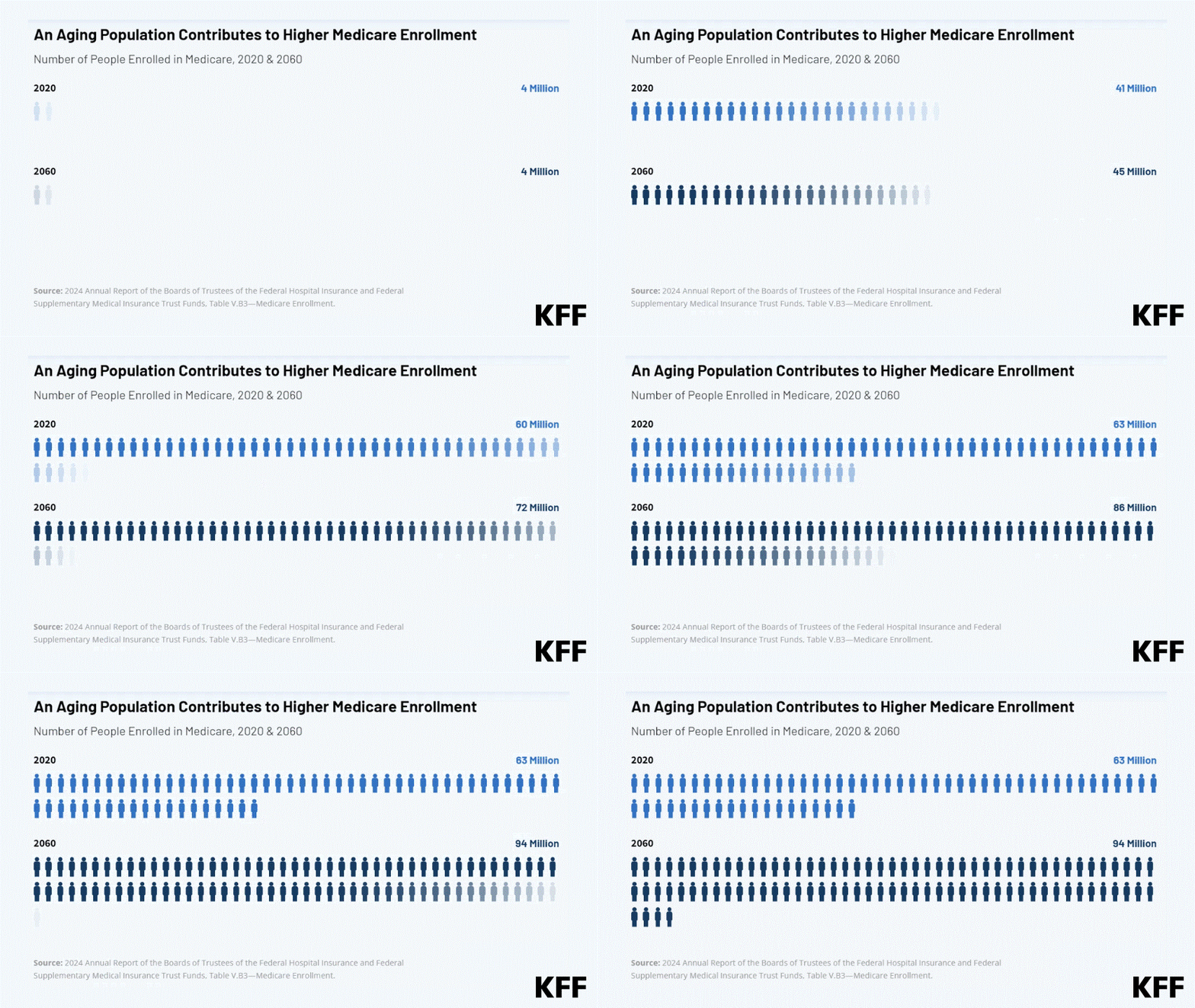
This interactive provides the facts on Medicare spending. Medicare, which serves 67 million people and accounts for 12 percent of the federal budget and 21 percent of national health spending, is often the focus of discussions about health expenditures, health care affordability and the sustainability of federal health programs. Explore data on enrollment growth, Medicare spending trends overall and per person, growth in Medicare spending relative to private insurance, spending on benefits and Medicare Advantage, Part A trust fund solvency challenges, and growth in out-of-pocket spending by beneficiaries.

Read More

Stay informed.

Stay informed.

Filter

1,461 - 1,470 of 1,613 Results

  • What Are the Implications for Medicare of the American Health Care Act and the Better Care Reconciliation Act?

    Issue Brief

    This issue brief highlights a major implication of the American Health Care Act and Better Care Reconciliation Act for Medicare. Both bills would repeal the Affordable Care Act provision to increase the payroll tax on high-income earners. Repealing this surtax would move up the insolvency date of the Medicare Part A trust fund by 2 years, from 2028 to 2026, and also worsens the program's long-term financial outlook.

  • Many More Counties Lack Medicare Advantage Plans Today than are at Risk for Lacking an ACA Marketplace Insurer in 2018

    News Release

    A new analysis from the Kaiser Family Foundation finds that 147 counties lack Medicare Advantage plans – many more than the 19 counties expected to lack an Affordable Care Act (ACA) marketplace insurer next year. Yet Medicare Advantage, the private plans that cover a third of all Medicare beneficiaries, is often described as an example of a robust insurance market, while some policymakers say the “bare” counties under the ACA are evidence that the law…

  • What Do We Know About Health Care Access and Quality in Medicare Advantage Versus the Traditional Medicare Program?

    Report

    As the number of Medicare Advantage enrollees continues to climb, there is growing interest in understanding how the care provided to Medicare beneficiaries in Medicare Advantage plans differs from the care received by beneficiaries in traditional Medicare. This literature review of more than 40 studies synthesizes the evidence to date comparing access and quality for beneficiaries in Medicare Advantage plans and traditional Medicare.

  • How Do Quality and Access Compare In Medicare Advantage Versus Traditional Medicare?

    News Release

    Today a record three in 10 Medicare beneficiaries are enrolled in Medicare Advantage health plans, mainly HMOs and PPOs, which are paid by the government to provide Medicare benefits to their enrollees. Given the projected rise in Medicare Advantage enrollment, an important question for both consumers and policymakers is how quality and access to care compares for beneficiaries in traditional Medicare versus Medicare Advantage plans. To try to answer this question, the Kaiser Family Foundation…

  • The Role of Medicare and the Indian Health Service for American Indians and Alaska Natives: Health, Access and Coverage

    Report

    This report examines the role of both Medicare and the Indian Health Service (IHS) in providing access to health care for about 650,000 American Indians and Alaska Natives who are age 65 and older or who have permanent disabilities. While Medicare provides important health care coverage for most in this group, its relatively high cost-sharing and gaps in benefits can be problematic for American Indians and Alaska Native Medicare beneficiaries who do not have additional…

  • How Much Does Medicare Spend on Insulin?

    Issue Brief

    The price of insulin, used by people with both Type 1 and Type 2 diabetes to control blood glucose levels, has come under increasing scrutiny as policymakers grapple with rising drug costs. This data note finds spending on insulin by Medicare and beneficiaries enrolled in private Part D drug plans has increased sharply between 2007 and 2017.

  • Do People Who Sign Up for Medicare Advantage Plans Have Lower Medicare Spending?

    Issue Brief

    The analysis finds that people who switched from traditional Medicare to Medicare Advantage in 2016 had health spending in 2015 that was $1,253 less, on average, than the average spending for beneficiaries who remained in traditional Medicare (after adjusting for health risk). The findings suggest that the current payment method may systematically overestimate expected costs of Medicare Advantage enrollees. Adjusting payments to reflect Medicare Advantage enrollees’ prior use of health services could potentially lower total…