Medicare

Medicare Open Enrollment

Medicare Advantage Plan Availability Varies Widely by County for 2027

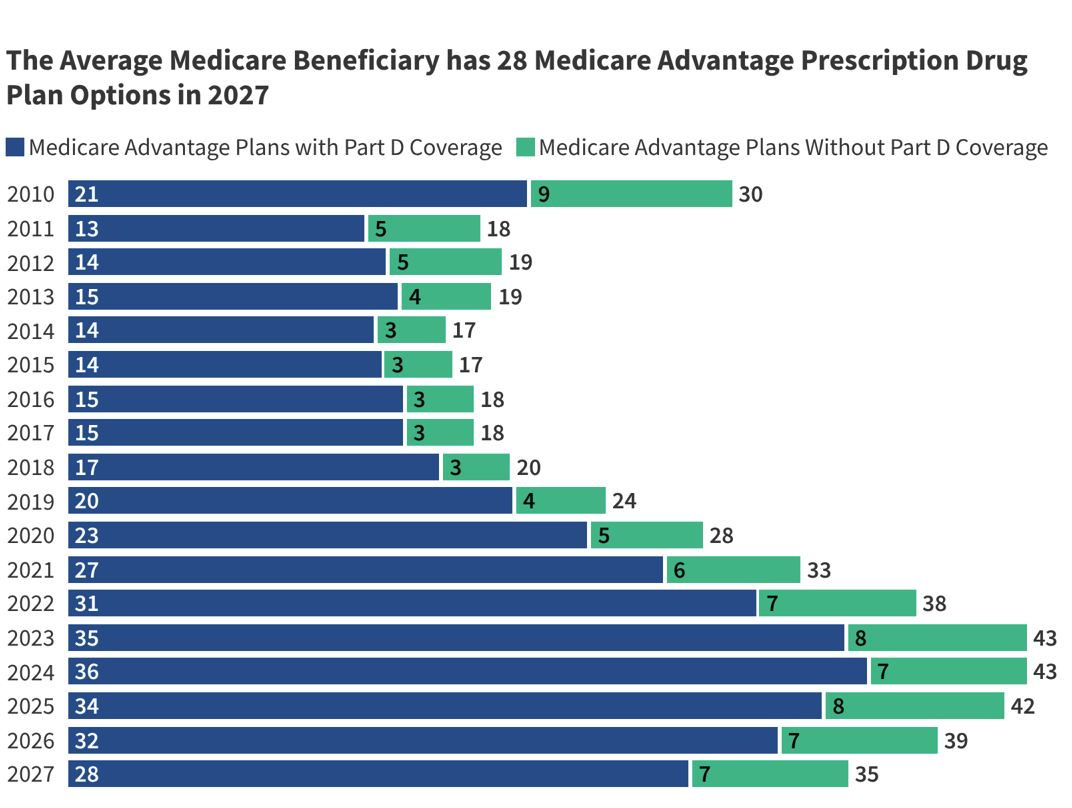
Medicare Advantage prescription drug plan (MA-PD) availability varies widely by county in 2027, with a modest reduction in the share of enrollees with more than 40 plans to choose from and some major insurers exiting many more counties than they are entering. 1 in 5 Medicare beneficiaries (20%) can choose from among more than 40 MA-PDs for 2027, down from 27% in 2026. 1% of all beneficiaries will have no plan option for 2027.
Medicare Open Enrollment and Coverage Options: Key Questions and Answers

Each year, Medicare beneficiaries have an opportunity to make changes to how they receive their Medicare coverage during the nearly 8-week annual open enrollment period, which runs from October 15 through December 7. This brief answers key questions about the Medicare open enrollment period and Medicare coverage options.

Medigap

Medigap Guaranteed Issue Requirements: An Overview of Federal and State Rules

This issue brief analyzes federal and state rules related to guaranteed issue requirements for Medigap policies and how they impact beneficiaries’ access to Medigap, including the implications for Medicare beneficiaries with pre-existing medical conditions and those under age 65 with long-term disabilities.

NEW AND NOTEWORTHY

Decoding Medicare Advantage Coding Intensity

Federal payments to Medicare Advantage plans, and adjustments for health status, have come under increased scrutiny. This brief answers key questions about coding intensity, recent steps taken by CMS, the effects on beneficiaries, and other proposals to improve payment accuracy.

Data Visualization

The Facts About Medicare Spending

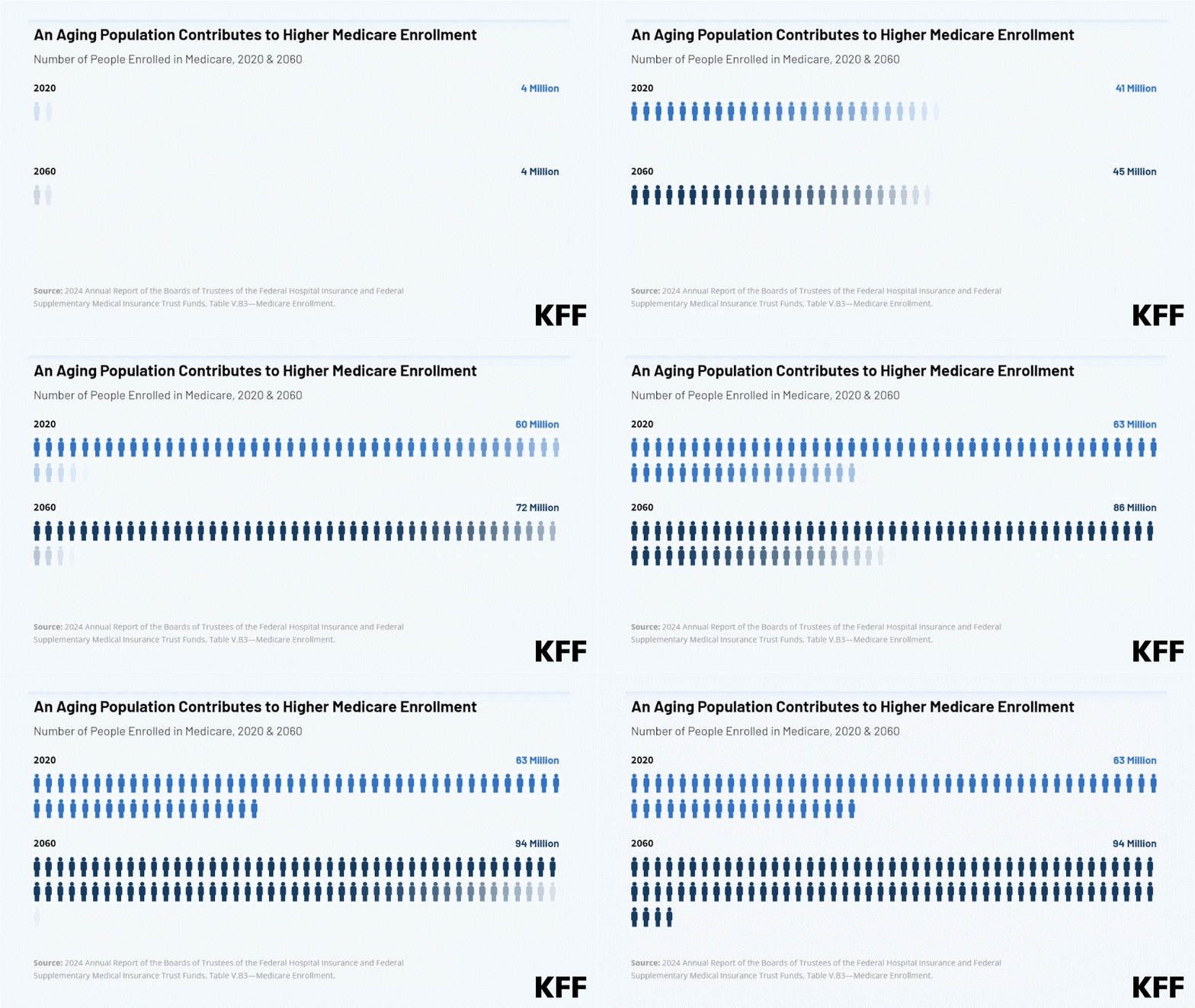
This interactive provides the facts on Medicare spending. Medicare, which serves 67 million people and accounts for 12 percent of the federal budget and 21 percent of national health spending, is often the focus of discussions about health expenditures, health care affordability and the sustainability of federal health programs. Explore data on enrollment growth, Medicare spending trends overall and per person, growth in Medicare spending relative to private insurance, spending on benefits and Medicare Advantage, Part A trust fund solvency challenges, and growth in out-of-pocket spending by beneficiaries.

Read More

Stay informed.

Stay informed.

Filter

1,451-1,460 of 1,624 results

  • Health Affairs Blog: Medicare Premium Support Proposals Could Increase Costs for Today’s Seniors, Despite Assurances

    Perspective

    In a Health Affairs blog post, Tricia Neuman and Gretchen Jacobson of the Kaiser Family Foundation examine how proposals to convert Medicare to a premium support system could lead to higher Medicare premiums and cost-sharing for seniors currently enrolled in the program, even if today’s seniors are “grandfathered” and the new system is phased-in for people ages 55 and younger. The blog post explains how today’s seniors could face higher health care costs, if older…

  • What Could a Medicaid Per Capita Cap Mean for Low-Income People on Medicare?

    Issue Brief

    Policymakers are currently considering proposals that would fundamentally change the structure and financing of Medicaid, and potentially affect 11 million people on Medicare. This brief discusses the potential implications of Medicaid per capita cap or block grant proposals for the 11 million low-income seniors and people with disabilities on Medicare. It also describes how the per capita cap model proposed in the American Health Care Act could potentially affect low-income people on Medicare who receive…

  • Do People Who Sign Up for Medicare Advantage Plans Have Lower Medicare Spending?

    Issue Brief

    The analysis finds that people who switched from traditional Medicare to Medicare Advantage in 2016 had health spending in 2015 that was $1,253 less, on average, than the average spending for beneficiaries who remained in traditional Medicare (after adjusting for health risk). The findings suggest that the current payment method may systematically overestimate expected costs of Medicare Advantage enrollees. Adjusting payments to reflect Medicare Advantage enrollees’ prior use of health services could potentially lower total…

  • Poll: Democrats Say They Are Hearing Enough From Presidential Candidates About Medicare-for-All and Expanding Coverage, But Want Them to Talk More about Health Costs and Women’s Health Care

    News Release

    Heading into tonight’s Democratic primary debate, most Democrats and Democratic-leaning independents say the candidates are spending the right amount or too much time talking about ways to provide coverage to more Americans and Medicare-for-all, two topics that have dominated health care discussions in the past three rounds of Democratic debates, the latest KFF Health Tracking Poll finds. In contrast, large shares of Democrats and Democratic-leaning independents say that the presidential candidates are spending too little…

  • Medicare-for-All’s Popularity May Have Peaked

    From Drew Altman

    In this Axios column, Drew Altman looks at the polling trend on support for Medicare-for-all suggesting it may have crested as criticism has mounted. He considers what it means for the Democratic primary and continued debate for Medicare-for-all and other expansion proposals.

  • JAMA Forum: Medicare-For-All or Medicare-For-More?

    Perspective

    In this May 2019 post for The JAMA forum, Larry Levitt examines how the early discussion and positioning among the presidential candidates offers a glimpse into how a debate about Medicare-for-all might play out.

  • Less Than One-Third of New Medicare Beneficiaries Enrolled in Medicare Advantage During Their First Year on Medicare 

    News Release

    Twenty-nine percent of new beneficiaries chose to enroll in Medicare Advantage during their first year in Medicare in 2016, finds a new KFF analysis. That level generally matches the overall share of beneficiaries who opted for Medicare Advantage that year, but does not support the view that the aging Baby Boom generation, having had more experience with HMOs and PPOs during their working years, would select the private plans over traditional Medicare at relatively high…

  • Explainer Video Breaks Down Prescription Drug Rebates and Why They Matter in the Debate About Prescription Drug Costs

    News Release

    A new KFF animation explains how rebates for prescription drugs work, including how they are determined, who benefits from them, how they affect spending by insurers and consumers and the role of pharmacy benefit managers in the process. The Trump Administration had proposed banning such rebates in Medicare Part D, but dropped the proposal amid concerns that it would lead to higher costs for insurers, consumers and the Medicare program. It is still possible that…