Medicare

Medicare Open Enrollment

Medicare Advantage Plan Availability Varies Widely by County for 2027

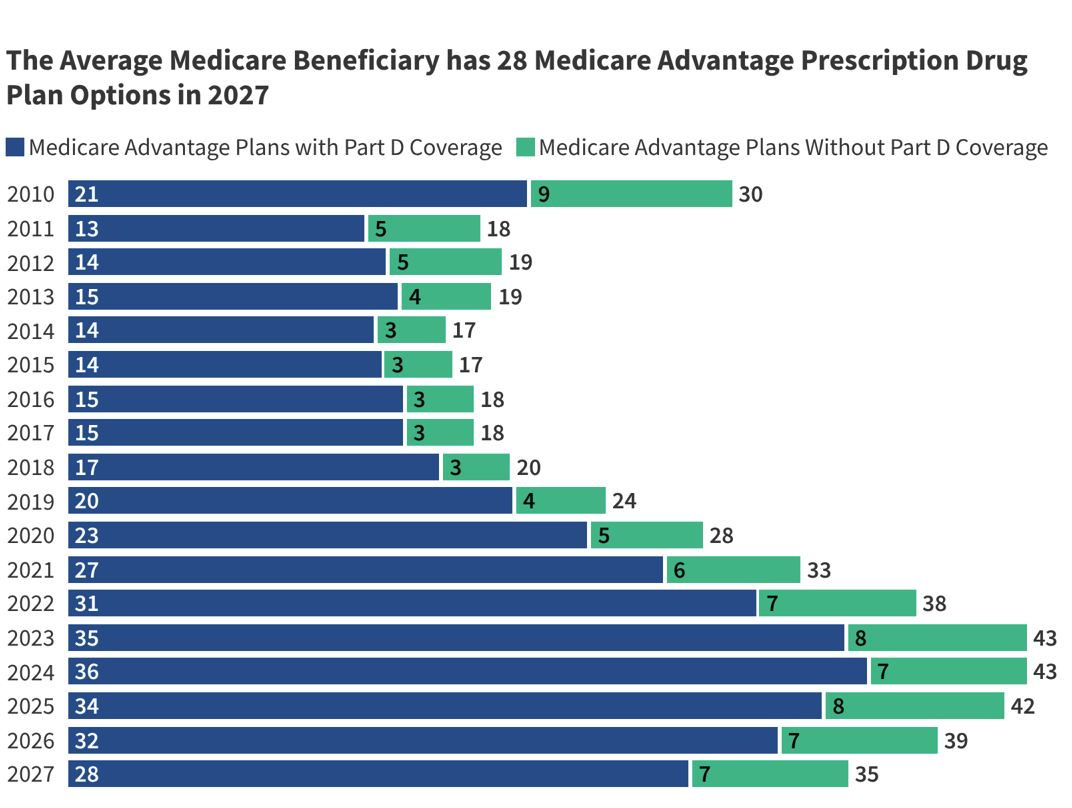
Medicare Advantage prescription drug plan (MA-PD) availability varies widely by county in 2027, with a modest reduction in the share of enrollees with more than 40 plans to choose from and some major insurers exiting many more counties than they are entering. 1 in 5 Medicare beneficiaries (20%) can choose from among more than 40 MA-PDs for 2027, down from 27% in 2026. 1% of all beneficiaries will have no plan option for 2027.
Medicare Open Enrollment and Coverage Options: Key Questions and Answers

Each year, Medicare beneficiaries have an opportunity to make changes to how they receive their Medicare coverage during the nearly 8-week annual open enrollment period, which runs from October 15 through December 7. This brief answers key questions about the Medicare open enrollment period and Medicare coverage options.

Medigap

Medigap Guaranteed Issue Requirements: An Overview of Federal and State Rules

This issue brief analyzes federal and state rules related to guaranteed issue requirements for Medigap policies and how they impact beneficiaries’ access to Medigap, including the implications for Medicare beneficiaries with pre-existing medical conditions and those under age 65 with long-term disabilities.

NEW AND NOTEWORTHY

Decoding Medicare Advantage Coding Intensity

Federal payments to Medicare Advantage plans, and adjustments for health status, have come under increased scrutiny. This brief answers key questions about coding intensity, recent steps taken by CMS, the effects on beneficiaries, and other proposals to improve payment accuracy.

Data Visualization

The Facts About Medicare Spending

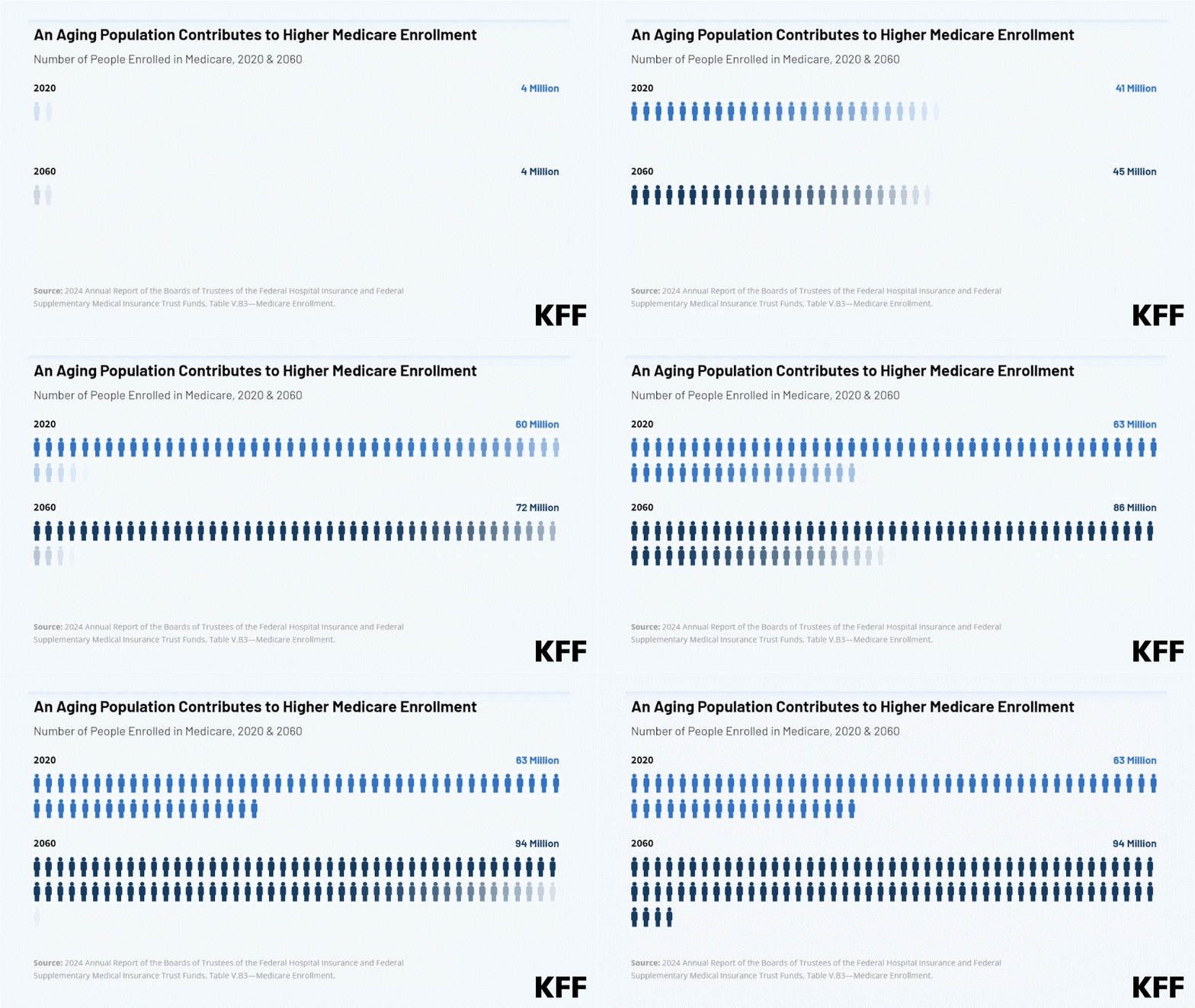
This interactive provides the facts on Medicare spending. Medicare, which serves 67 million people and accounts for 12 percent of the federal budget and 21 percent of national health spending, is often the focus of discussions about health expenditures, health care affordability and the sustainability of federal health programs. Explore data on enrollment growth, Medicare spending trends overall and per person, growth in Medicare spending relative to private insurance, spending on benefits and Medicare Advantage, Part A trust fund solvency challenges, and growth in out-of-pocket spending by beneficiaries.

Read More

Stay informed.

Stay informed.

Filter

1,291-1,300 of 1,623 results

  • Toplines: Kaiser Health Tracking Poll — September 2009

    Poll Finding

    This document contains the toplines from the September Health Tracking Poll. The survey was designed and analyzed by public opinion researchers at the Kaiser Family Foundation and was conducted September 11 through September 18, 2009, among a nationally representative random sample of 1,203 adults ages 18 and older. Telephone interviews conducted by landline (801) and cell phone (402, including 147 who had no landline telephone) were carried out in English and Spanish. The margin of…

  • Toplines: Kaiser Health Tracking Poll — December 2009

    Poll Finding

    This document contains the toplines from the December Health Tracking Poll. The survey was designed and analyzed by public opinion researchers at the Kaiser Family Foundation and was conducted December 7 through December 13, 2009, among a nationally representative random sample of 1,204 adults ages 18 and older. Telephone interviews conducted by landline (801) and cell phone (403, including 111 who had no landline telephone) were carried out in English and Spanish. The margin of…

  • Medicare Spending and Use of Medical Services for Beneficiaries in Nursing Homes and Other Long‐Term Care Facilities: A Potential for Achieving Medicare Savings and Improving the Quality of Care

    Report

    Medicare Spending and Use of Medical Services for Beneficiaries in Nursing Homes and Other Long‐Term Care Facilities: A Potential for Achieving Medicare Savings and Improving the Quality of Care This report documents the relatively high rates of hospital stays, emergency room visits and skilled nursing facility admissions among long-term care facility residents. It finds that Medicare per capita spending for Medicare beneficiaries living in nursing homes, assisted-living centers and other long-term care facilities, $14,538 in…

  • Reaching for the Stars: Quality Ratings of Medicare Advantage Plans, 2011

    Issue Brief

    New: Medicare Advantage Plan Star Ratings and Bonus Payments in 2012 In 2012, Medicare Advantage plans will be awarded additional payments based on their quality ratings as a result of the 2010 health reform law. The Centers for Medicare and Medicaid Services has proposed a demonstration that would modify the quality-based payments for plans, providing additional payments for 2012 to 2014. This policy brief by the Kaiser Family Foundation examines the quality ratings of private…

  • The Nuts and Bolts of Medicare Premium Support Proposals

    Issue Brief

    In April 2011, as part of its 2012 budget resolution, the U.S. House included a proposal to reduce Medicare spending by transforming the program into a system sometimes called "premium support" or vouchers. Such an approach also has been a central element of other proposals by national leaders seeking to reduce the federal deficit and national debt. This Kaiser Family Foundation brief reviews the evolution of the premium support concept, examines key policy decisions and…

  • The Role of Medicare and Beneficiaries in the Deficit-Reduction Debate

    Event Date:
    Event

    This Kaiser Family Foundation briefing examined how Medicare reform options now under consideration might work and their implications for beneficiaries and taxpayers. As context for understanding the potential effects of reforms, the briefing looked at the current and projected income and assets of people on Medicare, out-of pocket health care spending and the ability of Medicare beneficiaries to absorb rising costs. The Foundation also released a new report and video profiling Medicare families and the…

  • Medicare Part D 2011 Data Spotlight: The Coverage Gap

    Report

    This data spotlight examines the availability of gap coverage in the private Medicare Part D drug plans offered to beneficiaries in 2011, the first year of the phase-out of the gap, as required under the 2010 health reform law. The changes for 2011 include a 50 percent discount on brand-name drugs purchased during the gap in coverage, reducing an enrollee’s potential out-of-pocket costs in the gap from about $3,600 to $1,800. The analysis was conducted…

  • Integrating Care for Dual Eligibles: What Do Consumers Want?

    Event Date:
    Event

    Many deficit reduction plans have recognized the need to improve care for the 9 million beneficiaries dually eligible for Medicare and Medicaid. How do Medicaid and Medicare coordinate payment and care for people covered by both programs? Are Health and Human Services initiatives encouraging innovations to integrate care for dual eligible beneficiaries? What kind of programs are currently available? What do consumers think about different ways of getting care? What lessons for program design can…

  • Medicare Part D Spending Trends: Understanding Key Drivers and the Role of Competition

    Issue Brief

    This brief commissioned by the Foundation examines factors that contributed to Medicare's lower-than-expected spending on prescription drugs under the Medicare Part D drug benefit that started in 2006. Since its launch, Medicare has spent about 30 percent less on Part D benefits than the Congressional Budget Office originally projected. Some cite the program's design, with private plans competing for enrollment, as the driving factor in lower spending; others point to factors in the overall market…

  • The Part D Experience: What are the Lessons for Broader Medicare Reform?

    Event Date:
    Event

    Launched in 2006, Medicare added a prescription drug benefit that relies entirely on private plans, while, for other benefits, beneficiaries have a choice between private health plans and traditional fee-for-service Medicare. As policymakers consider changes to Medicare that would give an even greater role to private health plans in caring for Medicare’s nearly 50 million seniors and people with disabilities, the Kaiser Family Foundation hosted a policy workshop to examine how the Part D experience…