Medicare

Medicare Open Enrollment

Medicare Advantage Plan Availability Varies Widely by County for 2027

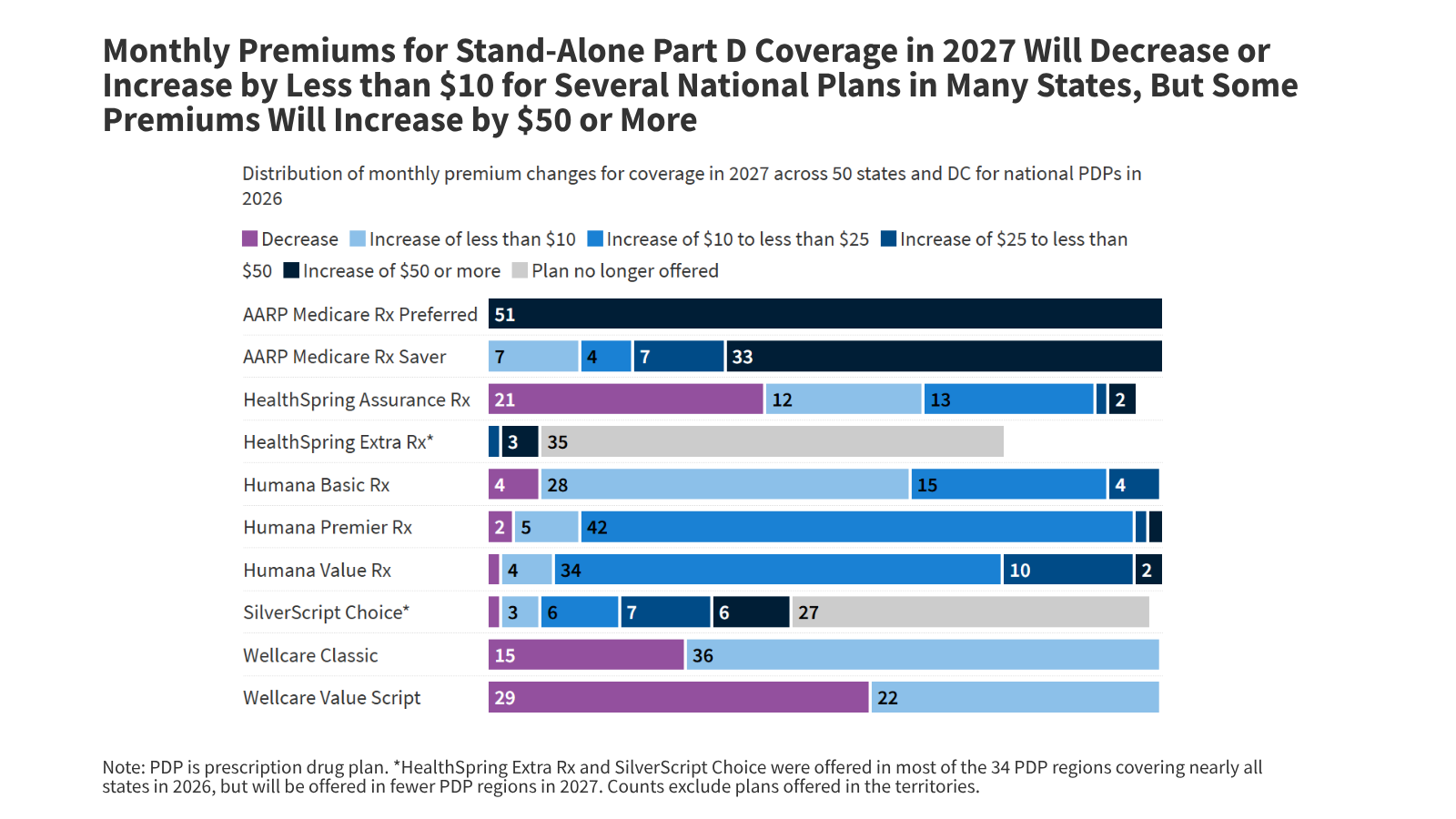
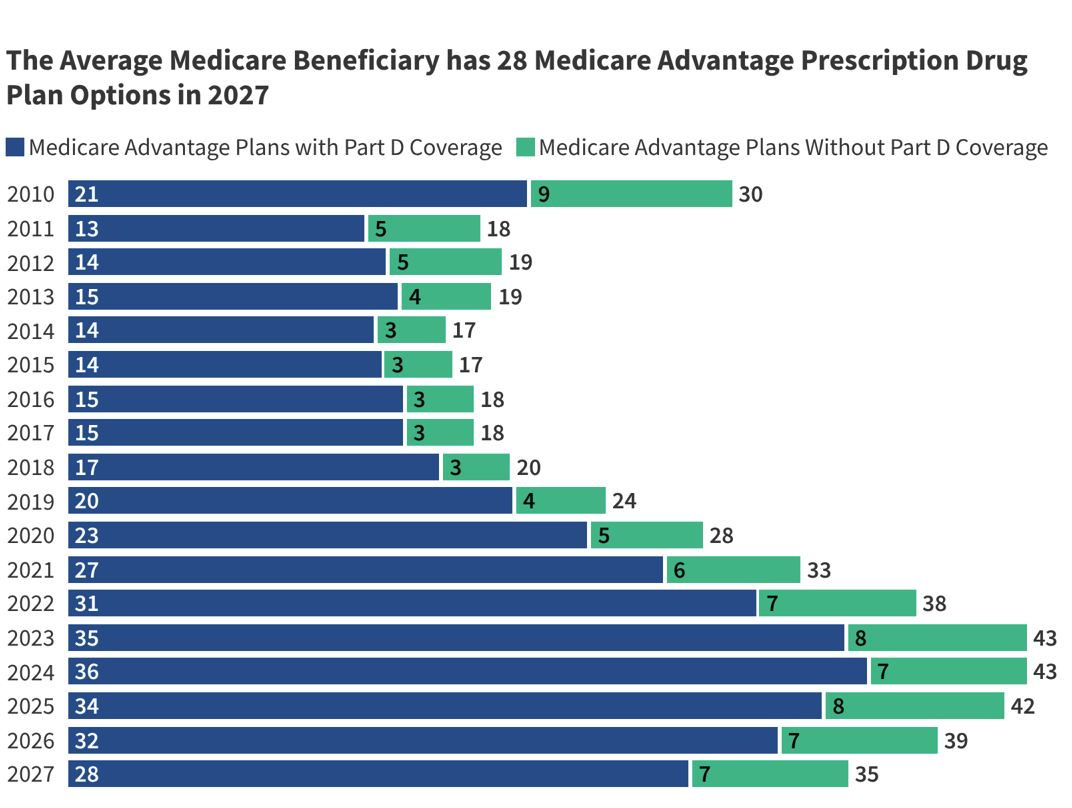
Medicare Advantage prescription drug plan (MA-PD) availability varies widely by county in 2027, with a modest reduction in the share of enrollees with more than 40 plans to choose from and some major insurers exiting many more counties than they are entering. 1 in 5 Medicare beneficiaries (20%) can choose from among more than 40 MA-PDs for 2027, down from 27% in 2026. 1% of all beneficiaries will have no plan option for 2027.
Medicare Open Enrollment and Coverage Options: Key Questions and Answers

Each year, Medicare beneficiaries have an opportunity to make changes to how they receive their Medicare coverage during the nearly 8-week annual open enrollment period, which runs from October 15 through December 7. This brief answers key questions about the Medicare open enrollment period and Medicare coverage options.

Medigap

Medigap Guaranteed Issue Requirements: An Overview of Federal and State Rules

This issue brief analyzes federal and state rules related to guaranteed issue requirements for Medigap policies and how they impact beneficiaries’ access to Medigap, including the implications for Medicare beneficiaries with pre-existing medical conditions and those under age 65 with long-term disabilities.

NEW AND NOTEWORTHY

Decoding Medicare Advantage Coding Intensity

Federal payments to Medicare Advantage plans, and adjustments for health status, have come under increased scrutiny. This brief answers key questions about coding intensity, recent steps taken by CMS, the effects on beneficiaries, and other proposals to improve payment accuracy.

Data Visualization

The Facts About Medicare Spending

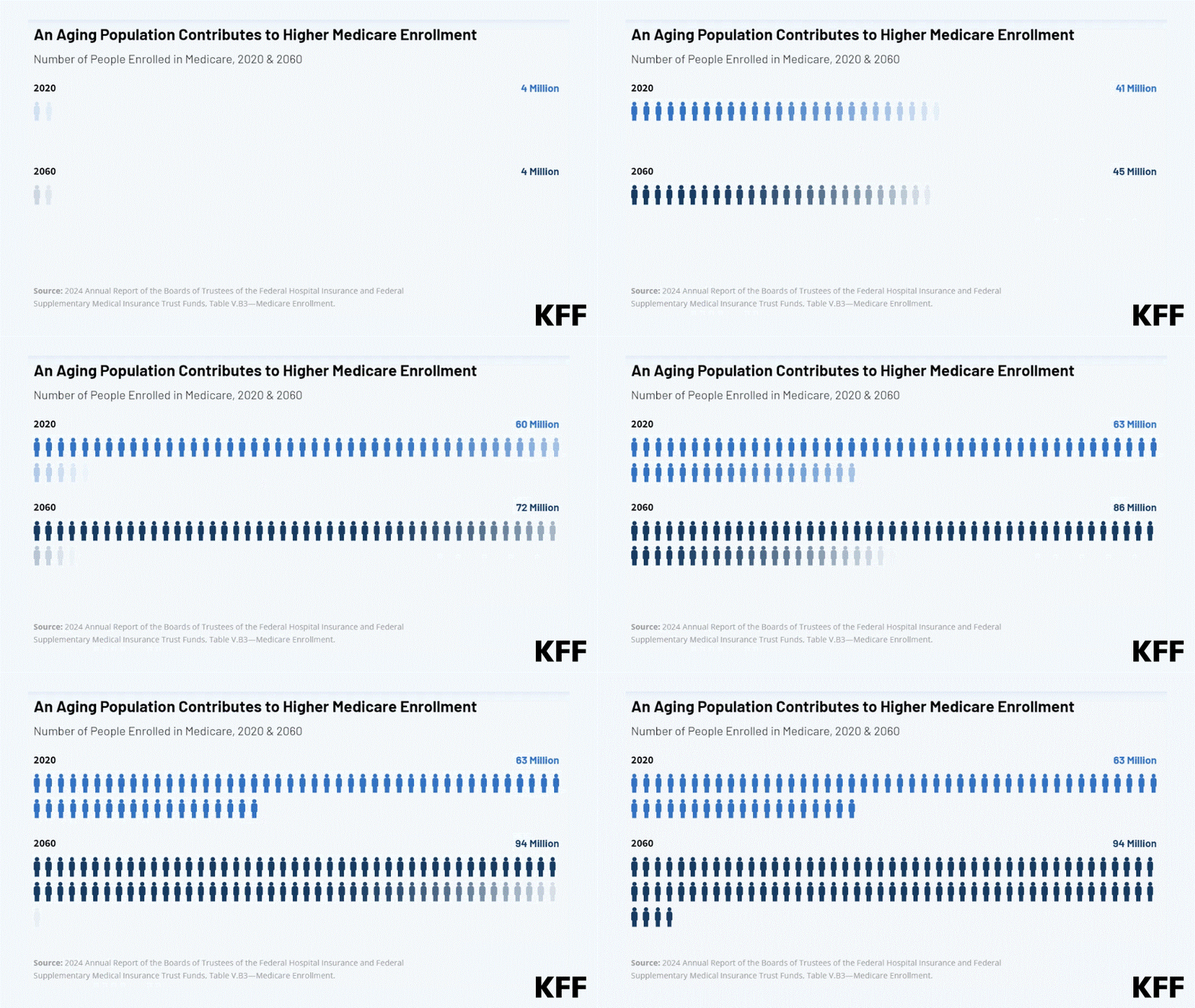
This interactive provides the facts on Medicare spending. Medicare, which serves 67 million people and accounts for 12 percent of the federal budget and 21 percent of national health spending, is often the focus of discussions about health expenditures, health care affordability and the sustainability of federal health programs. Explore data on enrollment growth, Medicare spending trends overall and per person, growth in Medicare spending relative to private insurance, spending on benefits and Medicare Advantage, Part A trust fund solvency challenges, and growth in out-of-pocket spending by beneficiaries.

Read More

Stay informed.

Stay informed.

Filter

1,261-1,270 of 1,623 results

  • Key Findings: Kaiser Health Tracking Poll — November 2009

    Poll Finding

    This document contains the key findings from the November Health Tracking Poll. The survey was designed and analyzed by public opinion researchers at the Kaiser Family Foundation and was conducted November 5 through November 12, 2009, among a nationally representative random sample of 1,203 adults ages 18 and older. Telephone interviews conducted by landline (802) and cell phone (401, including 112 who had no landline telephone) were carried out in English and Spanish. The margin…

  • Toplines: Kaiser Health Tracking Poll — November 2009

    Poll Finding

    This document contains the toplines from the November Health Tracking Poll. The survey was designed and analyzed by public opinion researchers at the Kaiser Family Foundation and was conducted November 5 through November 12, 2009, among a nationally representative random sample of 1,203 adults ages 18 and older. Telephone interviews conducted by landline (802) and cell phone (401, including 112 who had no landline telephone) were carried out in English and Spanish. The margin of…

  • Key Findings: Kaiser Health Tracking Poll — December 2009

    Poll Finding

    This document contains the key findings from the December Health Tracking Poll. The survey was designed and analyzed by public opinion researchers at the Kaiser Family Foundation and was conducted December 7 through December 13, 2009, among a nationally representative random sample of 1,204 adults ages 18 and older. Telephone interviews conducted by landline (801) and cell phone (403, including 111 who had no landline telephone) were carried out in English and Spanish. The margin…

  • Pulling it Together: Seniors and Health Reform

    Perspective

    It is widely believed that seniors are antsy about the new health reform law. And there is heightened interest in how seniors feel about the law in the political world because they are more likely to vote in midterm elections.  About 48% of the electorate said they voted in the 2006 midterms while about 63% of seniors said the same.  Our June and July tracking polls shed light on seniors’ views on health reform and…

  • To Hospitalize or Not to Hospitalize? Medical Care for Long-Term Care Facility Residents

    Report

    To Hospitalize or Not to Hospitalize? Medical Care for Long-Term Care Facility Residents This report explores factors that appear to drive relatively high rates of hospitalizations, based on interviews with doctors, nursing home staff and families in four cities. Key factors include liability concerns, limited onsite staff capabilities, difficulty reaching residents' physicians for care instructions on nights and weekends, better and more timely access to diagnostic tests in hospitals, and patient preferences. Physicians with patients…

  • Proposed Models to Integrate Medicare and Medicaid Benefits for Dual Eligibles: A Look at the 15 State Design Contracts Funded By CMS

    Issue Brief

    This brief summarizes 15 states' preliminary proposals to better coordinate care for people who are in both the Medicare and Medicaid programs. The design contracts, funded by the federal Center for Medicare and Medicaid Innovation (CMMI), are an outgrowth of new efforts under the health reform law to develop service delivery and payment models that integrate care for the nation’s nearly 9 million "dual eligibles," whose medical needs and health care costs typically exceed those…

  • Inside Deficit Reduction: What it Means for Health Care

    Event Date:
    Event

    After much heated debate on the U.S. debt limit, the Budget Control Act of 2011 was passed on August 2, 2011, containing more than $900 billion in federal spending reductions over 10 years. The law also established the 12-person “super committee” charged with finding more than $1 trillion in additional savings. What exactly is called for in the law? What are the implications for health care programs, including Medicare, Medicaid, CHIP and the Patient Protection…

  • Medicare Part D 2011 Data Spotlights

    Report

    The Kaiser Family Foundation has issued a collection of analyses related to the Medicare Part D stand-alone drug plan options available to seniors for calendar year 2011. These spotlights focuses on key aspects of the drug plan choices available and relevant trends since the Medicare drug benefit took effect in 2006. They were prepared by a team of researchers at Georgetown University, NORC and the Kaiser Family Foundation. 2012 Part D Data Spotlights Now Available…

  • Restructuring Medicare’s Benefit Design: Implications for Beneficiaries and Spending

    Report

    Several deficit-reduction plans have proposed combining Medicare's separate deductibles for hospital and physician services, standardizing cost sharing across types of benefits, and establishing a new limit on annual out-of-pocket costs for beneficiaries. A new Kaiser Family Foundation study examines the potential implications of proposals to revamp Medicare’s cost-sharing requirements as a way of reducing federal spending. The analysis projects what would happen if Medicare's current benefit design were replaced with a unified deductible of $550;…

  • An Update on CMS’s Capitated Financial Alignment Demonstration Model For Medicare-Medicaid Enrollees

    Issue Brief

    Beginning in January, 2013, the Centers for Medicare and Medicaid Services (CMS) will implement a three year multi-state demonstration to test new service delivery and payment models for people dually eligible for Medicare and Medicaid. These demonstrations will enroll full dual eligibles in managed fee-for-service or capitated managed care plans that seek to integrate benefits and align financial incentives between the two programs. On January 25, 2012, CMS issued a memorandum providing additional guidance for…