Medicare

NEW AND NOTEWORTHY

Decoding Medicare Advantage Coding Intensity

Federal payments to Medicare Advantage plans, and adjustments for health status, have come under increased scrutiny. This brief answers key questions about coding intensity, recent steps taken by CMS, the effects on beneficiaries, and other proposals to improve payment accuracy.

Data Visualization

The Facts About Medicare Spending

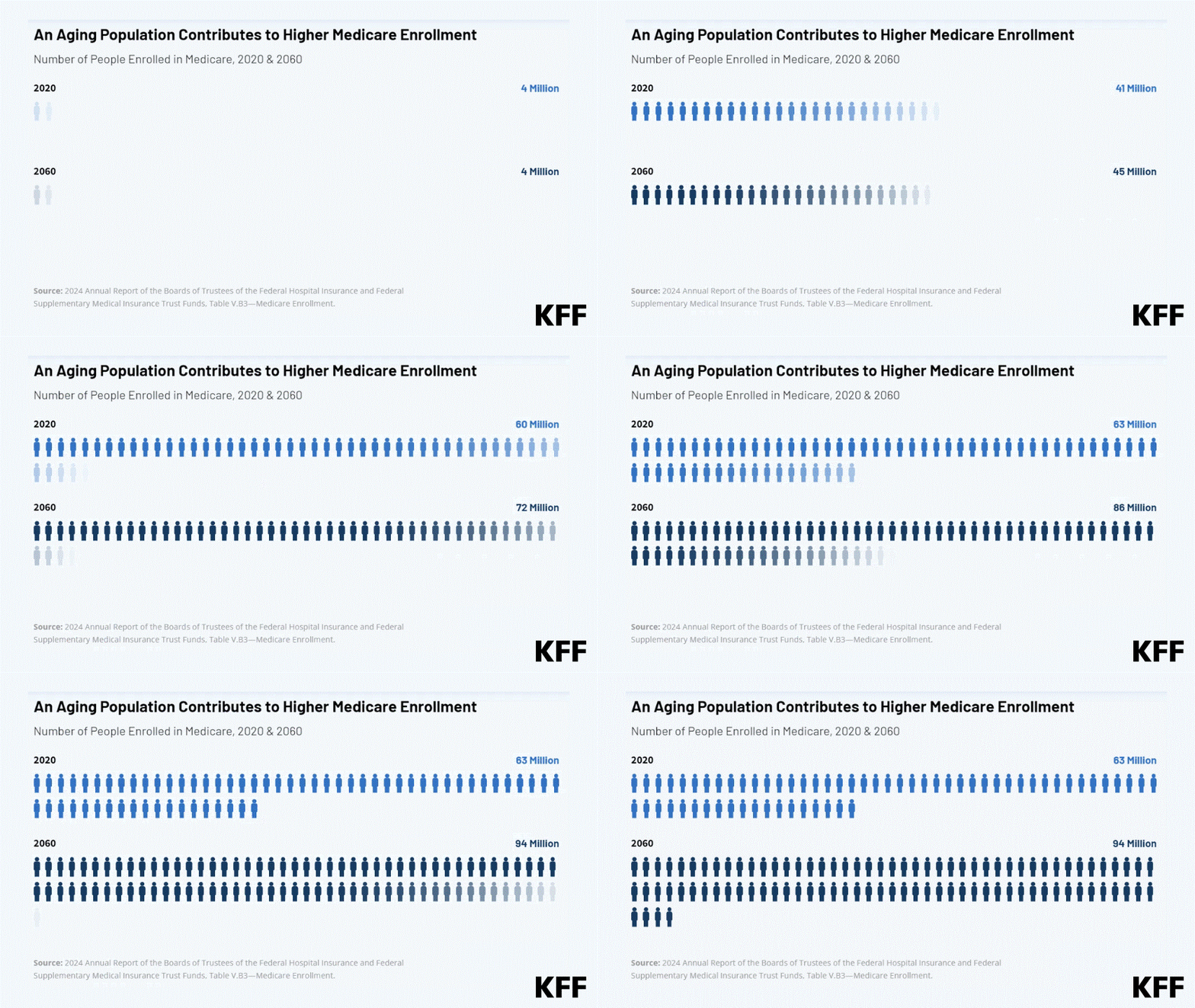
This interactive provides the facts on Medicare spending. Medicare, which serves 67 million people and accounts for 12 percent of the federal budget and 21 percent of national health spending, is often the focus of discussions about health expenditures, health care affordability and the sustainability of federal health programs. Explore data on enrollment growth, Medicare spending trends overall and per person, growth in Medicare spending relative to private insurance, spending on benefits and Medicare Advantage, Part A trust fund solvency challenges, and growth in out-of-pocket spending by beneficiaries.

Read More

Stay informed.

Stay informed.

Filter

1,261 - 1,270 of 1,613 Results

  • COVID-19 Has Claimed the Lives of 100,000 Long-Term Care Residents and Staff

    Policy Watch

    More than 100,000 residents and staff have died in long-term care facilities since the start of the pandemic. This post discusses the implications of the likely rise in cases due to holiday gatherings and the share of total COVID-19 deaths that have happened in long-term care facilities.

  • Options to Make Medicare More Affordable For Beneficiaries Amid the COVID-19 Pandemic and Beyond

    Report

    Medicare provides significant health and financial protections to more than 60 million Americans, but there are gaps in coverage and high cost-sharing requirements that can make health care difficult to afford. This report analyzes several policy options that could help make health care more affordable for people covered by Medicare, especially beneficiaries with relatively low incomes: adding an out-of-pocket limit to traditional Medicare, adding a hard out-of-pocket cap to Part D, expanding financial assistance through…

  • Who Didn’t Get a Second Shingrix Shot? Implications for Multidose COVID-19 Vaccines

    Issue Brief

    As the U.S. prepares for nationwide distribution of vaccines to combat COVID-19, some are asking whether people who get the first of two doses will return to complete the series. This analysis draws on Medicare Part D prescription drug claims data for the herpes zoster vaccine Shingrix, which also requires two doses, to shed light on this potential challenge of the leading COVID-19 vaccine candidates.

  • Medicare Part D: A First Look at Medicare Prescription Drug Plans in 2021

    Issue Brief

    This issue brief provides an overview of the Medicare Part D prescription drug benefit plan landscape for 2021, with a focus on stand-alone drug plans. It includes national and state-level data on plan availability, premiums, benefit design, cost sharing, information about premium-free plans for low-income beneficiaries, and information about the national Part D drug plans available in 2021.

  • March 30 Web Event: Unsung Heroes: The Crucial Role – and Tenuous Circumstances – of Home Care Workers During the Pandemic

    Event Date:
    Event

    Even as the pandemic took a devastating toll on health care workers and older adults in the United States, many home care workers continued to report to work and provide vital care to vulnerable people despite the health risks to themselves and their own families. KFF’s Kaiser Health News and The John A. Hartford Foundation held an interactive web event on March 30 to examine the crucial roles home care workers have played for families during…

  • Health Spending for 60-64 Year Olds Would Be Lower Under Medicare Than Under Large Employer Plans

    Issue Brief

    During the presidential campaign, President Biden proposed to lower the age of Medicare eligibility from 65 to 60. This analysis uses claims data for covered medical services from both large employer plans and traditional Medicare to illustrate the potential spending effects of using Medicare payment rates in lieu of higher rates paid by employer plans for people 60-64 who shift from large employer plans to Medicare.

  • Medicare Advantage Plans Denied 2 Million Prior Authorization Requests in 2021, About 6% of Such Requests

    News Release

    Medicare Advantage plans denied two million prior authorization requests for health care services in whole or in part in 2021, or about six percent of the 35 million requests submitted on behalf of enrollees that year, a new KFF analysis finds. Prior authorization is intended to ensure that health care services are medically necessary by requiring providers to obtain approval before a service or other benefit is covered. While prior authorization has long been used…