Medicare

New & Noteworthy

What to Know About Medicare Coverage of Telehealth

Congress has repeatedly extended pandemic-era flexibilities around Medicare coverage of telehealth, but most such flexibilities remain temporary. This brief answers key questions about the current scope of Medicare telehealth coverage, including both temporary and permanent changes adopted through legislation and regulation, and future policy considerations.

Examining the Potential Impact of Medicare’s New WISeR Model

A federal initiative to establish new prior authorization requirements in traditional Medicare, called the Wasteful and Inappropriate Service Reduction (WISeR) model, is likely to have only modest impact in its first year.

State Profiles for Dual-Eligible Individuals

This data collection draws on Medicare and Medicaid administrative data to present national and state-level information on people who are covered by both Medicare and Medicaid, referred to as dual-eligible individuals (also known as dually-enrolled beneficiaries).

Data Visualization

The Facts About Medicare Spending

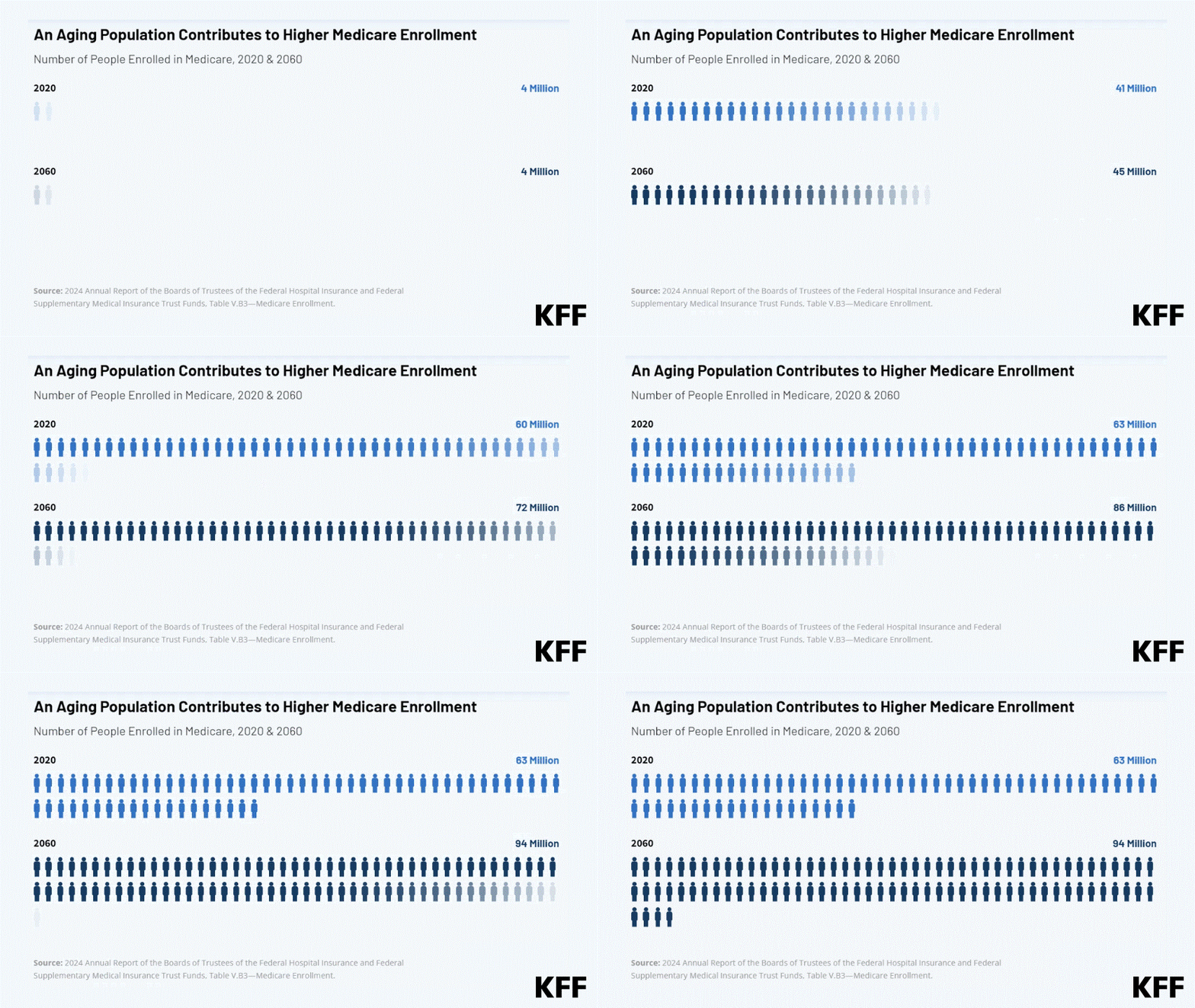
This interactive provides the facts on Medicare spending. Medicare, which serves 67 million people and accounts for 12 percent of the federal budget and 21 percent of national health spending, is often the focus of discussions about health expenditures, health care affordability and the sustainability of federal health programs.

Explore data on enrollment growth, Medicare spending trends overall and per person, growth in Medicare spending relative to private insurance, spending on benefits and Medicare Advantage, Part A trust fund solvency challenges, and growth in out-of-pocket spending by beneficiaries.

Related: FAQs on Medicare Financing and Trust Fund Solvency

Read More

Subscribe to KFF Emails

Choose which emails are best for you.
Sign up here

Filter

1,201 - 1,210 of 1,596 Results

  • New Medicare Drug Benefit’s Impact on States and Low-Income Beneficiaries

    Other Post

    New Medicare Drug Benefit's Impact on States and Low-Income Beneficiaries The recently signed Medicare prescription drug bill transfers responsibility for providing prescription drug coverage to dual-eligible beneficiaries from Medicaid to Medicare and creates a new subsidy program for low-income Medicare beneficiaries.

  • “My Name Is…” A Video

    Event Date:
    Event

    People with disabilities were profiled in “My Name Is…” a video produced by Kaiser Family Foundation Senior Visiting Fellow and former ABC News Correspondent, Jackie Judd, and shown at a December 12 briefing to release the findings from a survey of people with permanent mental and/or physical disabilities and their health-care experiences and challenges in…

  • Medicare Part D 2008 Data Spotlight: Benefit Design

    Issue Brief

    This Medicare Part D data spotlight examines the benefit design of Medicare Part D Prescription Drug Plans (PDP) in 2008, focusing on national plans. It shows that in 2008, as in previous years, only about 10 percent of national prescription drug plans offered the defined standard benefit.

  • The Emerging Role of Group Medicare Private Fee-for-Service Plans

    Issue Brief

    This issue brief examines the recent boom in Medicare Advantage enrollment attributable to employers contracting with Private Fee-for-Service (PFFS) plans to cover their Medicare-eligible retirees. Between 2006 and 2008, the number of Medicare beneficiaries enrolled in Medicare Advantage group plans nearly doubled from 900,000 to nearly 1.

  • Key Findings: Kaiser Health Tracking Poll — April 2009

    Poll Finding

    This document contains the key findings from the April Health Tracking Poll. The survey was designed and analyzed by public opinion researchers at the Kaiser Family Foundation and was conducted April 2 through April 8, 2009, among a nationally representative random sample of 1,203 adults ages 18 and older.

  • Medicare Drug Discount Cards: A Work In Progress (Briefing)

    Other Post

    Medicare Drug Discount Cards: A Work In Progress This report examines the early experience with the Medicare-Approved Drug Discount Card Program, prices offered by card sponsors, and potential savings for enrollees.

  • Health Care and the 2004 Elections: Health Care for Americans with Disabilities

    Issue Brief

    Health Care for Americans with Disabilities Download a printable .pdf of Health Care and the 2004 Elections: Health Care for Americans with Disabilities. IssueBackgroundHealth CoveragePrescription Drugs Under Public ProgramsCoverage of Long-Term Services and SupportsFinancing Medicaid and MedicareAssessing Candidate Positions Issue More than 50 million individuals, or roughly one in five Americans, have a disability.