Medicare

NEW AND NOTEWORTHY

What to Know About Medicare Coverage of Telehealth

Congress has repeatedly extended pandemic-era flexibilities around Medicare coverage of telehealth, but most such flexibilities remain temporary. This brief answers key questions about the current scope of Medicare telehealth coverage, including both temporary and permanent changes adopted through legislation and regulation, and future policy considerations.

Examining the Potential Impact of Medicare’s New WISeR Model

A federal initiative to establish new prior authorization requirements in traditional Medicare, called the Wasteful and Inappropriate Service Reduction (WISeR) model, is likely to have only modest impact in its first year.

State Profiles for Dual-Eligible Individuals

This data collection draws on Medicare and Medicaid administrative data to present national and state-level information on people who are covered by both Medicare and Medicaid, referred to as dual-eligible individuals (also known as dually-enrolled beneficiaries).

Data Visualization

The Facts About Medicare Spending

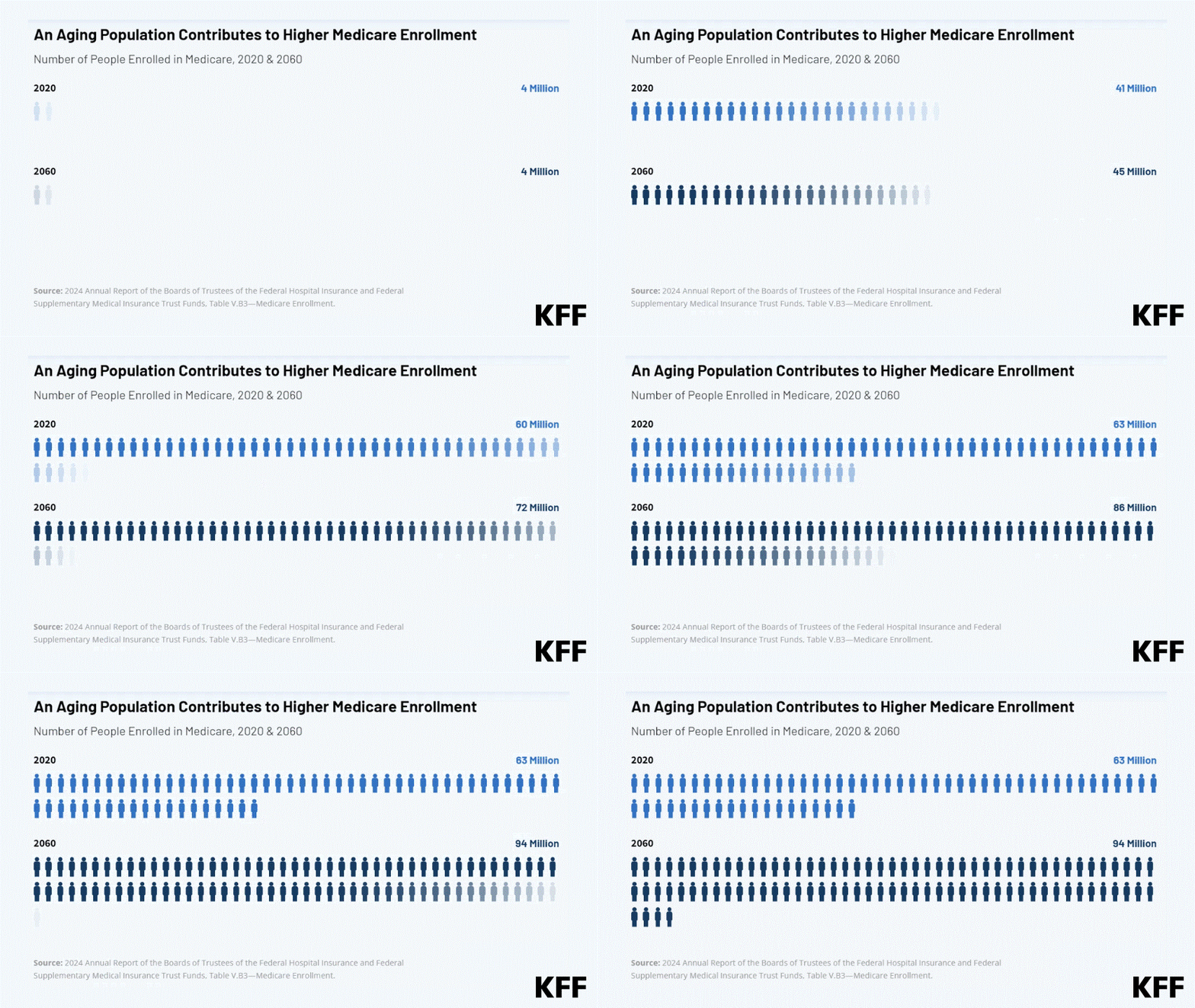
This interactive provides the facts on Medicare spending. Medicare, which serves 67 million people and accounts for 12 percent of the federal budget and 21 percent of national health spending, is often the focus of discussions about health expenditures, health care affordability and the sustainability of federal health programs. u003cbru003eu003cbru003eExplore data on enrollment growth, Medicare spending trends overall and per person, growth in Medicare spending relative to private insurance, spending on benefits and Medicare Advantage, Part A trust fund solvency challenges, and growth in out-of-pocket spending by beneficiaries.u003cbru003eu003cbru003eu003ca href=u0022https://www.kff.org/medicare/issue-brief/faqs-on-medicare-financing-and-trust-fund-solvency/u0022 data-type=u0022linku0022 data-id=u0022https://www.kff.org/medicare/issue-brief/faqs-on-medicare-financing-and-trust-fund-solvency/u0022u003eRelated:u003ca href=u0022https://www.kff.org/medicare/issue-brief/faqs-on-medicare-financing-and-trust-fund-solvency/u0022u003e FAQs on Medicare Financing and Trust Fund Solvencyu003c/au003eu003c/au003e

Read More

Stay informed.

Stay informed.

Filter

1,181 - 1,190 of 1,601 Results

  • Health Care Agenda for the New Congress – Toplines

    Poll Finding

    This document includes the complete toplines from a survey of the public's attitudes regarding the health care agenda for Bush's second term and the new Congress in 2005. It assesses the relative priority placed on health-care concerns by the American public and also provides insight into public opinion on key issues likely to face the new Congress, such as implementing the Medicare drug law, controlling health care costs, reducing the nation’s uninsured population and reforming…

  • New Survey Assesses Senior’s Views of Medicare Drug Law

    Poll Finding

    New Survey Assesses Senior's Views of Medicare Drug Law Seniors are most likely to say they would turn to their doctor, pharmacist, or the Medicare program, for help in making decisions about the new Medicare drug benefit set to begin Jan. 1, 2006, according to new data from the Kaiser Health Poll Report tracking survey. The tracking survey also provides updated tracking data on seniors’ knowledge and views of the new Medicare law. Foundation President…

  • The Effects of Formularies and Other Cost Management Tools on Access to Medications:  An Analysis of the MMA and the Final Rule

    Issue Brief

    This report examines the formulary and cost management provisions of the final Medicare regulations implementing the new Medicare Part D drug benefit that was passed as part of the Medicare Modernization Act of 2003, and their implications for people with Medicare who enroll in new drug plans and their access to medications. It was prepared for the Foundation by Jack Hoadley, Ph.D., of the Health Policy Institute at Georgetown University. Issue Brief (.pdf)

  • The Rising Cost of Living Longer: Analysis of Medicare Spending by Age for Beneficiaries in Traditional Medicare

    Report

    This analysis provides a detailed look at per person Medicare spending on the nearly 30 million beneficiaries over age 65 who are enrolled in the traditional Medicare program. Among the key findings of the report is that per person spending rises with age, peaking at age 96. But this rise is not entirely explained by Medicare spending on end of life care, which declines with age. What Medicare spends money on also changes as beneficiaries…

  • Visualizing Health Policy: The Role of Medicare Advantage

    News Release

    This Visualizing Health Policy infographic provides a snapshot of the role of Medicare Advantage plans, an alternative to traditional Medicare, including information about the proportion of Medicare beneficiaries who are enrolled in Medicare Advantage plans, geographic differences in Medicare Advantage penetration, the trend of increasing enrollment in Medicare Advantage plans, and the concentration of enrollment within a small number of firms and affiliates. It also shows the extent that Medicare has been paying more for…

  • How Pending Health-Related Lawsuits Could be Impacted by the Incoming Trump Administration

    Issue Brief

    This brief provides an overview of current lawsuits in health policy including preventive services, abortion care, gender affirming care, Medicare drug price negotiations, nursing home staffing rules, private coverage consumer protections, and protections and health coverage for Deferred Action for Childhood Arrivals (DACA) recipients; how they may be affected by the incoming Trump administration; and the implications of their potential outcomes.