Medicare

NEW AND NOTEWORTHY

Examining the Potential Impact of Medicare’s New WISeR Model

A federal initiative to establish new prior authorization requirements in traditional Medicare, called the Wasteful and Inappropriate Service Reduction (WISeR) model, is likely to have only modest impact in its first year.

State Profiles for Dual-Eligible Individuals

This data collection draws on Medicare and Medicaid administrative data to present national and state-level information on people who are covered by both Medicare and Medicaid, referred to as dual-eligible individuals (also known as dually-enrolled beneficiaries).

Data Visualization

The Facts About Medicare Spending

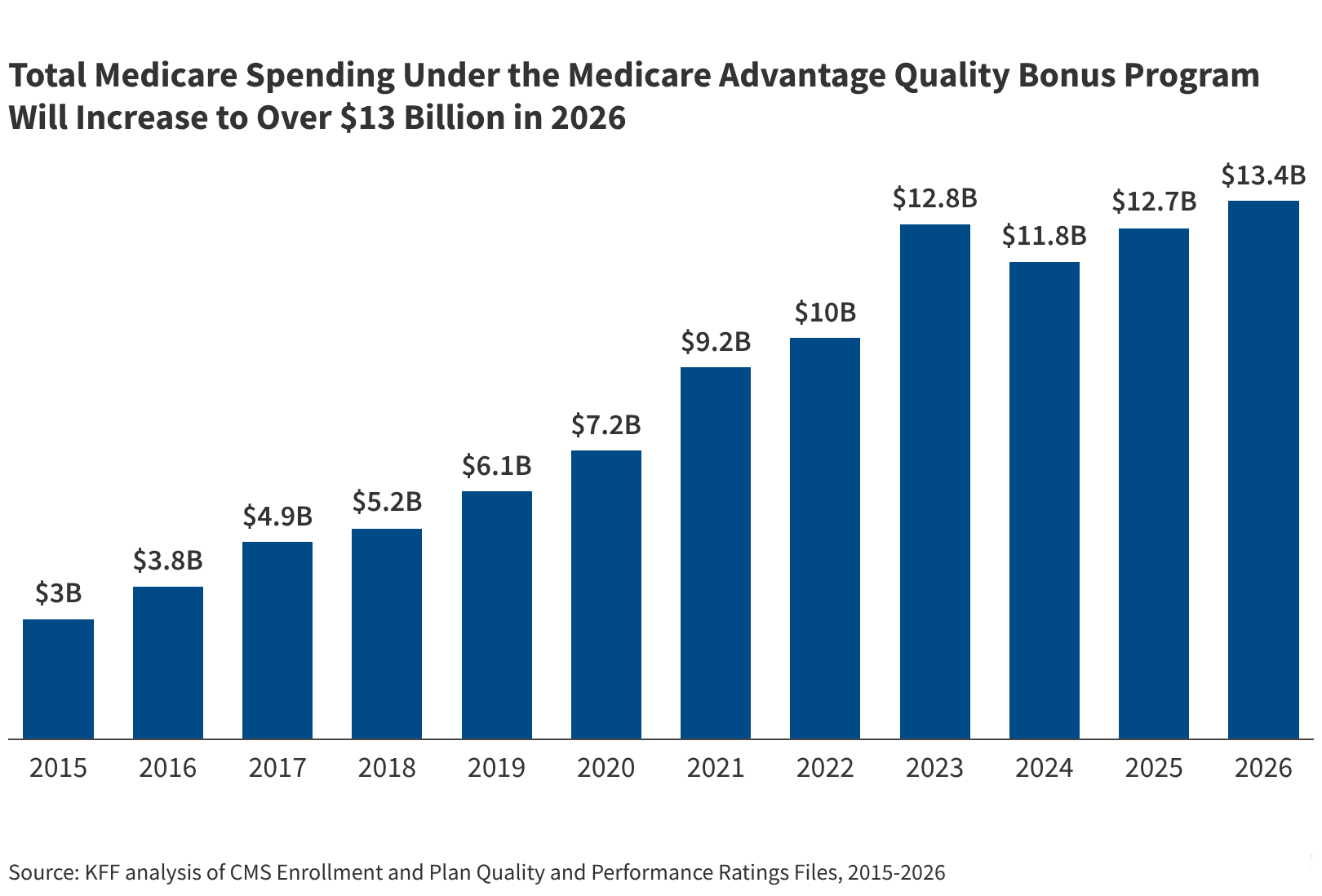
This interactive provides the facts on Medicare spending. Medicare, which serves 67 million people and accounts for 12 percent of the federal budget and 21 percent of national health spending, is often the focus of discussions about health expenditures, health care affordability and the sustainability of federal health programs. Explore data on enrollment growth, Medicare spending trends overall and per person, growth in Medicare spending relative to private insurance, spending on benefits and Medicare Advantage, Part A trust fund solvency challenges, and growth in out-of-pocket spending by beneficiaries.

Read More

Stay informed.

Stay informed.

Filter

1,101 - 1,110 of 1,602 Results

  • The Medicare Program: Panorama General De Medicare

    Fact Sheet

    Que Es El Medicare Y Como Se Financia? Medicare es un programa de seguro medico nacional que atiende a 39 millones de ancianos y discapacitados. Antes de la existencia del Medicare, menos de la mitad de todos los norteamericanos de edad avanzada contaban con un seguro medico. Hoy en dia, practicamente todos los adultos de 65 anos de edad mayores se encuentran asegurados bajo Medicare. Medicare cubre a 34 millones de beneficiarios ancianos y a…

  • Medicare Beneficiaries and HMOs: A Case Study of the Portland Market

    Report

    This case study of the evolution of Medicare managed care in Portland, Oregon, is part of a series of four case studies being prepared for the Kaiser Family Foundation to learn more about the factors influencing, and consequences of, the growth of Medicare managed care. Portland was one of the first markets to implement a Medicare managed care program, with the Kaiser Foundation Health Plan beginning its Medicare HMO in 1978 and all four of…

  • Women and Medicare

    Fact Sheet

    Medicare is a critical source of health insurance coverage for virtually all older women in the U.S. and for many younger women who have permanent disabilities. Because women have longer life expectancies than men, more than half (57%) of the people covered by the program are women. In 1999, there were 21 million women on Medicare 19 million ages 65 and over and another 2 million women under age 65 with disabilities who received Social…

  • Prescription Drug Discount Card Programs: Implications for Medicare Beneficiaries

    Report

    This testimony was delivered by Tricia Neuman, a vice president of the Kaiser Family Foundation, at a Senate Finance Committee hearing on the Bush Administration's Proposals for Medicare Modernization. The statement, which draws upon a report prepared for the Foundation by Health Policy Alternatives, Inc., provides an overview of existing prescription drug discount card programs, describes some of the features of the Administration's recently released proposal for a Medicare-endorsed discount card program, and raises some…

  • Medicare+Choice in California: Lessons and Insights

    Report

    Thirty-five percent of all California Medicare beneficiaries are enrolled in a M+C plan, far in excess of the 14 percent rate nationwide. This report seeks to identify what lessons for the nation can be drawn from the California M+C experience, as Congress debates the implications of major withdrawals from the M+C program and potential policy changes aimed at reversing this trend. The report is based largely on analysis of M+C data on plan participation, withdrawals,…

  • Paying for Choice: The Cost Implications of Health Plan Options For People on Medicare

    Report

    This report illustrates the financial stakes for Medicare beneficiaries when making choices about supplemental insurance coverage, by examining how much people on Medicare could spend out-of-pocket including premiums and other cost-sharing requirements under different supplemental insurance options. To assess the cost implications of choosing between different Medigap and Medicare+Choice insurance options, the research team estimated the range in health care expenditures associated with three prototypical beneficiaries (a 50 year-old man with disabilities, a relatively healthy…

  • Medicare and Low-Income Beneficiaries

    Fact Sheet

    As part of The Faces of Medicare, a collection of fact sheets profiling the characteristics and health needs of different groups of Medicare beneficiaries, highlights key facts about Medicare's low-income population, who have have greater health needs than those with higher incomes. Fact Sheet

  • Individuals With Disabilities and their Experiences with Medicaid Managed Care

    Report

    Today, one out of every four disabled Medicaid beneficiaries receives health care through managed care. This Background Paper provides insights into how Medicaid managed care is working for individuals with disabilities, based on the findings from seven focus groups held in Florida and New Mexico. The key findings show that adults and children with disabilities feel alone in managing their health care and that important components of managed care - coordination and gatekeeping role that…

  • Health News Index–May/June 2000

    Poll Finding

    Health News Index May/June, 2000 The May/June 2000 edition of the Kaiser Family Foundation/Harvard School of Public Health, Health News Index includes questions about major health stories covered in the news, including questions about the Congressional Democrats' proposal to have the Medicare program cover prescription drug costs for the elderly. The survey is based on a national random sample of 580 Americans and was conducted May 26-June 4, 2000. The survey measures public knowledge of…