Medicaid

Medicaid work requirements

Medicaid and the Road Ahead: Spending Cuts, Work Requirements and What’s Next for States, Providers and Families

Event Date:

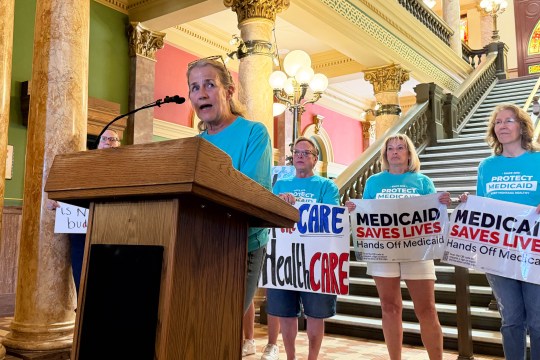
Passed last year, President Trump’s One Big Beautiful Bill Act made significant changes to Medicaid—the primary insurance provider for health and long-term care for people with low incomes. These changes are expected to lead to coverage loss for many current enrollees and will reduce funding for Medicaid, placing new financial pressures on states and health care providers. On July 23, KFF and States Newsroom hosted an event focused on the impacts of work requirements and other federal policy changes on states, health care systems, and people.

new and noteworthy

understanding medicaid

Medicaid Financing

Medicaid represents $1 out of every $5 spent on health care in the U.S. and is the major source of financing for states to provide health coverage and long-term care. This brief examines key questions about Medicaid financing and how it works.

Medicaid Program Integrity

This brief explains what is known about improper payments and fraud and abuse in Medicaid and describes ongoing state and federal actions to address program integrity.

Medicaid and Provider Taxes

All states except Alaska cover some state Medicaid costs with taxes on health care providers. This brief uses data from KFF’s 2024-2025 survey of Medicaid directors to describe current practices and the federal rules governing them.

Medicaid and Hospitals

Absorbing reductions in Medicaid spending could be challenging for hospitals, particularly for those that are financially vulnerable. This brief provides data on the reach of Medicaid across hospitals, patients, and charity care.

Medicaid Home Care

This issue brief provides an overview of what Medicaid home care (also known as “home- and community-based services”) is, who is covered, and what services were available in 2025.

Dual Eligibles

Stay informed.

Stay informed.

Filter

741 - 750 of 2,731 Results

  • New Incentive for States to Adopt the ACA Medicaid Expansion: Implications for State Spending

    Issue Brief

    The American Rescue Plan Act of 2021 encourages non-expansion states to take up the expansion by providing an additional temporary fiscal incentive for states to newly implement the ACA Medicaid expansion. This brief provides illustrative estimates of the net fiscal benefit to states from these incentives relative to state costs under the expansion.

  • Medicaid Spending and Enrollment Trends Amid the COVID-19 Pandemic – Updated for FY 2021 & Looking Ahead to FY 2022

    Issue Brief

    Even as the COVID-19 vaccine roll-out is accelerating across the country, the public health and economic effects of the pandemic continue to put pressure on Medicaid spending and enrollment. In mid-February 2021, the Kaiser Family Foundation (KFF) and Health Management Associates (HMA) fielded a two-part rapid, mini-survey of Medicaid directors in all 50 states and the District of Columbia as a follow-up to the annual Medicaid Budget Survey conducted last summer. This brief provides insights…

  • A Look at How Medicaid Agencies Are Assisting with the COVID-19 Vaccine Roll-Out

    Issue Brief

    As of February 2021, there are three COVID-19 vaccines approved for emergency use in the U.S. and states are playing a central role in their timely distribution and prioritizing eligible populations. Because Medicaid covers for over 77 million enrollees, including groups disproportionately at risk of contracting COVID-19 as well as hard-to-reach groups, Medicaid agencies can be important partners for the public health agencies that are typically leading the state COVID-19 vaccination efforts. This brief provides…

  • Early COVID-19 Vaccination Efforts Through Community Health Centers Are Reaching People of Color

    News Release

    More than half of those who received their first dose of a COVID-19 vaccine through a community health center were people of color, suggesting that health centers appear to be doing a better job of reaching people of color than are overall vaccination efforts, finds a new KFF analysis. People of color accounted for 54 percent of people who got their first dose of the vaccine through a health center, the analysis finds, including 26 percent…

  • Expanding Postpartum Medicaid Coverage

    Issue Brief

    This brief discusses Medicaid’s eligibility for pregnancy and postpartum care, gaps in coverage particularly in states that have not expanded Medicaid under the ACA, and several state and federal efforts to extend postpartum coverage to more women for a longer period of time.

  • KFF Tracking Poll: More Than a Third of Americans Say They’ve Struggled to Pay Living Expenses Since December; 6 in 10 Families Hit by COVID Have Lost A Job or Income

    News Release

    Majorities Favor Provisions to Expand Marketplace Tax Credits and Encourage States to Expand Medicaid As Congress considers an additional $1.9 trillion COVID-19 relief plan, more than a third (37%) of Americans say that someone in their household has had trouble paying basic living expenses over the past three months, the latest KFF Health Tracking Poll finds. This includes nearly 1 in 4 (23%) who say they have fallen behind on their credit card bills, and…

  • KFF Health Tracking Poll: Economic Hardship, Health Coverage, And The ACA

    Feature

    This poll examines the public's assessments of the Biden administration's handling of the coronavirus pandemic, the impact COVID-19 has had on people's finances, and support for provisions of the latest COVID-19 relief bill. It examines the public's views of the ACA and possible next steps.

  • Many Nonelderly People With Disabilities Face COVID-19 Risks Similar to Those of the Elderly in Nursing Homes, But Do Not Have Equal Footing When it Comes to Vaccine Priority

    News Release

    While the toll of COVID-19 on nursing home residents has been well documented, less noticed has been the experience of nonelderly people with disabilities who rely on long-term care services and supports outside of nursing homes. In many ways the two groups face similar health risks from the virus, but nonelderly people with disabilities generally do not have the same high priority status for the vaccine, finds a new KFF analysis. As of early February…

  • COVID-19 Vaccine Access for People with Disabilities

    Issue Brief

    This issue brief presents current state-level data about COVID-19 cases and deaths in settings that primarily serve nonelderly people with disabilities and summarizes available research on this population’s elevated risk of severe illness and death; explains how nonelderly people with disabilities and their LTSS providers are reflected in state vaccine prioritization plans; and discusses key issues related to vaccine access for these populations.