Immigrant Health

survey of immigrants

KFF-New York Times Survey: Immigrants Report Rising Fear, Negative Economic and Health Impacts, and Changing Political Views During the First Year of President Trump’s Second Term

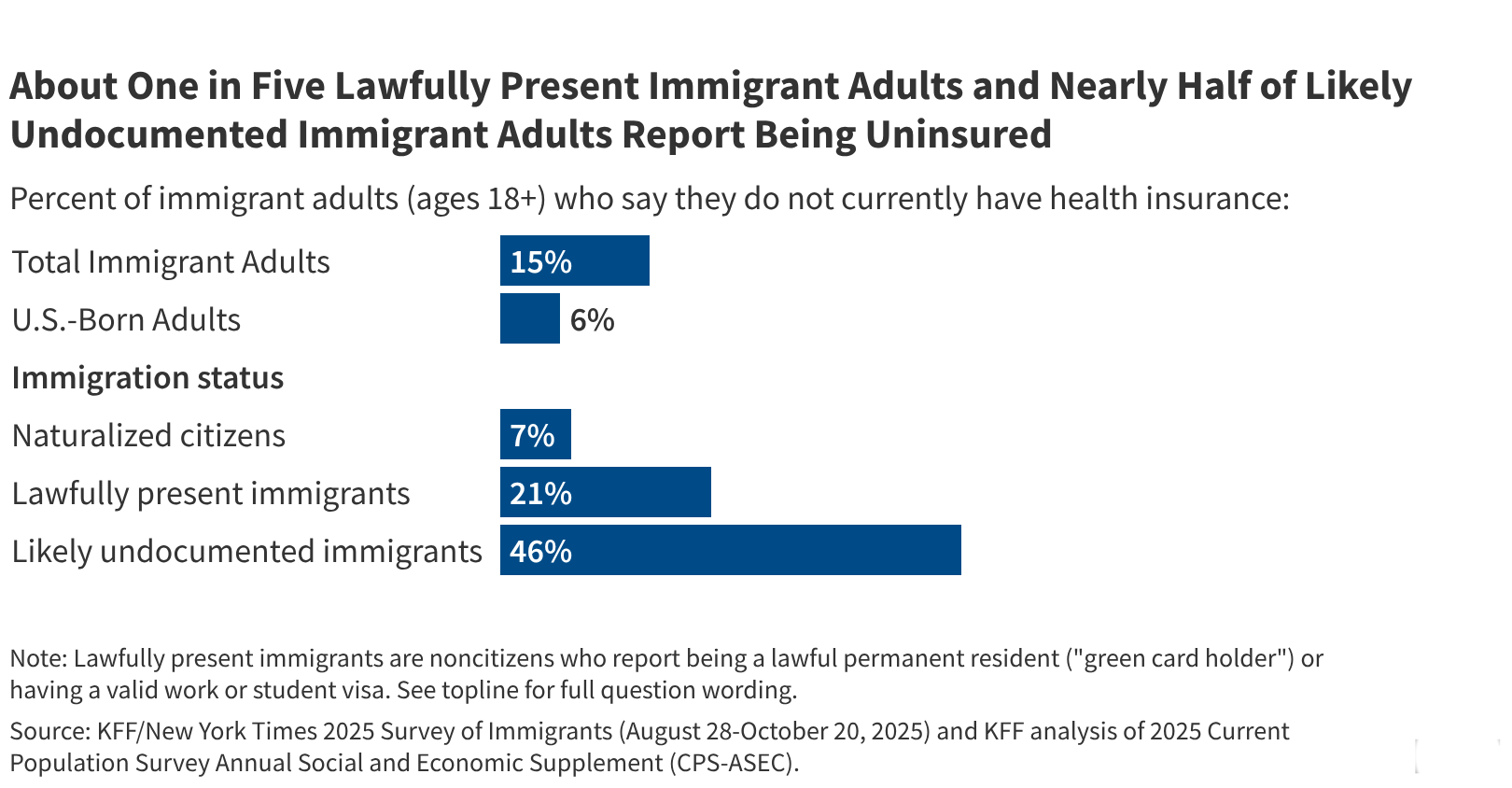
The 2025 Survey of Immigrants, a partnership between KFF and The New York Times, takes an in-depth look at the experiences of immigrants during the first year of President Trump’s second term, including their worries related to increased immigration enforcement, their health and economic wellbeing, and the political views and preferences of immigrant voters. The survey paints a portrait of families under strain — where fear of detention and economic instability are negatively impacting immigrants’ health and reshaping immigrant families’ daily lives and views of U.S. political parties.

Read the News Release | Explore The New York Times’ Reporting

Stay informed.

Stay informed.

Filter

111 - 120 of 181 Results

  • A 50-State Review of Access to State Medicaid Program Information for People with Limited English Proficiency and/or Disabilities Ahead of the PHE Unwinding

    Issue Brief

    This issue brief reviews accessibility of information for people with LEP and people with disabilities provided through state Medicaid websites and call center automated phone trees as of June 16, 2022. The analysis shows that while states have taken some steps to support access to information and applications for people with LEP and people with disabilities, gaps in accessibility remain.

  • 4 Key Q&As About the Impact of Climate Change on Health Equity

    News Release

    While climate change effects ripple across the world and all populations, it is poised to disproportionately affect people of color, low-income communities, immigrants, and other high-need groups. Many of these groups have historically been exposed to climate hazards due to government policies and discriminatory practices that leave them more vulnerable to adverse climate events like record-breaking heat, wildfires, coastal flooding, and the spread of infectious diseases. A new KFF brief looks at key questions about…

  • Climate Change and Health Equity: Key Questions and Answers

    Issue Brief

    While climate change poses health threats for everyone, people of color, low-income people, and other marginalized or high-need groups face disproportionate risks due to underlying inequities and structural racism and discrimination.

  • Mitigating Childhood Lead Exposure and Disparities: Medicaid and Other Federal Initiatives

    Issue Brief

    Exposure to lead can seriously harm a child’s health, including damage to the brain and nervous system, slowed growth and development, learning and behavior problems, and hearing and speech problems. The effects of lead on the nervous system can cause lower IQ, decreased ability to pay attention, and under performance in school.

  • Health and Health Care Experiences of Hispanic Adults

    Poll Finding

    The COVID-19 pandemic has exposed and exacerbated longstanding underlying disparities in health and health care facing Hispanic people. Using data from the COVID-19 Vaccine Monitor, this report provides insights into the health care experiences of Hispanic adults and examines how they vary by key factors, including insurance and immigration status.

  • June 18 Web Event: Asian Immigrant Experiences with Racism, Immigration-related Fears, and the COVID-19 Pandemic

    Event Date:
    Event

    While the country has collectively experienced health and economic difficulties with the COVID-19 pandemic, certain groups have experienced a disproportionate impact. The Asian American community has had to cope with the burden of pandemic-related racism and, as one of the fastest growing immigrant communities in the nation, immigration-related fears due to policy and regulatory action of recent years. Yet, there is often limited data and focus on the experiences of the expanding Asian immigrant community.…

  • Survey and Event Examine Experiences and Concerns of Asian Immigrants During COVID-19 Pandemic and Amid Rising Incidents of Anti-Asian Hate Crimes

    News Release

    A KFF survey of Asian patients at four community health centers serving a predominantly Asian, low-income population finds a third (33%) of them have felt more discrimination based on their race/ethnicity since the COVID-19 pandemic began. Respondents, 80% of whom were born outside the U.S., reported a range of negative experiences including receiving poorer service in public settings, being denied employment and/or housing, and being verbally or physically attacked. Asian Immigrant Experiences with Racism, Immigration-related…

  • How Employer Actions Could Facilitate Equity in COVID-19 Vaccinations

    Policy Watch

    Providing paid time off to employees to get and recover from any side effects could help boost vaccination rates. Overall, nearly three in ten (28%) employed adults who not yet ready to get the vaccine say that they would be more likely to get the COVID-19 vaccine if their employer gave them paid time off to get vaccinated and recover from any side effects.