new and noteworthy

Donor Government Funding for HIV in Low- and Middle-Income Countries in 2025

This report provides an analysis of donor government funding to address the HIV response in low- and middle-income countries in 2025, the latest year available, as well as trends over time. It includes both bilateral funding from donors and their multilateral contributions to the Global Fund to Fight AIDS, Tuberculosis and Malaria (Global Fund), UNITAID, and Joint United Nations Programme on HIV/AIDS (UNAIDS).

selected resources

Global Health Aid Cuts

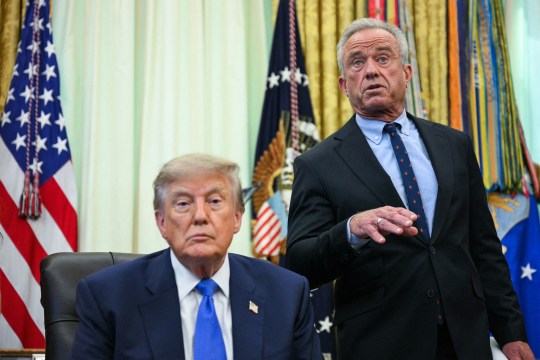
This collection of resources chronicles what recent Trump administration global health aid cuts mean for the future of global health programs and the people who rely on them.

A promotional image for the the KFF Health Policy 101 U.S. Government and Global Health

The U.S. Government and Global Health

In this Health Policy 101 chapter, investigate the U.S. role in global health, including the major initiatives the United States supports, funding levels, and agencies involved in implementing program area efforts.

the essentials

Global Health Trackers

U.S. Global Health Budget Tracker

This tracker provides regularly updated information on U.S. government funding for global health. It includes historical trends and tracks funding levels for U.S. global health efforts through bilateral and multilateral contributions and by program area and agency.

Stay informed.

Stay informed.

Filter

531 - 540 of 658 Results

  • The U.S. Department of Defense & Global Health

    Report

    This report provides the first comprehensive look at the role of the Department of Defense (DoD) in global health, examining its organizational structure, activities, strategy, policy, and budget for activities related to global health.

  • Global Funding for HIV/AIDS in Resource-Poor Settings

    Issue Brief

    This updated policy brief presents data on the range of resources currently directed to address the HIV/AIDS epidemic in resource poor settings, including bilateral, multilateral, and private sector support, as well as domestic funding by affected country governments. Issue Brief (.pdf)  

  • Innovative Financing Mechanisms for Global Health: Overview & Considerations for U.S. Government Participation

    Report

    When leaders from the world's 20 major economies gather for the upcoming G-20 Summit in France, one of their priorities will be finding new ways to maintain and expand the impact of global development programs in the wake of an international financial crisis and mounting efforts to control public spending and debt. The previous decade saw significant increases in support for global health, but there is growing pressure on traditional funding channels. As a result,…

  • Issue Brief: Trends in U.S. Government Funding for HIV/AIDS–Fiscal Years 1981 to 2004

    Issue Brief

        This updated issue brief, Trends in U.S. Government Funding for HIV/AIDS: Fiscal Years 1981 to 2004, provides an analysis of U.S. federal funding for HIV/AIDS since fiscal year (FY) 1981. It presents data and trends in the major categories of funding -- care, cash and housing assistance, research, prevention, and global/international -- over time. Cumulatively through its FY 2004, the US government has invested approximately $150 billion for domestic and international HIV/AIDS programs.…

  • 2008 Presidential Election Issue Spotlight: Global Health and HIV/AIDS

    Issue Brief

    During the 2008 Presidential campaign, now President Barack Obama and Republican presidential nominee Sen. John McCain announced a number of policy proposals and positions related to global health and the HIV/AIDS epidemic, both globally and domestically. This document summarizes those positions as staked out during the presidential campaign. It is adapted from the side-by-side comparisons examining the positions of the presidential candidates on these issues. Issue Spotlight (.pdf)

  • International Assistance for HIV/AIDS in the Developing World: Taking Stock of the G8, Other Donor Governments and the European Commission

    Other Post

    A new report from the Kaiser Family Foundation, , provides a detailed overview of how donors finance the international response to HIV/AIDS and presents the latest data on G8 and EC funding commitments and disbursements. The report also discusses the concept of "fair share" and examines different methodologies for assessing fair share among donors. Data for the report were collected through a collaborative effort among UNAIDS, the Kaiser Family Foundation and the Center for Strategic…

  • Survey of G7 Nations on HIV Spending in Developing Countries – Chartpack

    Report

    Kaiser has prepared this survey of more than 7,000 people in G7 nations in advance of the Group of 8 meeting in Gleneagles, Scotland. Public opinion in the countries (Canada, France, Germany, Great Britain, Italy, Japan, and the United States) shows similarities among the nations on whether progress is being made on HIV/AIDS, if other countries are spending too little, and whether spending will lead to meaningful progress in slowing the epidemic. The survey was…

  • The G8, Russia’s Presidency and HIV/AIDS in Eurasia

    Other Post

    This report -- coauthored by J. Stephen Morrison (Center for Strategic and International Studies) and Jennifer Kates (Kaiser Family Foundation) -- highlights the potential role of the G8 in addressing the Eurasian HIV/AIDS epidemic and further engaging Russia, China and India in the global HIV/AIDS response. Report -- English Language (.pdf) Report -- Russian Language (.pdf)