new and noteworthy

selected resources

Global Health Aid Cuts

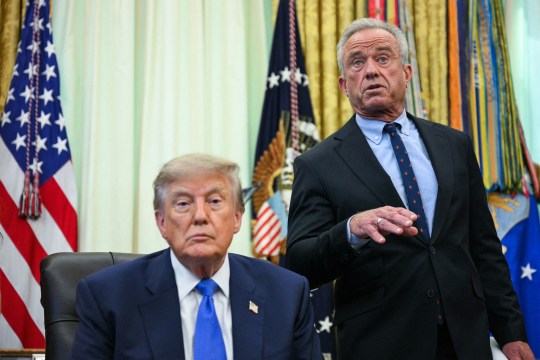
This collection of resources chronicles what recent Trump administration global health aid cuts mean for the future of global health programs and the people who rely on them.

A promotional image for the the KFF Health Policy 101 U.S. Government and Global Health

The U.S. Government and Global Health

In this Health Policy 101 chapter, investigate the U.S. role in global health, including the major initiatives the United States supports, funding levels, and agencies involved in implementing program area efforts.

the essentials

Global Health Trackers

U.S. Global Health Budget Tracker

This tracker provides regularly updated information on U.S. government funding for global health. It includes historical trends and tracks funding levels for U.S. global health efforts through bilateral and multilateral contributions and by program area and agency.

Stay informed.

Stay informed.

Filter

171 - 180 of 656 Results

  • The U.S. Congress and Global Health: A Primer

    Report

    This primer provides an overview of congressional engagement in global health. It examines the structure of Congress and its role and key activities in global health. It then illustrates these by examining two global health examples: the creation and evolution of PEPFAR and the 2014/2015 Ebola outbreak in West Africa.

  • Senate Appropriations Committee Releases FY 2022 State and Foreign Operations (SFOPs) and Labor Health and Human Services (Labor HHS) Appropriations Bills

    Fact Sheet

    The Senate Appropriations Committee released its FY 2022 State, Foreign Operations, and Related Programs (SFOPs) (links to bill and report) and Labor, Health and Human Services, Education, and Related Agencies (Labor HHS) (links to bill and report) appropriations bills and accompanying reports on October 18, 2021. The SFOPs bill includes funding for U.S. global health programs at the State Department and the U.S. Agency for International Development (USAID), while the Labor HHS bill includes funding…

  • As PEPFAR Nears its Two-Decade Mark, New Analysis Finds That Mortality Declined Substantially in PEPFAR Countries Over the Course of the Program

    News Release

    A new KFF analysis finds the President's Emergency Plan for AIDS Relief (PEPFAR) program was associated with large declines in mortality in PEPFAR recipient countries since its creation in 2003. The new analysis takes a closer look at PEPFAR’s health impact by assessing the all-cause mortality rate in 90 PEPFAR recipient countries compared to similar low-and middle-income countries. The all-cause mortality rate was 20% lower than expected had PEPFAR been absent. PEPFAR countries with higher…

  • Assessing PEPFAR’s Impact: Analysis of Mortality in PEPFAR Countries

    Issue Brief

    As the PEPFAR program approaches its two-decade mark, this new analysis finds the program was associated with large declines in mortality in PEPFAR recipient countries since its creation in 2003, suggesting that future investments will continue to yield significant health impacts.

  • Tracking Global COVID-19 Vaccine Equity: An Update

    Issue Brief

    This updated analysis looks at global COVID-19 vaccination efforts by income-level and region to assess the equity gap in both vaccination coverage and rates of administration. Overall, we find that low-income countries and countries in Africa are lagging behind, and based on current rates, are unlikely to meet global vaccination targets.

  • Key Issues and Questions for PEPFAR’s Future

    Issue Brief

    This brief explores key issues and poses questions regarding PEPFAR’s future, providing a roadmap for the major decisions ahead for the program. It identifies eight key, interrelated issues facing the administration, Congress, and other PEPFAR stakeholders.

  • Tracking Global COVID-19 Vaccine Equity

    Issue Brief

    This analysis looks at global COVID-19 vaccination efforts by income-level and region to assess the equity gap in both vaccination coverage and rates of administration. Overall, we find that low-income countries and countries are lagging behind, and based on current rates, are unlikely to meet global vaccination targets.

  • Disparities in Global Vaccination Progress Are Large and Growing, With Low-Income Countries and Those in Africa Lagging Behind

    News Release

    A new KFF analysis finds that only 1% of those in low-income countries have received at least one vaccine dose compared to 51% in high-income countries, highlighting the substantial vaccine inequities around the world. The analysis examines these inequities by country income level and by region, finding large differences for each. By region, Africa has the lowest coverage (2%) while Europe has the highest (40%), followed by the Americas (39%) and the Western Pacific (37%).…