new and noteworthy

Donor Government Funding for HIV in Low- and Middle-Income Countries in 2025

This report provides an analysis of donor government funding to address the HIV response in low- and middle-income countries in 2025, the latest year available, as well as trends over time. It includes both bilateral funding from donors and their multilateral contributions to the Global Fund to Fight AIDS, Tuberculosis and Malaria (Global Fund), UNITAID, and Joint United Nations Programme on HIV/AIDS (UNAIDS).

selected resources

Global Health Aid Cuts

This collection of resources chronicles what recent Trump administration global health aid cuts mean for the future of global health programs and the people who rely on them.

A promotional image for the the KFF Health Policy 101 U.S. Government and Global Health

The U.S. Government and Global Health

In this Health Policy 101 chapter, investigate the U.S. role in global health, including the major initiatives the United States supports, funding levels, and agencies involved in implementing program area efforts.

the essentials

Global Health Trackers

U.S. Global Health Budget Tracker

This tracker provides regularly updated information on U.S. government funding for global health. It includes historical trends and tracks funding levels for U.S. global health efforts through bilateral and multilateral contributions and by program area and agency.

Stay informed.

Stay informed.

Filter

131 - 140 of 659 Results

  • Do We Want to Outsource U.S. Vaccine Policy to Denmark?

    Quick Insights

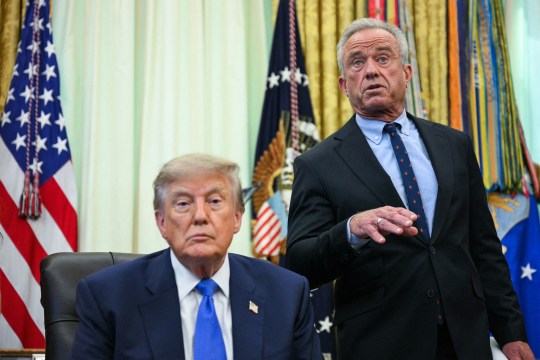
    Adopting Denmark’s vaccine schedule, as HHS Secretary Kennedy's vaccine advisors have suggested, would likely lower childhood vaccination rates in the U.S. as certain vaccines become harder to access.

  • Americans May Be Smarter About Vaccines Than You Think

    From Drew Altman

    In a new column that analyzes recent KFF polling, Founding President and CEO Dr. Drew Altman concludes that only a sliver of the public hold definitive anti-science, anti-vaccine views, and are greatly outnumbered by the people who believe established science, with even more Americans stuck in a “muddled middle.” He writes, “when you see reports of social media engagement spiking about a health myth, don’t overreact. It’s more likely than not that it's a relatively…

  • Military Families Survey, Toplines

    Poll Finding

    Military Families Survey A recent survey conducted by The Washington Post, Kaiser Family Foundation, and Harvard University examines the views of Army spouses and their experiences with military life, including experiences with deployment and attitudes toward re-enlistment, as well as attitudes towards government and the media. The survey was conducted among spouses of active duty U.S. Army personnel serving on the ten largest U.S. Army bases. Survey Toplines (.pdf)

  • Foreign NGO Engagement in U.S. Global Health Efforts: Foreign NGOs Receiving USG Support Through USAID

    Report

    This report provides an analysis of foreign (non-U.S.-based) non-governmental organizations (NGOs) that received global health funding from the U.S. government (USG) during FY 2013. It specifically focuses on funding provided to NGOs by the U.S. Agency for International Development (USAID), the largest implementer of global health activities among USG agencies and departments.

  • Comparing U.S. Ebola Outbreak Response Capabilities and Practices Over Time

    Issue Brief

    This brief compares the U.S. response to the current Ebola outbreak in DRC with U.S. responses to prior Ebola outbreaks across a variety of characteristics. It finds the US is on par or even faster with response funding, but the restructuring of the US response mechanisms and leadership (such as eliminating USAID) since 2025 have changed the organizational approach with unknown consequences, and how the US is engaging with international partners is different now.

  • Two-Thirds of the Public Say the U.S. Should Play a Major Role in Distributing COVID-19 Vaccines Globally, But Not Most Republicans

    News Release

    With increased attention to the global need for COVID-19 vaccines and the Biden administration’s announcement today about how it plans to distribute the first portion of the 80 million doses it will share by the end of this month, the latest KFF Health Tracking Poll finds that two-thirds of the public (66%) say that the U.S. should play at least a “major role” in distributing COVID-19 vaccines to other countries, including about a quarter (27%)…