KFF designs, conducts and analyzes original public opinion and survey research on Americans’ attitudes, knowledge, and experiences with the health care system to help amplify the public’s voice in major national debates.
This Medicare Part D data spotlight finds prices for some commonly used brand-name drugs rising in 2010 for beneficiaries who reach the coverage gap (or “doughnut hole”), with increases since 2006 far exceeding the growth in inflation.
The Part D benefit’s coverage gap generally requires enrollees to pay the full cost of their drugs after their total drug spending exceeds their initial coverage limit ($2,830 in 2010) until they reach the threshold for receiving catastrophic coverage ($6,440 in 2010). In 2007, an estimated 3.4 million Part D enrollees reached the coverage gap.
Using data posted on the government’s Medicare.gov website, the analysis looks at prices for commonly used brand-name drugs without a generic substitute for enrollees in stand-alone prescription drug plans. The prices reflect the amount that enrollees would pay for a 30-day supply after they reach the coverage gap and before catastrophic coverage begins.
This data spotlight is one in a series analyzing key aspects of the Medicare Part D drug plans that will be available to beneficiaries in 2010. The analysis was conducted jointed by Jack Hoadley and Laura Summer of Georgetown University, Elizabeth Hargrave of NORC at the University of Chicago, and Juliette Cubanski and Tricia Neuman of the Kaiser Family Foundation.
This issue brief details the various eligibility pathways by which individuals with disabilities and the elderly can qualify for Medicaid coverage. The program, which serves as a safety net for many of the nation’s poorest and sickest individuals, provides health coverage to nearly 60 million Americans, including 8.5 million with disabilities and 8.8 million low-income frail, elderly and disabled Medicare beneficiaries who rely on Medicaid to fill Medicare’s gaps.
Most See Delays As Driven By Politics Rather Than Policy
MENLO PARK, CA – The latest Kaiser Tracking Poll finds the public still split on health care reform legislation, with 43 percent in favor and 43 percent opposed. However, the poll also finds that majorities of Americans of all political leanings support several provisions in the health reform proposals in Congress and most attribute delays in passing the legislation to political gamesmanship rather than policy disagreements.
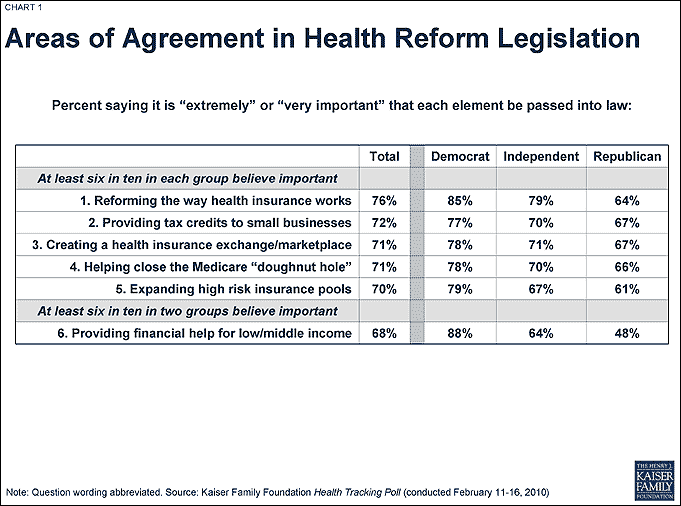
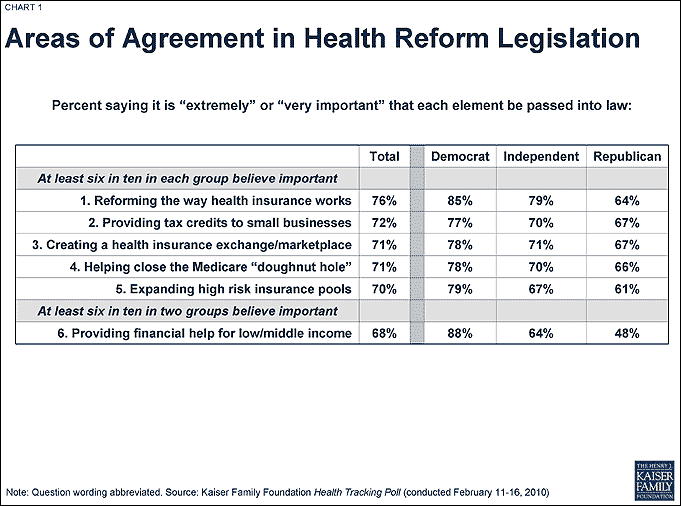
As Democratic and GOP lawmakers prepare for the upcoming health reform summit, the February Kaiser Health Tracking Poll finds that at least six of every ten Republicans, Democrats and independents back at least some of the key provisions in the reform bills that have passed the House and Senate. They include measures that would: reform the way health insurance works, such as preventing insurers from excluding people because of pre-existing conditions; offer tax credits to small businesses to help their workers get coverage; create a new health insurance marketplace; help close the Medicare “doughnut hole” so that seniors would no longer face a period of having to pay the full cost of their medicines; and expand high-risk insurance pools for individuals who cannot get coverage elsewhere. Providing subsidies to lower and middle income people also received strong support from Democrats and independents and near majority support from Republicans.
“While the intense debate over health care reform has divided the public, it looks like there is bipartisan support on at least some elements of health reform legislation, and more bipartisan support outside the beltway than there is inside,” said Kaiser President and CEO Drew Altman.
Along with these areas of agreement were differences of opinion that broke along party lines. Expanding Medicaid received majority support from Democrats and independents, but was deemed important to pass into law by a much smaller share of Republicans, 34 percent. On the other hand, limiting malpractice lawsuit payments ranked second among priorities for Republicans, but barely cracked the top 10 for Democrats and independents.
More and Less Popular Provisions
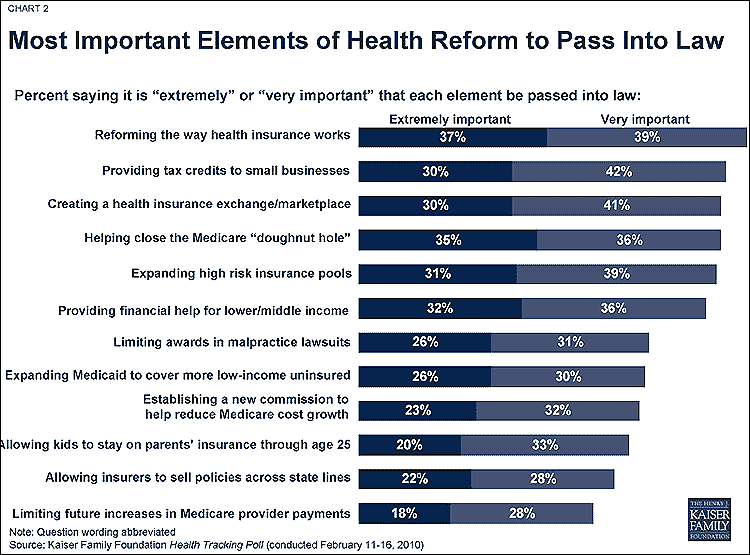
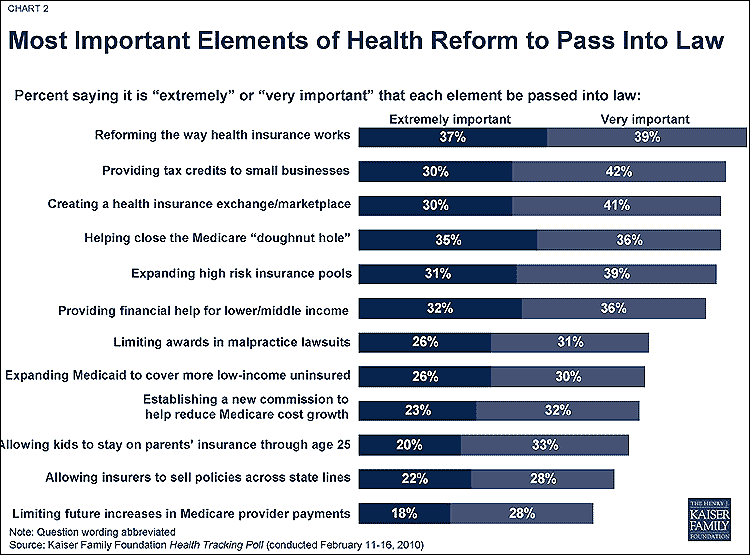
Given a list of various elements of health care reform, more than two-thirds of the public overall said it was either “extremely” or “very important” that these changes be passed into law: reforming the way health insurance works ( 76%), providing tax credits to small businesses (72%), creating a health insurance exchange (71%), helping close the Medicare “doughnut hole” (71%), expanding high-risk insurance pools (70%), and providing financial help for lower- and middle-income people (68%). At the bottom of the list, though still receiving significant levels of support, were measures to allow insurers to sell policies across state lines (50%) or to limit future increases in Medicare provider payments (46%).
The February Tracking Poll did not examine public opinion on the full range of measures to finance health reform or the public option; subjects which have been addressed comprehensively in previous tracking polls.
All Sides Point to Politics as the Reason for the Delay in Passing Health Reform
Most Americans attribute the delays in passing health care reform to political gamesmanship, with 59 percent saying the delays are “more about both sides playing politics” and 25 percent saying they are “more about Republicans and Democrats having disagreements.” This sentiment runs the political gamut, with 61 percent of Democrats, 62 percent of independents and 53 percent of Republicans fingering political considerations as the primary reason for the delays.
The large majority of Democrats reported feeling frustration and disappointment about the legislation being stalled, as did a narrow majority of independents. Most Republicans reported feeling “relieved.”
Moving Forward from Here
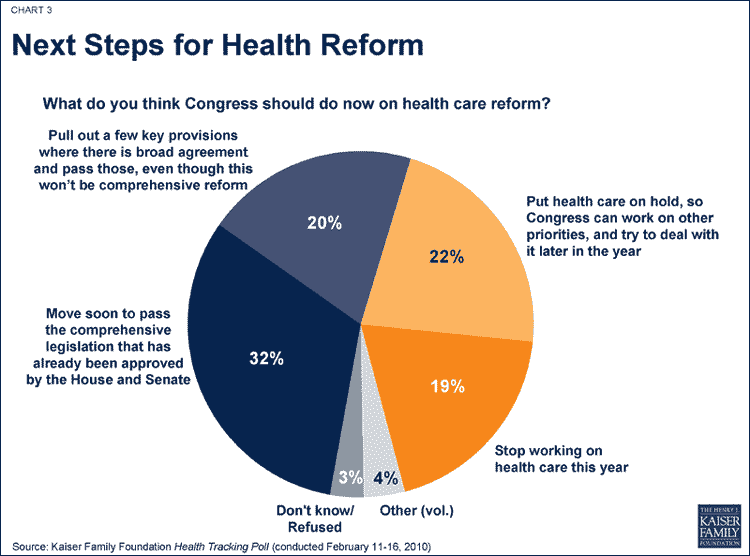
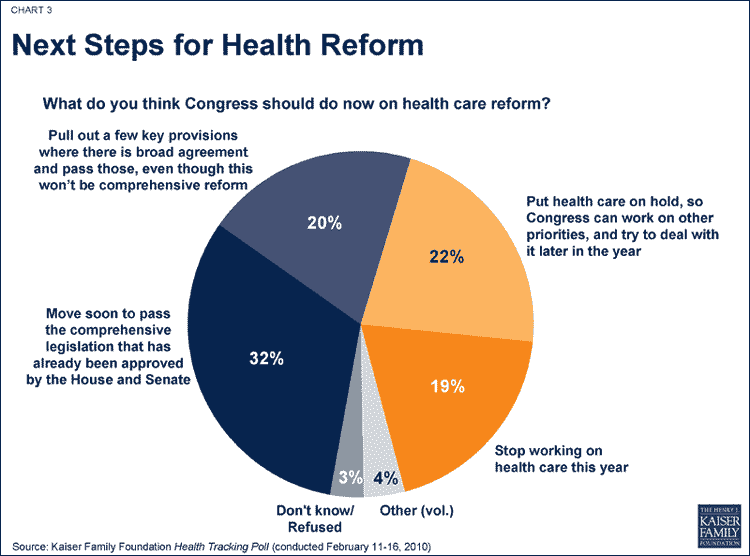
The poll shows that after a long and intense debate, the public has mixed views about how quickly and how comprehensively to move on reform, but relatively few hope the matter is dropped altogether. Overall, 32 percent hope Congress will send some version of the House and Senate’s comprehensive overhaul legislation to the president, and another 20 percent support pulling out some key provisions on which there is broad agreement and just passing those. Another 22 percent would rather Congress put health care on hold and deal with other priorities. And a similar percentage (19%) would like to pull the plug on health care reform for 2010.
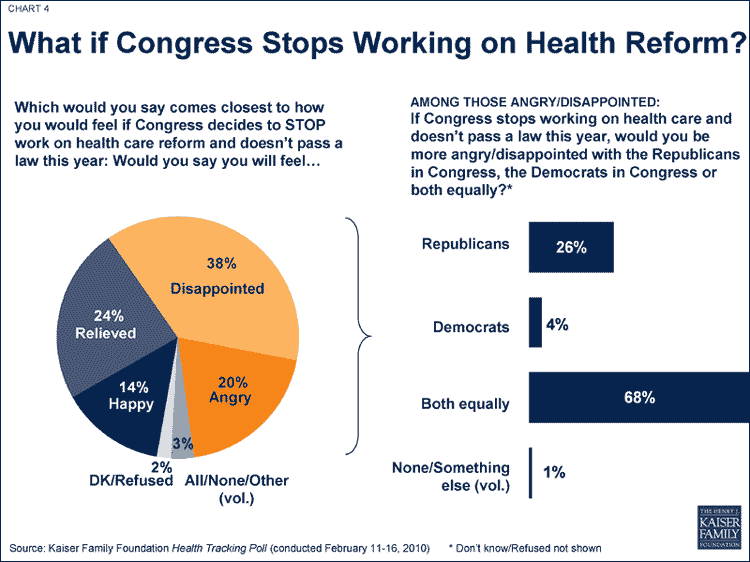
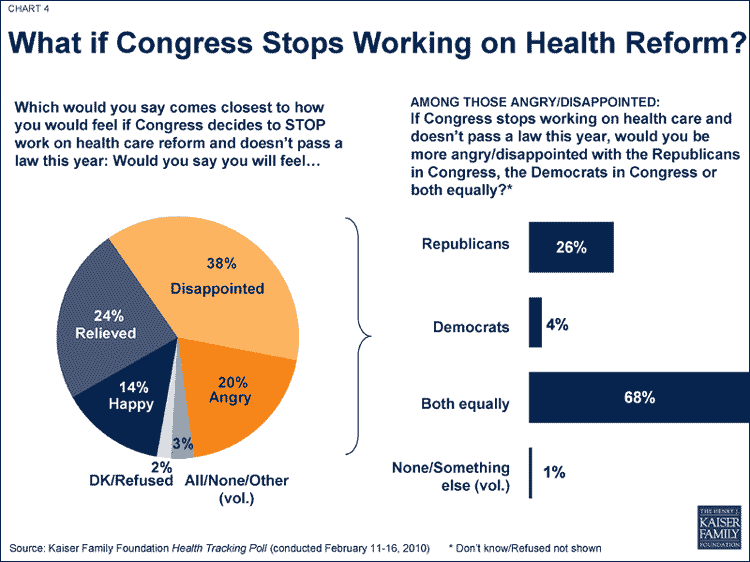
When all is said and done, 58 percent of Americans say they will be either disappointed or angry if Congress decides to stop working on health care reform. Thirty-eight percent say they expect to feel happy or relieved. The numbers are roughly reversed when the public is asked how they will feel if Congress passes reform, with 54 percent naming a positive emotion and 38 percent a negative one.
The survey was designed and analyzed by public opinion researchers at the Kaiser Family Foundation and was conducted February 11 through February 16, 2010, among a nationally representative random sample of 1,201 adults ages 18 and older.Telephone interviews conducted by landline (800) and cell phone (401, including 192 who had no landline telephone) were carried out in English and Spanish. The margin of sampling error for the total sample is plus or minus 3 percentage points. For results based on subgroups, the margin of sampling error is higher.
The Kaiser Family Foundation is a non-profit private operating foundation, based in Menlo Park, California, dedicated to producing and communicating the best possible information and analysis on health issues.
For further information contact:Rakesh Singh, (650) 854-9400, RSingh@kff.orgChris Lee (202) 347-5270, CLee@kff.org
Americans Remain Split On Stalled Health Care Legislation, but Some Provisions Popular Among Majorities of Democrats, Independents and Republicans
Most See Delays As Driven By Politics Rather Than Policy
MENLO PARK, CA – The latest Kaiser Tracking Poll finds the public still split on health care reform legislation, with 43 percent in favor and 43 percent opposed.However, the poll also finds that majorities of Americans of all political leanings support several provisions in the health reform proposals in Congress and most attribute delays in passing the legislation to political gamesmanship rather than policy disagreements.
As Democratic and GOP lawmakers prepare for the upcoming health reform summit, the February Kaiser Health Tracking Poll finds that at least six of every ten Republicans, Democrats and independents back at least some of the key provisions in the reform bills that have passed the House and Senate. They include measures that would: reform the way health insurance works, such as preventing insurers from excluding people because of pre-existing conditions; offer tax credits to small businesses to help their workers get coverage; create a new health insurance marketplace; help close the Medicare “doughnut hole” so that seniors would no longer face a period of having to pay the full cost of their medicines; and expand high-risk insurance pools for individuals who cannot get coverage elsewhere.Providing subsidies to lower and middle income people also received strong support from Democrats and independents and near majority support from Republicans.
“While the intense debate over health care reform has divided the public, it looks like there isbipartisan support on at least some elements of health reform legislation, and more bipartisan support outside the beltway than there is inside,” said Kaiser President and CEO Drew Altman.
Along with these areas of agreement were differences of opinion that broke along party lines. Expanding Medicaid received majority support from Democrats and independents, but was deemed important to pass into law by a much smaller share of Republicans, 34 percent. On the other hand, limiting malpractice lawsuit payments ranked second among priorities for Republicans, but barely cracked the top 10 for Democrats and independents.
More and Less Popular Provisions
Given a list of various elements of health care reform, more than two-thirds of the public overall said it was either “extremely” or “very important” that these changes be passed into law:reforming the way health insurance works ( 76%), providing tax credits to small businesses (72%), creating a health insurance exchange (71%), helping close the Medicare “doughnut hole” (71%), expanding high-risk insurance pools (70%), and providing financial help for lower- and middle-income people (68%). At the bottom of the list, though still receiving significant levels of support, were measures to allow insurers to sell policies across state lines (50%) or to limit future increases in Medicare provider payments (46%).
The February Tracking Poll did not examine public opinion on the full range of measures to finance health reform or the public option; subjects which have been addressed comprehensively in previous tracking polls.
All Sides Point to Politics as the Reason for the Delay in Passing Health Reform
Most Americans attribute the delays in passing health care reform to political gamesmanship, with 59 percent saying the delays are “more about both sides playing politics” and 25 percent saying they are “more about Republicans and Democrats having disagreements.” This sentiment runs the political gamut, with 61 percent of Democrats, 62 percent of independents and 53 percent of Republicans fingering political considerations as the primary reason for the delays.
The large majority of Democrats reported feeling frustration and disappointment about the legislation being stalled, as did a narrow majority of independents. Most Republicans reported feeling “relieved.”
Moving Forward from Here
The poll shows that after a long and intense debate, the public has mixed views about how quickly and how comprehensively to move on reform, but relatively few hope the matter is dropped altogether. Overall, 32 percent hope Congress will send some version of the House and Senate’s comprehensive overhaul legislation to the president, and another 20 percent support pulling out some key provisions on which there is broad agreement and just passing those. Another 22 percent would rather Congress put health care on hold and deal with other priorities. And a similar percentage (19%) would like to pull the plug on health care reform for 2010.
When all is said and done, 58 percent of Americans say they will be either disappointed or angry if Congress decides to stop working on health care reform. Thirty-eight percent say they expect to feel happy or relieved. The numbers are roughly reversed when the public is asked how they will feel if Congress passes reform, with 54 percent naming a positive emotion and 38 percent a negative one.
The survey was designed and analyzed by public opinion researchers at the Kaiser Family Foundation and was conducted February 11 through February 16, 2010, among a nationally representative random sample of 1,201 adults ages 18 and older.Telephone interviews conducted by land-line (800) and cell phone (401, including 192 who had no land-line telephone) were carried out in English and Spanish. The margin of sampling error for the total sample is plus or minus 3 percentage points. For results based on subgroups, the margin of sampling error is higher.
The full question wording, results, charts and a brief on the poll can be viewed online at here.
This package of resources examines the substantial enrollment growth in Medicaid between June 2008 and June 2009 and provides a mid fiscal-year 2010 update on key state Medicaid issues, including the impacts of the economic downturn.
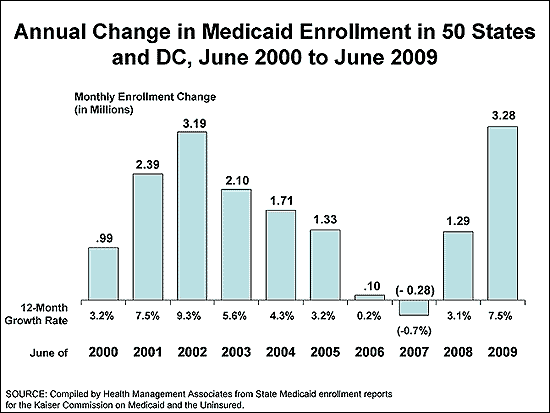
News ReleaseWith the country in a deep recession, nearly 3.3 million more people were enrolled in state Medicaid programs in June 2009 compared to the previous June, according to a new analysis, Medicaid Enrollment: June 2009 Data Snapshot (updated for 2011).
It was the first time since the early 1990s that every state experienced an increase in Medicaid enrollment, and in 32 states enrollment grew at least twice as fast as the year before, according to the analysis, which includes data breakouts by state.
The increase in enrollment reflects the role that Medicaid plays in reducing the numbers of people who become uninsured when the economy falters, with many people turning to the program for help after being laid off and losing their employer-based health insurance. Millions more who were not eligible for Medicaid likely joined the ranks of the nation’s uninsured.
A companion report, Medicaid’s Continuing Crunch in a Recession: A Mid-Year Update for State FY 2010 and Preview for FY 2011, finds that 44 states are experiencing higher than expected Medicaid enrollment and spending, prompting many to consider program cuts. Enhanced federal matching money for Medicaid provided through the federal stimulus law is set to expire on Dec. 31, 2010, further complicating state budgets.
Largest Ever One-Year Increase Illustrates Medicaid’s Role In Covering People During Economic Downturns But Further Strains Tight State Budgets
WASHINGTON, D.C. – With the country mired in a deep recession, nearly 3.3 million more people were enrolled in state Medicaid programs in June 2009 compared to the previous June, according to a new analysis by the Kaiser Family Foundation’s Commission on Medicaid and the Uninsured. It was the biggest ever one-year increase in terms of absolute numbers, and boosted the June monthly Medicaid enrollment by 7.5 percent to 46.9 million people.
It was the first time since the early 1990s that every state experienced an increase in Medicaid enrollment, and in 32 states enrollment grew at least twice as fast as the year before, according to the analysis, which includes data breakouts by state.
The increase in enrollment reflects the role that Medicaid plays in reducing the numbers of people who become uninsured when the economy falters, with many people turning to the program for help after being laid off and losing their employer-based health insurance. Millions more who were not eligible for Medicaid likely joined the ranks of the nation’s uninsured.
“State Medicaid programs have been able to help millions of Americans who have nowhere else to turn in a recession,” said Diane Rowland, Executive Vice President of the Foundation and Executive Director of KCMU. “But the states obviously face significant fiscal pressures as increases in enrollment push up costs at a time when state budgets are already severely constrained.”
A new Kaiser survey of state Medicaid directors finds that 44 states and the District of Columbia are experiencing higher than expected program enrollment, resulting in increased spending for fiscal year 2010. At least 29 states say they are considering additional mid-year cuts in provider rates and program benefits.
Enhanced federal matching money for Medicaid provided through the American Recovery and Reinvestment Act of 2009 has proved critical in helping states maintain coverage. But that money is scheduled to expire on Dec. 31, 2010, which will increase the strain on state fiscal year 2011 budgets, Medicaid directors reported.
Although Medicaid enrollment is on the rise, costs of the program as measured on a per-person basis are not climbing at a faster rate than health costs more generally. (See “An Actuarial Rorschach Test”). Moreover, in past recessions, after the economy has improved, Medicaid enrollment growth has slowed and sometimes contracted, suggesting that the record rate of enrollment growth seen in 2009 will eventually subside.
The enrollment analysis is part of a package of resources released today in advance of a joint Kaiser Commission on Medicaid and the Uninsured (KCMU)-Alliance for Health Reform briefing on state budgets, Medicaid and the economy on Feb. 22.
The Kaiser Family Foundation is a non-profit private operating foundation, based in Menlo Park, California, dedicated to producing and communicating the best possible information, research and analysis on health issues.
The Kaiser Commission on Medicaid and the Uninsured provides information and analysis on health care coverage and access for the low-income population, with a special focus on Medicaid’s role and coverage of the uninsured. Begun in 1991 and based in the Kaiser Family Foundation’s Washington, D.C. office, the Commission is the largest operating program of the Foundation. The Commission’s work is conducted by Foundation staff under the guidance of a bipartisan group of national leaders and experts in health care and public policy.
My colleagues have worked on this column with me and I invited them to join me as authors.
As with pretty much every other discussion of health care going back to the days of Roosevelt, the great reform debate of 2009 (and now 2010) has been distilled into an ideological battle over the role of government. A government-sponsored “public option” has been off the table for a while now, yet still critics say the Democratic reform plans would represent a “government takeover” of the health system.
And it’s through that filter that observers and the media reacted to the latest projections from the Centers for Medicare and Medicaid Services (CMS) showing that public spending in health will soon exceed private spending, as if the projections were an actuarial Rorschach test. Is it evidence that the government is “taking over the health care system”? Or that spending for Medicare and Medicaid is “out of control”? Or is it something else altogether?
Predictably, the projections show a big jump in national health spending as a percentage of GDP (to 17.3%). CMS actuaries estimate that health spending rose 5.7% in 2009 while the bottom dropped out of the economy. Equally unsurprising is their forecast that health spending will rise to 19.3% of GDP by 2019, further underscoring the need to get health care costs under control over the long term. (In fact, a little more surprising was their estimate that health spending will grow over the next ten years at an average of 1.7 percentage points faster than GDP. Over the last two decades, the average gap has been more like 2.0 percentage points.)
The conclusions that got more attention were that the public sector will start paying more than half of the nation’s health care bill starting in 2012, and that government spending will grow faster than private spending from 2009 to 2019 (an average of 7.0% per year vs. 5.2%). Why is this happening?
Public spending will exceed private spending because we are coming out of a long and deep recession and because of the basic arithmetic of the baby boom. And while this may surprise some or fly in the face of conventional wisdom, when you compare spending increases in public programs and the private sector fairly, neither looks as good as we would like, but public programs actually look somewhat better (despite the fact that they cover a sicker and more expensive population).
Let’s start with Medicaid. The actuaries estimate that Medicaid spending grew 9.9% in 2009 and will increase by 8.9% in 2010. But that rapid growth is mainly due to more families relying on Medicaid as workers lose their jobs, and with them, their health insurance. A survey of state officials by the Kaiser Family Foundation’s Commission on Medicaid and the Uninsured found that Medicaid enrollment grew by 7.5% from June 2008 to June 2009. Medicaid is, as intended, serving a counter-cyclical role.
In Medicare — our other major public health insurance program — actuaries predict that spending will grow by 6.9% per year over the next decade vs. 5.2% for health spending in the private sector. The big driver there is an increasing number of people turning age 65 as a result of the baby boom, leading to more people covered by Medicare rather than private insurance. Indeed, Medicare’s trustees project that the ratio of workers to Medicare beneficiaries will fall from about 3.7 in 2008 to around 3 by 2018. That means that while the number of people covered by Medicare is projected to grow by about 30% over that period, the number of workers will grow by only about 6%.
In fact, government programs have done a little bit better job at controlling spending than the private sector. According to figures from the actuaries, Medicare per capita costs grew at an average annual rate of 6.8% over the ten years from 1998 to 2008, while private health insurance costs per capita grew by 7.1%. And, this overstates Medicare cost growth, since a new drug benefit was added during that period. Based on figures from the actuaries that compare costs on a “common benefits” basis, Medicare per capita costs grew at an average rate of 4.9% per year over the period, substantially less than the 7.1% rate for private insurance. Comparable Medicaid spending data only goes back to 2000, but shows a similar result: per capita spending increases for covered families averaged 5.2% per year over the period, compared to 7.2% for private insurance. (These Medicaid figures exclude the elderly and disabled, where cost growth was even lower due to modest increases for long-term care services.)
The share of health spending from public programs is growing, but it’s simply not true that public programs are “out of control” when fairly compared to the private sector on an apples to apples basis. Some argue that public programs achieve lower growth in per capita spending by underpaying providers. Others see their lower payments as a virtue, arguing that they simply succeed in driving a harder bargain than the private sector does. Whatever your view, their rate of increase in per capita spending has generally been lower despite covering higher cost patients.
Given all this, what’s the right way to answer some of the questions that have arisen as people have looked at the “inkblot” spending projections released by CMS:
With a greater share of health spending in government programs, will government have greater control over health care financing? YES, but that control is spread over the federal Medicare program and 50 state-federal Medicaid programs, so it’s quite diffused.
Is government health spending out of control? NO, and in fact contrary to conventional wisdom, government health programs are performing as well, if not better than the private sector.
Are we witnessing a government takeover of the health care system? NO. The greater share of health spending represented by government programs in the actuaries’ projections is not the result of any grand policy decision to push out the private sector, but rather just the byproduct of economic and demographic trends. And, rhetoric notwithstanding, health care in this country is delivered primarily though private doctors, hospitals and other providers. Nothing about that has changed, nor is it likely to do so regardless of what share of the health care dollar is public.
The real message from the CMS report has nothing to do with a government takeover. The report simply underscores the need to control health care costs in the public and the private sectors alike.
Tuesday, February 2nd marked a milestone of sorts in the health reform debate: there was no story on health reform in the New York Times (national edition). I haven’t done a study, but as a professional New York Times (NYT) reader, I am virtually certain that this is the first day in over a year without a story in the NYT on health reform.
The day of silence in the NYT is reflective of the astonishing braking power health has shown as an issue since the special election in Massachusetts, going from 100 mph to about 10 mph in just a matter of weeks.
National health reform legislation could still pass in the coming weeks; no one can claim to be able to predict for certain what will happen now. But it is clear that leaders will now focus less on health and much more on jobs and the economy, and media coverage will follow their lead. And as the national conversation shifts, polls are likely to begin to show health slipping as a public priority. But don’t be misled. That will not be because people are less worried about paying for health care or about losing their health coverage if they lose their job; they remain very worried about these things. It will simply be because leaders are talking less about health and health reform and the media is covering health less. When people hear less about an issue, their sense of its importance falls relative to other issues — remember the rise and fall of immigration. And of course, the underlying problems health reform was designed to address have not gone away and will keep the public, employers and government concerned about health care. Just this week we learned from Centers for Medicare and Medicaid Services that health spending has reached 17% of GDP.
On the other hand, if and when leaders rekindle the debate, media coverage will follow and health will rise again as a priority in the polls. Whether national leaders return to comprehensive health reform legislation this month, in a few months, or in several years, there will be an underlying reservoir of public concern for them to tap into. This may surprise you, but polls show quite clearly that the underlying level of public anxiety about health has in fact been largely unchanged since the early 1990’s. Consider these two measures as examples. In 1992, 61% of the American people said they were worried about paying for health care in the future; a similar percentage, 62%, says the same thing today. In 1992, 37% of the American people said “our health care system has so much wrong with it, it needs to be completely rebuilt”; 34% say that now. On both questions (and there are many others), results have moved within a narrow range since the early 90’s. Public concern has been a constant; it’s what leaders do that changes as we have elections and political control shifts, and that in turn drives what is on the media’s radar screen and on the public’s mind when they are asked in polls what the top issues are facing the nation or the president and the congress. (When people are asked about what the top problems are facing them or their families they often give very different answers).
In the middle of the last big health reform debate, the percentage of Americans naming health as one of the top two issues facing the country shot up to more than 50%. Immediately after that debate subsided, the percentage fell into the teens and remained there for 15 years. Generally, only a big unexpected event can change the equation and propel an issue into the forefront, such as a war, a terrorist attack or a natural disaster (and controversial failed response) like Katrina. There are big implications here for strategies to affect policy change. Are top-down or bottom-up strategies more effective? Strategies that target the bottom and the top of the pyramid to influence policy are both important, but my subject today is a more limited one – anticipating the polls.
One big challenge for health is that it has never really broken through as a voting issue even when it ranks fairly highly on the public’s issue priority list. The recent special senate election in Massachusetts was an exception, and even there for Brown voters health was primarily a proxy for broader voter discontent. With very few exceptions, health has not been a decisive issue in elections, either by rewarding or punishing candidates who take strong positions on health reform. The upcoming midterm elections will be the next test of whether that will happen in key races, with key swing voting groups such as seniors or independents, or in the electorate overall. If health reform fails, we will see if the narrower slice of the electorate that tends to vote in midterms will punish Democratic candidates for failing to deliver or reward Republican candidates who run on anti-health reform planks. But if history is a guide, other factors — the qualities of the candidates themselves, local issues, other national issues and especially jobs and the economy – will have a much greater influence on people’s votes. So don’t be surprised if health does not register as a critical voting issue in the midterm election exit polls, it almost never has.
It’s hard to put an overly positive face on the apparent pause in the health reform effort or, at this point, to say with any certainty what will happen next. But there is at least one side benefit if a pause eases public anxiety. The rancorous and fiercely partisan debate has made the public anxious about change and it has made health reform a symbol for many voters of what they don’t like about the policy making process and the political system overall. This is one reason why our polls show that the public is so sharply divided about the legislation overall, but much more positive about the legislation when we tell them what it actually would do. The legislation became a symbol of deeper divisions in America beyond its substance which, with a few notable exceptions, people like. The pause, even a short one lasting a month, could lower temperatures enough so that health reform debate focuses more on the substance and what it does for people and is less of a lightening rod for deeper divisions in our country. Well, maybe.
In any case, don’t make too much of polls showing health dropping as a public priority or of exit polls in the midterm election showing health was not a critical factor if and when they emerge. The public’s underlying concerns about the affordability of health care will not really have changed. And if health does not drop as a priority as national discussion moves on to other issues (or actually rises), or if health registers as a voting issue across the country, that should really send a message to elected officials.
The February Kaiser Health Tracking Poll finds the public still split on health care reform legislation, with 43 percent in favor and 43 percent opposed. However, the poll also finds that majorities of Americans of all political leanings support several provisions in the health reform proposals in Congress and most attribute delays in passing the legislation to political gamesmanship rather than policy disagreements.
The poll finds that at least six of every 10 Republicans, Democrats and independents back at least some of the key provisions in the reform bills that have passed the House and Senate. They include measures that would: reform the way health insurance works, such as preventing insurers from excluding people because of pre-existing conditions; offer tax credits to small businesses to help their workers get coverage; create a new health insurance marketplace; help close the Medicare “doughnut hole” so that seniors would no longer face a period of having to pay the full cost of their medicines; and expand high-risk insurance pools for individuals who cannot get coverage elsewhere. Providing subsidies to lower and middle income people also receives strong support from Democrats and independents and near majority support from Republicans.