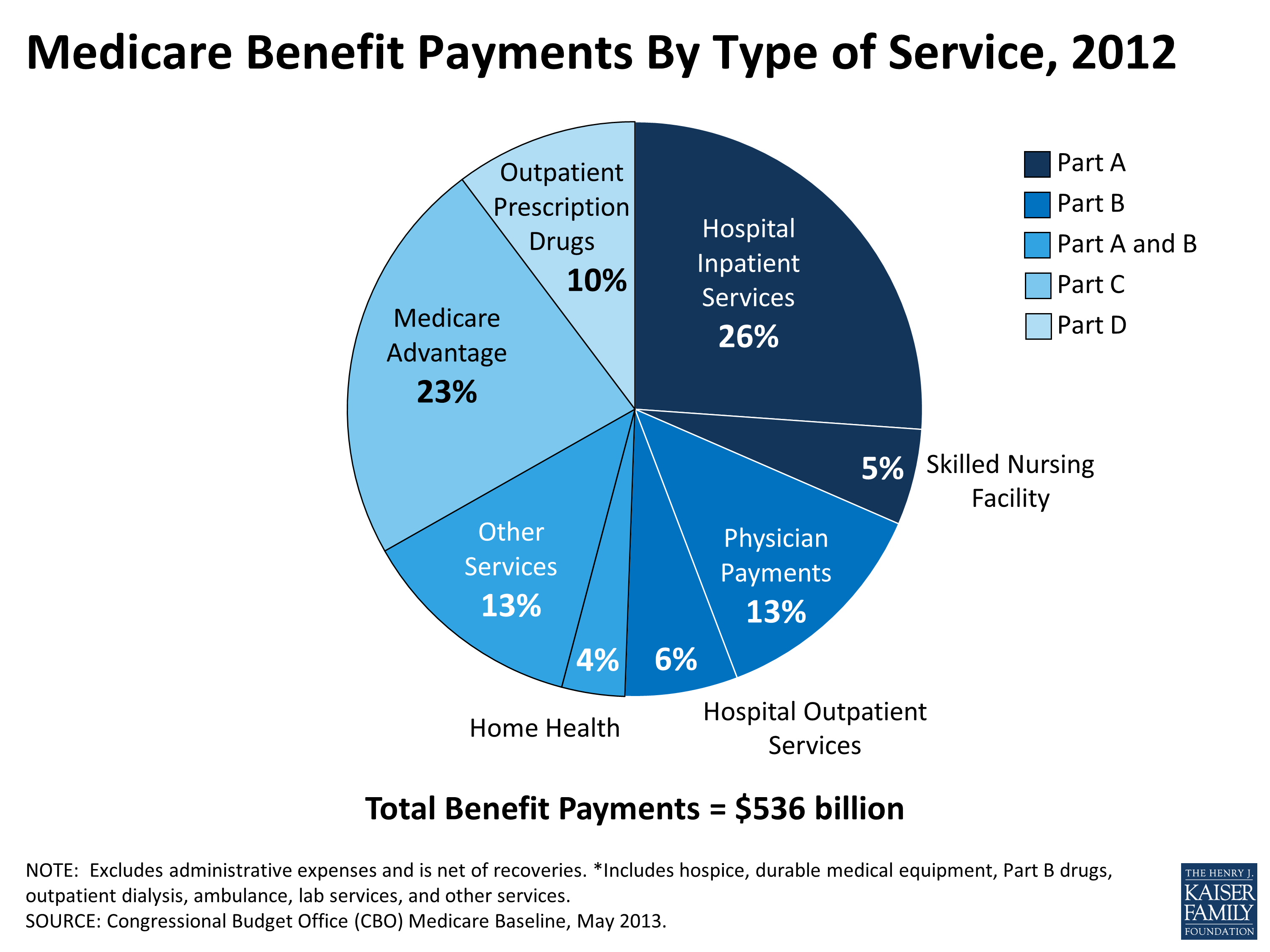
Medicare Benefit Payments By Type of Service, 2012
Source
Congressional Budget Office (CBO) Medicare Baseline, May 2013.
The independent source for health policy research, polling, and news.
Congressional Budget Office (CBO) Medicare Baseline, May 2013.
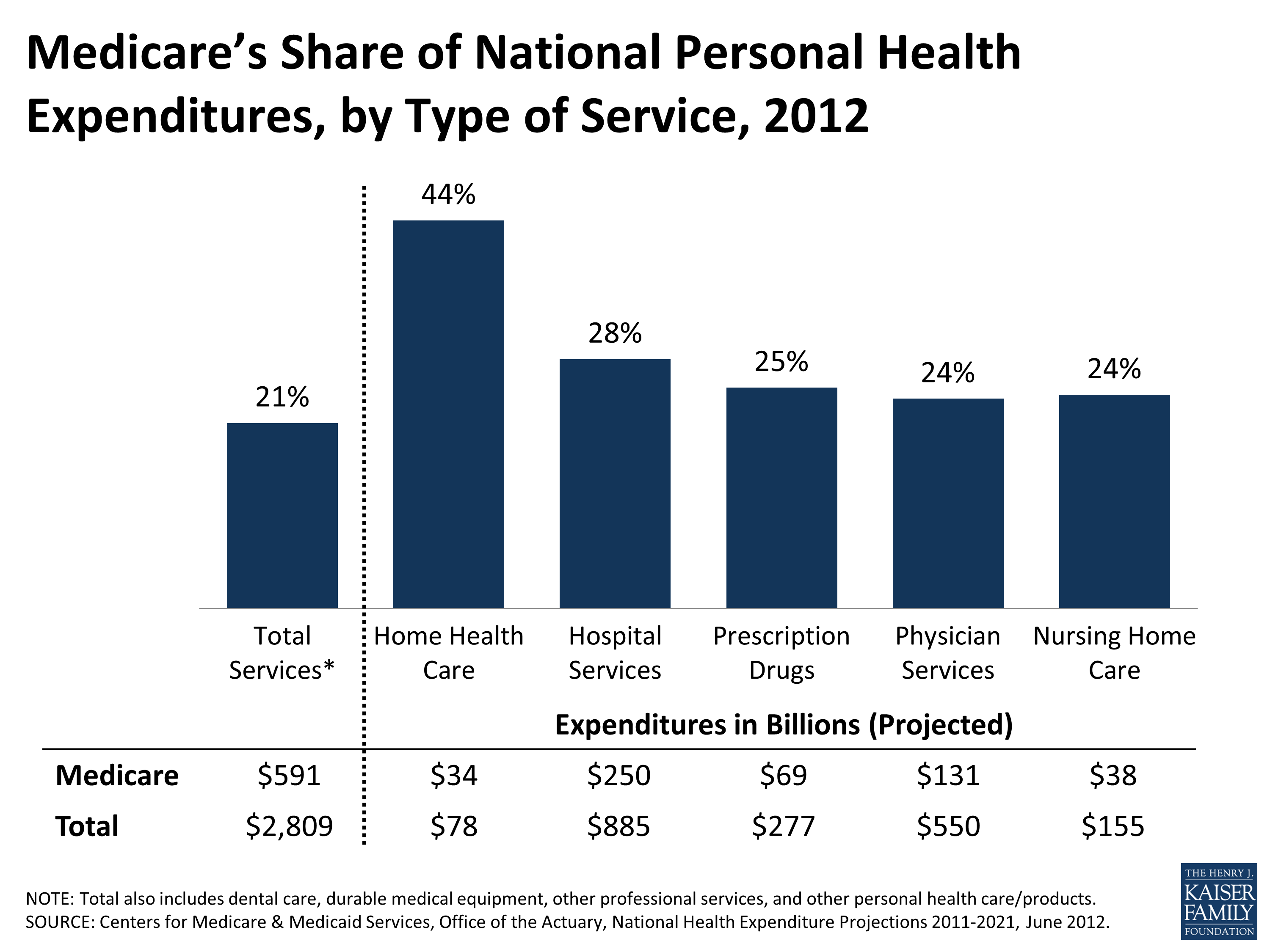
Centers for Medicare & Medicaid Services, Office of the Actuary, National Health Expenditure Projections 2011-2021, June 2012.
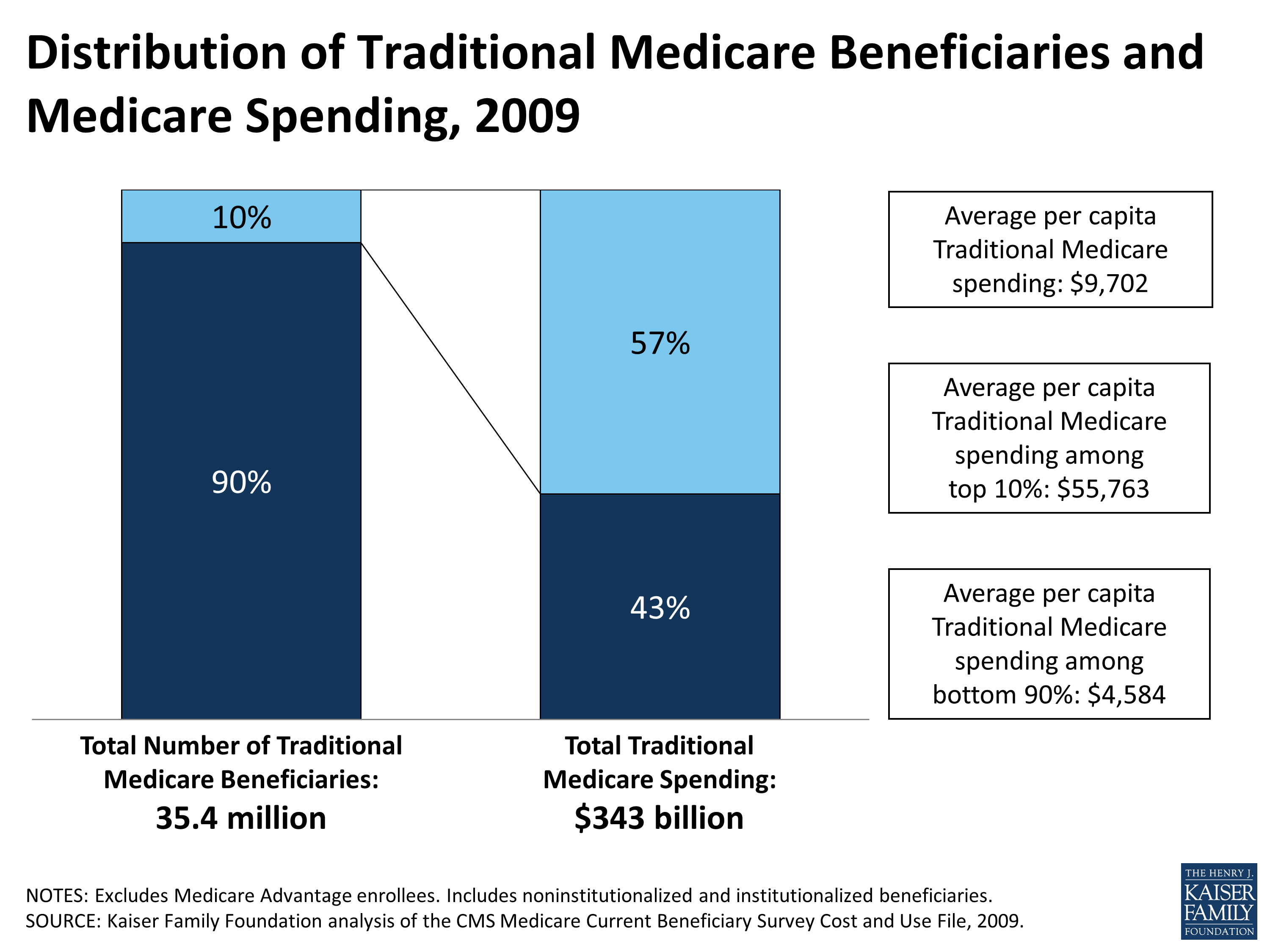
Kaiser Family Foundation analysis of the CMS Medicare Current Beneficiary Survey Cost and Use File, 2009.
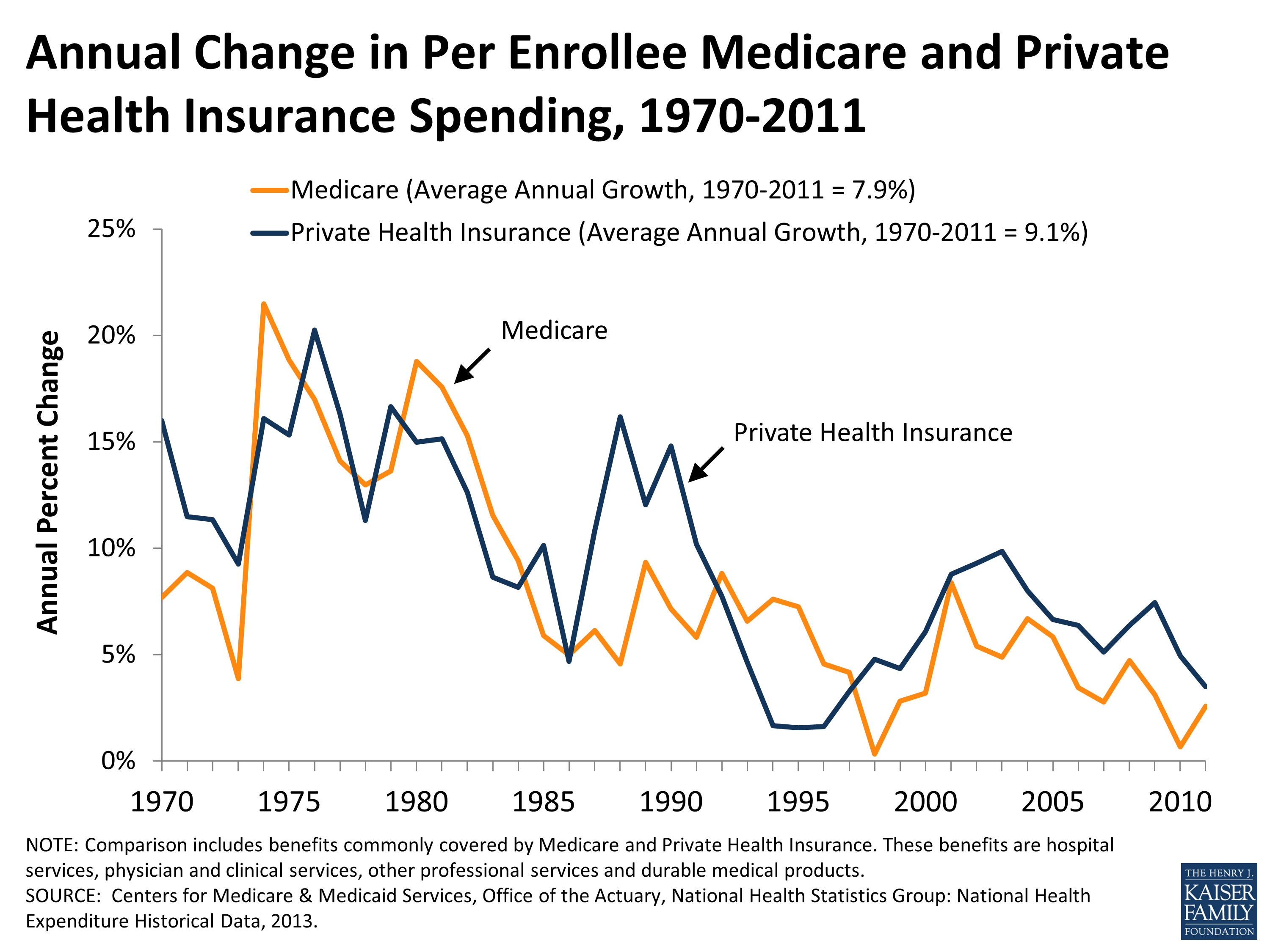
Centers for Medicare & Medicaid Services, Office of the Actuary, National Health Statistics Group: National Health Expenditure Historical Data, 2013.
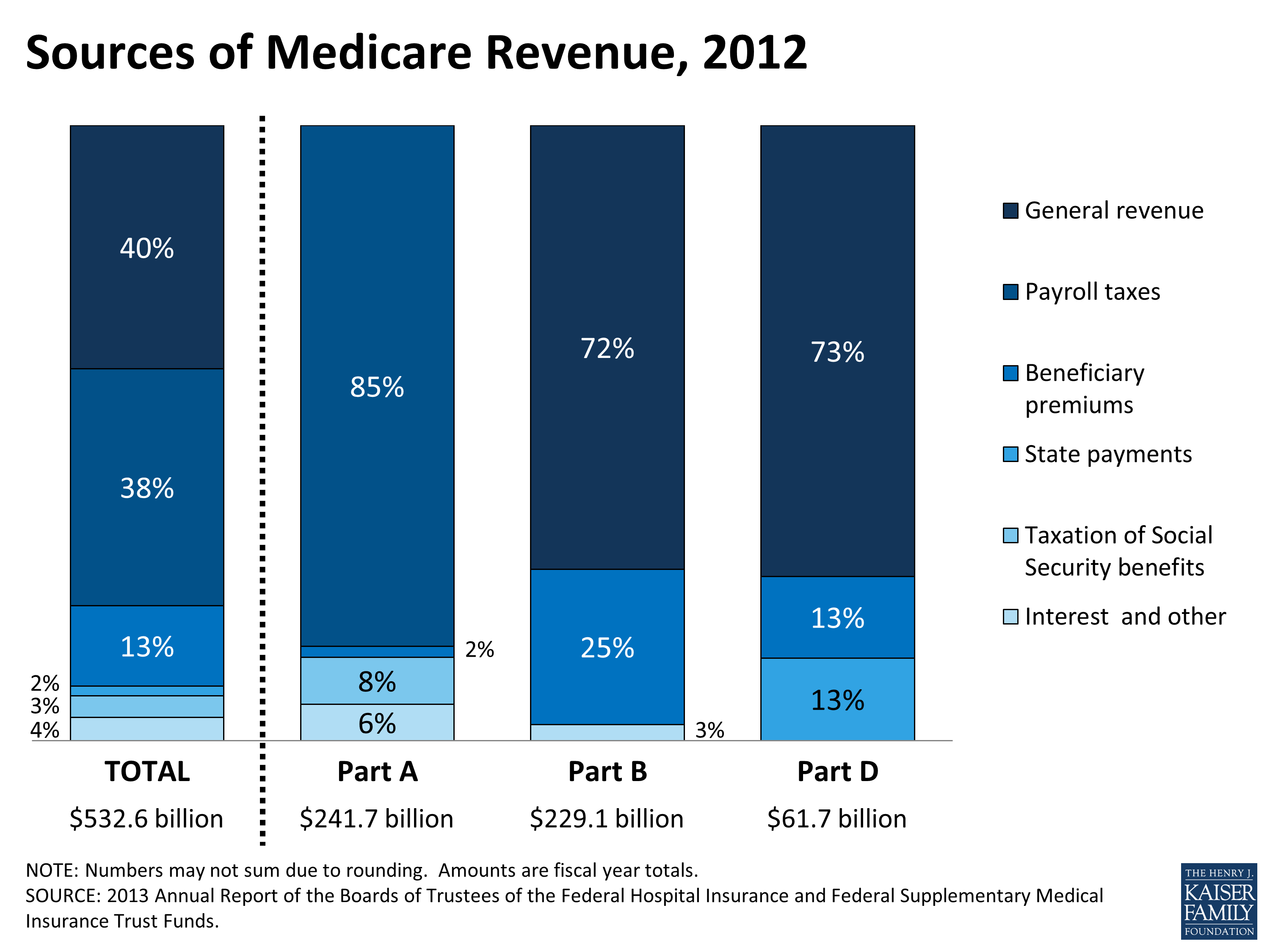
2013 Annual Report of the Boards of Trustees of the Federal Hospital Insurance and Federal Supplementary Medical Insurance Trust Funds.
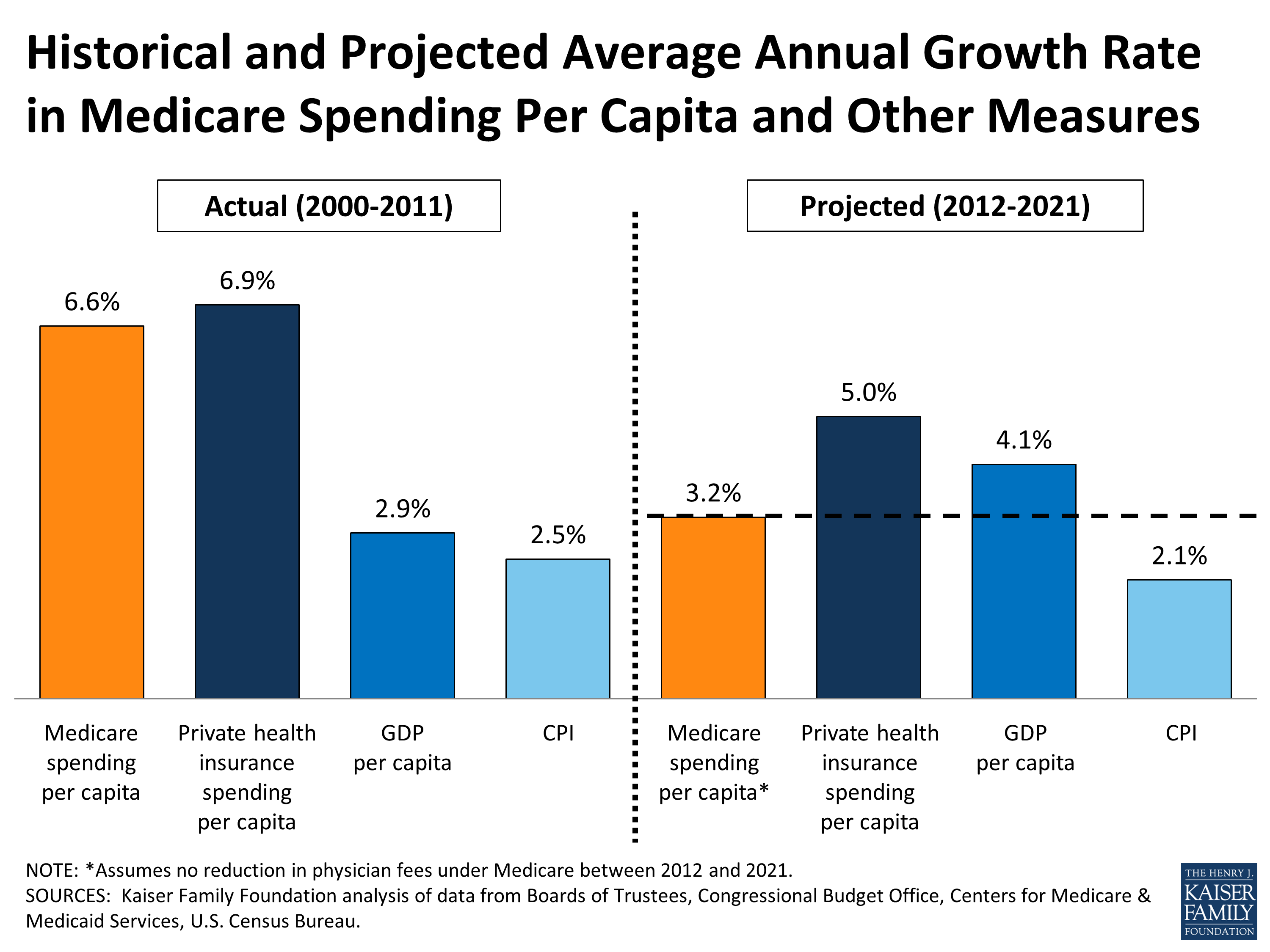
Kaiser Family Foundation analysis of data from Boards of Trustees, Congressional Budget Office, Centers for Medicare & Medicaid Services, U.S. Census Bureau.
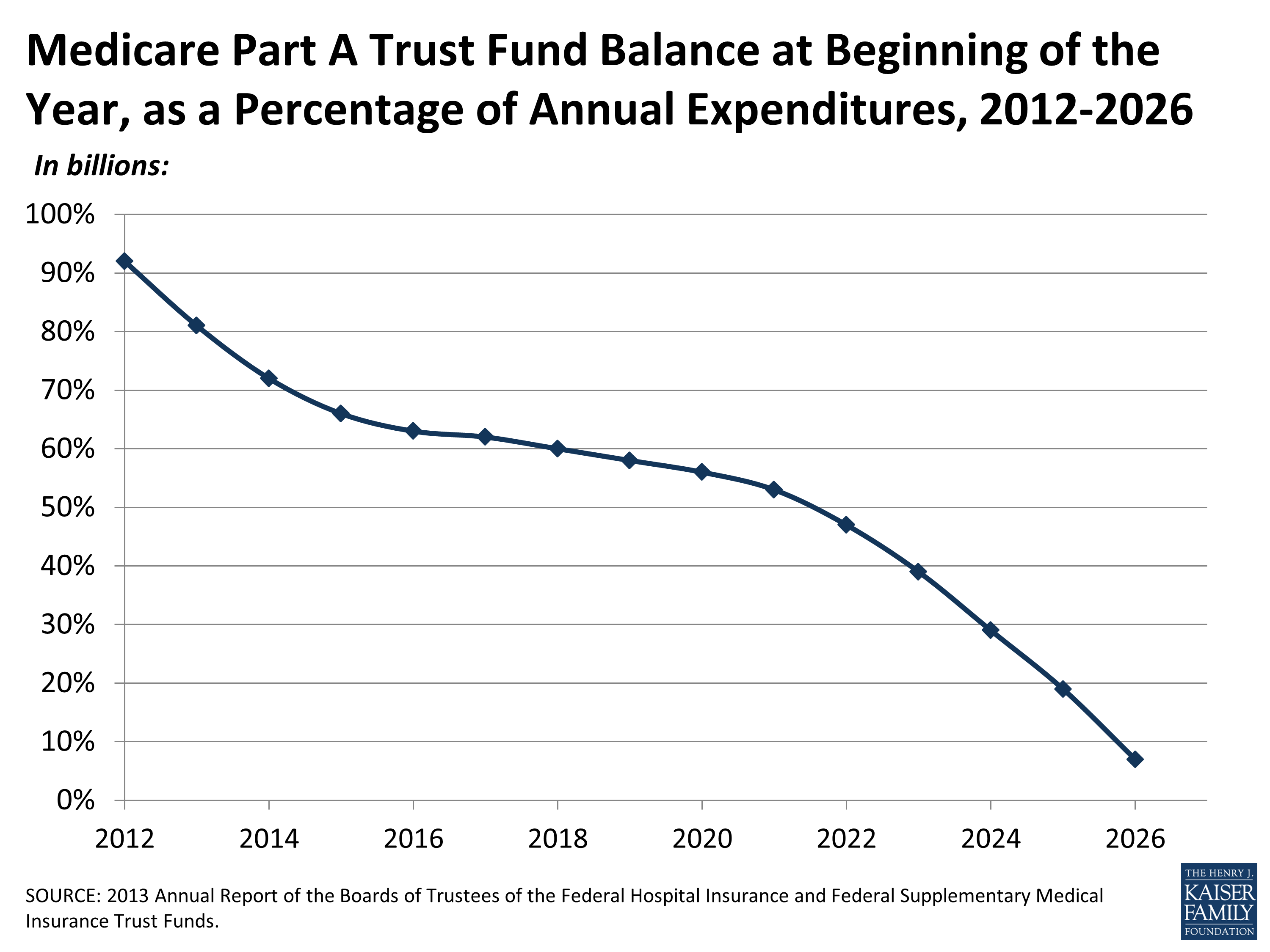
2013 Annual Report of the Boards of Trustees of the Federal Hospital Insurance and Federal Supplementary Medical Insurance Trust Funds.
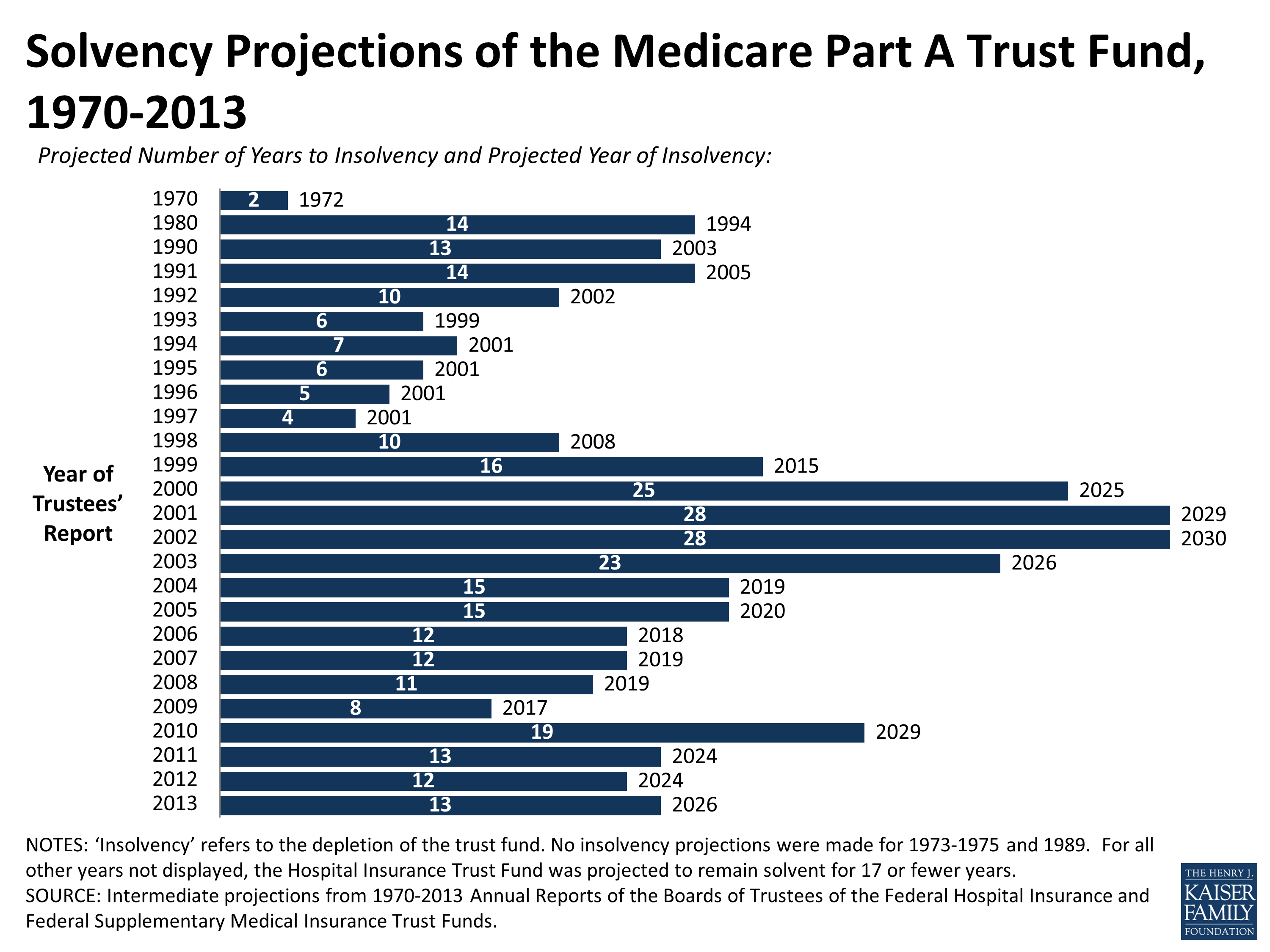
Intermediate projections from 1970-2013 Annual Reports of the Boards of Trustees of the Federal Hospital Insurance and Federal Supplementary Medical Insurance Trust Funds.
The Senate Committee on Appropriations approved the FY 2013 Labor, Health & Human Services, Education and Related Agencies appropriations bill (S. 1284) by a vote of 16-14. A report (113-71) released by the committee provided the funding levels for global health programs at the Centers for Disease Control and Prevention (CDC) and the John E. Fogarty International Center. Additional funding for global health programs and research conducted by the National Institutes of Health (NIH) is not yet available.
Note: The majority of U.S. global health funding is provided through the State & Foreign Operations appropriations bill which has not yet been introduced.
| Area | FY12 Final (millions) | FY14 Senate (millions) | Difference: Senate – FY12 (millions) |
| Centers for Disease Control and Prevention (CDC) | |||
| Global AIDS Program | $117.1 | $116.9 | $-0.2 (-0.2%) |
| Global Immunization | $160.3 | $195.0 | $34.7 (21.7%) |
| Polio Eradication | $111.3 | $146.1 | $34.8 (31.3%) |
| Other Global Immunization | $49.0 | $48.9 | $-0.1 (-0.2%) |
| Global Disease Detection and Emergency Response | $41.6 | $41.5 | $-0.1 (-0.2%) |
| Parasitic Diseases and Malaria | $19.4 | $19.3 | $0.0 (-0.2%) |
| Global Public Health Capacity Development | $9.2 | $19.2 | $10.0 (108.3%) |
| Total CDC Funding | $347.6 | $392.0 | $44.4 (12.8%) |
| John E. Fogarty International Center | $69.6 | $72.4 | $2.8 (4%) |
Note: The President’s FY 2014 Budget Request for CDC includes a realignment of funding that is not taken into account in the Senate appropriations bill. As a result, a direct comparison between the FY 2014 Budget Request and the Senate appropriations bill is not possible.
Access the Senate Committee on Appropriations press release summarizing the appropriations bill here.
This report illustrates the diverse experiences of dually eligible beneficiaries – low-income seniors and younger adults with disabilities who are eligible for both Medicare and Medicaid – in obtaining medical care and non-medical, supportive services. Based on personal interviews, the profiles of 14 dually eligible beneficiaries residing in California, Florida, Massachusetts, Michigan, and Oklahoma highlight day-to-day experiences with accessing care, maintaining relationships with providers, managing prescription medications and personal finances, and relying on family and friends for additional support. Such personal stories add a human dimension to the ongoing conversations among federal and state policymakers about the importance of high quality, coordinated care for this population.
The report also includes a brief background on how dually eligible beneficiaries qualify for Medicare and Medicaid and what benefits are covered under each program as well as spending and enrollment data and a glossary of eligibility and service delivery system terms.