How Do Americans Cope With Loneliness?
The independent source for health policy research, polling, and news.
Key Takeaways
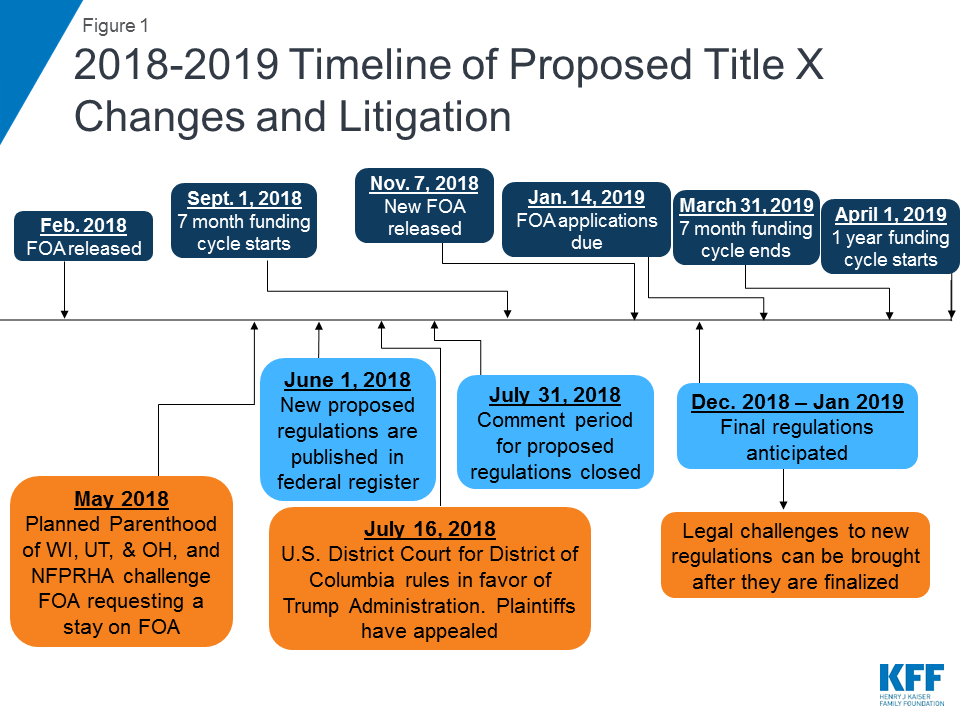
The Trump administration has taken numerous steps to alter significantly the Title X program, the federal grant program that supports family planning services to low-income women. These actions would block the availability of federal funds to family planning providers that also offer abortion services like Planned Parenthood, curtail counseling and referrals to abortion services by Title X funded providers, and direct new funds to faith-based and other organizations that promote fertility awareness and abstinence as methods of family planning. On June 1, 2018, the Trump administration issued a new proposed regulation that would restore Reagan-era restrictions regarding abortion and Title X that could significantly shrink the network of clinics available to provide family planning services to low-income women. This new proposed regulation comes in the midst of an already fraught and delayed new funding cycle for the Title X program that is being legally challenged by family planning groups and providers (Figure 1). This brief provides an overview of the Title X program, discusses the new 2018 funding announcement and related litigation, and reviews the Trump administration’s proposed regulations and the implications of these changes.
The statute governing Title X requires that program funds must serve low-income populations at low or no cost, provide clients with a broad range of acceptable and effective family planning methods and services, and ensure that the services are voluntary.1 It also stipulates that funds may only go to entities where “abortion is not a method of family planning.” Current regulations interpret this provision to mean that Title X projects are prohibited from using Title X funds to pay for abortions and must keep any abortion-related activities financially separate from their Title X activities. Title X projects are required to provide nondirective counseling to pregnant women on prenatal care and delivery, infant or foster care, adoption, and abortion. Pregnant women desiring an abortion must be provided with a referral if asked, but the provider cannot promote abortion, schedule an appointment, negotiate rates, or arrange transportation for women desiring abortions.
Key Facts – Title X National Family Planning Program
2018 Title X Funding Opportunity Announcement (FOA)
On February 23, 2018, the Trump administration issued the 2018 Title X Funding Opportunity Announcement (FOA) after a five-month delay. Three Planned Parenthood affiliates and the National Family Planning and Reproductive Health Association (NFPRHA) sued HHS claiming that the FOA violates the Title X statute and regulations and was not promulgated through proper rulemaking.2 ,3 On July 16, 2018, the U.S. District Court for the District of Columbia ruled in favor of the Trump administration, a decision the plaintiffs have since appealed.
The Office of Population Affairs funded all of the prior grantees, but issued contracts for only 7 months, ending March 31, 2019. On November 7, 2018, the Trump administration issued a new FOA due on January 14, 2019, for grants beginning April 1, 2019, and although the proposed regulations have not yet been finalized, many anticipate them to be published in late 2018/early 2019. The November 2018 FOA includes priorities that stand in sharp contrast to those of the Obama administration (which focused on achieving clinical standards of care and the provision of a broad range of contraceptive methods). Like the February 2018 FOA, the November 2018 FOA elevates natural family planning, infertility services, and abstinence counseling to a program priority. The FOA also promotes the provision of family planning care in a primary care setting and “fostering interaction with faith-based organizations,” deemphasizing the role of specialized family planning clinics such as Planned Parenthood, a significant provider of family planning services to low-income women in the US.4 References to hormonal contraception and clinical guidelines such as the QFP were re-introduced in the November 2018 FOA after being excluded in the February 2018 FOA.
On June 1, 2018, new proposed regulations for Title X grants were published in the Federal Register with a 60-day public comment period, which closed July 31, 2018. The proposed regulations would make many changes to the requirements for Title X projects that could significantly limit the network of providers who can qualify for funds; restrict the ability of participating providers from discussing and referring for abortion; and make other programmatic changes that could dramatically reshape the program and provider network available to low-income women through Title X. Specifically, they would:
Ban federal Title X funds from going to any provider that also provides abortion services. The Title X statute specifies that no federal funds appropriated under the program “shall be used in programs where abortion is a method of family planning.” HHS has changed its interpretation of this provision over time, but throughout the history of the program, the ban has generally been understood to mean that Title X funds cannot be used to pay for or support abortion, as is the policy under the current regulations (Appendix 1). The proposed regulation would:
Box 1 – Rust v. Sullivan, 500 U.S. 173 (1991)
In 1988, the Reagan administration issued proposed regulations that prohibited Title X projects from engaging in counseling concerning, referrals for, and activities promoting abortion as a method of family planning. The regulations also required Title X projects to be financially and physically separate from any prohibited abortion-related activities including separate personnel, accounting records, treatment, consultation, examination and waiting rooms, and banned signs or materials promoting abortion.
Title X grantees and doctors challenged the regulations with a lawsuit that ultimately reached the U.S. Supreme Court in Rust v. Sullivan. In 1991, the Supreme Court held that the regulations were a permissible interpretation of the statute and did not violate the First or Fifth Amendments. The Court ruled that the government is permitted to favor childbirth over abortion and may allocate funds consistent with this viewpoint without violating a woman’s right to choose to terminate her pregnancy.
Restrict referrals for abortions: The proposed regulations interpret counseling and referral for abortion to be activities that would be considered providing “abortion as a method of family planning” and would prohibit Title X grantees and subrecipients from providing, promoting, referring for, supporting, or presenting abortion services to patients.
The proposed regulations would allow for a limited exception –only if a pregnant Title X patient has already decided to have an abortion and explicitly requests a referral. In this case, a doctor (and not any other clinical staff) would be permitted–but not be required—to provide the pregnant woman with a list of health care providers that offer comprehensive prenatal care, some of which also provide abortion. The Title X doctor may not indicate which providers on the list offer abortion services.
Eliminate the requirement for nondirective pregnancy options counseling: The new regulations would eliminate the requirement that Title X projects provide nondirective pregnancy options counseling that includes discussion of abortion as an option. This would now be left up to each site and organization that participates (which may include those that do not support abortion) to decide whether to mention abortion as an option to pregnant women who seek counseling. However, the extent to which counseling for abortion is permissible is unclear. The text of the proposed regulations specifies that all pregnant women must be referred to prenatal care, regardless of their stated wishes and would not allow discussion of abortion during that counseling session. The preamble, a non-binding introduction to the regulation, states: “Recognizing, however, the duty of a physician to promote patient safety, a doctor would be permitted to provide nondirective counseling on abortion. Such nondirective counseling would not be considered encouragement, promotion, or advocacy of abortion as a method of family planning.”
New primary care requirements for Title X projects: Title X projects would be required to offer “comprehensive primary health services onsite or have a robust referral linkage with primary health providers who are in close physical proximity.” There is no definition of the term “close physical proximity” in the regulations.
Extended federal oversight, enforcement, and recordkeeping: The new proposed regulations grant enforcement and oversight authority of grantees and subrecipients to the Secretary of HHS. In the past, grantees were subject to review by HHS, but all subrecipients and partners were under the authority of the grantee organization. In addition, there are new and significant informational requirements of the grantees including reporting detailed information about all subrecipients, referral agencies, and community partners including a description of the extent of the partnership and the process by which the grantee will “ensure adequate oversight and accountability for quality and effectiveness of outcomes.” Title X grantees and subrecipients would also be required to maintain and report records indicating the age of minor clients and the age of their sexual partners as specified under state notification laws.
Eliminates requirement that projects offer the full range of family planning methods. The only types of family planning methods that the proposed regulations specify that all Title X projects must offer are natural family, planning methods, infertility services, and services for adolescents. No Title X project would be required to provide every acceptable and effective family planning method or service. Instead, the regulation only requires a “broad range of family planning methods” that includes, but is not limited to: male condom, spermicide, cervical cap, fertility awareness based methods, female condom, diaphragm, vaginal contraceptive ring, IUD, oral contraceptives, shot/injection, implantable rod, vasectomy, and sexual risk avoidance (or abstinence). Under current regulations, any organization that desires to provide only a single method, or a limited number of methods of family planning, may participate, as long as the Title X project as a whole offers a broad range of methods. However, this provision is emphasized in the new proposed regulations, and there is no requirement that the services include a contraceptive method.
New definition for “Low-income:” The proposed regulations would modify the definition of “low-income” (currently defined as income below 100% of the federal poverty level) to include women who receive employer-sponsored insurance offered by an employer who refuses to cover contraceptives in their plan due to religious or moral objections. In October 2016, the Trump administration issued new interim final regulations that significantly broaden the ability of employers to be exempt from the Affordable Care Act’s (ACA) contraceptive coverage requirement based on a religious or moral objection to contraceptives. Although several states have legally challenged these regulations, and there is currently a stay blocking their implementation pending the outcome of the litigation, in November 2018, following a public comment period, the administration issued final regulations which were similar to the 2016 interim final regulations in most regards. The Trump administration contends that women affected by the regulation could be able to obtain contraceptive services at Title X clinics. The revised definition of “low-income” would expand eligibility to this new group of women who do not meet the income guidelines but do not have contraceptive coverage. However, at this point, no additional funds have been made available to Title X clinics to accommodate this new eligibility group.
Access to family planning services is still a challenge for many low-income women. Should this proposed regulation become final, the impact would be far reaching and would change the network of providers that are eligible to participate, limiting rather than expanding access.
Family planning providers that also perform abortions would no longer be eligible to participate in Title X, dramatically reducing the network of family planning providers serving women under the program. The proposed regulations essentially disqualify any provider that offers abortion services or is affiliated with an abortion provider from receiving Title X funds. The provisions that require physical and financial separation would make it impossible for clinics like Planned Parenthood and any other provider that also offers abortion services to comply with the new requirements of the program. Furthermore, restrictions on infrastructure support and affiliations would make it impossible for them to continue to participate in Title X.
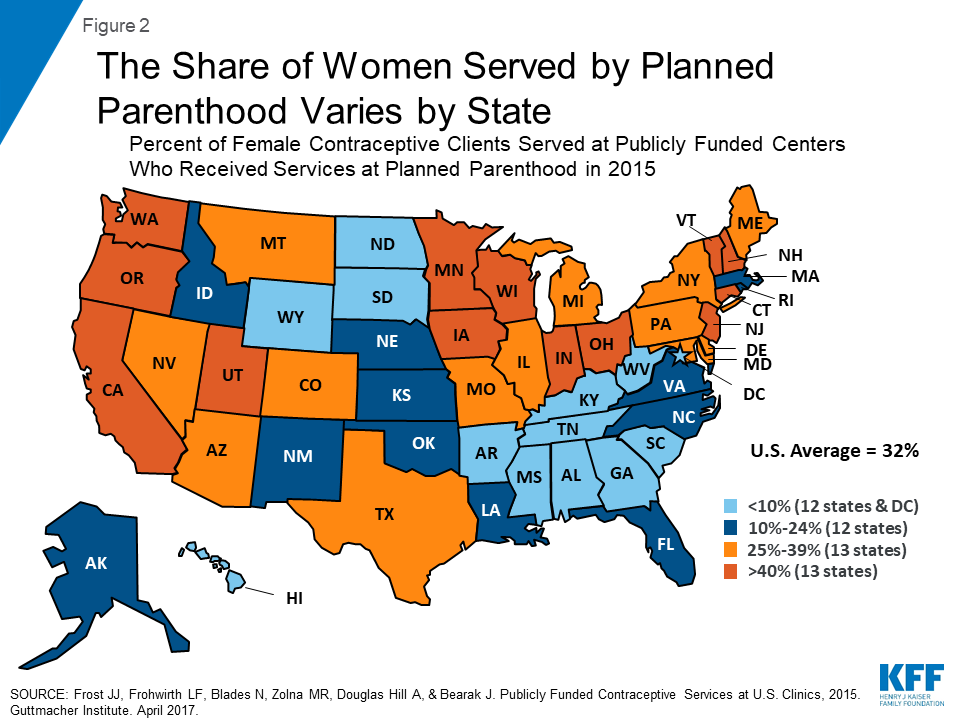
The impact of banning federal Title X funds to Planned Parenthood, in conjunction with the counseling and referral restrictions that would be imposed on Title X projects, will vary across the country. In 13 states, Planned Parenthood clinics were the site of care for over 40% of women who obtained publicly funded contraceptives (Figure 2).5 Research has shown that blocking Planned Parenthood from receiving public funds can reduce low-income women’s access to contraceptives.6 ,7 In 2013, the Wisconsin legislature approved family planning cuts directed at Planned Parenthood, which resulted in the closure of five Planned Parenthood clinics in rural areas. Women who used the Planned Parenthood clinics were referred to other clinics that were usually further away, with waiting lists, and that did not provide the full range of contraceptive methods.8 A study conducted by Health Management Associates for Planned Parenthood concluded that women in seven Wisconsin counties would have no alternative family planning provider should Planned Parenthood centers close there.9
The proposed restriction on referrals for abortions would compromise the quality of family planning care women receive through Title X providers. The Institute of Medicine’s landmark study on health care quality identified six dimensions of quality: safety, timeliness, patient-centeredness, effectiveness, efficiency, and equity.10 Providers that withhold information about abortion and, if provided, limit the list of providers that pregnant women seeking abortion are offered would compromise the quality of care they provide. Care offered under those restrictions would not be patient-centered, could lead to delayed care, and would be inequitable. Adherence to medical standards of care requires providers to offer patients referrals to the highest quality providers that can offer care in the timeliest manner and respects a patient’s decision to seek that care. In the event a woman is able to obtain a list of referrals that include abortion, the proposed regulation stipulates that only comprehensive prenatal care providers– some of whom also offer abortion — can be given to a pregnant woman (and only by a medical doctor). The referral could not show which of the prenatal providers also offer abortion. This list would primarily be comprised of hospitals and doctor’s offices, which, while accounting for roughly half of the abortion-providing facilities, only provide about 5% of all abortion procedures. In contrast, abortion clinics and nonspecialized clinics, such as Planned Parenthood, provided 90% of abortions.11 Services delivered at a hospital are much more costly than those provided in a clinic setting, and many private physicians do not accept Medicaid or uninsured patients. Women who live in rural communities or in states with few abortion providers would have to travel even greater distances to obtain abortion care at hospitals or doctor’s offices rather than be sent to freestanding abortion providers.
Restrictions on counseling and referral could place participating providers at risk of medical liability. Providers who still qualify for Title X funds because they do not offer abortion may find themselves facing a medical liability risk if they opt to participate in the program that restricts referrals for abortions. As Rosenbaum and her colleagues cite, the case of Wickline v. State of California finds that it is “no defense in a medical liability case to argue that physicians simply have followed a payer’s instructions,” which in this case, would be the Title X program.12 They argue that because Title X participating providers would be required to withhold information about services and referrals to qualified providers, they could be held liable and potentially jeopardize other funding they receive through the program that funds the federal Community Health Center program. Some community health centers may decide to discontinue their Title X participation because of concerns about medical liability and because this regulation would force them to offer their patients poorer quality care by restricting their ability to offer counseling and referral that includes abortions.
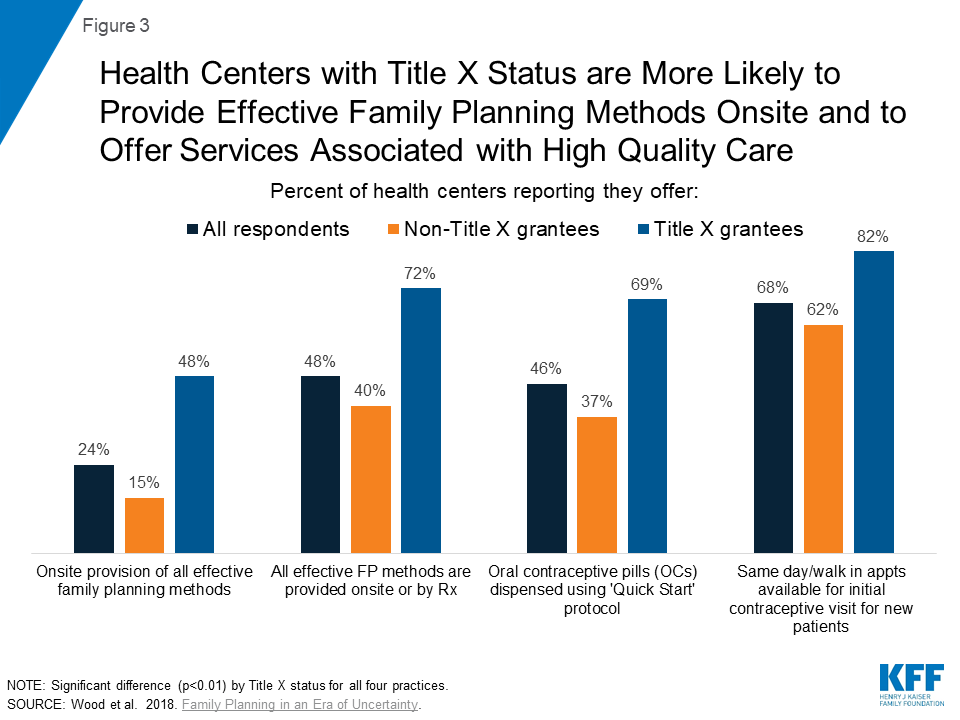
A Kaiser Family Foundation and George Washington University study is illustrative of the difference that having Title X support makes in terms of the quality and range of family planning services offered by Federally Qualified Health Centers (FQHCs) (Figure 3).13 Because they adhere to the QFP guidelines, Title X-funded sites consistently offer patients a larger range of onsite contraceptive methods, including natural family planning instruction and emergency contraception. Title X-funded health center sites offer all seven of the most effective methods onsite at three times the rate of sites not receiving Title X funding (48% to 15% respectively). Title X-funded sites also consistently show greater incorporation of evidence-based best practice methods, such as use of the “quick start” method for oral contraception that ensures that women who seek it have rapid access to effective contraceptive services.
Some stand-alone family planning clinics, particularly in rural communities, may not be in close proximity to other primary health providers, and therefore may not qualify for funding. Excluding family planning clinics because they do not offer comprehensive primary care or are not near a primary care provider could make it more difficult for women, particularly in rural areas, to access the full range of family planning services that are available under the current program. Specialized family planning clinics have been shown to provide a wider range of contraceptive methods and higher quality family planning care than clinics providing comprehensive care, such as community health centers.14
Eliminating the requirement that Title X sites offer women the full range of family planning services would restrict the number of sites that offer low-income women comprehensive contraceptive and family planning services. The proposed regulation would no longer require that sites follow the QFP guidelines to provide “services that are consistent with current recognized national standards of care, including QFP, related to family planning, reproductive health, and general preventive health measures.”15 These requirements were added to Title X in 2014 following an exhaustive process by OPA and CDC to improve the standards of family planning services in clinics and other sites. By dropping this requirement, access to the full range of contraceptive services and other quality family planning services could be limited for low-income women.
The new regulation would channel new federal family planning funds to faith-based and other organizations that do not provide contraceptive services. The vast majority of women who seek family planning care at Title X sites use and seek contraceptive services. Women seeking contraceptives could find themselves at a federally funded faith-based provider that only offers natural family planning education and does not provide them with a referral or option for securing effective contraceptive methods including IUDs, implants, or oral contraceptives. While some women may seek to use natural family planning or fertility awareness methods to plan or avoid pregnancy, these methods are among the least effective and least commonly used methods to prevent unintended pregnancies.16 The proposed regulation permits and encourages the participation of these single service providers, so long as they are part of a Title X project that includes comprehensive services, and does not require that other contraceptive services be offered onsite.
Many elements of this regulation would be administratively burdensome for grantees and subrecipients. The program in its current state already has significant reporting requirements and oversight, and this proposed rule would go far beyond current practice. Subrecipients do not typically oversee the policies and referral practices of the organizations that they refer to for other services. This would require clinics to track services among referral networks they are not funded to provide. The documentation and reporting requirements for minors may also violate some state confidentiality laws and could provide a disincentive for minors and teens to seek services.
If fully implemented, the proposed changes to Title X could have major repercussions for low-income women across the country that rely on Title X sites for their family planning care. As the regulations are finalized and likely litigated, the future of the Title X program and access to quality family planning services for millions of low-income women hangs in the balance.
Under the proposed regulations, all Planned Parenthood centers would be disqualified and countless other providers that currently participate in Title X could decide that limits on counseling and referral for abortion violate the clinical standards of care and informed consent. These actions could shrink the network of providers that offer low-income women comprehensive family planning services using federal support. In addition to the abortion-specific provisions, there are other notable changes in the proposed regulations that are administratively burdensome, weaken the clinical standards of family planning care offered by Title X providers, and redefine programmatic eligibility standards to promote Administration priorities. For low-income women, clinic-based providers are important sources of family planning services. One in three low-income women reported that they obtained birth control from a clinic-based provider such as Planned Parenthood or another health center or public health clinic.17 In 2016, 64% of clients seen at Title X clinics had family incomes at or below the poverty level, 37% were covered by Medicaid or another public program, and nearly half (43%) were uninsured.18
As the ACA coverage expansions are weakened and more women become uninsured, the robust network of providers that the Title X program now supports will become even more essential for women. The proposed regulation could vastly restrict the size and scope of this network and place considerable burdens on the providers who opt to stay in the program, but who may not be able to keep up with demand for care. In the 2017 Kaiser Family Foundation and George Washington University survey, many community health centers reported a limited ability to take on new patients given current staffing and space constraints, suggesting that these health centers may not have the capacity to fill the void if Planned Parenthood were excluded nationwide as a Title X provider. At the same time that the need for affordable family planning services is likely to grow, many women would be left with far fewer options to obtain affordable, comprehensive, and high quality family planning care.
| Appendix 1: Federal Rules for Title X Projects on Abortion Services and Activities | |||
| 1988(only in effect for one month due to litigation and subsequent change of Administration) | 1993-Present | 2018 Proposed Regulations | |
| Counseling | Prohibited. | Nondirective counseling required for pregnant women addressing: prenatal care & delivery, infant care, foster care, adoption, pregnancy termination. | The language of the proposed regulation: “A Title X project may not provide, promote, refer for, support, or present abortion as a method of family planning.” The non-binding preamble to the proposed regulation states: “A doctor, though not required to do so, would be permitted to provide nondirective counseling on abortion.” |
| Referral | Prohibited. | Must offer referral for abortion if asked but cannot:
| Prohibited, unless a woman has already decided to have an abortion, and requests a referral. A medical doctor may provide a list of comprehensive health service providers, some but not all of which also provide abortion. |
| Requirements For How Abortion Activities Supported By Non-Title X Funds Must Be Handled | |||
| Financial | Separate accounting records. | Separate accounting records. | Separate accounting records, electronic and paper health records. |
| Facility | Separate treatment, consultation, waiting rooms. | Shared waiting room permissible as long as costs are properly pro-rated. | Separate treatment, consultation, examination, and waiting rooms, office entrances and exits, workstations, signs, phone numbers, email addresses, educational services, and websites. |
| Staff | Separate staff. | Shared staff permissible as long as all abortion related activities are financed separately from the Title X project. | Separate staff. |
| Prohibition on activities that encourage, promote, or advocate for abortion | Lobbying, providing speakers or educators who promote abortion, paying dues to an abortion advocacy group, legal action to make abortion available, developing or disseminating materials advocating for abortion. | No prohibition on these activities. | Lobbying, providing speakers or educators, attending events or conferences during which the grantee or subrecipient engages in lobbying, paying dues to an abortion advocacy group, legal action, developing or disseminating materials. |
| SOURCE: Kaiser Family Foundation analysis of federal regulations. | |||
The Trump Administration has finalized regulations that significantly broaden employers’ ability to be exempt from the Affordable Care Act’s (ACA) contraceptive coverage requirement. The regulations open the door for any employer or college/ university with a student health plan with objections to contraceptive coverage based on religious beliefs to qualify for an exemption. Any employer, except publicly traded corporations, with moral objections to contraception also qualify for an exemption. Their female employees, dependents, and students will no longer be entitled to coverage for the full range of FDA approved contraceptives at no cost.
These final regulations are very similar to the October 2017 Interim Final Regulations that were issued without an opportunity for public notice and comment, as required under the Administrative Procedure Act. Four nonprofit advocacy groups and 8 states filed lawsuits challenging those regulations. In the cases led by California and Pennsylvania, the federal courts issued preliminary injunctions in December 2017, blocking the enforcement of these regulations pending the outcome of the litigation. These decisions have been appealed to the 3rd and 9th Circuit Courts of Appeal.1 The status of these lawsuits is unclear now that the final regulations have been published. In any event, it is likely that there will be new legal challenges to the final regulations.
On November 15, 2018, the Trump Administration issued final regulations greatly expanding the types of employers that may be exempt from the Affordable Care Act’s (ACA) contraceptive coverage requirement. These regulations are a significant departure from the Obama-era regulations that only granted an exception to houses of worship. One of the regulations allows nonprofit or for-profit employers with an objection to contraceptive coverage based on religious beliefs to qualify for an exemption and drop contraceptive coverage from their plans. The other regulation exempts all but publicly traded employers with moral objections to contraception from the requirement. These new policies, effective immediately, also apply to private institutions of higher education that issue student health plans. The immediate impact of these regulations on the number of women who are eligible for contraceptive coverage is unknown, but the new regulations open the door for many more employers to withhold contraceptive coverage from their plans.
Contraceptive coverage under the ACA has made access to the full range of contraceptive methods affordable to millions of women. This provision is part of a set of key preventive services that has been identified by the Health Resources and Services Administration (HRSA) for women that must be covered without cost-sharing. Since it was first issued in 2012, the contraceptive coverage provision has been controversial. While very popular with the public, with over 77% of women and 64% of men reporting support for no-cost contraceptive coverage, it has been the focus of litigation brought by religious employers, with two cases (Zubik v Burwell and Burwell v Hobby Lobby) reaching the Supreme Court. This brief explains the contraceptive coverage rule under the ACA, the impact it has had on coverage, and how the new regulations issued by the Trump Administration change the contraceptive coverage requirement for employers and affect women’s coverage.
Since they were announced in 2011, the contraceptive coverage rules have evolved through litigation and new regulations. Most employers were required to include the coverage in their plans. Houses of worship could choose to be exempt from the requirement if they had religious objections. This exception meant that women workers and female dependents of exempt employers did not have guaranteed coverage for either some or all FDA approved contraceptive methods if their employer had an objection. Religiously- affiliated nonprofits and closely held for-profit corporations were not eligible for an exemption, but could choose an accommodation. This option was offered to religiously-affiliated nonprofit employers and then extended to closely held for-profits after the Supreme Court ruling in Burwell v. Hobby Lobby. The accommodation allowed these employers to opt out of providing and paying for contraceptive coverage in their plans by either notifying their insurer, third party administrator (TPA), or the federal government of their objection. The insurers were then responsible for covering the costs of contraception, which assured that their workers and dependents had contraceptive coverage while relieving the employers of the requirement to pay for it.
As of 2015, 10% of nonprofits with 5,000 or more employees had elected for an accommodation without challenging the requirement. This approach, however, has not been acceptable to all nonprofits with religious objections.2 In May 2016, the Supreme Court remanded Zubik v. Burwell, sending seven cases brought by religious nonprofits objecting to the contraceptive coverage accommodation back to the respective district Courts of Appeal. The Supreme Court instructed the parties to work together to “arrive at an approach going forward that accommodates petitioners’ religious exercise while at the same time ensuring that women covered by petitioners’ health plans receive full and equal health coverage, including contraceptive coverage.”3
On November 15, 2018, the Trump Administration issued final regulations that greatly expand eligibility for the exemption to all nonprofit and closely-held for-profit employers with objections to contraceptive coverage based on religious beliefs or moral convictions, including private institutions of higher education that issue student health plans (Figure 1). In addition, publicly traded for-profit companies with objections based on religious beliefs also qualify for an exemption. There is no guaranteed right of contraceptive coverage for their female employees and dependents or students. Table 1 presents the changes to the contraceptive coverage rule from the Obama Administration in the Final regulations issued by the Trump Administration.
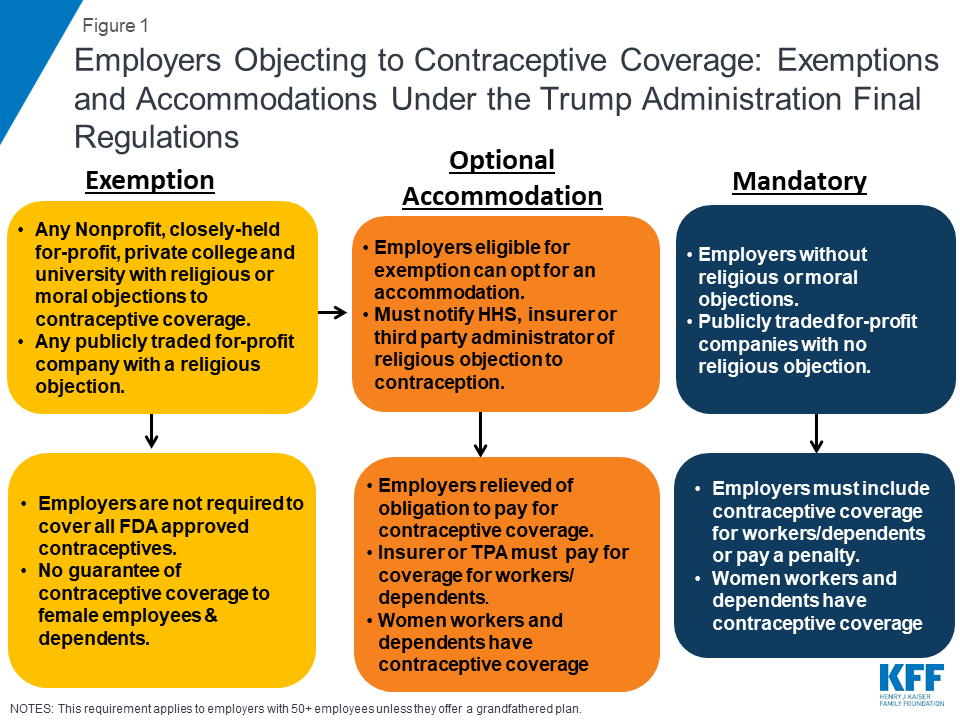
The accommodation will be available to any employer now eligible for the exemption as well as employers that previously qualified for the accommodation. The federal agencies issuing the regulations posit that these new rules will have limited impact on the number of women losing contraceptive coverage. However, how many employers who were not eligible for either the exemption or accommodation under the old regulations will now seek an exemption is unknown, as is the number of employers previously utilizing the accommodation who will now opt for an exemption (resulting in the loss of contraceptive coverage for their employees and dependents). HHS estimates that the cost of losing contraception is $584 per woman per year.
The Trump Administration has stated that they do not believe it is feasible to resolve the religious objection of employers while still ensuring that the affected women receive full and equal health coverage that includes contraceptive coverage. Instead, the Administration suggests women could receive contraceptive services through Title X clinics or other governmental programs.
While many women who would lose contraceptive coverage because of employers’ religious and moral objections would not qualify for services under the current Title X regulations, on June 1, 2018, the Trump Administration issued Proposed Regulations for the Title X federal family program that would broaden the definition of the group of individuals who qualify for assistance under the program. The proposed regulation would broaden the definition of “low-income” (currently defined as income below 100% of the federal poverty level) to also include women who receive employer-sponsored insurance offered by an employer who does not cover contraceptives in their plan due to religious or moral objections. The revised definition of “low-income” would expand eligibility to this new group of women who do not meet the income guidelines but do not have contraceptive coverage to make them eligible receive services at Title X family planning clinics at no charge.
| Table 1: Summary of Changes in the Contraceptive Coverage Regulations for Objecting Entities | ||
| Obama AdministrationAugust 2012 to January 13, 2019* | Trump AdministrationEffective January 14, 2019 | |
| What types of contraceptives must plans cover withoutcost-sharing? | At least one of each of the 18 FDA approved contraceptive methods for women, as prescribed, along with counseling and related services must be covered without cost-sharing. | No change |
| Are any employers** “exempt” from the contraceptive mandate? | Religious institutions defined as “houses of worship.” Grandfathered plans. No notice to employees is required. Women workers and female dependents must pay for their own contraceptives. | Religious institutions defined as “houses of worship.” Grandfathered plans. Nonprofit or for-profit employers (including publicly traded companies), insurers, or private colleges or universities that issue student insurance plans with a religious objection to contraception. Nonprofit or closely held for-profit employers, insurers, or private colleges or universities that issue student insurance plans with a moral objection to contraception. Notice is only required if the plan previously included contraceptive coverage. Women workers and female dependents must pay for their own contraceptives. |
| Who pays for contraceptive coverage for employees of organizations receiving an exemption? | The cost of contraceptives is borne by women workers and female dependents. There is no guarantee of contraceptive coverage for employees of an exempt organization. The employer may choose to cover some methods, but has no obligation to cover all 18 FDA methods without cost sharing. | No change |
| What type of employers may seek an “accommodation” to avoid paying for contraceptives in their plans? | Closely held for-profit corporations and religiously affiliated nonprofits with religious objections to contraception can opt out of providing and paying for contraceptive coverage. Notice must be provided to either their insurer, third party administrator, or the federal government of their objection. Women workers and female dependents receive no cost contraceptive coverage. | Any entity eligible for an exemption can voluntarily choose the accommodation instead of the exemption. Notice must be provided to either their insurer, third party administrator, or the federal government of their objection. Women workers and female dependents receive no cost contraceptive coverage. |
| Who pays for contraceptive coverage for employees of organizations receiving an accommodation? | Insurance companies of firms obtaining an accommodation must pay for contraceptive coverage. Third-party administrators (TPA) of self-funded health plans must cover the costs of contraceptives for employees. The costs of the benefit are offset by reductions in the fees the TPA pays to participate in the federal exchange. | No change |
| When can entities change from an accommodation to an exemption? | N/A | When an employer or private college or university currently using the accommodation opts for an exemption, the revocation of contraceptive coverage will be effective on the first day of the first plan year that begins 30 days after the date of the revocation or 60 days notice may be given in a summary of benefits statement. The issuer or third party administrator is responsible for providing the notice to the beneficiaries. |
| NOTES: *The Trump Administration issued Interim Final Regulations in October 2017 but two federal courts stayed the regulations in December 2017 while litigation proceeded. The Obama-era regulations have been in effect as the cases have been appealed.** The Trump Administration’s regulations extend the exemption to any employer, organization or sponsor that adopts a health plan established or maintained by an employer eligible for an exemption. | ||
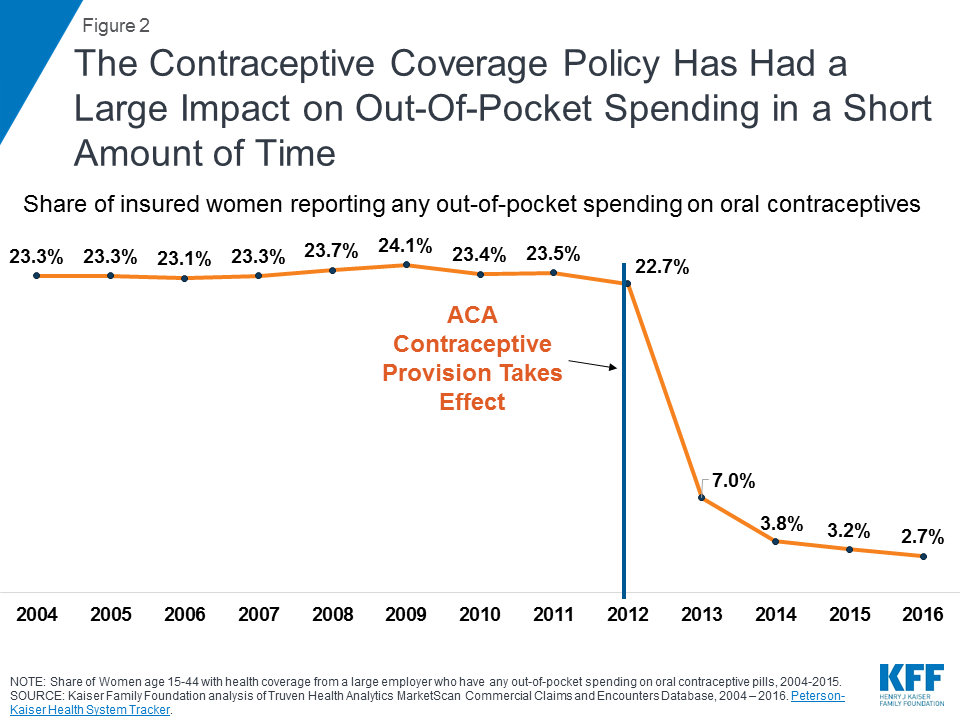
Contraceptive use among women is widespread, with over 99% of sexually-active women using at least one method at some point during their lifetime.4 Contraceptives make up an estimated 30-44% of out-of-pocket health care spending for women.5 Since the implementation of the ACA, out-of-pocket spending on oral contraceptive drugs has decreased dramatically (Figure 2).6 One study estimates that roughly $1.4 billion dollars per year in out-of-pocket savings on the pill resulted from the ACA’s contraceptive mandate.7 By 2013, most women had no out-of-pocket costs for their contraception, as median expenses for most contraceptive methods, including the IUD and the pill, dropped to zero.8
This provision has also influenced the decisions women make in their choice of method. After implementation of the ACA contraceptive coverage requirement, women were more likely to choose any method of prescription contraceptive, with a shift towards more effective long-term methods.9 High upfront costs of long-acting methods, such as the IUD and implant, had been a barrier to women who might otherwise prefer these more effective methods. When faced with no cost-sharing, women choose these methods more often,10 with significant implications for the rate of unintended pregnancy and associated costs of childbirth.11
Finally, decreases in cost-sharing were associated with better adherence and more consistent use of the pill. This was especially true among users of generic pills. One study showed that even copayments as low as $6 were associated with higher levels of discontinuation and non-adherence,12 increasing the risk of unintended pregnancy.
The federal standards under Affordable Care Act created a minimum set of preventive benefits that applied to most health plans regulated by the federal government (self-funded plans, federal employee plans) and states (individual, small and large group plans), including contraceptive coverage for women with no cost-sharing. States have also historically regulated insurance, and many have had mandated minimum benefits for decades. State laws, however, have more limited reach in that they only apply to state regulated fully insured plans and do not have jurisdiction over self-funded plans, where 61% of covered workers are insured.13 In self-funded plans, the employer assumes the risk of providing covered services and usually contracts with a third party administrator (TPA) to manage the claims payment process. These plans are overseen by the Federal Department of Labor under the Employer Retirement Income Security Act (ERISA) and are only subject to federally established regulations.14 The ACA sets a minimum standard of coverage for preventive services for all plans. However, state laws regulating insurance, including contraceptive coverage, can require fully insured plans to provide coverage beyond the federal standards.
Ten states and DC have strengthened and expanded the federal contraceptive coverage requirement (CA, IL, ME, MD, MA, NV, NY, OR, VT, WA). Another 19 states have contraceptive equity laws that require plans to cover contraceptives if they also provide coverage for prescription drugs, but they do not necessarily require coverage of all FDA-approved contraceptives or ban cost-sharing (Figure 3).
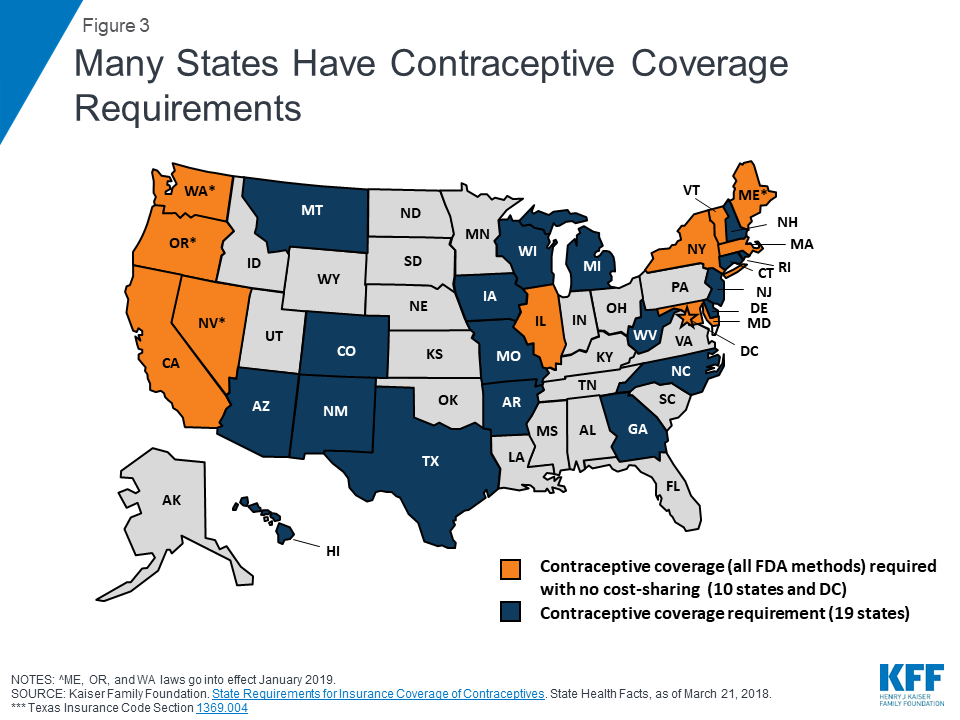
Many of the 29 states that have passed contraceptive coverage laws (both equity and no-cost coverage) have a provision for exemptions, but the laws vary from state to state and only apply to fully insured plans. This means that there may be a conflict between the state and federal requirements when it comes to religious exemptions. In some states with a contraceptive coverage requirement, some employers who are eligible for an exemption under federal law will not qualify for an exemption under state law (Table 2). Employers in those states will have to have to meet the standards established by their state even though they may qualify for an exemption based on the new federal regulations.
| Table 2: State Requirements for No-Cost Contraceptive Coverage | |||||||
| StateDate Effective | Applies to | Coverage required without cost sharing | Exemptions allowed | ||||
| Private plans | Medicaid | With RX all FDA approved | OTC | Vasectomy | Religious | Moral | |
| California January 2015 | X | MCOs | X | Narrowly defined nonprofit religious employers | None | ||
| Illinois January 2017 | X | X | X-except male condoms | Any employer, or insurer with a religious objection | Any employer, or insurer with a moral objection | ||
| District of ColumbiaApril 2018 | X | X | X | X | ^ | None | |
| MaineJanuary 2019 | X | X | Narrowly defined nonprofit religious employers | None | |||
| MarylandJanuary 2018 | X | X | X | X | X | Religious organizations if the coverage conflicts with the organization’s bona fide religious beliefs and practices | None |
| MassachusettsMay 2018 | X | X | X | X-only Emergency Contraception | Narrowly defined nonprofit religious employers | None | |
| NevadaJanuary 2018 | X | X | X | Insurers affiliated with a religious organization | None | ||
| New YorkAugust 2017 | X | X | Narrowly defined nonprofit religious employers* | None | |||
| OregonJanuary 2019 | X | X | X | Narrowly defined nonprofit religious employers | None | ||
| VermontOctober 2016 | X | X-and all other public health assistance programs | X | X | None | None | |
| WashingtonJanuary 2019 | X | X | X | X | None | None | |
| NOTES: *Requires the insurer to offer a rider to policyholders so that women will have contraceptive coverage.^Mirroring the current federal regulations, DC allows for religiously affiliated nonprofits and closely held for-profits to request an accommodation which requires the group health insurer issuer to provide separate payments for contraceptive products and services without imposing any fee or cost-sharing to the employer or policy holders.SOURCE: Kaiser Family Foundation analysis of state laws and regulations. | |||||||
The Trump Administration’s new regulations substantially expand the exemption to nonprofit and for-profit employers, as well as to private colleges or universities with religious or moral objections to contraceptive coverage. It is unknown how many of these employers and colleges will maintain coverage through the accommodation as before and how many will now opt for the exemption leaving their students, employees and dependents without no-cost coverage for the full range of contraceptive methods. As a result of the new regulation, choices about coverage and cost-sharing will be made by employers and private colleges and universities that issue student plans. For many women, their employers will determine whether they have no-cost coverage to the full range of FDA approved methods. Their choice of contraceptive methods may again be limited by cost, placing some of the most effective yet costly methods out of financial reach.
A new Kaiser Family Foundation brief and interactive map provide the latest national and state-level estimates from the U.S. Census Bureau of the share and number of people ages 65 and older who are living in poverty. The resources examine poverty among seniors under the official poverty threshold ($11,756 in income for an individual age 65 or older in 2017), and under an alternative measure of poverty known as the Supplemental Poverty Measure. That measure, developed in response to concerns that the official measure does not accurately reflect people’s financial resources or liabilities, takes into account out-of-pocket health care costs, regional variation in housing costs and other factors.
A new brief from KFF (the Kaiser Family Foundation) examines potential changes to “spousal impoverishment” rules in Medicaid that allow married couples to protect a portion of their income and assets should one spouse seek Medicaid coverage for long-term care. A provision of the Affordable Care Act that requires state Medicaid programs to apply such rules to home- and community-based long-term care is set to expire on December 31. That could tip the balance of financial incentives toward institutional care, to which the rules would still apply, and affect the efforts that states have made (through waivers) to expand access to home- and community-based services, the brief explains. Congress may consider legislation to extend the ACA provision in the next few weeks.
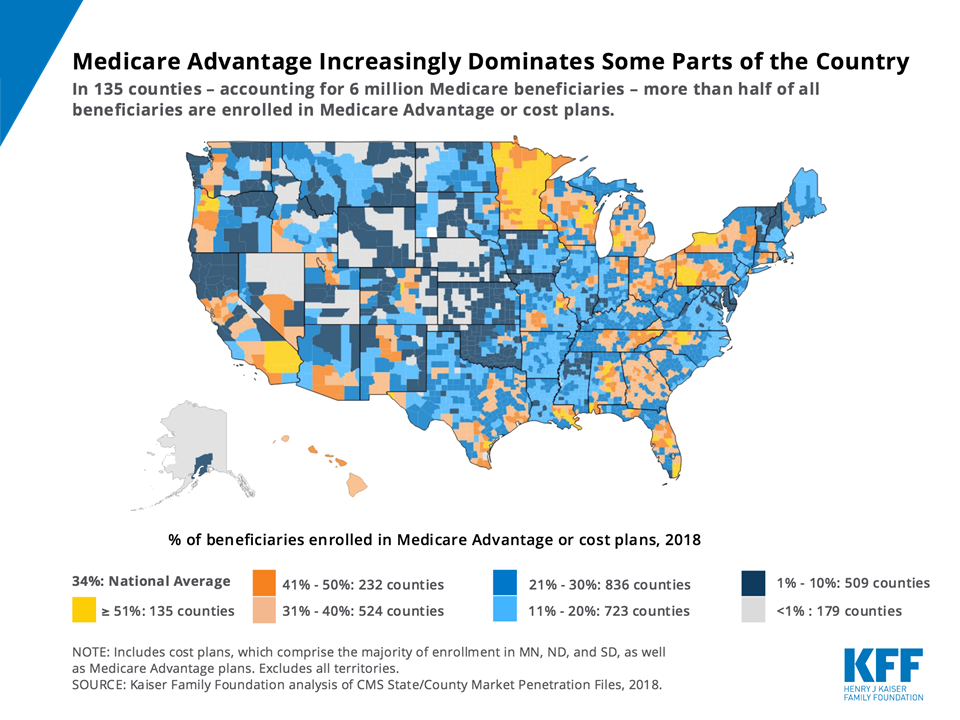
In this November 2018 New England Journal of Medicine article, KFF’s Tricia Neuman and Gretchen Jacobson examine the extent to which Medicare Advantage plans are achieving goals with respect to benefits, out-of-pocket costs, plan choice, federal spending and quality. They also highlight areas where more evidence is needed to understand the implications of rising Medicare Advantage enrollment for beneficiaries and the future of Medicare. More than one in three Medicare beneficiaries are enrolled in Medicare Advantage, and the share is projected to continue rising over the next decade.
The article is now available in the New England Journal of Medicine.
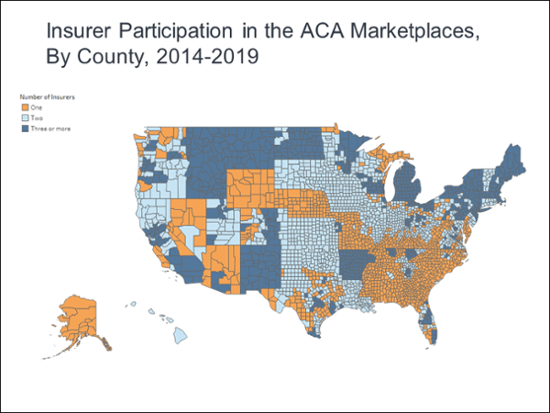
Insurer participation in the Affordable Care Act’s health insurance marketplaces is rising in 2019, finds a new analysis from KFF (the Kaiser Family Foundation).The increase follows consecutive years of improving insurance company profits and shows up in several different ways:
Insurer participation varies greatly within states, and rural areas tend to have fewer insurers than do metropolitan areas. The analysis has data on the number of insurers by state and county from 2014 to 2019, including interactive maps highlighting changes at the county level.
This report provides the latest data on donor government resources available for family planning activities in low- and middle-income countries. It is part of an effort by the Kaiser Family Foundation that began after the London Summit on Family Planning in 2012 where donors committed US$2.6 billion in additional funding to increase access to family planning by 2020.3 Stakeholders reconvened at The Family Planning Summit for Safer, Healthier and Empowered Futures in 2017 and made new and renewed commitments to global family planning goals.4
This current report provides data on donor government disbursements in 2017, the most recent year available. It includes data from all members of the Organisation for Economic Co-operation and Development (OECD)’s Development Assistance Committee (DAC), as well as non-DAC members where data are available.5 Data are collected directly from donors and supplemented with data from the DAC. Ten donor governments that account for 98% of total disbursements for family planning are profiled in this analysis. Both bilateral assistance and core contributions to UNFPA are included. For more detail, see the below methodology. For information on family planning funding from other sources (e.g. multilateral organizations, foundations, etc.) see Appendix 1.
New @KaiserFamFound report: Donor government support for global family planning services rose 6% in 2017, but remains below 2014 peak #FP2020
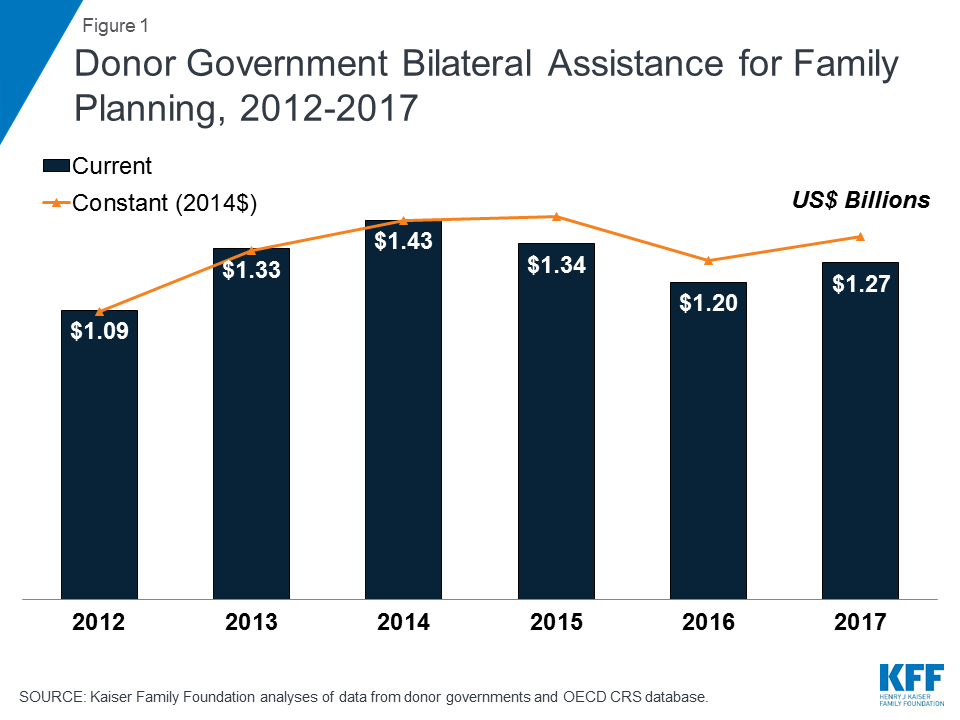
In 2017, donor governments disbursed US$1,272.7 million in bilateral funding for family planning activities (see Figure 1, Table 1 & Appendix 2), an increase of US$74 million (6%) compared to the 2016 level (US$1,199.2 million). This marks the first increase after two years of declines. However, funding is still below the peak level reached in 2014 (US$1,432.7 million).6
| Table 1: Donor Government Bilateral Disbursements for Family Planning, 2012-2017 (in current US$, millions) | ||||||||
| Government | 2012 | 2013 | 2014 | 2015 | 2016 | 2017 | Difference | |
| 2016 – 2017 | 2012 – 2017 | |||||||
| Australia | $43.2 | $39.5 | $26.6 | $12.4 | $24.9 | $25.6 | $0.7(2.8%) | $-17.6(-40.7%) |
| Canada | $41.5 | $45.6 | $48.3 | $43.0 | $43.8 | $69.0 | $25.2(57.5%) | $27.5(66.2%) |
| Denmark | $13.0 | $20.3 | $28.8 | $28.1 | $30.7 | $33.1 | $2.4(7.8%) | $20.1(154.6%) |
| France | $49.6 | $37.2 | $69.8 | $68.6 | $39.9 | $19.2 | $-20.7(-51.9%) | $-30.4(-61.3%) |
| Germany | $47.6 | $38.2 | $31.3 | $34.0 | $37.8 | $36.8 | $-1(-2.5%) | $-10.8(-22.6%) |
| Netherlands | $105.4 | $153.7 | $163.6 | $165.8 | $183.1 | $197.0 | $13.9(7.6%) | $91.6(86.9%) |
| Norway | $3.3 | $20.4 | $20.8 | $8.1 | $5.7 | $2.2 | $-3.5(-61.7%) | $-1.1(-33.8%) |
| Sweden | $41.2 | $50.4 | $70.2 | $66.0 | $92.5 | $109.2 | $16.7(18.1%) | $68(165%) |
| United Kingdom | $252.8 | $305.2 | $327.6 | $269.9 | $204.8 | $282.4 | $77.6(37.9%) | $29.6(11.7%) |
| United States | $485.0 | $585.0 | $636.6 | $638.0 | $532.7 | $488.7 | $-44(-8.3%) | $3.7(0.8%) |
| Other DAC Countries* | $11.0 | $29.5 | $9.0 | $10.1 | $3.3 | $9.6 | $6.3(192.4%) | $-1.4(-13.1%) |
| Total | $1,093.6 | $1,325.0 | $1,432.7 | $1,344.0 | $1,199.2 | $1,272.7 | $73.6(6.1%) | $179.1(16.4%) |
| *Austria, Belgium, Czech Republic, European Union, Finland, Greece, Hungary, Iceland, Ireland, Italy, Japan, Korea, Luxembourg, New Zealand, Poland, Portugal, the Slovak Republic, Slovenia, Spain, and Switzerland. | ||||||||
The increase in 2017 occurred despite a decline by the U.S., the world’s largest donor. In 2017, U.S. disbursements totaled US$488.7 million, a decrease of US$44.0 million (-8%) compared to 2016 (US$532.7 million). While this marked the second year of declines by the U.S., it was largely due to a delay in disbursements and does not reflect a decline in U.S. appropriations by Congress, which have been flat for several years (see Figure 2 and Box 1).
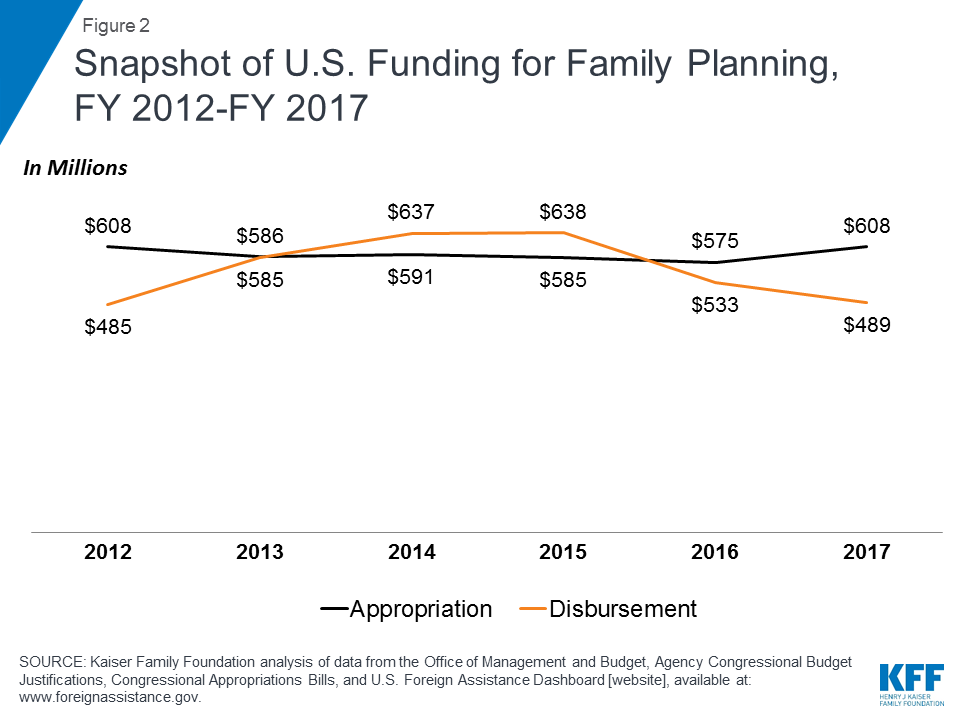
Box 1: U.S. Government Family Planning Appropriations & Disbursements
The U.S. President’s budget request to Congress starts the budget process each year. Congress considers this request and then specifies funding levels in annual appropriations bills. Funding amounts specified by Congress are for a given fiscal year (the U.S. fiscal year is from October 1 to September 30), but may be spent over a multiyear period.
Key highlights of recent trends in U.S. funding for FP are as follows:
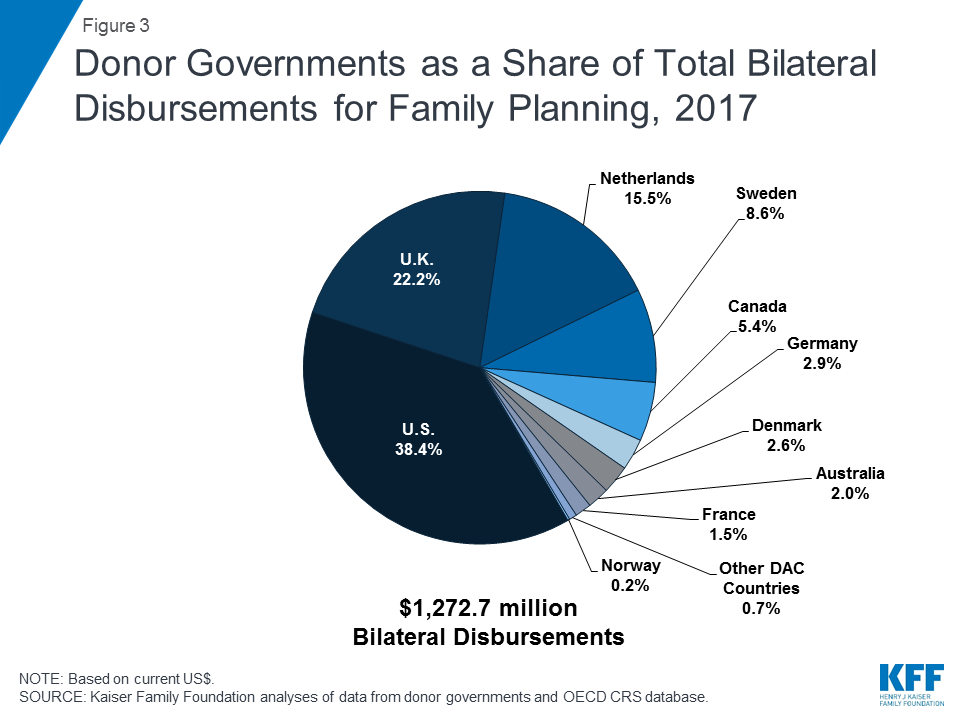
Despite the decline by the U.S., it remained the largest donor, accounting for 38% of donor government disbursements (see Figure 3). The U.K. (22%) was the second largest donor followed by the Netherlands (15%), Sweden (9%), and Canada (5%).
Among the donors profiled, five (Canada, Denmark, the Netherlands, Sweden, and the U.K.) increased FP funding in 2017, two remained flat (Australia and Germany), and three decreased funding (France, Norway, and the U.S.). This was the case in current U.S. dollars as well as after adjusting for currency fluctuations.
While the majority of donor government assistance for family planning is provided bilaterally, donors also provide support for family planning activities through contributions to the United Nations Population Fund (UNFPA). Most of UNFPA’s funding is from donor governments, which provide funding in two ways: 1) donor directed or earmarked contributions for specific activities (e.g. donor contributions to the UNFPA Supplies), which are included as part of bilateral funding above; and 2) general contributions to “core” activities that are untied and meant to be used for both programmatic activities (e.g. family planning, population and development, HIV/AIDS, gender, and sexual and reproductive health and rights) and operational support as determined by UNFPA.
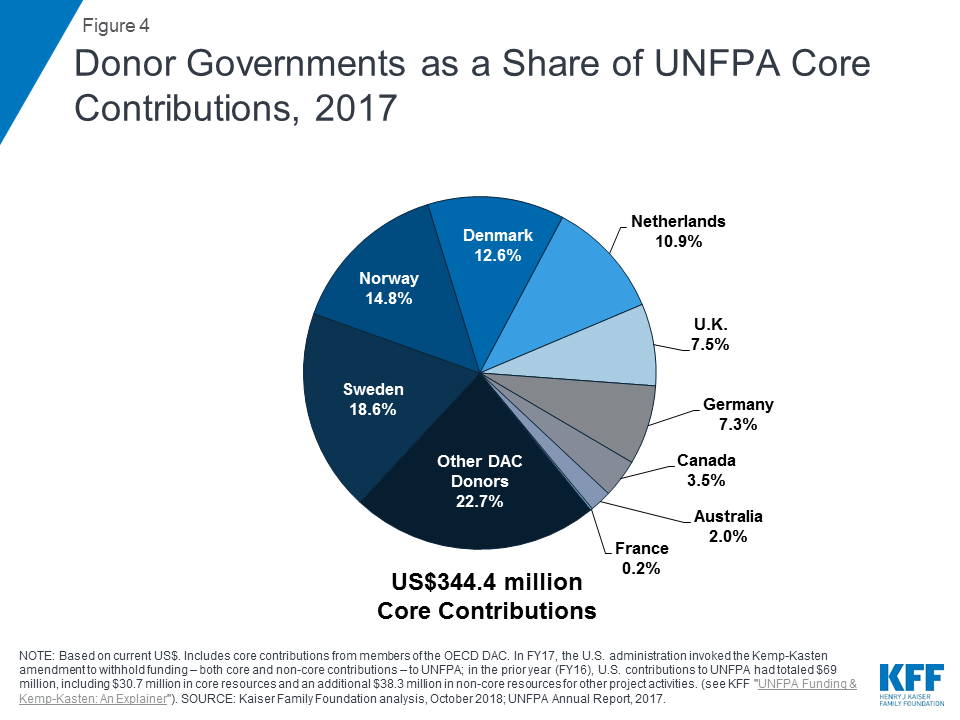
In 2017, donor governments provided US$344.4 million in core contributions to UNFPA, essentially flat compared to the 2016 level (US$347.8 million). The majority of donors either increased funding (Denmark, Norway and Sweden) or remained flat (Australia, Canada, Germany, the Netherlands, and the U.K.), while two donors declined (France and the U.S., the latter of which did not provide any in 2017- see Box 2).7
Box 2: U.S. funding for UNFPA
Created in 1969, UNFPA is a United Nations agency that supports sexual and reproductive health activities in many low- and middle-income countries and was a key partner in both the 2012 and 2017 family planning summits. The U.S. played a key role in the founding of UNFPA and has historically provided both core and non-core funding to the organization. However, this funding has been subject to the “Kemp-Kasten amendment”, first enacted by Congress in 1985 and included in annual appropriations language, which states that no U.S. funds may be made available to “any organization or program which, as determined by the president of the United States, supports or participates in the management of a program of coercive abortion or involuntary sterilization.” Since 1985, the Kemp-Kasten amendment has been invoked 17 times – as determined by presidents along party lines – to withhold funding (both core and non-core) from UNFPA (see KFF “UNFPA Funding & Kemp-Kasten: An Explainer”). This has resulted in significant fluctuations in funding over time.
Recent highlights of U.S. funding for UNFPA are as follows:
Sweden provided the largest core contribution to UNFPA in 2017 (US$63.8 million), followed by Norway (US$50.8 million), Denmark (US$43.2 million), and the Netherlands (US$37.4) (see Figure 4 and Table 2). Among the ten donors profiled, one donor – Norway – provided a larger contribution to UNFPA’s core resources than their total bilateral disbursement for family planning.
| Table 2: Donor Government Contributions to UNFPA (Core Resources), 2012-2017 (in current US$, millions) | ||||||||
| Government | 2012 | 2013 | 2014 | 2015 | 2016 | 2017 | Difference | |
| 2016 – 2017 | 2012 – 2016 | |||||||
| Australia | $14.9 | $15.6 | $13.9 | $11.7 | $7.0 | $6.9 | $-0.1(-1.9%) | $-8(-53.7%) |
| Canada | $17.4 | $16.0 | $14.0 | $12.4 | $11.7 | $12.1 | $0.4(3.8%) | $-5.3(-30.3%) |
| Denmark | $44.0 | $40.4 | $41.9 | $35.7 | $28.1 | $43.2 | $15(53.5%) | $-0.8(-1.9%) |
| France | $0.5 | – | – | $0.6 | $0.8 | $0.6 | $-0.2(-28.6%) | $0.1(19.4%) |
| Germany | $20.7 | $24.0 | $24.7 | $21.3 | $24.4 | $25.1 | $0.7(2.8%) | $4.4(21.1%) |
| Netherlands | $49.0 | $52.4 | $48.4 | $39.7 | $39.1 | $37.4 | $-1.8(-4.5%) | $-11.6(-23.8%) |
| Norway | $59.4 | $70.6 | $69.1 | $55.6 | $46.8 | $50.8 | $3.9(8.4%) | $-8.6(-14.5%) |
| Sweden | $66.3 | $65.8 | $70.3 | $57.4 | $59.0 | $63.8 | $4.8(8.1%) | $-2.5(-3.8%) |
| United Kingdom | $31.8 | $31.5 | $33.1 | $30.8 | $25.0 | $25.9 | $0.9(3.5%) | $-5.9(-18.6%) |
| United States | $30.2 | $28.9 | $31.1 | $30.8 | $30.7 | – | $-30.7(-100%) | $-30.2(-100%) |
| Other Donors | $98.0 | $108.8 | $125.0 | $96.6 | $75.1 | $78.8 | $3.7(4.9%) | $-19.2(-19.6%) |
| Total | $432.2 | $454.0 | $471.5 | $392.6 | $347.8 | $344.4 | $-3.4(-1%) | $-87.8(-20.3%) |
After two years of declines, donor government funding for family planning activities increased in 2017. While funding is still below the peak level reached in 2014, it is important to note that the increase in 2017 occurred despite a decline by the U.S., the world’s largest donor. The U.S. decline is likely temporary as annual family planning appropriations have remained flat over the past several years. In addition, some donors made new or renewed commitments at the Family Planning Summit in 2017 as well as to other family planning-related efforts (e.g. SheDecides). Moving forward, we will continue to track funding as well as progress towards these commitments.
Bilateral and multilateral data on donor government assistance for family planning (FP) in low- and middle-income countries were collected from multiple sources. The research team collected the latest bilateral assistance data directly for 10 governments: Australia, Canada, Denmark, Germany, France, the Netherlands, Norway, Sweden, the United Kingdom, and the United States during the first half of 2018. Data represent the fiscal year 2017 period for all governments. Direct data collection from these donors was desirable because they represent the preponderance of donor government assistance for family planning and the latest official statistics – from the Organisation for Economic Co-operation and Development (OECD) Creditor Reporting System (CRS) (see: http://www.oecd.org/dac/stats/data) – which are from 2016 and do not include all forms of international assistance (e.g., funding to countries such as Russia and the Baltic States that are no longer included in the CRS database). In addition, the CRS data may not include certain funding streams provided by donors, such as FP components of mixed-purpose grants to non-governmental organizations. Data for all other OECD DAC member governments – Austria, Belgium, Czech Republic, the European Union, Finland, Greece, Hungary, Iceland, Ireland, Italy, Japan, Korea, Luxembourg, New Zealand, Poland, Portugal, the Slovak Republic, Spain, and Switzerland – who collectively accounted for less than 2 percent of bilateral family planning disbursements, were obtained from the OECD CRS and are from calendar year 2016.
For purposes of this analysis, funding was counted as family planning if it met the OECD CRS purpose code definition: “Family planning services including counselling; information, education and communication (IEC) activities; delivery of contraceptives; capacity building and training.”8 Where it was possible to identify funding amounts, family-planning-related activities funded in the context of other official development assistance sectors (e.g. education, civil society) are included in this analysis. Project-level data were reviewed for Canada, Denmark, France, Germany, the Netherlands, Norway, and Sweden to determine whether all or a portion of the funding could be counted as family planning. Family-planning-specific funding totals for the United States were obtained through direct data downloads and communications with government representatives. Funding attributed to Australia and the United Kingdom is based on a revised Muskoka methodology as agreed upon by donors at the London Summit on Family Planning in 2012. Funding totals presented in this analysis should be considered preliminary estimates based on data provided by representatives of the donor governments who were contacted directly.
It was difficult in some cases to disaggregate bilateral family planning funding from broader reproductive and maternal health totals, as the two are sometimes represented as integrated totals. In addition, family-planning-related activities funded in the context of other official development assistance sectors (e.g. education, civil society) have in the past remained largely unidentified. For purposes of this analysis, we worked closely with the largest donors to family planning to identify such family-planning-specific funding where possible. In some cases (e.g. Canada), specific FP percentages were recorded for mixed-purpose projects. In other cases, it was possible to identify FP-specific activities by project titles in languages of origin, notwithstanding less-specific financial coding. In still other cases, detailed project descriptions were analyzed (see Appendix 2 for detailed data table).
Bilateral funding is defined as any earmarked (FP-designated) amount and includes family planning-specific contributions to multilateral organizations (e.g. non-core contributions to the UNFPA Supplies). U.S. bilateral data correspond to amounts disbursed for the 2017 fiscal year. UNFPA contributions from all governments correspond to amounts received during the 2017 calendar year, regardless of which contributor’s fiscal year such disbursements pertain to.
With some exceptions, bilateral assistance data were collected for disbursements. A disbursement is the actual release of funds to, or the purchase of goods or services for, a recipient. Disbursements in any given year may include disbursements of funds committed in prior years and in some cases, not all funds committed during a government fiscal year are disbursed in that year. In addition, a disbursement by a government does not necessarily mean that the funds were provided to a country or other intended end-user. Enacted amounts represent budgetary decisions that funding will be provided, regardless of the time at which actual outlays, or disbursements, occur. In recent years, most governments have converted to cash accounting frameworks, and present budgets for legislative approval accordingly; in such cases, disbursements were used as a proxy for enacted amounts.
UNFPA core contributions were obtained from United Nations Executive Board documents. UNFPA estimates of total family planning funding provided from both core and non-core resources were obtained through direct communications with UNFPA representatives. Other than core contributions provided by governments to UNFPA, un-earmarked core contributions to United Nations entities, most of which are membership contributions set by treaty or other formal agreement (e.g., United Nations country membership assessments), are not identified as part of a donor government’s FP assistance even if the multilateral organization in turn directs some of these funds to FP. Rather, these would be considered as FP funding provided by the multilateral organization, and are not considered for purposes of this report.
The fiscal year period varies by country. The U.S. fiscal year runs from October 1-September 30. The Australian fiscal year runs from July 1-June 30. The fiscal years for Canada and the U.K. are April 1-March 31. Denmark, France, Germany, the Netherlands, Norway, and Sweden use the calendar year. The OECD uses the calendar year, so data collected from the CRS for other donor governments reflect January 1-December 31. Most UN agencies use the calendar year and their budgets are biennial.
All data are expressed in US dollars (USD). Where data were provided by governments in their currencies, they were adjusted by average daily exchange rates to obtain a USD equivalent, based on foreign exchange rate historical data available from the U.S. Federal Reserve (see: http://www.federalreserve.gov/) or in some cases from the OECD. Data obtained from UNFPA were already adjusted by UNFPA to represent a USD equivalent based on date of receipts.
Appendix 1: Other Sources of Funding for FP in Low- & Middle-Income Countries
In addition to donor governments, there are three other major funding sources for family planning assistance: multilateral organizations, the private sector, and domestic resources.
Multilateral Organizations: Multilateral organizations are international organizations made up of member governments (and in some cases private sector and civil society representatives), who provide both core contributions as well as donor-directed funding for specific projects. Core support from donors is pooled by the multilateral organization, which in turn directs its use, such as for family planning. Donor-directed or earmarked funding, even when provided through a multilateral organization, is considered part of a donor’s bilateral assistance.
The primary multilateral organization focused on family planning is the United Nations Population Fund (UNFPA), which estimates that it spent US$303 million (US$120 million from core resources and US$183 million from non-core resources), or 40% of its total resources, on family planning activities in 2017.9 Another important source of multilateral assistance for family planning is the World Bank, which provides such funding under broader population and reproductive health activities and hosts the Secretariat for the Global Financing Facility (GFF).
Private Sector: Foundations (charitable and corporate philanthropic organizations), corporations, faith-based organizations, and international non-governmental organizations (NGOs) provide support for FP activities in low- and middle-income countries not only in terms of funding, but through in-kind support; commodity donations; and co-investment strategies with government and other sectors. For instance, the Bill & Melinda Gates Foundation has become a major funder of global health efforts, including family planning activities, and is a core partner of FP2020. In 2016, the Gates Foundation provided US$181 million for family planning.10
Domestic Resources: Domestic resources include spending by country governments that also receive international assistance for FP and spending by households/individuals within these countries for FP services. Such resources represent a significant and critical part of the response. Since the London Summit, a total of 44 low- and middle-income countries have made specific commitments to increase their family planning spending.
| Appendix 2: Donor Government Bilateral Disbursements for Family Planning, 2012-2017* (in current US$, millions) | |||||||
| Country | 2012 | 2013 | 2014 | 2015 | 2016 | 2017 | Notes |
| Australia | $43.2 | $39.5 | $26.6 | $12.4 | $24.9 | $25.6 | Australia has now identified A$33 million in bilateral FP funding for the 2016-17 fiscal year using the FP2020-agreed methodology, which includes funding from non-FP-specific activities (e.g. HIV, RH, maternal health and other sectors) and a percentage of the donor’s core contributions to several multilateral organizations (e.g. UNFPA). For this analysis, Australian bilateral FP funding did not include contributions to multilateral institutions. However, it was not possible to identify and adjust for funding to other non-FP-specific activities in most cases. |
| Canada | $41.5 | $45.6 | $48.3 | $43.0 | $43.8 | $69.0 | Bilateral funding is for family planning and reproductive health components of combined projects/activities in FY17-18. Reproductive health activities without family planning components are not reflected. This is a preliminary estimate.In support of its feminist international agenda, Canada committed to double its funding to sexual and reproductive health and rights (SRHR) from 2017-2020 with an additional CAD 650 million. This amount includes the CAD 241.5 million that Canada announced at the London FP2020 Summit. Canada is taking a comprehensive approach to SRHR. Efforts focus on providing comprehensive sexuality education, strengthening reproductive health services, and investing in family planning and contraceptives. Programs will also help prevent and respond to sexual and gender-based violence, including child early and forced marriage and female genital mutilation and cutting, and support the right to choose safe and legal abortion, as well as access to post-abortion care. The rise in Canada’s funding for family planning in this year’s report reflects the roll-out of this broader commitment to SRHR. |
| Denmark | $13.0 | $20.3 | $28.8 | $28.1 | $30.7 | $33.1 | Bilateral funding is for family planning-specific activities. |
| France | $49.6 | $37.2 | $69.8 | $68.6 | $39.9 | $19.2 | Bilateral funding is new commitment data for a mix of family planning, reproductive health and maternal & child health activities in 2012-2017; family planning-specific activities cannot be further disaggregated. 2017 data is preliminary. |
| Germany | $47.6 | $38.2 | $31.3 | $34.0 | $37.8 | $36.8 | Bilateral funding is for family planning-specific activities. |
| Netherlands | $105.4 | $153.7 | $163.6 | $165.8 | $183.1 | $197.0 | The Netherlands budget provided a total of US$471 million in 2017 for “Sexual and Reproductive Health & Rights, including HIV/AIDS” of which an estimated US$197 million was disbursed for bilateral family planning and reproductive health activities (not including HIV). |
| Norway | $3.3 | $20.4 | $20.8 | $8.1 | $5.7 | $2.2 | Bilateral funding is for family planning-specific activities, narrowly-defined under the corresponding DAC subsector 13030. Overall bilateral Norwegian support to Population and Reproductive Health activities including family planning was NOK312.5 million ($37.8 million) in 2017, an increase of NOK135.1 million over 2016 levels. |
| Sweden | $41.2 | $50.4 | $70.2 | $66.0 | $92.5 | $109.2 | Bilateral funding is for combined family planning and reproductive health activities; family planning-specific activities cannot be further disaggregated. None of Sweden’s top-magnitude health activities appears to reflect an exclusive family-planning-specific subsector focus, indicative of the integration of FP activities into broader health initiatives in ways similar to those employed by some other governments. It thus may not be possible to identify exact amounts of Swedish bilateral or multi-bi FP financing. |
| United Kingdom | $252.8 | $305.2 | $327.6 | $269.9 | $204.8 | $282.4 | In the financial year 2017/18, total UK spending on family planning was £243.3 million. This is a provisional estimate, based upon the revised Muskoka Methodology*, which includes funding from non-FP-specific activities (e.g., HIV, RH, maternal health and other sectors) and a percentage of the donor’s core contributions to several multilateral organizations. For this analysis, UK bilateral FP funding of £212.9 million was calculated by removing unrestricted core contributions to multilateral organizations. However, it was not possible to identify and adjust for funding for other non-FP-specific activities in most cases. The 2014-16 US$ decrease is significantly exchange-rate-related. Bilateral funding is for combined family planning and reproductive health, consistent with the methodology. A final estimate will be available after DFID publishes its annual report for 2017/18 in 2019. |
| United States | $485.0 | $585.0 | $636.6 | $638.0 | $532.7 | $488.7 | Bilateral funding is for combined family planning and reproductive health activities; while USAID estimates that most funding is for family planning-specific activities only, these cannot be further disaggregated. |
| Other DAC Countries** | $11.0 | $29.5 | $9.0 | $10.1 | $3.3 | $9.6 | Bilateral funding was obtained from the Organisation for Economic Co-operation and Development (OECD) Credit Reporting System (CRS) database and represents funding provided in the prior year (e.g. data presented for 2017 are the 2016 totals, the most recent year available; 2016 presents 2015 totals; etc.). |
| TOTAL | $1,093.6 | $1,325.0 | $1,432.7 | $1,344.0 | $1,199.2 | $1,272.7 | |
| *For purposes of this analysis, family planning bilateral expenditures represent funding specifically designated by donor governments for family planning as defined by the OECD DAC (see methodology), and include: stand-alone family planning projects; family planning-specific contributions to multilateral organizations (e.g. contributions to UNFPA Supplies); and, in some cases, projects that include family planning within broader reproductive health activities. During the FP2020 Summit, donors agreed to a revised Muskoka methodology to determine their FP disbursements totals. This methodology includes some funding designated for other health sectors including, HIV, reproductive health (RH), maternal health, and other areas, as well as a percentage of a donor’s core contributions to several multilateral organizations including UNFPA, the World Bank, WHO, and the Global Fund to Fight AIDS, Tuberculosis and Malaria. Among the donors profiled, Australia and the U.K. reported FP funding using this revised methodology.**Austria, Belgium, Czech Republic, European Union, Finland, Greece, Hungary Iceland, Ireland, Italy, Japan, Korea, Luxembourg, New Zealand, Poland, Portugal, the Slovak Republic, Slovenia, Spain, and Switzerland. | |||||||