News Release

Health Care Costs Top the Public’s List of Financial Worries, and Those Who Are Struggling the Most Want to Hear Presidential Candidates Discuss Economic and Health Care Issues

Far More People Want to Expand What the Affordable Care Act Does Than Want to Repeal It; Most Don’t Know Popular Pre-Existing Condition Protections Are Part of the ACA

Published: Feb 21, 2024

At a time when kitchen table economic problems are on voters’ minds, unexpected medical bills and health care costs top the public’s list of financial concerns, and voters who are struggling to pay their monthly bills are the most eager to hear the presidential candidates talk about economic and health care issues, the latest KFF Health Tracking Poll finds.

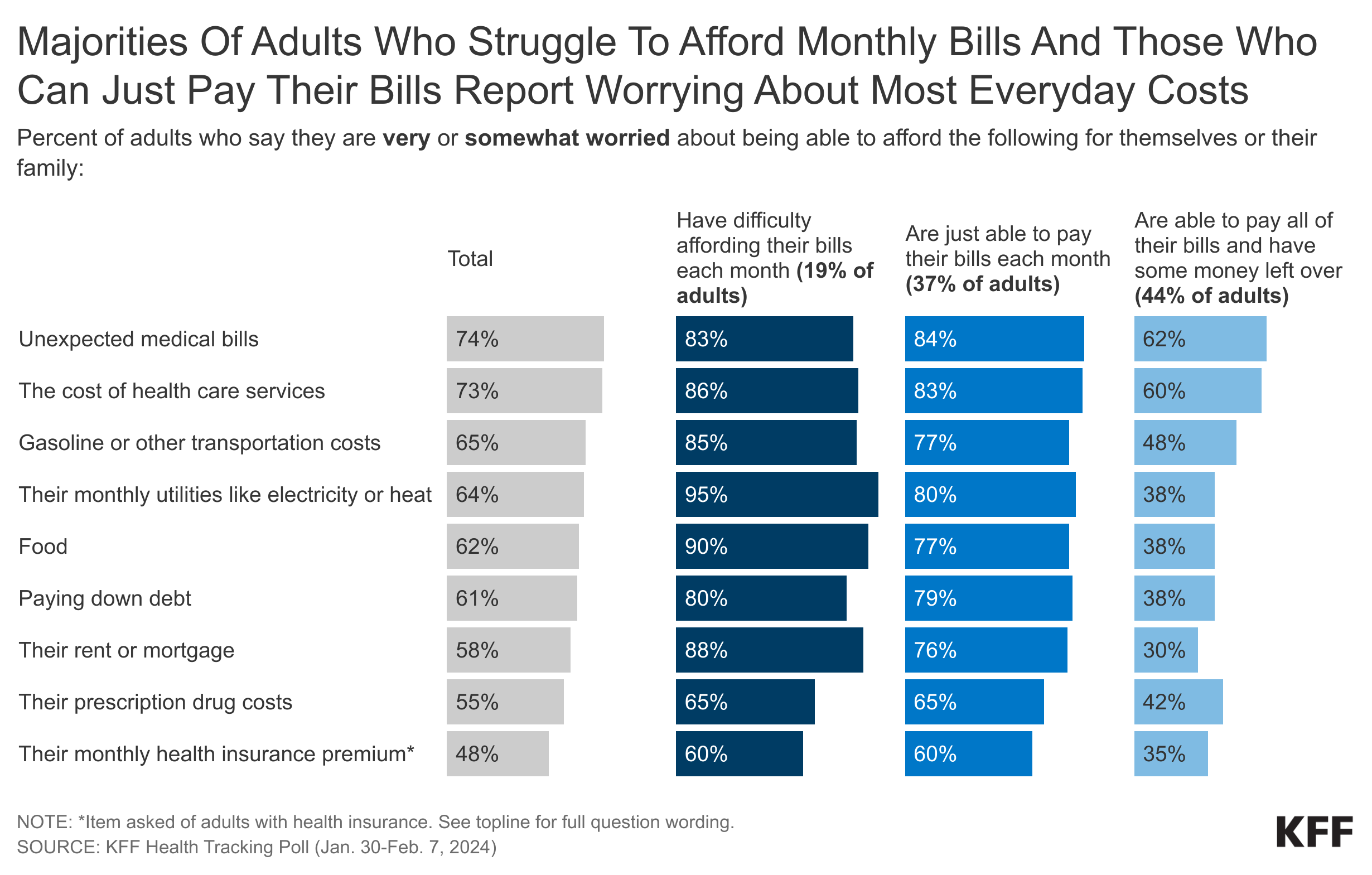
Nearly 3 in 4 adults say they are worried about being able to afford unexpected medical bills (74%) and the cost of health care services (73%), more than say the same about other everyday expenses, such as gas, utilities, food, and housing costs, and about paying for prescription drugs (55%). Health care worries top the list regardless of partisanship.

About half of all voters (48%) say health care costs are a major reason for their negative views of the economy, though larger shares cite everyday expenses, inflation, and housing costs. Overall, two thirds (67%) of voters view the economy negatively. Republican voters are more than twice as likely as Democratic voters to hold such negative views. 

The poll probes how people’s economic struggles color their views of the economy and their priorities for candidates. Overall, 1 in 5 adults (19%) say they have trouble affording their monthly bills, and nearly 4 in 10 (37%) say they say they can just afford their monthly bills. These groups hold very different views than those who say that they afford their bills with money left over (44% of all adults).

Those who report difficulty affording monthly bills are more likely to view the national economy negatively and are more likely to worry about affording health care and other routine expenses. They are also more likely to want the presidential candidates to talk about economic issues, including health care costs and the future of Medicaid, compared to voters who can easily afford their bills. 
The ACA Remains Popular, and More Want to Expand It Than Scale It Back or Repeal It

The poll also explores views of the Affordable Care Act (ACA), which remains popular generally, though voters again split sharply along partisan lines over what should happen to the law next. 

Most of the public (59%) views the law favorably, as has been true since Republicans’ failed attempt to repeal and replace it during President Trump’s presidency. Fewer hold unfavorable views (39%), though most Republicans do (67%).  

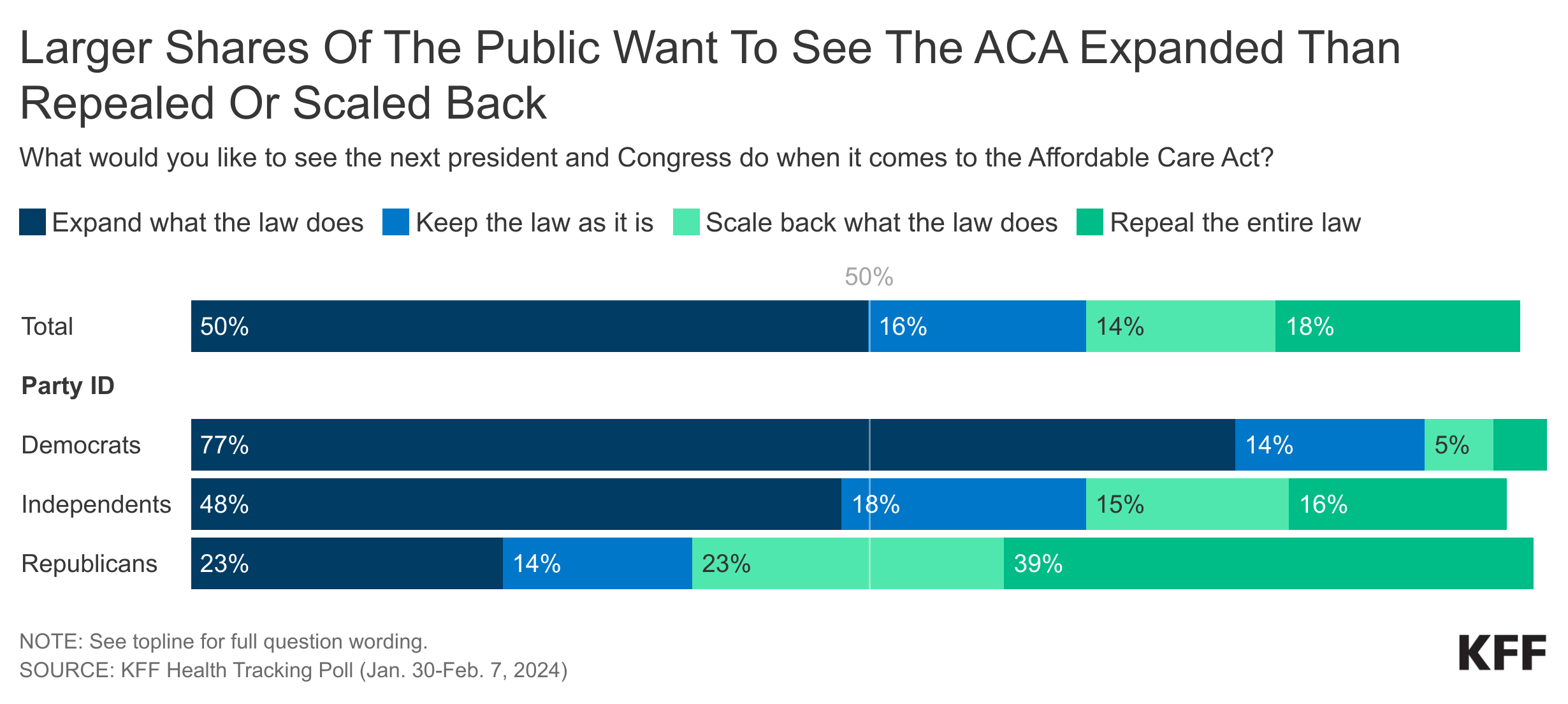
In addition, half (50%) of the public, including nearly a quarter of Republicans (23%), want the next president and Congress to expand what the ACA does, as President Biden has advocated. Another 16% want to keep it as is. In contrast, only about a third of the public favor either scaling back the law (14%) or repealing it entirely (18%), the options preferred by most Republicans.
While President Trump has talked about wanting to replace the ACA during his campaign, just 1 in 6 voters (16%) say that he has a plan to do so. Even among Republican voters, just 3 in 10 say that President Trump has a plan to replace the ACA.On the flip side, while the ACA was originally enacted during Biden’s tenure as vice president, just half of the public says he had either a major (21%) or minor (28%) role in its passage. Democrats ages 50 and older are most likely to say President Biden played a role in the ACA becoming law. Most adults want the law’s prohibition on insurers from denying coverage based on pre-existing medical conditions to stay. Two thirds (67%) of the public say that it is “very important” that this provision remain in place, including most Republicans (54%) However, only about 4 in 10 people (39%) are aware that that provision is part of the ACA.The poll also finds gaps in the public’s knowledge about the ACA’s impact on health coverage. While the share of adults under age 65 who are uninsured has fallen sharply since the ACA’s enactment, just over a third (35%) of the public correctly says the uninsured rate has gone down since the law’s enactment, while similar shares incorrectly say it has gone up (32%) or stayed the same (31%).

The poll findings are featured in two reports: a main report that captures the main findings on health costs, the Affordable Care Act, and the election, and a companion report that looks at differences in the economic views and priorities for adults based on their economic circumstances.

Designed and analyzed by public opinion researchers at KFF, the survey was conducted from January 30-February 7, 2024, online and by telephone among a nationally representative sample of 1,309 U.S. adults, including 1,055 registered voters. Interviews were conducted in English and in Spanish. The margin of sampling error is plus or minus 4 percentage points for the full sample and the registered voter sample. For results based on other subgroups, the margin of sampling error may be higher.
News Release

KFF Health News and CBS News Win 2023 George Polk Award for Medical Reporting

Published: Feb 19, 2024

KFF Health News won the 2023 George Polk Award for Medical Journalism for its year-long investigation with CBS News into the failure of FDA-approved medical devices that were suspected of contributing to thousands of injuries and patient deaths.

The George Polk Awards were established in 1949 by Long Island University to commemorate George Polk, a CBS correspondent murdered in 1948 while covering the Greek Civil War. The awards place a premium on investigative and enterprising reporting that gains attention and achieves results.

The investigation, “When Medical Devices Malfunction,“ brought to light deep flaws in FDA oversight of a series of devices, including:

  • Artificial knee implants that wore out prematurely;
  • Metal hip implants that snapped in two and led to urgent surgeries;
  • Last-resort heart pumps that may have caused or contributed to thousands of patient deaths;
  • Insulin pumps that are blamed for contributing to at least a dozen patient deaths; and,
  • A dental device that lawsuits alleged caused catastrophic harm to teeth and jawbones.

“This investigation revealed the deeply significant, and sometimes deadly, impact of flawed devices and oversight, and is part of our continuing work across KFF to show how people are affected by health policy,” said Dr. Drew Altman, president and chief executive officer, KFF.

“When Medical Devices Malfunction“ was reported by Fred Schulte, an investigative reporter at KFF Health News, Holly K. Hacker, the data editor at KFF Health News, Daniel Chang, the Florida correspondent at KFF Health News, Brett Kelman, a correspondent at KFF Health News, Anna Werner, the national consumer investigative correspondent at CBS News, and Nicole Keller, consumer investigative producer at CBS. It is Schulte’s and Werner’s second Polk award.

About KFF Health News’ Partnership with CBS News

The reporting in “When Medical Devices Malfunction“ was done in partnership with CBS News to investigate the safety of devices suspected of causing patient harm and explore the FDA’s process for assuring patient safety. Reporters from KFF Health News and CBS reviewed FDA data and court records and conducted many interviews with patients, device manufactures, FDA officials, consumer advocates, and others.

The investigation stems from a broader editorial partnership between CBS News and KFF Health News. The editorial partnership also features regular appearances by Dr. Céline Gounder, KFF Health News’ senior fellow and editor-at-large for public health, on CBS News, the popular “Bill of the Month” series, in which KFF Health News editor-in-chief Elisabeth Rosenthal appears regularly on “CBS Mornings” to discuss surprising medical bills, and the KFF Health News “Health Minute,” a weekly feature for CBS News Radio stations that helps millions of listeners understand how developments in health care delivery and policy affect them.

About KFF and KFF Health News

KFF is the independent source for health policy research, polling, and journalism. Our mission is to serve as a nonpartisan source of information for policymakers, the media, the health policy community, and the public. KFF Health News is a national newsroom that produces in-depth and award-winning journalism about health issues and is one of the core operating programs at KFF. Other major KFF programs include Policy Analysis; KFF Polling and Survey Research; and KFF Social Impact Media, which conducts specialized public health information campaigns. A new program on Health Misinformation and Trust is under development.

Section 1115 Waiver Watch: Continuous Eligibility Waivers

Published: Feb 15, 2024

Note: For the latest information on states with approved and pending waivers to extend multi-year continuous eligibility for children, view our Section 1115 tracker “Key Themes Maps.

The pandemic continuous enrollment provision and other research show that continuous eligibility reduces Medicaid disenrollment and “churn” rates and helps to ensure stable coverage. Guaranteeing 12-month continuous coverage for children has long been an option in Medicaid and CHIP without a waiver, but not for adults. The Consolidated Appropriations Act required all states to implement 12-month continuous eligibility for children beginning on January 1, 2024. As many Medicaid enrollees are currently experiencing disruptions in coverage as a result of the Medicaid unwinding, a number of states are pursuing strategies to help promote continuity of coverage, including through unwinding waivers and Section 1115 demonstration waivers. This Waiver Watch summarizes approved and pending Section 1115 waivers with continuous eligibility provisions for children and adults in Medicaid.

What is continuous eligibility?

States are required to provide 12-month continuous eligibility for children in Medicaid and CHIP. Continuous eligibility generally allows individuals to remain enrolled for a specific period even if there are fluctuations in income. States have long had the option to provide 12 months of continuous eligibility to children (under age 19) without a waiver, and many states (23 as of January 2023) had taken up that option for all children in Medicaid and CHIP (additional states had adopted 12-month continuous eligibility for only some children or only children in CHIP). However, the Consolidated Appropriations Act required all states to implement 12-month continuous eligibility for all children in Medicaid and CHIP beginning on January 1, 2024. Additional guidance issued on October 27, 2023 prohibits states from terminating coverage of children enrolled in CHIP for failure to pay premiums. Under the previous 12-month continuous eligibility option, states were permitted to disenroll children in CHIP during the continuous eligibility period if a family did not pay their premiums; this exception to continuous eligibility was not available in Medicaid. On February 1, 2024, the state of Florida filed a lawsuit against HHS challenging the implementation of the law, asserting states should be allowed to terminate CHIP coverage (during the 12-month period) when premium payments are not made.

Under current law, states cannot provide continuous eligibility for adults without a Section 1115 waiver submitted to the federal government. States cannot require a renewal process for Medicaid coverage for adults who are eligible based on income more than once every 12 months. While states may conduct renewals for individuals who qualify for Medicaid based on age or disability more than once every 12 months, most states conduct annual renewals for these groups. However, because states cannot guarantee continuous eligibility for adults absent a waiver, adults may lose coverage if there are “changes in circumstance,” including changes in family income, during the year. Enrollees are required to report changes in circumstances, and some states conduct periodic electronic data matches between renewal periods to identify changes in circumstance.

Continuous eligibility has been shown to reduce Medicaid disenrollment and “churn” rates. Churn occurs when individuals temporarily lose Medicaid coverage and then re-enroll within a short period of time suggesting they are experiencing short-term changes in income or difficulty completing the renewal process. When individuals churn on and off coverage, the gaps in coverage may limit access to care or lead to delays in getting needed care, which can be especially problematic for young children who receive frequent screenings and check-ups. Research has found continuous eligibility for Medicaid is associated with improved child health. While continuous eligibility increases coverage costs due to longer average eligibility periods, there are also administrative costs associated with disenrolling individuals and then subsequently processing new applications.

How are states using 1115 waivers to provide extended continuous eligibility for children?

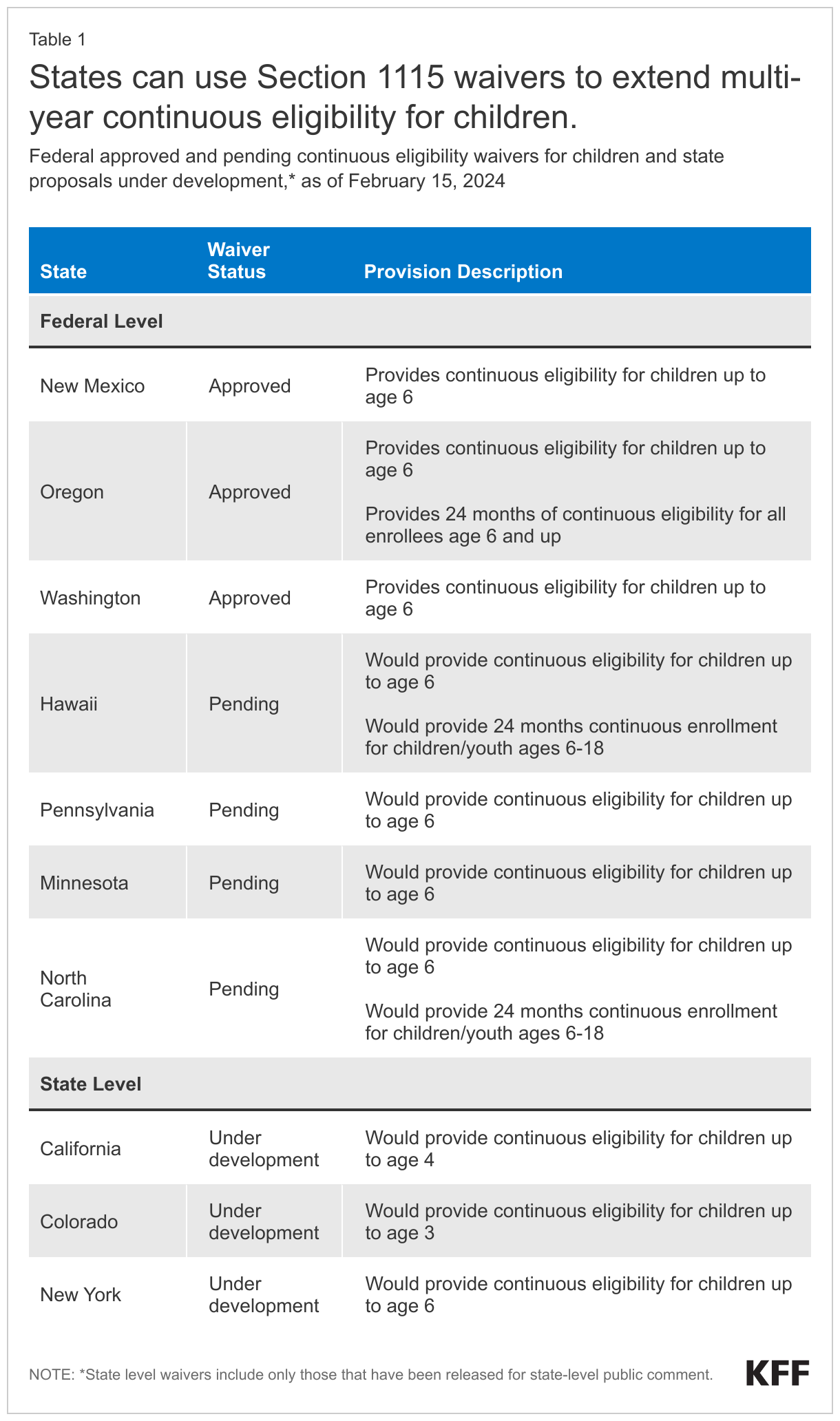
As of February 15, 2024, three states have approved Section 1115 demonstration waivers to provide multi-year continuous eligibility to children (Table 1). Section 1115 waivers allow states to obtain federal approval to operate Medicaid programs in ways that differ from federal standards and requirements. In September 2022, CMS approved Oregon’s waiver to implement continuous eligibility for children from birth to age six as well as 24 months of continuous eligibility for nearly all enrollees ages six and older. Since then, CMS has approved multi-year continuous eligibility requests for children in Washington and New Mexico. Hawaii, Minnesota, North Carolina, and Pennsylvania have requests pending with CMS.

A number of states are developing waivers to provide multi-year continuous eligibility to children. Several states have waiver proposals under development that have recently been released for state-level public comment (California, Colorado, and New York) that include multi-year continuous eligibility for children (Table 1). Other tracking shows state activity, including legislation directing the state Medicaid agency to seek approval for multi-year continuous eligibility for children, in Illinois, Ohio and the District of Columbia. In December 2023, growing concern over loss of Medicaid coverage for children prompted federal officials to issue additional guidance with strategies to protect coverage; one strategy CMS highlighted in its guidance is providing multi-year continuous eligibility for children through Section 1115 demonstration authority.

States can use Section 1115 waivers to extend multi-year continuous eligibility to children.

What options do states have to provide continuous eligibility for adults?

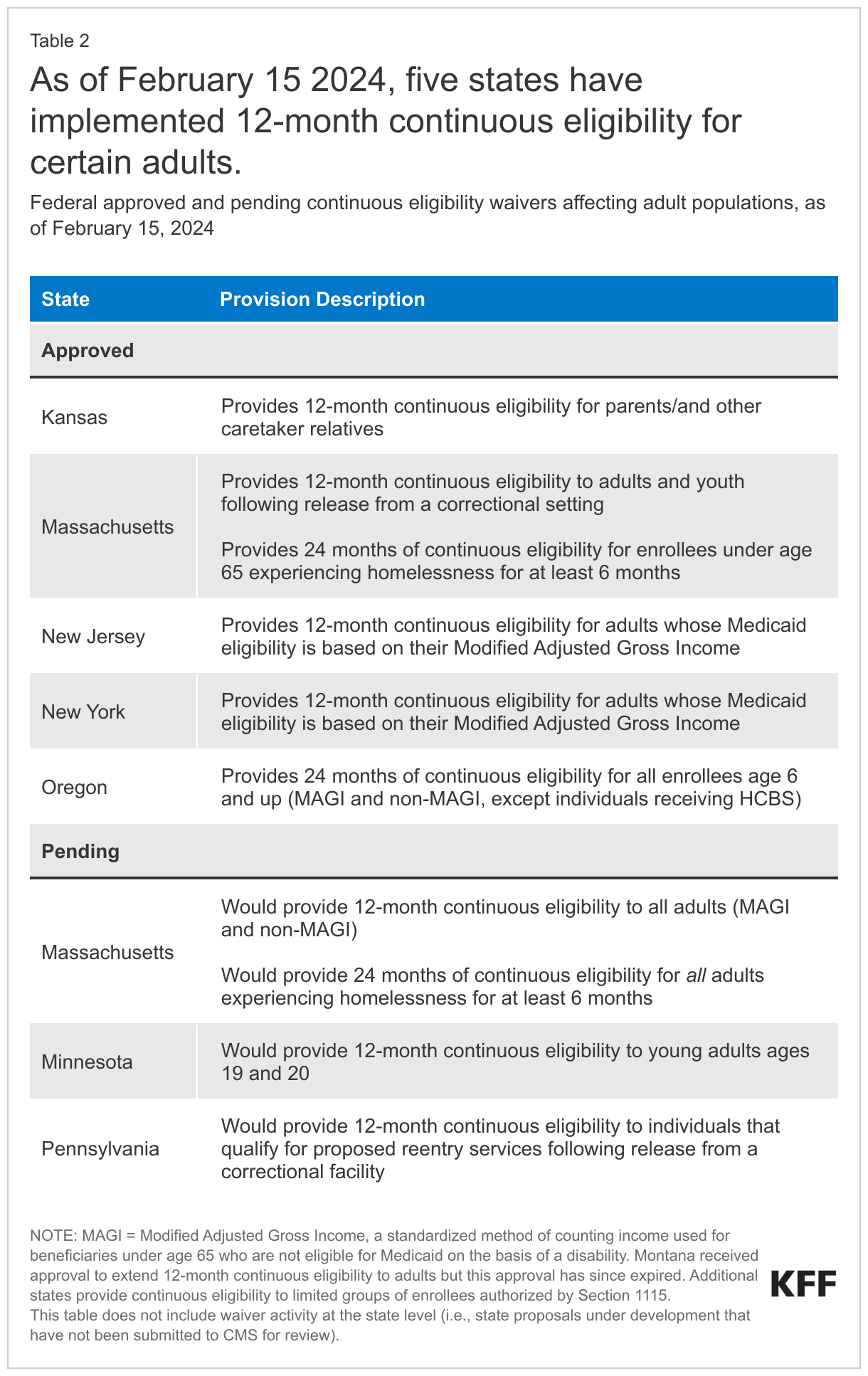
As of February 15, 2024, five states have approved Section 1115 waivers to provide varying lengths of continuous eligibility to certain adults (Table 2). Oregon provides 24 months of continuous eligibility to nearly all enrollees over age six. New York and New Jersey provide 12-month continuous eligibility to all income-eligible Medicaid adults. Kansas provides 12-month continuous eligibility to parents and caretaker relatives. Massachusetts provides 12-month continuous eligibility for individuals following release from a correctional institution and 24-month continuous eligibility for individuals under age 65 experiencing homelessness for at least 6 months; however, the state is seeking CMS approval to expand 12-month continuous eligibility to all adults (including those eligible based on income, age, or disability status) and 24 months of continuous eligibility to all adults experiencing homelessness. Minnesota is seeking to provide 12-month continuous eligibility to young adults ages 19 and 20, and Pennsylvania is seeking to provide 12-month continuous eligibility to individuals that qualify for proposed reentry services following release from a correctional facility.

As of February 2024, five states have implemented 12-month continuous eligibility for certain adults.

Looking Ahead

Experience during the pandemic demonstrated that continuous enrollment can ensure stable coverage and reduce churn. While increased enrollment may result in increased overall costs, the policy can also improve health outcomes and potentially lead to some longer-term savings due to less fragmented care. While the unwinding of the pandemic-era continuous enrollment provision is leading to high rates of procedural disenrollments and is expected to increase the number of people who are uninsured longer term, mandatory 12-month continuous eligibility for children as well as new continuous eligibility policies that some states are pursuing through 1115 waivers can help to provide more stable coverage once the unwinding period ends.

What Would Another Trump Presidency Mean for Health Care?

Published: Feb 15, 2024

In this JAMA Health Forum column,  Larry Levitt, KFF’s Executive Vice President for Health Policy, explores what a second Trump presidency would mean for health care based on President Trump’s record and remarks, and concludes that a new term likely would result in efforts to weaken the Affordable Care Act, reduce federal Medicaid costs, restrict abortion access to abortion, and scale back benefits for immigrants.

News Release

Few Nursing Facility Residents and Staff Have Gotten the Latest COVID-19 Vaccines

Published: Feb 13, 2024

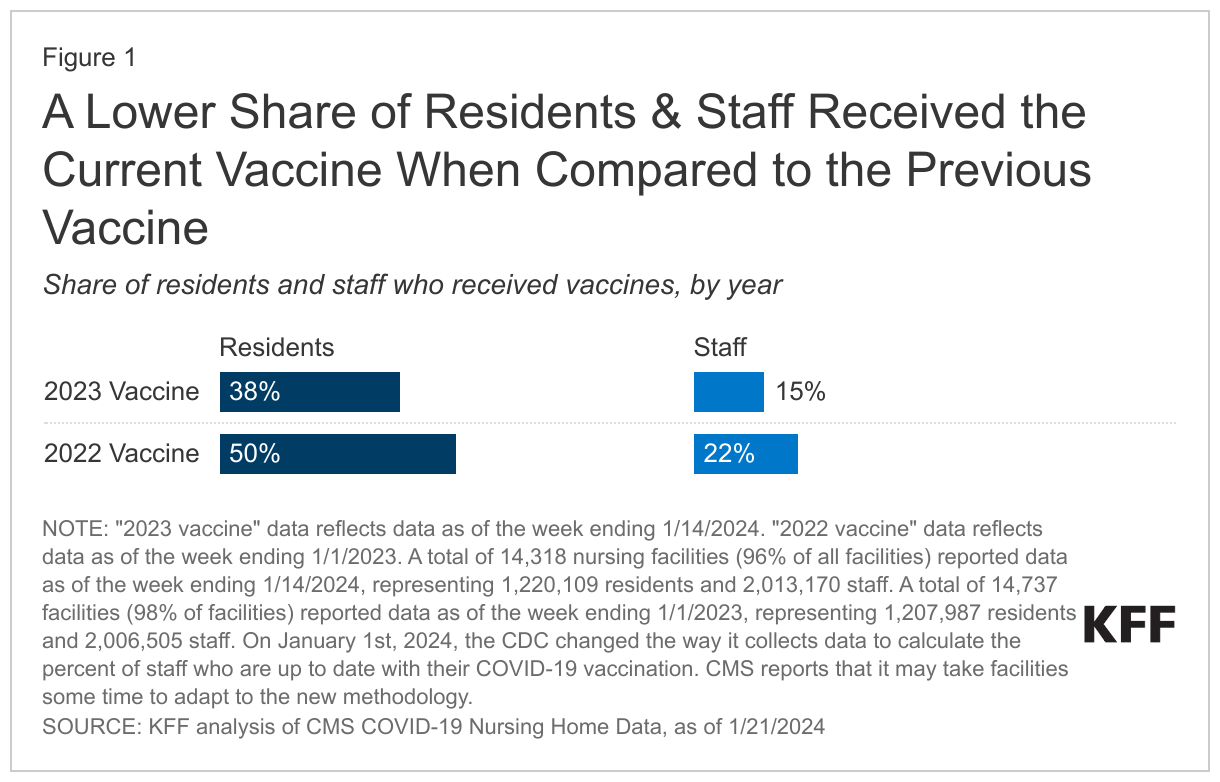
Fewer nursing facility residents and staff are getting COVID-19 vaccines, according to a new KFF analysis of federal data. Only 38% of residents and 15% of staff have received the latest vaccine. In comparison, 50% of residents and 22% of staff received updated vaccines in 2022 and 87% of residents and 88% of staff completed the initial vaccination series.

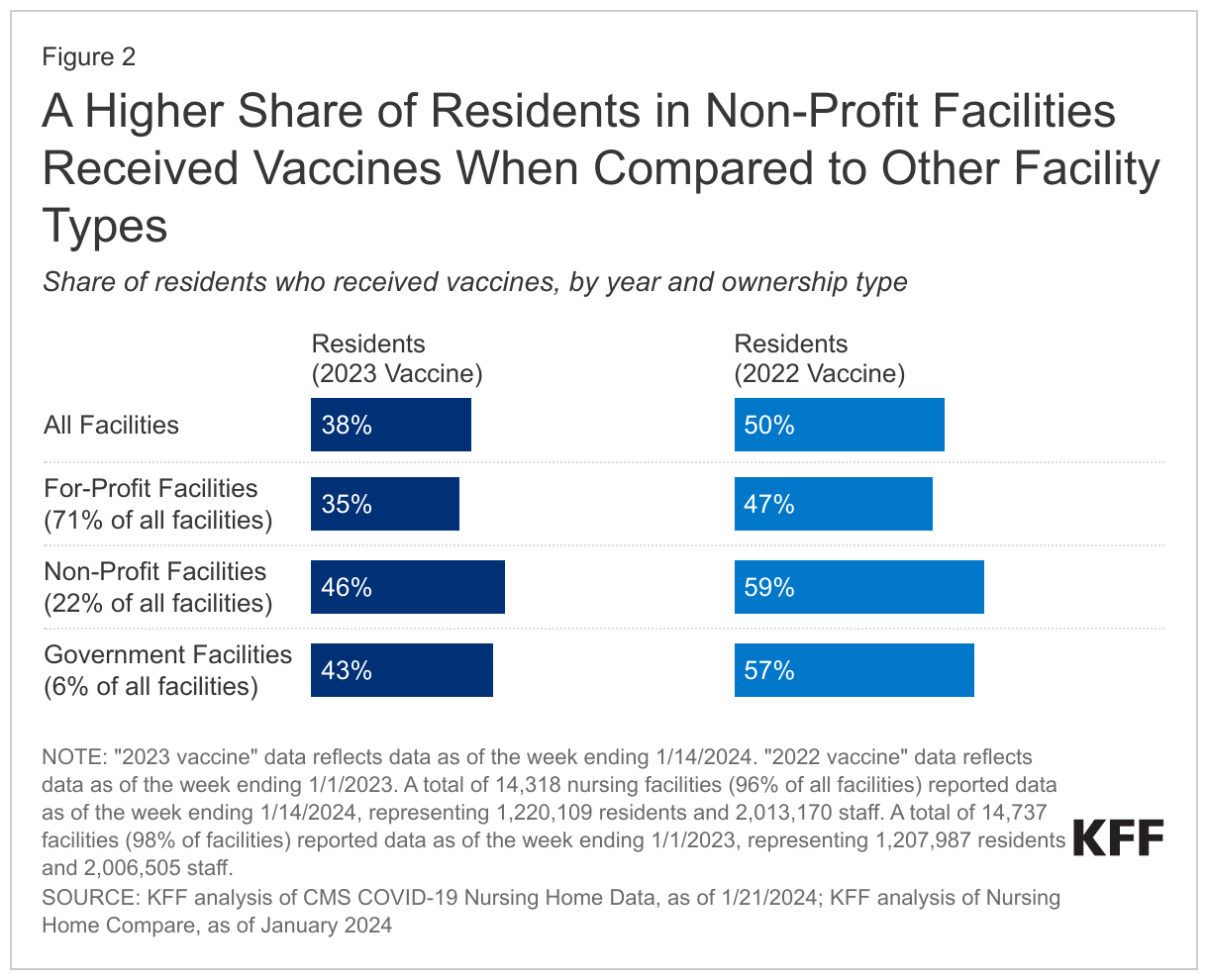
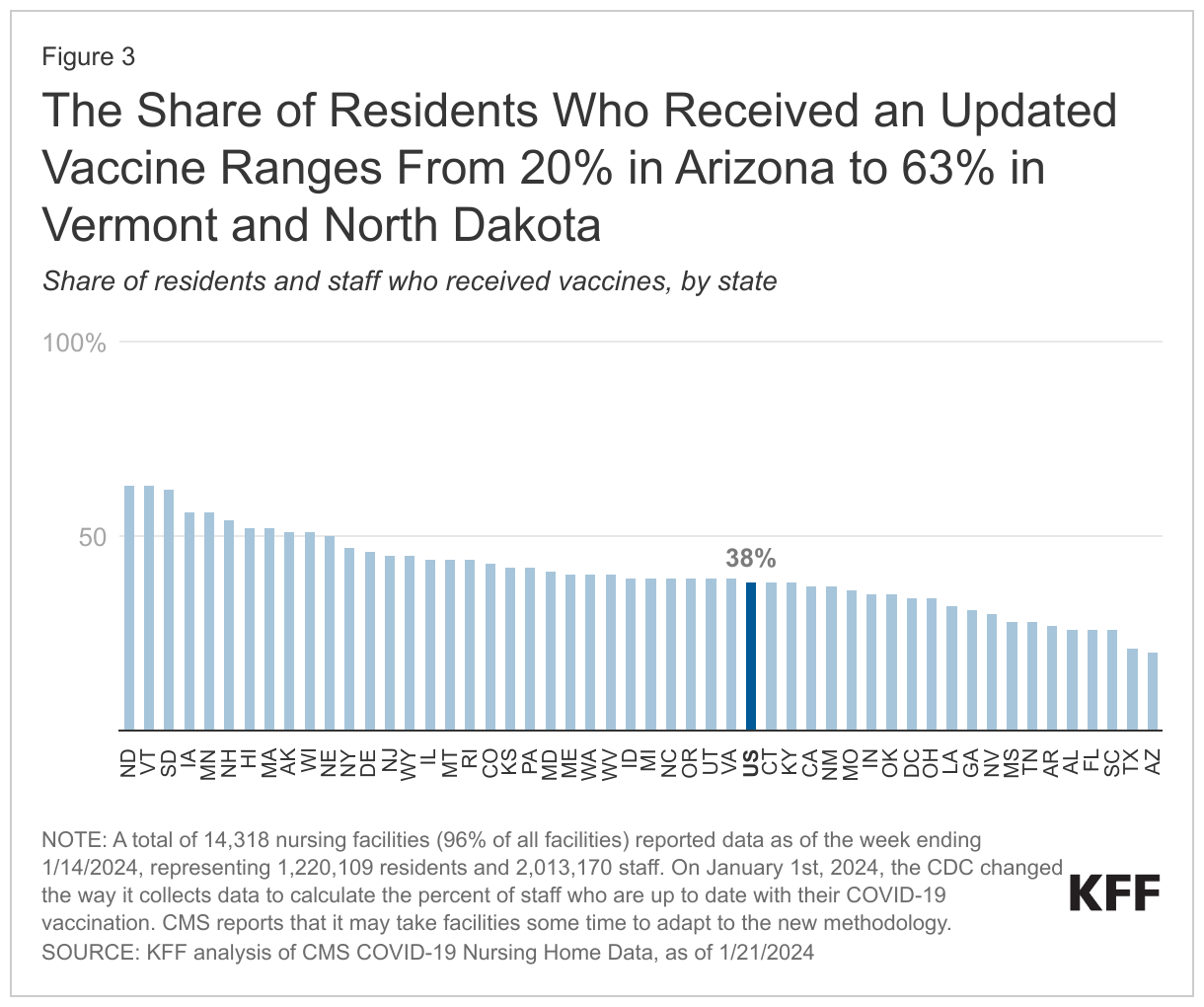
The percentage of residents who received the latest COVID-19 vaccine varies by state and type of facility. Vaccination rates range from 20% in Arizona to 63% in Vermont and North Dakota and were higher in nonprofit facilities (46%) than in for-profit (35%) or government (43%) facilities. Nursing staff had less variation and lower vaccination rates across states and in all facilities.

Residents’ and staff vaccination rates have declined with the release of each new COVID-19 shot for a variety of reasons, including fewer federal initiatives aimed at increasing vaccinations, the end of vaccine mandates for health care workers, and declining concerns about COVID-19 risks. Recent KFF polling shows that more than half of previously vaccinated adults are not worried about getting COVID-19.

Variation in nursing facility vaccine rates across states may be affected by several factors, including ownership patterns and partisanship, with higher rates in states that have more non-profit facilities and states that voted for President Biden in 2020, as well as whether facilities have established successful vaccination programs.

Few Nursing Facility Residents and Staff Have Received the Latest COVID-19 Vaccine

Published: Feb 13, 2024

Keeping 2 million nursing facility staff and 1.2 million residents current on their COVID-19 vaccines is one tool for reducing deaths from COVID-19 as the virus continues to evolve. KFF analysis found that despite over one-fifth of all U.S. COVID-19 deaths occurring in long-term care facilities, as of January 14, 2024, only 38% of residents and 15% of staff were “up-to-date” with their COVID-19 vaccines, which the CDC defines as having received the updated Fall 2023 vaccine. Those rates are lower than uptake was for the 2022 vaccine. This data note also finds lower uptake rates for for-profit facilities and state uptake rates that vary from 20% to 63%. Data for this analysis include 14,318 nursing facilities (96% of all nursing facilities, home to 1.2 million residents) that had reported COVID-19 vaccination data as of January 21, 2024.

Uptake of the most recent COVID-19 vaccine is lower among nursing facility residents and staff than uptake was for the fall 2022 vaccine: Only 38% of residents and 15% of staff have received the new vaccine (Figure 1). In comparison, at the same point in time last year, 50% of residents and 22% of staff had received the updated vaccine. Those rates represent the share that received the newly available COVID-19 vaccines, 18 weeks after each shot was made available to the public. These rates are much lower than the 87% of residents and 88% of staff who received their primary vaccination series when measured in September 2022. On January 1, 2024, the CDC changed the way it collects data to calculate the percent of staff who are up to date with their COVID-19 vaccination. CMS reports that it may take facilities some time to adapt to the new methodology.

A Lower Share of Residents & Staff Received the Current Vaccine When Compared to the Previous Vaccine

Uptake of the current COVID-19 vaccine is higher in non-profit facilities than in for-profit or government facilities (Figure 2). The percentage of nursing facility residents who received the updated vaccine is 46% in non-profit facilities compared with 35% in for-profit facilities and 43% in government facilities. Uptake of the fall 2022 vaccine was also highest in non-profit facilities and lowest in for-profit facilities. Rates of vaccine uptake for nursing facility staff were low in all types of facilities with minimal variation across facility types (data not shown).

A Higher Share of Residents in Non-Profit Facilities Received Vaccines When Compared to Other Facility Types

The percentage of nursing facility residents who received the latest COVID-19 vaccine ranges from 20% in Arizona to 63% in Vermont and North Dakota (Figure 3). In eleven states, half or more of nursing facility residents received the newest vaccine while in two states, 25% or fewer have received the most recent vaccine. Uptake among staff of the most recent vaccine ranges from 5% in Arkansas to 51% in Washington D.C. In 42 states, fewer than 20% of staff have received the most recent vaccine. There are a number of factors that may contribute to the variation in nursing facility vaccine uptake across states including ownership patterns and partisanship, with higher rates in states that have more non-profit facilities and states that voted for President Biden in 2020. Other factors include whether facilities have established programs to keep residents current on their vaccines and the success of those various programs. Additionally, some state variation in staff rates may be attributed to variation in how facilities are adapting to new CMS reporting methodology for staff vaccinations.

The Share of Residents Who Received an Updated Vaccine Ranges From 20% in Arizona to 63% in Vermont and North Dakota

Federal vaccine clinics contributed to high initial vaccination rates among nursing facility residents, but without ongoing federal initiatives, uptake of vaccines among nursing facility residents may remain low and vary across facilities. Earlier KFF analysis found that nearly 90% of residents completed the initial COVID-19 vaccination series. High take-up of the primary vaccine series stems from high death rates among nursing facility residents, which contributed to a fear of contracting COVID-19, and a concerted policy effort to vaccinate nursing facility residents, including through federally supported on-site vaccination clinics. According to AARP, federal supports have ended and long-term care facilities now coordinate their own COVID-19 vaccination programs, contributing to greater variation across facilities and lower overall rates.

Recent KFF polling shows that over half of previously vaccinated adults are not worried about getting COVID-19, suggesting that uptake of vaccines among nursing facility staff may remain low in the absence of federal mandates. Among nursing facility staff, initial take-up of COVID-19 vaccines was low until a health care worker vaccination mandate required providers that participate in Medicare and/or Medicaid to be vaccinated. This mandate was not updated to include follow-up vaccines, which may contribute to lower uptake of new vaccines among staff, particularly as concern about contracting COVID-19 drops among the U.S, population more broadly.

As winter viruses circulate, COVID-19 vaccines may help decrease sickness and preventable deaths among nursing facility residents and staff. Though people living and working in nursing facilities have likely built some immunity against COVID-19 through prior vaccinations and natural immunity, periodic vaccines have been shown to decrease mortality and increase antibody concentrations among nursing facility residents. For older adults—who constitute most people who use nursing facilities—the risks of COVID-19 may be seven times higher than that of the flu. The CDC finds that 72% of residents had received the flu vaccine as of December 10, 2023, among the small number of nursing facilities that had reported such data, a rate that is nearly twice that of the most recent COVID-19 vaccine. Beyond the flu and COVID-19, RSV is another high-risk respiratory virus. Although there is a new vaccine for RSV, uptake of the new vaccine among nursing facility residents has been hampered by shortages of RSV vaccines and the prioritization of the vaccine for infants and high-risk children. Increasing access to all vaccinations for this population may be a key strategy to preventing respiratory illnesses.

News Release

People with Medical Debt are Much More Likely to Experience Other Forms of Financial Stress

Published: Feb 12, 2024

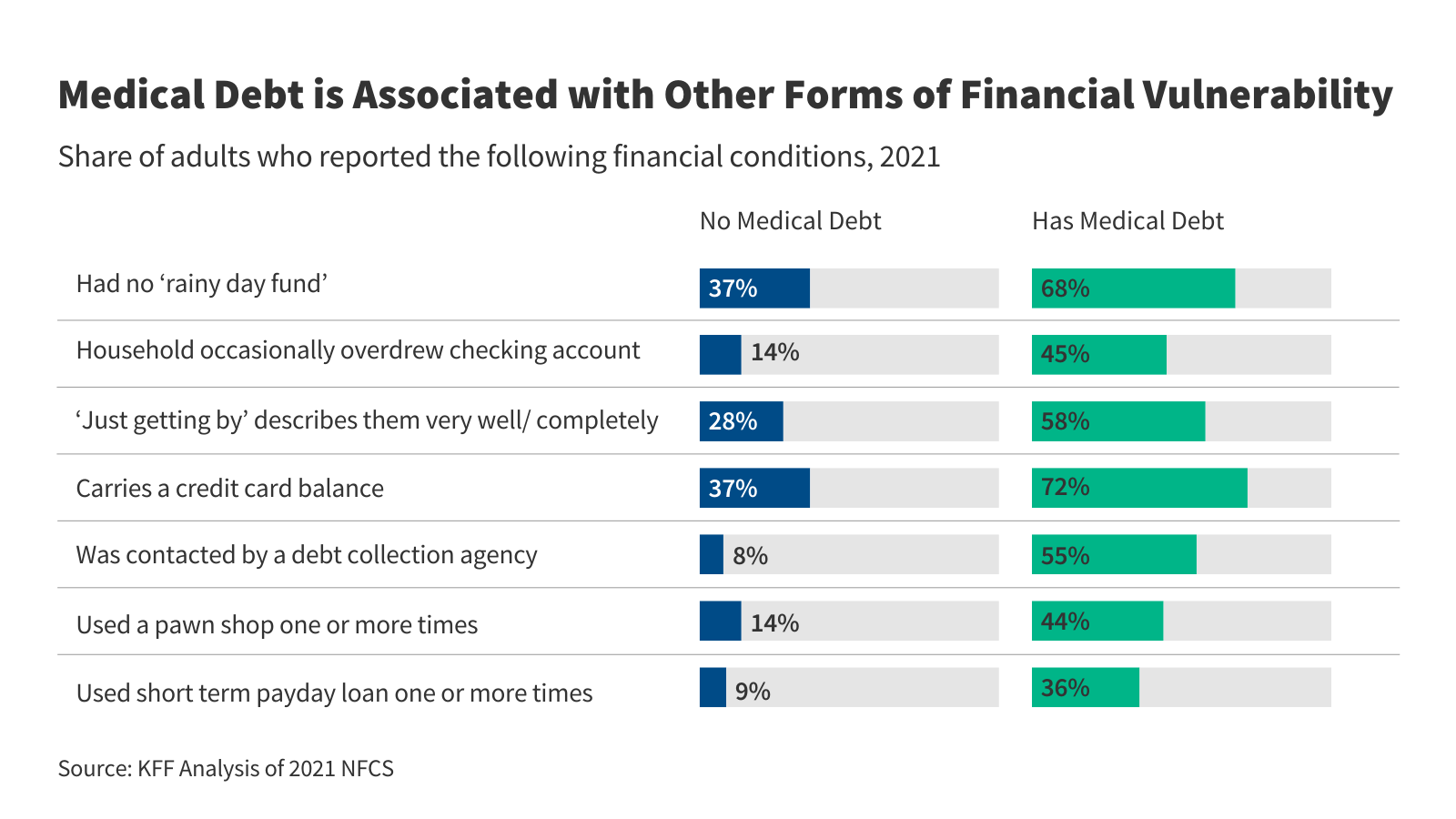
People with medical debt are much more likely than those without such debt to show other signs of financial vulnerability, like having no “rainy day” fund, overdrawing a checking account, or relying on costly loans, according to a new KFF analysis of national survey data.

Medical debt remains a significant issue in the U.S., including among people with health insurance. In 2021, 23% of U.S. adults had one or more unpaid and past due bills from a medical service provider.

KFF’s 2022 Health Care Debt Survey found similar results: Among adults, 24% say they had medical or dental bills that were past due or that they could not pay, and a total of 41% had some type of health care debt, including on credit cards or owed to family members.

Medical debt and other forms of financial instability affect people and households across the income spectrum and can cause individuals to forgo needed care. In its award-winning series, “Diagnosis: Debt”, KFF Health News examined the epidemic of medical debt that has become a defining feature of the U.S. health care system.

The Consumer Financial Protection Bureau is expected to release requirements that remove medical debt from credit reports and could crack down on certain debt collection practices. Some states and localities have also bought or are seeking to buy their residents’ medical debt, in part with remaining COVID relief funds.

KFF’s new analysis relies on data from the 2021 National Financial Capabilities Survey. The survey uses information from more than 27,000 adults in each state and D.C.

How Financially Vulnerable are People with Medical Debt?

Authors: Aubrey Winger, Gary Claxton, Matthew Rae, Shameek Rakshit, and Anthony Damico
Published: Feb 12, 2024

This analysis of government data finds that people with medical debt are much more likely to have other forms of financial distress than those without medical debt, like having no “rainy day” fund, overdrawing a checking account, or relying on costly loans.

Medical debt is associated with financial vulnerability across a range of other indicators and can cause people to delay or forgo needed medical care due to cost.

The analysis relies on data from the 2021 National Financial Capabilities Survey. The survey uses information from more than 27,000 adults in each state and D.C.

The analysis is available through the KFF-Peterson Health System Tracker, an online information hub that monitors and assesses the performance of the U.S. health system.

The Burden of Medical Debt in the United States

Authors: Shameek Rakshit, Matthew Rae, Gary Claxton, Krutika Amin, and Cynthia Cox
Published: Feb 12, 2024

This analysis of government data estimates that people in the United States owe at least $220 billion in medical debt. Approximately 14 million people (6% of adults) in the U.S. owe over $1,000 in medical debt and about 3 million people (1% of adults) owe medical debt of more than $10,000.

The share of adults with medical debt varies considerably across the U.S. Hawaii (2.3%) and D.C. (2.7%) have the lowest share of adults with medical debt. States with the highest share of adults with medical debt include South Dakota (17.7%), Mississippi (15.2%), North Carolina (13.4%), West Virginia (13.3%), and Georgia (12.7%).

The analysis is based on data from the 2021 Survey of Income and Program Participation, a nationally representative survey that asks every adult in a household whether they owed money for medical bills and how much they owe.

The report also examines variations in medical debt by age, race and ethnicity, health status, and for people with a disability.

The analysis is available through the KFF-Peterson Health System Tracker, an online information hub that monitors and assesses the performance of the U.S. health system.