Racial Equity and Health Policy

Survey of Immigrants

KFF-New York Times Survey: Immigrants Report Rising Fear, Negative Economic and Health Impacts, and Changing Political Views During the First Year of President Trump’s Second Term

The 2025 Survey of Immigrants, a partnership between KFF and The New York Times, takes an in-depth look at the experiences of immigrants during the first year of President Trump’s second term, including their worries related to increased immigration enforcement, their health and economic wellbeing, and the political views and preferences of immigrant voters. The survey paints a portrait of families under strain — where fear of detention and economic instability are negatively impacting immigrants’ health and reshaping immigrant families’ daily lives and views of U.S. political parties.

Read the News Release | Explore The New York Times’ Reporting
the Essentials
  • Disparities in Health and Health Care: 5 Key Questions and Answers

    This brief provides an introduction to what health and health care disparities are, why it is important to address them, what the status of disparities is today, recent federal actions to address disparities, and key issues related to addressing disparities in the future.
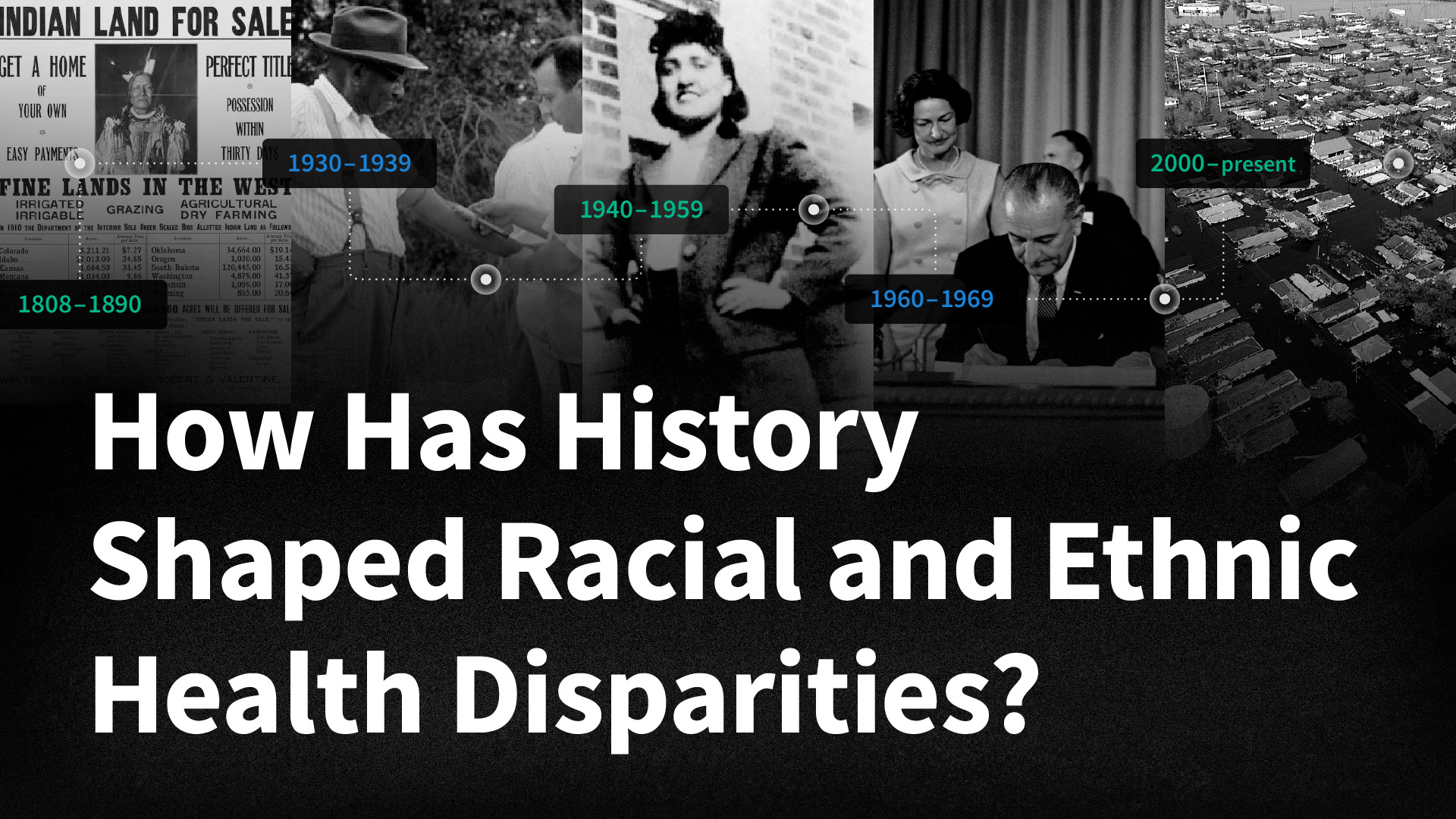
  • Timeline: How History Has Shaped Racial and Ethnic Health Disparities

    This timeline offers a historical view of significant U.S. federal policies and events spanning the early 1800s to today that have influenced present-day health disparities.
  • Health Policy 101: Chapter on Race, Inequality and Health

    Addressing persistent racial and ethnic disparities in health and health care is important for improving the nation’s health and economic prosperity. KFF explains such disparities and the factors that drive them, examines the actions to address them, and outlines future considerations.
  • Key Data on Health and Health Care by Race and Ethnicity

    Racial and ethnic disparities in health and health care remain a persistent challenge in the United States. An updated KFF resource examines how people of color fare compared to White people across 64 measures of health, health care, and social determinants of health.

Subscribe to KFF Emails

Choose which emails are best for you.
Sign up here

Filter

81 - 90 of 589 Results

  • Compare the Candidates on Health Care Policy

    Feature

    The side-by-side comparison tool provides a quick overview of former President Trump's and Vice President Harris' records, positions, public statements, and proposed policies on a range of key health care topics.

  • Medicaid Efforts to Address Racial Health Disparities

    Issue Brief

    Medicaid programs are a major source of coverage for people of color and a potential mechanism to address racial health disparities. This issue brief provides insight into ways Medicaid can mitigate racial health disparities, how coverage may vary by race and ethnicity, and other Medicaid initiatives states pursuing to address racial disparities in health and health care.

  • Loneliness and Social Support Networks: Findings from the KFF Survey of Racism, Discrimination and Health 

    Poll Finding

    The issues of loneliness and social isolation gained attention during the COVID-19 pandemic, and continue to be associated with poor mental and physical health conditions. One in six (15%) adults report feeling always or often lonely in the past year, with the highest shares among young adults ages 18-29. There is a strong relationship between feelings of loneliness, local support networks, and physical and mental health and well-being, but Black, Hispanic, and Asian adults are somewhat less likely to report strong local support networks compared to their White counterparts.

  • Health Policy 101 Introduction

    Feature

    Health Policy 101 is a comprehensive guide covering fundamental aspects of U.S. health policy and programs, including Medicare, Medicaid, the Affordable Care Act, employer-sponsored insurance, the uninsured population, health care costs and affordability, women's health issues, and health care politics. It includes overviews of private health insurance regulation, racial and ethnic disparities, public health, international comparison of health systems, U.S. global health policy, and the federal role in health policy. The chapters can be downloaded in a PDF format for faculty and student use, and the information will be updated annually or as data and circumstances change.

  • Who is at Risk Amid the H5N1 Influenza Outbreak? Characteristics and Health Coverage of Animal Production Workers

    Issue Brief

    This analysis uses data on “animal production workers” from the 2022 American Community Survey to examine characteristics of workers who may be at risk for exposure to H5N1 avian influenza, which has been found in dairy cattle herds in nine U.S. states as of May 14, 2024. The analysis compares characteristics of these workers to all U.S. workers, to all workers in the H5N1-affected states, and draws out some implications. Among the findings are that animal production workers are more likely than workers overall to be Hispanic and noncitizen immigrants, as well as to be uninsured.