Medicare

Medicare Open Enrollment

NEW AND NOTEWORTHY

Decoding Medicare Advantage Coding Intensity

Federal payments to Medicare Advantage plans, and adjustments for health status, have come under increased scrutiny. This brief answers key questions about coding intensity, recent steps taken by CMS, the effects on beneficiaries, and other proposals to improve payment accuracy.

Data Visualization

The Facts About Medicare Spending

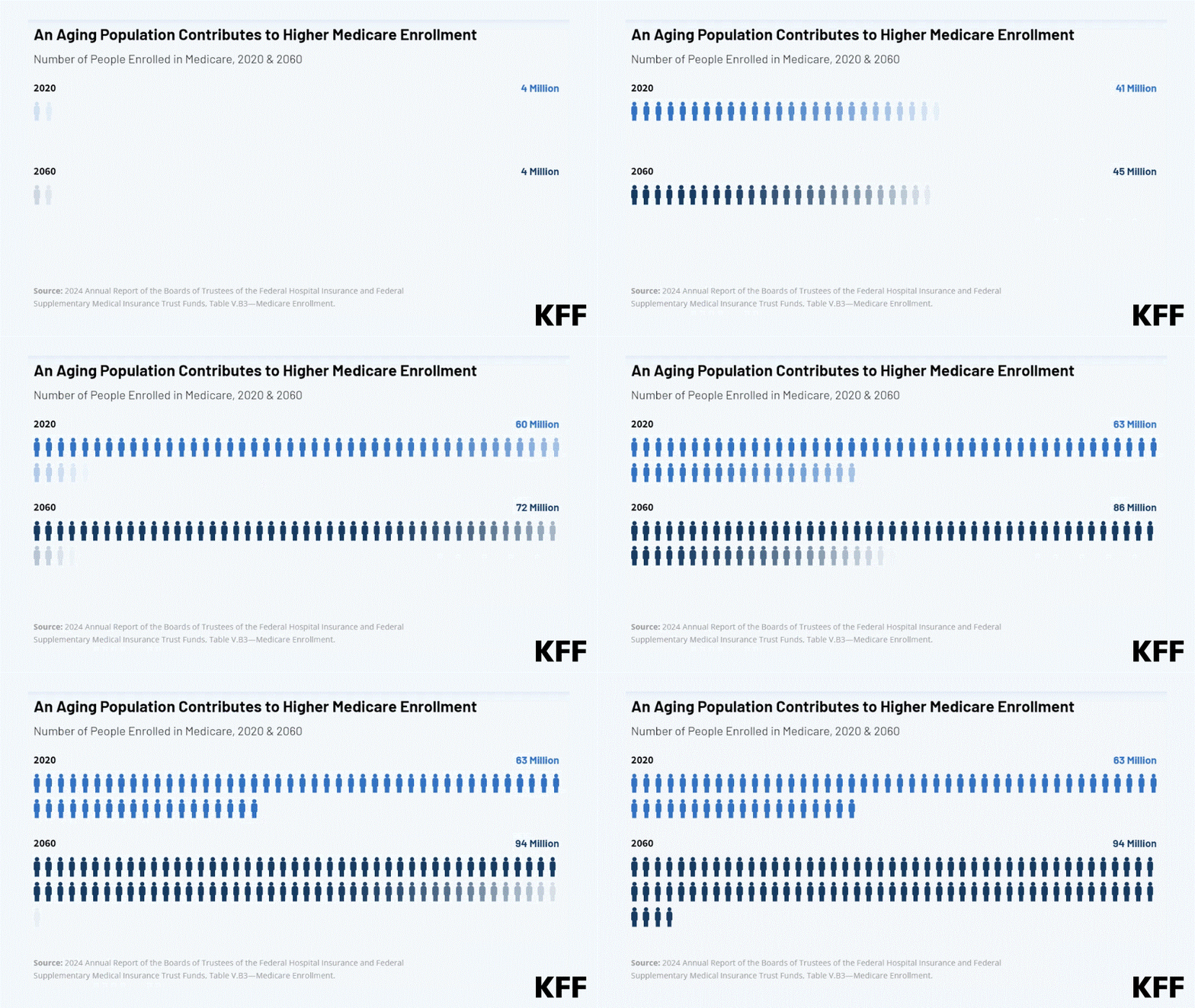
This interactive provides the facts on Medicare spending. Medicare, which serves 67 million people and accounts for 12 percent of the federal budget and 21 percent of national health spending, is often the focus of discussions about health expenditures, health care affordability and the sustainability of federal health programs. Explore data on enrollment growth, Medicare spending trends overall and per person, growth in Medicare spending relative to private insurance, spending on benefits and Medicare Advantage, Part A trust fund solvency challenges, and growth in out-of-pocket spending by beneficiaries.

Read More

Stay informed.

Stay informed.

Filter

1,451-1,460 of 1,622 results

  • Estimates of Medicare Beneficiaries’ Out-of-Pocket Drug Spending in 2006

    Report

    This report projects the impact of the new Medicare drug benefit on out-of-pocket spending for people who enroll in 2006. This analysis from November 2004 estimates that 6.9 million beneficiaries are projected to be affected by the coverage gap (the so-called "doughnut hole") in the standard Part D drug benefit. This estimate is based on projected enrollment in Part D plans of 29 million (Congressional Budget Office, July 2004), prior to implementation of the drug…

  • Federal Funding Under the Affordable Care Act

    Fact Sheet

    This fact sheet provides highlights from an analysis tracking the flow of federal Affordable Care Act funds to states as reporter in the Department of Health and Human Services grant database as well as periodic reports from HHS and the Internal Revenue Service. The analysis distinguishes between funds awarded to state and local governments (including state and local health departments and school districts) and private entities (including private employers, health centers, universities, and other community-based…

  • Understanding The Effects of The Medicare Part D Coverage Gap in 2008 and 2009

    Report

    This Kaiser Family Foundation study examines how the coverage gap in Medicare’s drug benefit known as the “doughnut hole” affects Medicare beneficiaries and their prescribing patterns. Based on actual claims data from 2008 and 2009, before the 2010 health reform law began to close the gap, the study finds that most Part D enrollees with high drug costs who fall in the gap one year are likely to do so in future years. Enrollees who…

  • How Much Skin in the Game is Enough? The Financial Burden of Health Spending for People on Medicare

    Report

    How Much " Skin in the Game " is Enough? The Financial Burden of Health Spending for People on Medicare Medicare extends health security and financial protection to seniors and younger people with disabilities. However, premiums, relatively high cost-sharing requirements, and gaps in the benefit package result in some beneficiaries spending a significant share of their income on health expenses. This data spotlight examines the burden out-of-pocket expenses placed on Medicare beneficiaries between 1997 and…

  • How Much ‘Skin In The Game’ Do Medicare Beneficiaries Have? The Increasing Financial Burden of Health Care Spending, 1997-2003

    Issue Brief

    This study evaluated the changes in Medicare beneficiaries' health care spending between 1997 and 2003, and found beneficiaries spent a growing share of their income on health care. The results showed that median out-of-pocket health spending increased from 11.9% of income in 1997 to 15.5% in 2003, and about four in 10 beneficiaries spent at least one-fifth of their income on health care in 2003. Researchers using data from the Medicare Current Beneficiary Survey found…

  • Health Coverage and Expenses: Impact on Older Women’s Economic Well-Being

    Issue Brief

    In this article in the Journal of Women, Politics & Policy, researchers from the Kaiser Family Foundation examine how health issues that women face over the course of their lives, as well as policies that shape Medicare, Medicaid and other supplemental coverage, can affect retired women's economic well-being. They found that women's health care expenses were higher than men's; that older women paid for a greater share of their total spending out of pocket and that…

  • Transitions 2006

    Video

    On January 1, 2006, the six million Americans who are covered by both Medicare and Medicaid saw a change in how their prescription drugs are covered. The dual eligible population was transitioned from Medicaid into the Medicare prescription drug benefit. As a group, these beneficiaries are poorer and sicker than those on Medicare. Consequently, they have more extensive health and prescription drug needs than most Medicare beneficiaries.

  • Transitions 2005

    Video

    Transitions is a video that explores some of the issues and challenges “dual eligibles” may face during the transition from Medicaid drug coverage to Medicare.

  • Medicare and Medicaid at 40

    Video

    The Medicare and Medicaid health coverage programs were signed into law July 30, 1965. The Kaiser Family Foundation has some new resources that examine how Medicare and Medicaid came into existence and how they have evolved over the past 40 years. You will find new documentaries and extended interviews with key policymakers and government officials examining the origins of Medicare and Medicaid, new interactive historical timelines, a chart pack of key information and statistics, a…

  • Medicare at 40

    Video

    The Kaiser Family Foundation has produced three documentaries to mark the 40th anniversary of Medicare and Medicaid. The documentaries examine the social needs that led policymakers to create these programs, the expectations of what they would achieve and the reality of these programs today. Key policymakers, staff officials and members of Congress involved in the creation and implementation of Medicare and Medicaid are interviewed. Extensive use of historic video helps tell the story of these…