Medicare

Medicare Open Enrollment

Medicare Advantage Plan Availability Varies Widely by County for 2027

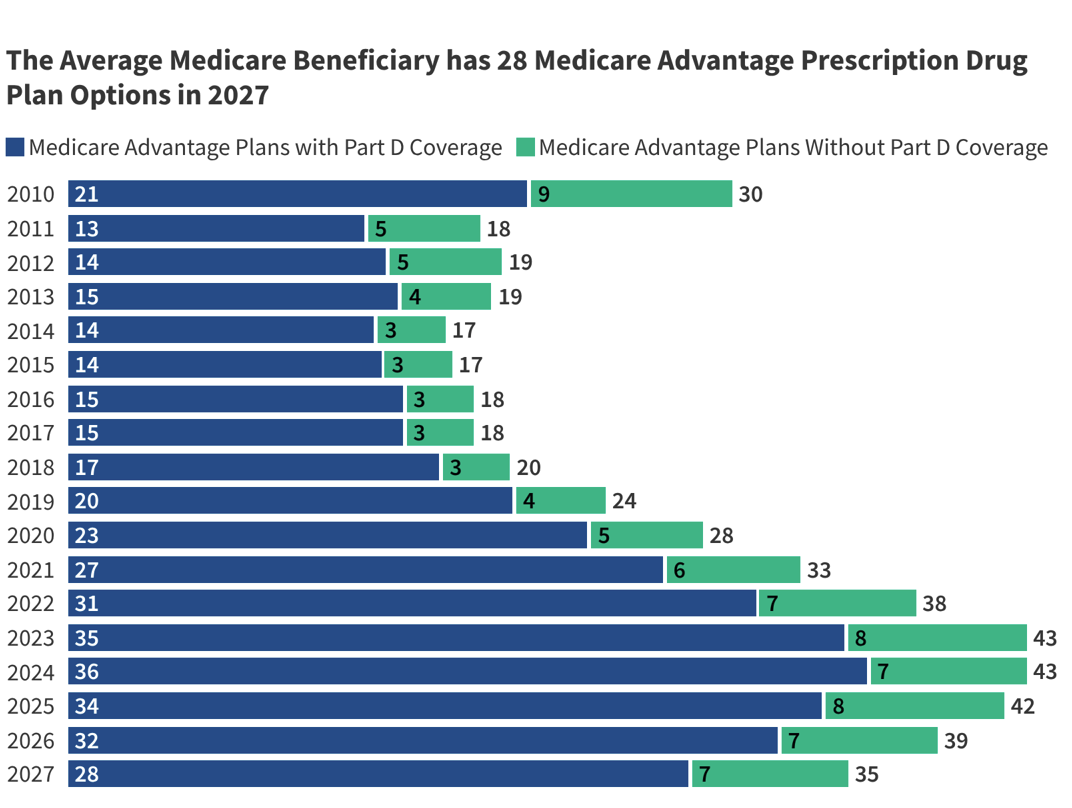
Medicare Advantage prescription drug plan (MA-PD) availability varies widely by county in 2027, with a modest reduction in the share of enrollees with more than 40 plans to choose from and some major insurers exiting many more counties than they are entering. 1 in 5 Medicare beneficiaries (20%) can choose from among more than 40 MA-PDs for 2027, down from 27% in 2026. 1% of all beneficiaries will have no plan option for 2027.
Medicare Open Enrollment and Coverage Options: Key Questions and Answers

Each year, Medicare beneficiaries have an opportunity to make changes to how they receive their Medicare coverage during the nearly 8-week annual open enrollment period, which runs from October 15 through December 7. This brief answers key questions about the Medicare open enrollment period and Medicare coverage options.

NEW AND NOTEWORTHY

Decoding Medicare Advantage Coding Intensity

Federal payments to Medicare Advantage plans, and adjustments for health status, have come under increased scrutiny. This brief answers key questions about coding intensity, recent steps taken by CMS, the effects on beneficiaries, and other proposals to improve payment accuracy.

Data Visualization

The Facts About Medicare Spending

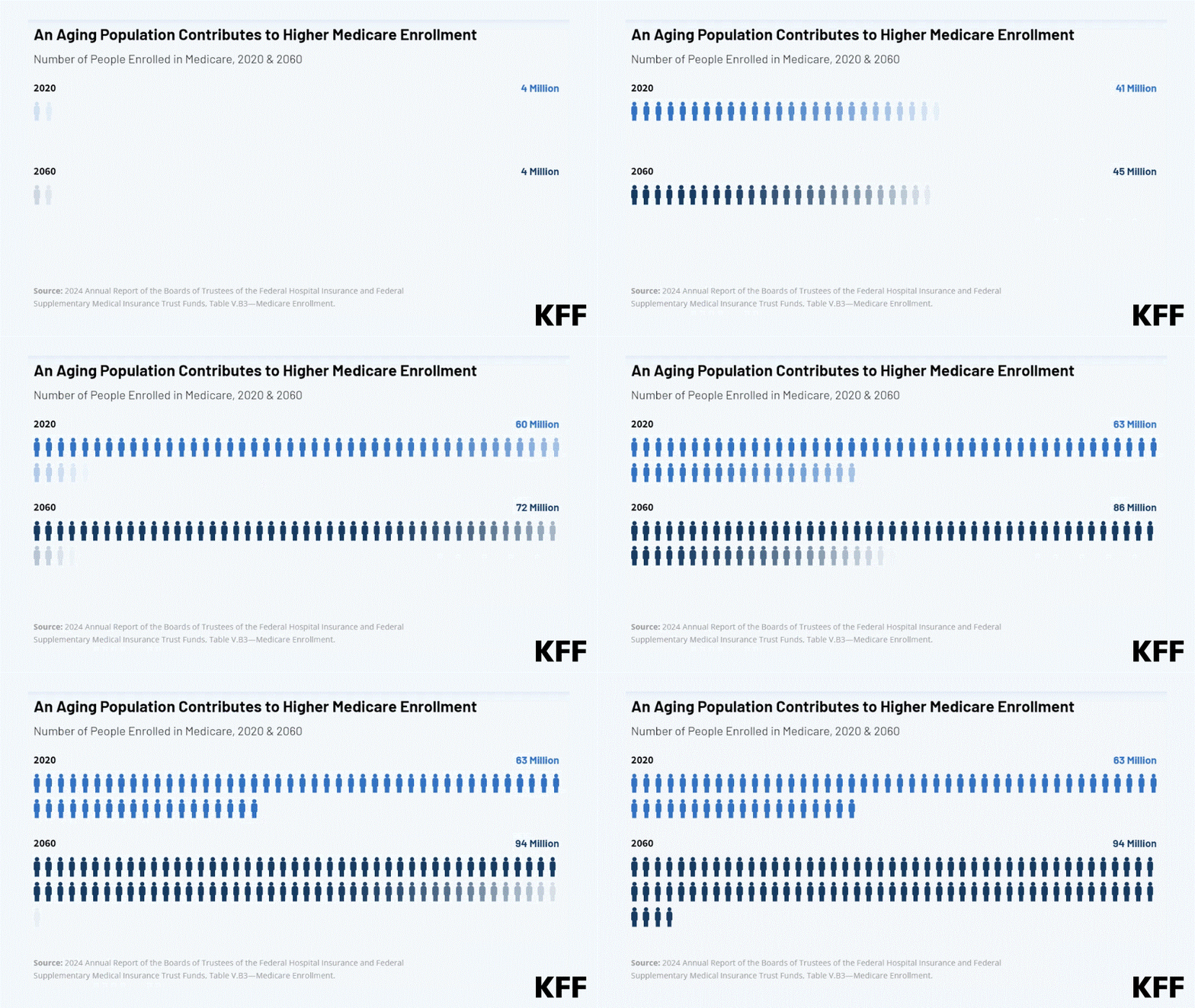
This interactive provides the facts on Medicare spending. Medicare, which serves 67 million people and accounts for 12 percent of the federal budget and 21 percent of national health spending, is often the focus of discussions about health expenditures, health care affordability and the sustainability of federal health programs. Explore data on enrollment growth, Medicare spending trends overall and per person, growth in Medicare spending relative to private insurance, spending on benefits and Medicare Advantage, Part A trust fund solvency challenges, and growth in out-of-pocket spending by beneficiaries.

Read More

Stay informed.

Stay informed.

Filter

1,091-1,100 of 1,622 results

  • Affordable Care Act Provisions Relating to the Care of Dually Eligible Medicare and Medicaid Beneficiaries

    Issue Brief

    This issue brief identifies the major provisions in the Patient Protection and Affordable Care Act (ACA) that are designed to improve care and streamline service delivery for dual eligibles, the millions of low-income seniors and younger persons with disabilities who are enrolled in both the Medicaid and Medicare programs. Dual eligibles are among the sickest and poorest individuals covered by either the Medicaid or Medicare programs; they comprise only 15 percent of total Medicaid enrollment…

  • Projecting Income and Assets: What Might the Future Hold for the Next Generation of Medicare Beneficiaries?

    Report

    As national attention turns to the federal deficit, some policymakers have proposed reforms to Medicare, Medicaid and Social Security that could have significant implications for current and future generations of seniors and younger adults with disabilities. This data spotlight, co-authored by researchers at the Kaiser Family Foundation and the Urban Institute, describes the income and assets of current Medicare beneficiaries, considers variations by race, ethnicity and other demographic characteristics and examines the extent to which…

  • How Much Skin in the Game is Enough? The Financial Burden of Health Spending for People on Medicare

    Report

    How Much " Skin in the Game " is Enough? The Financial Burden of Health Spending for People on Medicare Medicare extends health security and financial protection to seniors and younger people with disabilities. However, premiums, relatively high cost-sharing requirements, and gaps in the benefit package result in some beneficiaries spending a significant share of their income on health expenses. This data spotlight examines the burden out-of-pocket expenses placed on Medicare beneficiaries between 1997 and…

  • Dual Eligibles: Medicaid’s Role for Low-Income Medicare Beneficiaries

    Fact Sheet

    This updated fact sheet describes the nearly 8.9 million "dual eligibles," the low-income elderly and persons with disabilities who are enrolled in both Medicare and Medicaid, why this population needs Medicaid, what services they receive from Medicaid, and what the new health reform law may mean for them. Fact Sheet (.pdf)

  • Proposed Changes to Medicare in the “Path to Prosperity”: Overview and Key Questions

    Issue Brief

    This brief examines key Medicare provisions included in "The Path to Prosperity: Restoring America's Promise," a long-term budget proposal released by House Budget Chairman Paul Ryan on April 5, 2011, which outlines a strategy for reducing federal spending and reducing the national debt over time. The Medicare provisions are among the many significant changes to programs affecting the elderly and disabled in the "Path to Prosperity" proposal. The central Medicare proposal would transform the program…

  • The Independent Payment Advisory Board: A New Approach to Controlling Medicare Spending

    Issue Brief

    In 2010, the Patient Protection and Affordable Care Act authorized the creation of the Independent Payment Advisory Board (IPAB) to help control the growth in Medicare costs. Beginning in 2014, IPAB will issue recommendations to lower Medicare costs in the event that spending exceeds targets established in the health care reform law. This brief explains how the Independent Payment Advisory Board will be structured, the process and timelines for IPAB to make recommendations to achieve…

  • Kaiser Health Tracking Poll — April 2011

    Feature

    As Congress and the president debate different approaches to reducing the deficit, the April Kaiser Health Tracking Poll indicates that initial public reaction is fairly evenly split when a premium support/voucher program like the one in House Budget Committee Chairman Paul Ryan’s "Path to Prosperity" proposal is described, but seniors prefer to keep the current Medicare system by a 2‐to‐1 margin. Meanwhile, public opinion on the health reform law remains remarkably steady. The April poll…

  • How Popular Is The Idea Of Changing Medicare To A Defined Contribution Plan?

    Poll Finding

    In March 2011, House Budget Committee Chair Paul Ryan released his "Path to Prosperity" budget plan, which included a proposal to change Medicare from a defined benefit program into one in which the government pays a specific amount towards the cost of private health insurance for each enrollee. Surveys conducted by five different polling organizations from March-April 2011 have attempted to gauge the level of public support for such a plan, and their results have…

  • Medicare Spending Briefs

    Other Post

    Data Spotlights Examine Financial Burden of Health Care on Medicare Beneficiaries With renewed attention to the nation’s long-term budget deficit and the national debt, proposed changes to Medicare and other federal entitlement programs could significantly affect health coverage and spending for millions of older and disabled Americans. These three data spotlights from the Kaiser Family Foundation provide new information on out-of-pocket health care spending among the nation’s 48 million Medicare beneficiaries, as well as income…

  • Briefing – Medicare: A Primer

    Event Date:
    Event

    This briefing provided an overview of the Medicare program and its role in the health care system. Panelists discussed who is eligible for Medicare, what benefits are covered and how the program is administered. Medicare financing and the program's role in health reform was also explained. More information on Medicare from the Kaiser Family Foundation can be found in the related documents below. This March 11 briefing was cosponsored by the Kaiser Family Foundation and…