Global Health Policy

selected resources

Global Health Aid Cuts

This collection of resources chronicles what recent Trump administration global health aid cuts mean for the future of global health programs and the people who rely on them.

A promotional image for the the KFF Health Policy 101 U.S. Government and Global Health

The U.S. Government and Global Health

In this Health Policy 101 chapter, investigate the U.S. role in global health, including the major initiatives the United States supports, funding levels, and agencies involved in implementing program area efforts.

the essentials

Global Health Trackers

U.S. Global Health Budget Tracker

This tracker provides regularly updated information on U.S. government funding for global health. It includes historical trends and tracks funding levels for U.S. global health efforts through bilateral and multilateral contributions and by program area and agency.

Stay informed.

Stay informed.

Filter

361 - 370 of 651 Results

  • New Interactive Tool Tracks the U.S. Global Health Budget in Real Time

    News Release

    The Kaiser Family Foundation has launched a new interactive tool designed to provide the latest data on the U.S. government's global health budget in an easy-to-access form. The U.S. Global Health Budget Tracker lets users follow the budget from the President's budget request through the appropriations process in Congress, as well as see trends over time. Data are provided for global health program areas (e.g., HIV, TB, family planning/reproductive health) by Agency (e.g., USAID, CDC) and…

  • Quick Takes: Timely insights and analysis from KFF staff

    Trump Administration Withdrawal from the World Health Organization: What’s at Stake?

    Quick Insights

    As expected, President Trump signed an executive order announcing his intention to withdraw the U.S. from the World Health Organization. For the U.S., the implications [aren’t] clear and immediate but could also be significant. By not being at the table, the U.S. will cede this role to others—China in particular—and take itself out of influencing international negotiations.

  • What is happening to USAID?

    Quick Insights

    The more important question, though, is not whether USAID sits in the State Department or remains independent, but what functions it does and does not perform (and will be kept), and more broadly, as a result, what the United States role in the world is.

  • An image of text is an excerpt form Josh Michaud's quick take which reads, "Adopting Denmark’s vaccine schedule, as HHS Secretary Kennedy's vaccine advisors have suggested, would likely lower childhood vaccination rates in the U.S. as certain vaccines become harder to access."

    Do We Want to Outsource U.S. Vaccine Policy to Denmark?

    Quick Insights

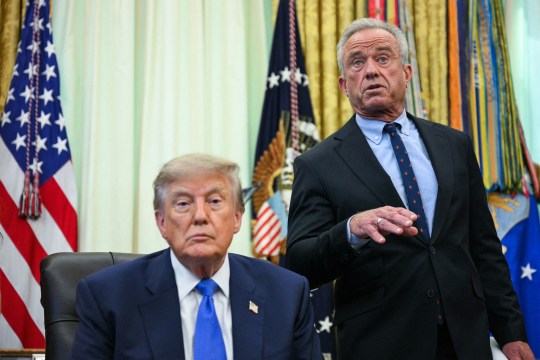
    Adopting Denmark’s vaccine schedule, as HHS Secretary Kennedy's vaccine advisors have suggested, would likely lower childhood vaccination rates in the U.S. as certain vaccines become harder to access.

  • Pulling it Together: As The International AIDS Conference Convenes, Some Positive News About Public Opinion and HIV

    From Drew Altman

    The American people are busy trying to make ends meet and take care of their families and they are constantly bombarded by messaging and spin. They rarely have a full understanding of policy issues and debates. Often it is their strongly held beliefs, whether based on accurate or inaccurate perceptions, which color what they think about issues.  The classic case is the public’s perception of foreign aid, something they don’t like and that they believe…

  • The Women, Girls, and Gender Equality Principle of the U.S. Global Health Initiative: How Have USG Programs Responded?

    Report

    This report examines how countries are responding to and implementing the women, girls, and gender equality principle of the U.S. Global Health Initiative (GHI). This principle, one of seven core principles of the GHI, aims to sharpen the focus on women and girls across U.S. government global health efforts. Based on interviews conducted by the Foundation with representatives from 15 GHI country teams, this report identifies nine key themes and trends that could help inform…

  • AIDS at 21: Media Coverage of the HIV Epidemic 1981 – 2002 – Methodology Report

    Poll Finding

    The Kaiser Family Foundation, in conjunction with Princeton Survey Research Associates, conducted a comprehensive examination of media coverage of HIV/AIDS from 1981 to 2002. The study investigates the volume of HIV/AIDS coverage over time and key events, domestic versus international focus of coverage, the portrayal of affected populations, story topics, the tone of the media coverage, the length and placement of the coverage, and the consumer education component. The methodology report from this study is…