Immigrant Health

survey of immigrants

KFF-New York Times Survey: Immigrants Report Rising Fear, Negative Economic and Health Impacts, and Changing Political Views During the First Year of President Trump’s Second Term

The 2025 Survey of Immigrants, a partnership between KFF and The New York Times, takes an in-depth look at the experiences of immigrants during the first year of President Trump’s second term, including their worries related to increased immigration enforcement, their health and economic wellbeing, and the political views and preferences of immigrant voters. The survey paints a portrait of families under strain — where fear of detention and economic instability are negatively impacting immigrants’ health and reshaping immigrant families’ daily lives and views of U.S. political parties.

Read the News Release | Explore The New York Times’ Reporting

Stay informed.

Stay informed.

Filter

1-10 of 192 results

  • State Health Coverage for Immigrants and Implications for Health Coverage and Care

    Issue Brief

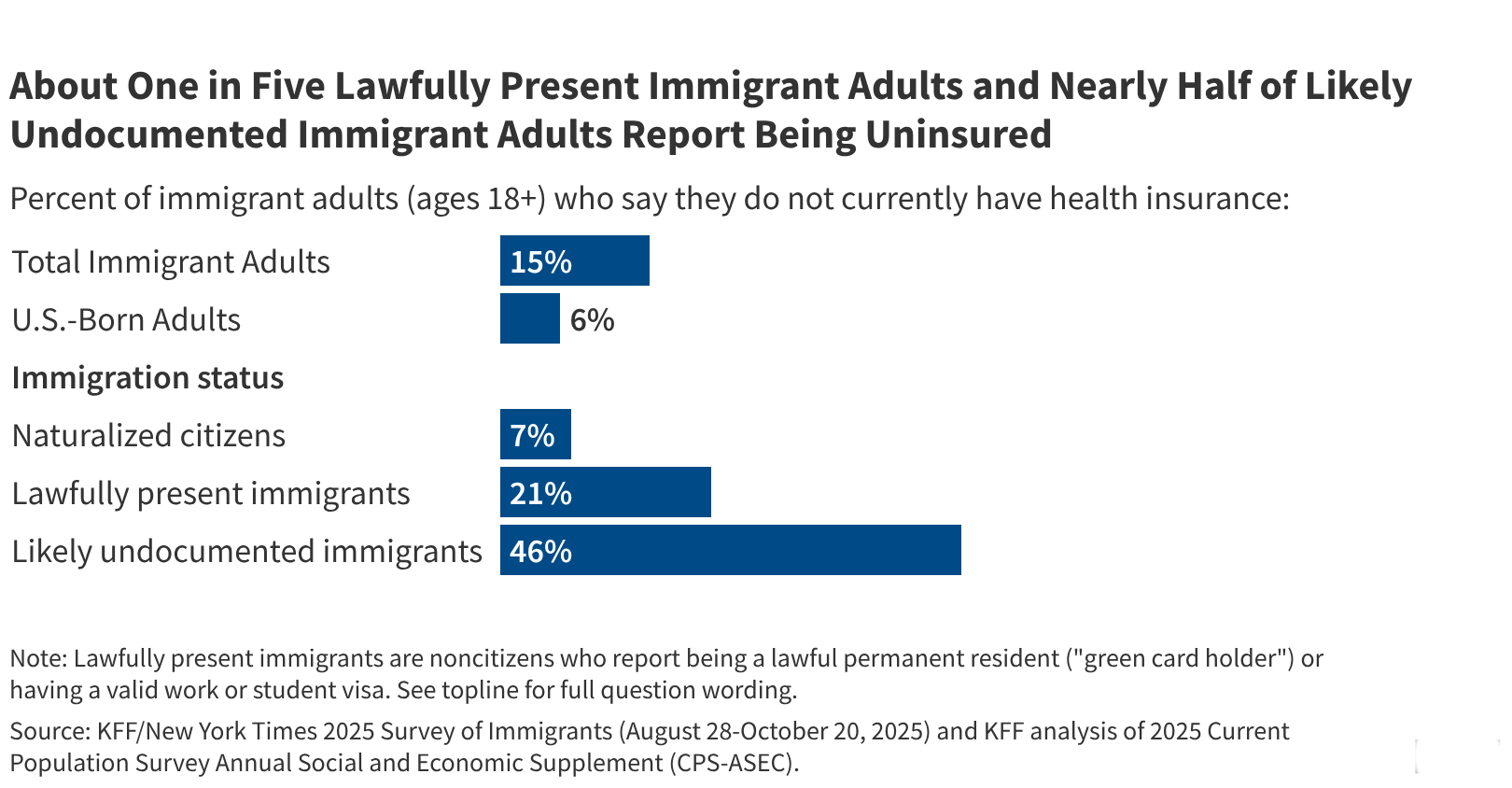
    Noncitizen immigrants, particularly those who are undocumented, face significant barriers to accessing health coverage and care and are significantly more likely than citizens to be uninsured. This brief provides an overview of state health coverage programs for immigrants, including among states that have taken up options in Medicaid and the Children’s Health Insurance Program (CHIP) to expand coverage for lawfully present immigrants and/or established fully state-funded programs to fill gaps in coverage for immigrants.

  • Payment Rates for Medicaid Home Care in 2026

    Issue Brief

    This issue brief describes Medicaid payment rates for home care and other workforce supports that are in place in 2026 and compares KFF survey data to the data states are now required to report under the Medicaid access rule.

  • 9 Things to Watch for the 2027 ACA Open Enrollment Period 

    Issue Brief

    The ACA Marketplace Open Enrollment season began November 1, bringing higher premiums, fewer insurer options in some states as more insurers exit the market, less access to health insurance subsidies, and less help finding coverage following federal actions to address broker fraud—among other changes to watch.

  • Midterm Election Update: Immigrant Health Policy  

    Fact Sheet

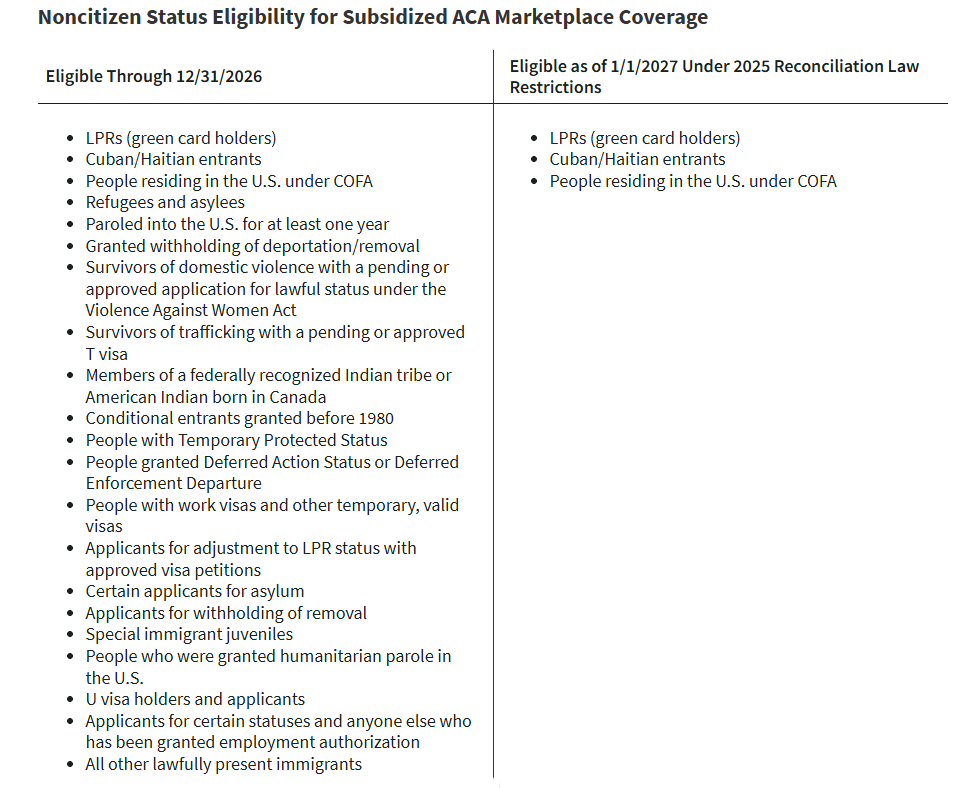
    Immigration restrictions and enforcement are central to the Trump administration’s domestic agenda and a focus of debate in the 2026 midterm elections. These policies have ripple effects on health care: immigration-related fears are leading some immigrant families to avoid medical care and drop coverage, including for U.S. citizen children, and visa restrictions could strain a health care workforce that relies on immigrants. Federal law has also narrowed eligibility for health coverage among lawfully present immigrants,…

  • Green Card Processing Backlogs for Refugees and Asylees Could Have Implications for Health Coverage and Care 

    Issue Brief

    This data note highlights changes in green card (I-485) application processing for refugees and asylees between fiscal year (FY) 2021 and FY2025, as well as across the first three quarters of FY2025 to FY2026 (since FY2026 data are only available through the third quarter). It discusses the implications of these trends for access to federally funded health coverage following eligibility changes under the 2025 reconciliation law.

  • Which States Will Be Affected by Key Medicaid Provisions in the 2025 Reconciliation Law?

    Policy Watch

    The 2025 reconciliation law makes sweeping changes to Medicaid that will affect every state through key eligibility and financing changes, including new work requirements, immigrant eligibility restrictions, and changes to provider taxes and state directed payments. This issue brief explains which states will be affected by each of these key provisions.

  • Community Health Center Patients, Financing, and Services

    Issue Brief

    Community health centers served more than 32.7 million patients in medically underserved urban and rural areas in 2025. This brief reports on health center patients, services, and financing in 2025, using national data from the Uniform Data System (UDS).