Medicare Beneficiaries: A Population at RiskFindings from the Kaiser/Commonwealth Fund 1997 Survey of Medicare Beneficiaries
Cathy Schoen, Patricia Neuman, Michelle Kitchman, Karen Davis, and Diane RowlandDecember 1998
Table Of ContentsExecutive Summary
Findings from the Kaiser/Commonwealth 1997 Survey of Medicare Beneficiaries
Medicare Beneficiaries: Health Status and Income
Health Insurance Coverage
Satisfaction, Access, and Financial Burden: Variations by Income
Prescription Drugs: Use and Cost Exposure
Satisfaction, Access, and Financial Burden: Variations by Type of Insurance Coverage
HMOs: Making the Decision to Enroll
Implications
Survey and Study Methodology
Survey Charts Part 1
Survey Charts Part 2
Survey Tables Part 1
Survey Tables Part 2
Executive Summary
Central to the debate on Medicare s future are the health care needs of the millions of elderly and disabled Americans who depend on the program for basic health insurance coverage. As the National Bipartisan Commission on the Future of Medicare considers Medicare s role into the next century, a key challenge will be how to maintain or improve access to health care in the event of illness. Today, Medicare insures 34 million elderly Americans as well as 5 million permanently disabled beneficiaries under age 65. This population is generally at high risk for acute and chronic illness and has diverse health care needs and experiences.
To profile beneficiaries experiences getting health care, examine their exposure to financial burden, and analyze how their experiences vary by income level, health status, and insurance coverage, The Commonwealth Fund and The Henry J. Kaiser Family Foundation jointly supported the Kaiser/Commonwealth 1997 Survey of Medicare Beneficiaries. The survey, which included telephone interviews with 3,300 non-institutionalized Medicare enrollees, was conducted by Louis Harris and Associates, Inc., from November 1996 through June 1997. Beneficiaries reported on their health care access and costs, their supplemental insurance coverage, and their decision of whether to join a Medicare health maintenance organization (HMO).1
The survey s findings underscore the diversity of the Medicare population and point to the challenge of improving protections for the relatively large share of beneficiaries with low incomes and/or health problems.
Summary of Findings
Portrait of the Medicare PopulationOverall, the survey s findings portray a population at high risk owing to problematic health and low or modest incomes. Contrary to popular media images of the wealthy and healthy retiree, two of three Medicare beneficiaries live on relatively low incomes or have health problems. One of three beneficiaries lives on an income below 200 percent of the poverty level (about $15,000 annually for an individual) and reports health problems. Half (49%) said they spend all (22%) or most (27%) of their monthly income on basic living necessities.
Beneficiaries with low incomes are more likely than beneficiaries with higher incomes to have health problems. They are more likely to be in fair or poor health, have one or more impairments regarding activities of daily living (ADL), and experience certain health problems such as diabetes. Women are significantly more likely than men to have low incomes. Black and Hispanic beneficiaries have higher poverty rates than non-Hispanic whites.
Disabled Medicare beneficiaries under age 65 those receiving Social Security payments because of a permanent disability are another vulnerable group. Compared with Medicare s elderly, these individuals were more likely to report fair or poor health status, functional impairments, and mental health problems. Compounding their health problems is poverty: more than two-fifths (43%) of Medicare s disabled under age 65 live at or below the poverty level. Two of five (41%) receive assistance from Medicaid, and less than a quarter (22%) have Medigap coverage or an employer-sponsored policy to supplement their traditional Medicare coverage.
Satisfaction with MedicareMedicare beneficiaries generally gave the program high ratings, with more than half (57%) reporting they are “very satisfied,” another quarter (27%) reporting they are “satisfied,” and only a fraction (7%) reporting they are “dissatisfied.” This high level of satisfaction holds true when analyzed by income level, health status, and type of insurance (traditional Medicare or Medicare HMO). Disabled beneficiaries under age 65 were a notable exception: they were significantly less likely than the elderly to report being “very satisfied” with Medicare.
Access DifficultiesIn general, a relatively low proportion of Medicare s elderly and disabled reported health care access problems. Less than 3 percent of Medicare beneficiaries said they did not get needed care, a finding that underscores the value of Medicare s universal health insurance protection. One of seven beneficiaries (15%), though, did report difficulties obtaining needed care.
However, reports of health care access problems differ when broken down by beneficiary income, age, and health status. Beneficiaries with health problems or low incomes are at higher risk for experiencing difficulties gaining access to care: more than one of five beneficiaries (23%) who perceive their health to be fair or poor had difficulties getting needed care, and comparable rates were reported for those with long-term care needs and those living in poverty. The under-65 disabled are at relatively greater risk of having an access problem, with a third (33%) reporting difficulties getting needed care and a quarter (25%) reporting problems obtaining home health services, mental health care, or specialist care.
Access problems also vary by type of insurance coverage. Those with Medigap or retiree health supplements to Medicare were less likely than all others to report difficulty getting needed care.
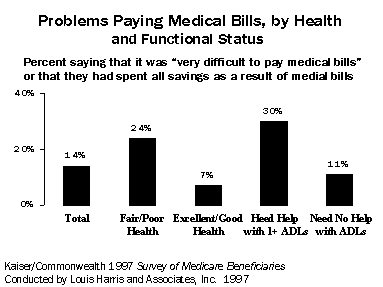
Financial BurdensIn general, the survey found that high cost-sharing requirements and gaps in Medicare s benefits package can expose Medicare beneficiaries to burdensome medical bills. One of 10 (9%) Medicare beneficiaries reported that paying medical bills in the past year had been “very difficult,” while the same percentage reported spending all their savings on medical bills. Taken together, one of seven (14%) said either that paying their medical bills was “very difficult” or that paying these bills used up all their savings.
A higher share of the poor, the under-65 disabled, those in poor health, and those with ADL impairments reported problems paying their medical bills. One of four beneficiaries who are poor (27%) or in fair or poor health (24%) said that paying bills is very difficult or that doing so has exhausted all their savings. Among disabled beneficiaries, this rate increases to nearly one of three (30%).
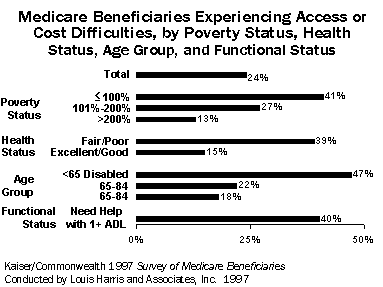
Access and Financial ProblemsOne of four beneficiaries surveyed (24%) experienced access or cost problems, as determined by whether they had difficulty getting needed health care or problems paying medical bills. Among beneficiaries with health problems or low incomes, the proportion was even greater. Nearly half (47%) of all beneficiaries surveyed who are under age 65 and disabled reported access or cost problems more than twice the rate reported by beneficiaries age 65 and older. Meanwhile, Medicare s poor were three times as likely to report access or cost problems as were beneficiaries with incomes more than twice the poverty level (41% vs. 13%). Four of 10 beneficiaries with fair or poor health status (39%) or ADL impairments (40%) reported access or cost problems.
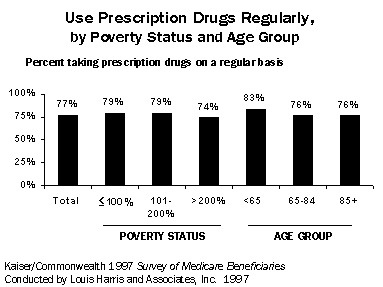
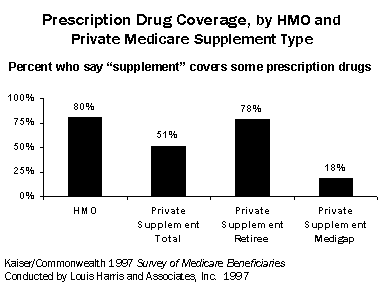
Prescription Drug Use and ExpendituresLack of prescription drugs under traditional Medicare exposes beneficiaries to greater financial liabilities. The vast majority (77%) of beneficiaries reported using prescription drugs on a regular basis, a reflection of the high incidence of chronic disease within the Medicare population. While some have private supplemental insurance to fill gaps in coverage, only half (51%) of those with private supplemental insurance said their Medigap or retiree health plans cover prescription drugs.
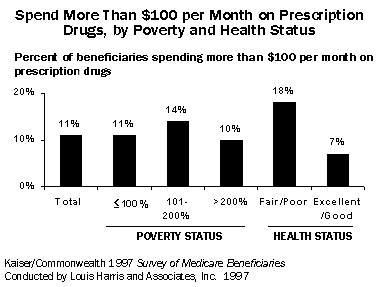
One of 10 (11%) beneficiaries reported spending more than $100 out-of-pocket per month to pay for medications, above the amount paid in premiums. A somewhat higher percentage of the under-65 disabled population (18%) and the near-poor with incomes from 101 to 200 percent of poverty (14%) pay more than $100 per month for their prescriptions.
Role of Supplemental InsuranceTo help fill in the gaps in Medicare s benefit package, most beneficiaries have some type of supplemental coverage. Medicare s poor are most likely to have Medicaid to supplement Medicare, although less than half (43%) of those surveyed with incomes below the poverty level were enrolled in both Medicare and Medicaid. Lower-income beneficiaries are least likely to have retiree health benefits from a former employer, with only 10 percent of Medicare s poor covered by employer-sponsored benefits, compared with 40 percent of those with incomes above 200 percent of poverty.
Reflecting their relatively low income levels, women are more likely than men to rely on Medicaid. Beneficiaries with private supplemental coverage were less likely to report access or cost problems than beneficiaries with Medicare alone. Beneficiaries covered by both Medicare and Medicaid had the highest rates of reported access or cost problems, most likely owing to their lower incomes and greater health problems.
Medicare and Managed CareMedicare beneficiaries can also turn to HMOs for supplemental coverage, as had one of eight (12%) beneficiaries at the time of the survey. Reports from HMO enrollees indicate that, on average, they are about as likely as beneficiaries with other forms of private supplemental coverage to rate the care they receive as excellent. At the time the survey was conducted, HMO enrollees were more likely to rate their insurance benefits and cost-sharing positively because of the generosity of benefits provided and/or level of premiums charged.
However, reports on access experiences are slightly more mixed. HMO enrollees were about twice as likely to report access difficulties as those in traditional Medicare with private supplemental coverage (19% vs. 10%, respectively). Yet use of preventive care services is similar or, in the case of mammograms, more extensive among those enrolled in HMOs. For both Medicare HMO enrollees and Medicare beneficiaries with private supplements, the proportion of those reporting problems paying medical bills was low when compared with that for beneficiaries with traditional Medicare only.
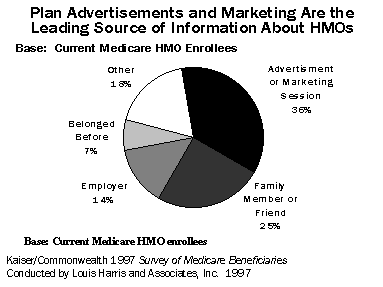
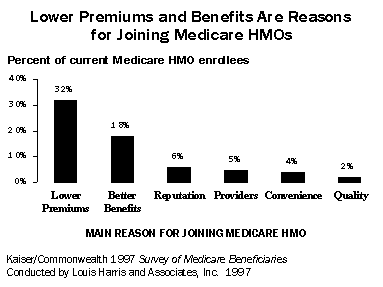
Cost protection appears to be one of the major factors driving HMO choice. HMO enrollees reported that lower premiums and better benefits are the leading reasons they join their HMOs rather than a plan’s reputation for quality or physician networks. Marketing activities, however, play a key role in informing the decision whether to join an HMO. More than a third (36%) of HMO enrollees said they first learned about their HMO from plan marketing sessions and advertisements. Two of five (42%) HMO enrollees said that they decided with the help of family or friends or that someone else made the choice for them.
In general, beneficiaries appear to be content to remain with the coverage they already have. The majority of Medicare HMO enrollees (88%) reported they plan to stay in their current plan; only 2 percent said they intend to switch plans, while 1 percent intend to return to the traditional Medicare program. The majority of fee-for-service beneficiaries (88%) have never considered joining a Medicare HMO. Only 4 percent of those in traditional Medicare said they intend to join a Medicare HMO in the future.
ImplicationsIn general, the survey s portrait of Medicare beneficiaries health and health care experiences underscores the physical and financial vulnerabilities of the Medicare population and the importance of sustaining and improving the program s protections in the future. Evidence suggests that special attention must be paid to the unique challenges faced by certain segments of the population especially under-65 disabled beneficiaries and low-income beneficiaries. Reports of difficulties getting access to needed health care and paying medical bills among low-income beneficiaries signal a need to improve protections for Medicare s poor. Their struggles call for a reexamination of Medicare s basic benefits structure to improve coverage of basic services and financial protections for vulnerable beneficiaries in the event of major illness.
Findings From TheKaiser/Commonwealth 1997 Survey of Medicare Beneficiaries
Medicare Beneficiaries: Health Status and IncomeAs the nation’s health insurer for nearly all the elderly as well as growing numbers of permanently disabled adults under age 65, Medicare by definition covers beneficiaries who are at high risk for acute, chronic, and disabling health conditions. Although the media often portray a relatively affluent and healthy older generation, in reality only one of three Medicare beneficiaries fits this image.
Two of three beneficiaries are at risk because of either low incomes or health problems. Two of five beneficiaries (42%) have health problems that is, they rate their health status as either fair or poor or receive Medicare because of a disability.2 One-quarter of beneficiaries (26%) live on an income that is 200 percent of poverty or below, although they reported their health to be excellent or good. Only one of three (32%) beneficiaries is in relatively good health with an income well beyond poverty range. (Chart 1)
The majority of Medicare beneficiaries live on low or modest incomes. When asked about their ability to pay for basic needs such as food and electric bills, nearly one of five (19%) said they had “a lot” or “some” trouble. When probed further, half of beneficiaries said they spend all or most of their monthly income just to meet basic needs: 22 percent spend all and 27 percent spend most of their income to pay for the basics. Nearly two-thirds (63%) reported an annual income of $25,000 or less. (Table 1)
The lower their income, the more likely Medicare beneficiaries are to have health problems. Beneficiaries with incomes below poverty were twice as likely as those with incomes above 200 percent of poverty to rate their health as fair or poor (54% vs. 25%), and about twice as likely to suffer from diabetes or mental health problems. (Chart 2 and Table 1)
Functional impairments with regard to an activity of daily living (ADL) as measured by the inability to perform regular activities such as eating or walking further impair health and quality of life among Medicare s poorest beneficiaries.3 Medicare s poor were two-and-a-half times as likely as those with incomes from 101 to 200 percent of poverty and four times as likely as those with incomes above 200 percent of poverty to report limitations in at least one ADL. (Chart 3)
Medicare s under-65 disabled population is particularly vulnerable because of low income and health problems. Three-quarters (77%) of the disabled under age 65 reported incomes below 200 percent of poverty, and nearly half spent all or most of their incomes on basic needs. Three of five rated their health status as fair or poor, nearly twice the rate for those age 65 to 84. Medicare s under-65 beneficiaries are at notably high risk for mental health problems: 29 percent said they have a mental health problem, more than three times the percentage of beneficiaries age 85 and older who reported such a problem. (Table 2)
Among beneficiaries age 65 and older, Medicare s “oldest old” those age 85 and older have relatively low incomes and greater long-term care needs. Nearly two of five (39%) of those age 85 or older live on incomes at or below the poverty line, a rate 50 percent higher than the rate for those age 65 to 84 (22%). One of four beneficiaries (24%) reported at least one ADL limitation, nearly three times the rate for those age 65 to 84.
Women are disproportionately represented among Medicare s oldest old and Medicare s poor. Seventy percent of those age 85 and older are women. Two-thirds (68%) of poor Medicare beneficiaries are women.
Limited education exposes Medicare s most vulnerable beneficiaries to health and economic insecurity. On average, nearly two-thirds (62%) of survey respondents have at most a high school education, and one of four did not complete high school. Those with higher-than-average health risks and lower incomes tend to have less education: more than half (58%) of poor beneficiaries, 43 percent of those above age 85, and one-third (34%) of the disabled under age 65 have not completed high school.
One-third of all Medicare beneficiaries live alone. The poor, near-poor, and old are also more likely than the average beneficiary to be living alone, without the ready support of a spouse or family members: 36 percent of the poor, 40 percent of those with incomes from 101 to 200 percent of poverty, and 47 percent of those age 85 and older live alone. By comparison, 32 percent of all Medicare beneficiaries live alone. Women are twice as likely as men to live alone.
Health Insurance Coverage
Medicare covers hospital care, physician services, laboratory and X-ray services, home health care, and some skilled nursing facility care. The program requires deductibles for hospital services ($760 per spell of illness) and physician services ($100 deductible) as well as cost-sharing for longer hospital stays and $20 coinsurance for physician services. The benefits package leaves beneficiaries exposed to catastrophic costs in the event of a serious or lengthy illness and to the full costs of benefits not covered, such as prescription drugs.
To help fill gaps in coverage, most Medicare beneficiaries rely on some form of supplemental insurance coverage. At the time of the survey, 12 percent of all beneficiaries had elected to join a Medicare HMO. The majority chose to remain in the more traditional, fee-for-service Medicare program with its open choice of physicians and medical providers nationwide. Most of those in fee-for-service Medicare have some form of supplemental coverage, whether private insurance (individually purchased Medigap or employer-sponsored retiree health coverage) or Medicaid. Including those beneficiaries enrolled in HMOs as well as those with private or public insurance supplements to Medicare, more than four of five (82%) had some form of supplemental coverage.4
Despite having a greater need for private supplemental coverage owing to their health problems and budget constraints, beneficiaries with low or modest incomes are less likely to have additional insurance. The interaction of income, health status, and cost of supplemental insurance leaves a significant proportion of Medicare s most vulnerable beneficiaries exposed to potential access barriers and financial burden. One-quarter (26%) of Medicare s under-65 disabled population and more than one of five of Medicare s poor (22%) have no supplemental coverage, despite their greater-than-average risk for health problems. (Charts 4 and 5)
The higher their incomes, the more likely Medicare beneficiaries are to have a retiree supplemental policy. Beneficiaries with incomes more than twice the poverty level are four times more likely than the poor and 50 percent more likely than the near-poor to have retiree coverage through a former employer. Purchasers are largely concentrated among those with incomes above poverty. Approximately one of four (24%) beneficiaries purchases his or her own Medicare policy. The under-65 disabled population reports lower levels of Medigap coverage, with only 8 percent owning a Medigap policy.
Medicare s poor and under-65 disabled beneficiaries rely heavily on Medicaid to supplement gaps in their Medicare coverage. The poor are nearly three times as likely as the “average” beneficiary to rely on Medicaid to supplement Medicare (43% vs. 15%). Similarly, Medicare s under-65 disabled are more likely than the average beneficiary to be covered by Medicaid (41%). (Charts 4 and 5)
As the supplemental program for Medicare s poorest and sickest, Medicaid covers a particularly vulnerable group of beneficiaries. More than half of these dual enrollees rated their health as fair or poor (58%) and 34 percent reported difficulty with at least one ADL. Medicare beneficiaries with Medicaid are also more likely than the general Medicare population to have less than a high school education (59% vs. 28%) and to be living alone (43% vs. 32%). Two-thirds (66%) of all beneficiaries covered by Medicaid are women. (Table 3)
Medicare beneficiaries with traditional Medicare only, and no supplemental coverage, tend to have low or modest incomes. Two-thirds (67%) have incomes below 200 percent of poverty. Four of five live on annual incomes of $25,000 or less, while more than half (57%) live on $15,000 or less.
Having supplemental coverage varies significantly by race or ethnicity.5 Black and Hispanic beneficiaries are three to four times as likely to be enrolled in both Medicare and Medicaid, and far less likely to be covered by a retiree supplemental plan, than are non-Hispanic white beneficiaries. (Chart 6) Race and ethnicity coverage patterns tend to reflect incomes: more than half of the black (57%) and Hispanic (56%) beneficiaries surveyed have poverty-level incomes, compared with about one of five white beneficiaries (22%). In contrast, nearly half (48%) of white Medicare beneficiaries reported incomes above 200 percent of poverty, compared with only one of five Hispanic (22%) and one of eight black (13%) beneficiaries.
Satisfaction, Access, and Financial Burden: Variations By Income
Satisfaction with Medicare, Health Services, and PhysiciansMedicare beneficiaries as a group rate the program highly. A majority (57%) said they are “very satisfied” with Medicare as a program, while another quarter (27%) reported that they are “satisfied.” Only a fraction (7%) reported they are “somewhat or very dissatisfied.”
High program ratings hold across poverty groups yet vary by eligibility status and age. The under-65 disabled are least likely to be “very” satisfied (46%) and most likely to be “somewhat” or “very” dissatisfied (11%). These lower ratings are likely a reflection of the health problems faced by disabled enrollees and their limited access to supplemental insurance. In contrast, Medicare enrollees age 85 and older are the most likely to be very satisfied with Medicare. (Charts 7 and 8)
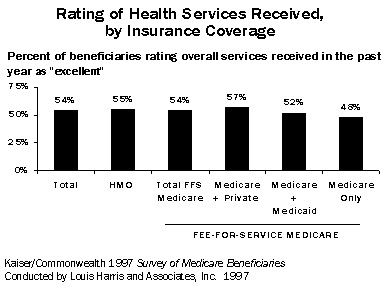
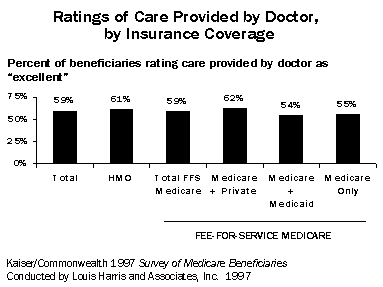
Beneficiaries, in general, also rated highly the health care they receive and the physicians who treat them. More than half (54%) said the health services they have received have been “excellent,” and nearly three of five (59%) said their physician care has been excellent. A minority of beneficiaries gave negative ratings to health care services or physicians: 5 percent rated their physician and 6 percent rated the services they have received as fair or poor.
Beneficiaries with low incomes or health problems are less likely to rate their care or physician as “excellent.” Less than half of beneficiaries with incomes at or below poverty rated health care services as excellent (47%), compared with nearly three-fifths of those with incomes above 200 percent of poverty (58%). (Chart 9) Similarly, the poor are less likely to rate physician care as excellent: half (51%) gave physicians excellent ratings, while 64 percent of beneficiaries with incomes more than twice the poverty level did so. (Chart 10) Lower ratings may well reflect perceived gaps in the Medicare benefit package.
Ratings of medical care also tend to be lower among those with health problems. Compared with beneficiaries who rated their health as excellent or good, beneficiaries who reported fair or poor health status were less likely to give their care (49% vs. 57%) or physicians (56% vs. 61%) an excellent rating.
Access ExperiencesWith Medicare as a foundation covering basic health care services, a relatively small share of beneficiaries (3%) reported a time they did not get needed care. Indeed, other surveys confirm that Medicare beneficiaries are significantly less likely to report not getting needed care than the U.S. population overall largely because of Medicare s universal coverage.6
Yet the survey finds that obtaining needed care can be a struggle, especially for those living on low incomes or those with health problems. Using a composite variable to measure difficulties getting needed care, 15 percent of all beneficiaries reported some type of access difficulty.7
Reports of difficulties gaining access to health care vary significantly by poverty, age, and health status. Medicare beneficiaries with poverty-level incomes are more than twice as likely to have encountered difficulties getting health care as beneficiaries with incomes above 200 percent of poverty (23% vs. 10%). Low-income beneficiaries similarly reported problems getting specific services such as home health, mental health, or specialist services.8 (Chart 11 and Table 5)
Beneficiaries with health problems or a disability were generally more likely to report access problems than healthier beneficiaries. More than one of five beneficiaries in fair or poor health (23%) or with at least one ADL impairment (21%) have difficulties getting care. Beneficiaries who are under 65 and disabled are particularly at risk: one-third (33%) have experienced difficulties getting care, more than twice the rate for beneficiaries age 65 to 84, and three times the rate for those age 85 and older. One of four under-65 disabled beneficiaries reported problems getting needed home health, mental health, or specialty care, more than twice the rate reported by beneficiaries age 65 to 84. (Chart 12 and Table 4)
Controlling for both income and health, those with low incomes and health problems are the most likely to encounter access difficulties. Beneficiaries with health problems who live on incomes at or below 200 percent of poverty are 50 percent more likely to have difficulty getting care (26% vs. 16%) or problems getting specific services (23% vs. 16%) than are beneficiaries with health problems who have incomes above 200 percent of poverty.9 The incidence of access problems is markedly lower for those in excellent or good health in both income groups. Yet even among the relatively healthy segment of the Medicare population, lower-income beneficiaries were more likely to report access problems. (Table 5)
Use of preventive care services reflects access to basic, routine health care. To encourage preventive care, Medicare has expanded coverage of some preventive care services. At the time of the survey, Medicare covered flu shots in full and covered mammograms subject to a frequency schedule and a 20 percent copayment. The program did not cover prostate exams.
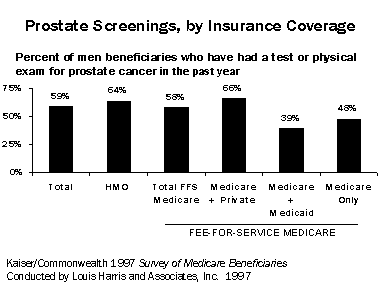
The survey found that substantial proportions of women and men in Medicare do not receive regular preventive care. About two-thirds of those surveyed (64%) had received a flu shot, 51 percent of women had had a mammogram, and 59 percent of men had undergone a prostate exam in the past year.
Use of preventive care services varies widely by income and age. Just over half (55%) of poor beneficiaries surveyed had received a flu shot, compared with 70 percent of those with incomes above 200 percent of poverty. Poor and near-poor women were about 20 percent less likely to have had mammograms and poor men were nearly 50 percent less likely to have undergone prostate exams than were women and men with incomes more than twice poverty. Preventive care use is disproportionately low among the under-65 disabled. (Charts 13 and 14)
The strong link between lower income and lower use of preventive services remains even after controlling for health status. Beneficiaries with incomes at or below 200 percent of poverty are significantly less likely to receive flu shots, mammograms, or prostate exams whether or not they have health problems or are in excellent or good health. (Table 5)
Difficulties Paying Medical BillsThe survey found that gaps in benefits coverage can expose Medicare beneficiaries to the financial burden of medical bills. Nearly one of 10 (9%) beneficiaries reported that paying medical bills in the past year has been “very difficult.” The same percentage reported spending all their savings on medical bills. Together, one of seven Medicare beneficiaries reported problems paying bills; that is, they reported that paying medical bills in the past year had been very difficult and/or that they had spent all of their savings as a result of these bills.
Problems paying medical bills are twice as likely among Medicare beneficiaries who are poor, who are under age 65 and disabled, and who rated their health as fair or poor. One of four beneficiaries who are poor (27%) or are in fair or poor health (24%), and nearly one of three disabled beneficiaries (30%), said that paying their medical bills is “very difficult” or that, as a result of bills, they have exhausted all their savings. (Charts 15 and 16 and Table 5)
The extent to which medical bills have drained savings for retirement will affect current and future economic security as well as access to health care. Although only 9 percent of all Medicare beneficiaries said they have depleted their savings paying off medical bills, one of five beneficiaries who is poor (21%), is under age 65 and disabled (22%), has one or more ADL limitation (24%), or is in fair or poor health (17%) has exhausted all savings.
By controlling for both income and health, a strong association between income, health, and financial burden emerges. Beneficiaries with health problems and relatively low incomes are nearly three times as likely to have problems paying medical bills than are beneficiaries with health problems and incomes above 200 percent of poverty (30% vs. 11%). Low incomes also expose beneficiaries who rate their health as excellent or good to financial burdens: 11 percent of those with incomes at or below 200 percent of poverty who said they are in excellent or good health have problems paying bills. By comparison, only 2 percent of beneficiaries with incomes above 200 percent of poverty with similar health status have such problems. (Table 7)
Taken together, a quarter of all Medicare beneficiaries said they are having difficulties getting health care or problems paying medical bills. The risk for access or cost problems is particularly acute for low-income beneficiaries and those with health problems. Nearly half of the disabled under age 65 reported either an access or cost problem or both (47%), as did two of five of the poor (41%) and of those rating their health as fair or poor (39%). (Chart 17)
Prescription Drugs: Use and Cost Exposure
Although Medicare does not cover outpatient prescription drugs, the vast majority of beneficiaries surveyed said they regularly use them. Nearly 8 of 10 beneficiaries (77%) reported that they take prescription medications on a regular basis. Reflecting the relatively high incidence of chronic disease among Medicare beneficiaries, prescription drug use rates are high across income, age, and health insurance groups. (Chart 18)
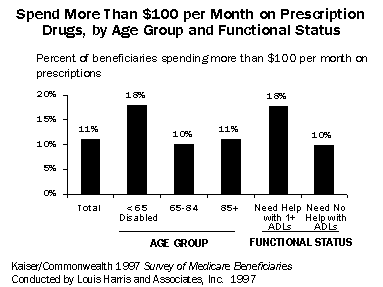
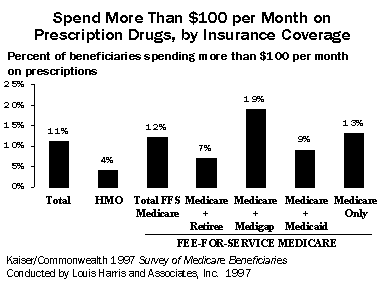
Reports of out-of-pocket costs indicate that Medicare s lack of prescription drug coverage is exposing beneficiaries to ongoing costs that can be quite high. Eleven percent of beneficiaries said they spend more than $100 per month for their prescription drugs.
Those with health problems are at risk for high monthly payments for prescription drugs. Nearly one of five of those in fair or poor health (18%), with one or more ADL limitations (18%), or under age 65 and disabled (18%) said they are paying more than $100 per month for prescription drugs. (Charts 19 and 20)
Beneficiaries with modest incomes are also at relatively high risk. Fourteen percent of those with incomes from 101 to 200 percent of poverty, compared with only 10 percent of those with incomes above 200 percent of poverty, are spending more than $100 per month for prescriptions. The near-poor group is also at higher risk than Medicare s poor. This exposure to high drug costs likely results from incomes that are too high to be eligible for Medicaid coverage yet too low to pay for more comprehensive supplements to Medicare, as well as from less access to retiree coverage.
The survey found that exposure to out-of-pocket drug costs is also attributable to limited prescription coverage under private Medicare supplemental insurance plans. Although the majority of beneficiaries have coverage that supplements Medicare, only half (51%) of those with private supplements to Medicare have some coverage for drugs.10 (Chart 21)
HMO plans are an exception. Medicare HMO enrollees reported that their plans typically include prescription drug coverage: 80 percent of Medicare HMO enrollees said their plans include prescription drug benefits.
Most, but not all, Medicare beneficiaries covered by Medicaid have full coverage that includes some prescription drugs. Nevertheless, nearly one of 10 (9%) said they are spending more than $100 per month for prescription drugs.11 (Table 6)
Satisfaction, Access, and Financial Burden: Variations By Type Of Insurance Coverage
Comparisons of satisfaction ratings, health care access, and medical bill problems by insurance coverage group indicate that experiences vary by type of insurance and type of supplemental coverage as well as by beneficiary income and health. When surveyed, 12 percent of Medicare beneficiaries had elected to join a Medicare HMO, while 15 percent were covered by Medicare and Medicaid, 28 percent by retiree supplements, and 24 percent by purchased Medigap policies; 18 percent reported no additional coverage.
The survey found generally high satisfaction ratings across insurance groups. Reflecting generally lower ratings by those with health problems and low incomes, beneficiaries dually enrolled in Medicaid and Medicare were the least likely to give high ratings to the care they have received. HMO enrollees, as well as those beneficiaries with retiree coverage or Medigap policies, vary little in their likelihood of rating their care overall as excellent or of rating highly the Medicare program itself. (Chart 22 and Table 6)
Satisfaction with physician care is relatively low among Medicare beneficiaries covered by Medicaid and those in the traditional Medicare program who do not have supplemental coverage. For example, about 55 percent of beneficiaries with Medicaid or Medicare rate their doctor as excellent, compared with 65 percent of those with Medigap. Analysis reveals, however, that the lower ratings given by those on Medicaid tend to reflect health problems and low incomes. In logistic regressions adjusting for health status and income, Medicare/Medicaid beneficiaries were as likely or somewhat more likely to rate care as excellent as were those with Medicare-only coverage.12
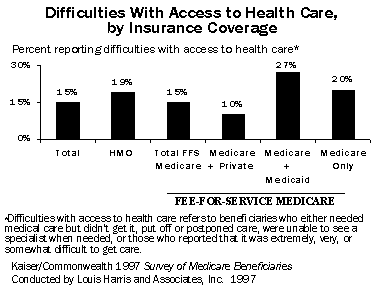
The likelihood of having difficulty getting needed health care varies across the different insurance groups. In general, Medicare beneficiaries with either retiree or private Medigap supplemental coverage were less likely to report difficulties getting care or problems obtaining specific services than were HMO enrollees, beneficiaries jointly enrolled in Medicaid, or beneficiaries enrolled in Medicare only. Beneficiaries who are jointly enrolled in Medicaid, as well as those who are in Medicare only, were nearly three times as likely to report problems getting care as were those with private supplemental coverage. Medicare-only beneficiaries and HMO enrollees were about twice as likely to report difficulties (20% and 19%, respectively) as beneficiaries with private supplements to Medicare (10%). (Chart 23)
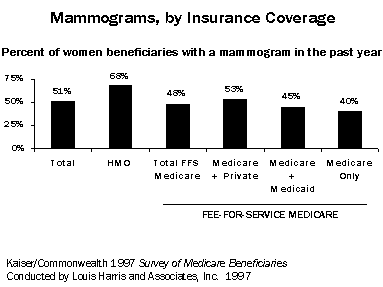
Beneficiaries either enrolled in HMOs or having private supplements are the most likely to have received basic primary care, as determined by flu shots, prostate exams, and mammograms received. Medicare beneficiaries in HMOs reported the highest rates of mammograms, with more than two-thirds (68%) of women having had an exam in the past year.
Compared with little more than half of those with retiree health benefits (55%) or Medigap (51%), Medicare beneficiaries with no supplemental insurance coverage and those with Medicaid have notably lower rates of receiving preventive care. Despite Medicaid s supplemental role and enhanced coverage of out-of-pocket costs, access to routine and primary care services remains a problem for low-income Medicare beneficiaries. (Charts 24, 25, and 26)
Financial burdens due to medical bills vary across insurance groups. Medicare beneficiaries with retiree supplemental coverage and those enrolled in HMOs appear to be the best protected against prescription drug costs. Only 4 percent of HMO enrollees and 7 percent of beneficiaries with retiree coverage said they are spending more than $100 per month on drugs half the rate of the Medicare average. In contrast, 19 percent of beneficiaries with Medigap policies said they are spending more than $100 per month on drugs, likely because of gaps in benefits coverage. While beneficiaries with Medicaid reported less exposure to burdensome drug costs than those with Medigap or Medicare-only coverage, prescription drug costs remain problematic for them given their low incomes: 9 percent of those with Medicaid reported they are paying more than $100 per month. (Chart 27)
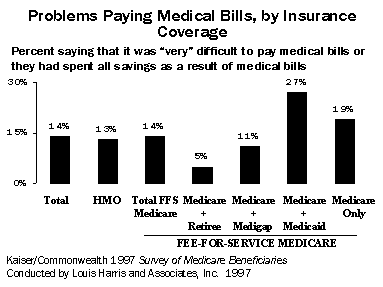
Despite HMOs reputation for low cost-sharing requirements and comprehensive benefits, 9 percent of Medicare HMO enrollees said they find paying medical bills “very difficult,” and 8 percent reported they have spent all their savings as a result of bills. In all, 13 percent of Medicare HMO enrollees reported having financial burdens from medical bills. (Chart 28)
HMO enrollees and Medigap-covered beneficiaries were about equally likely to report financial burdens (13% and 11%, respectively). Rates for both groups, however, are well below the rates for beneficiaries with Medicaid or Medicare-only coverage. (Chart 27 and Table 6)
Beneficiaries with retiree supplemental coverage appear to be the best protected against medical bill problems. Only 3 percent said that paying bills is “very difficult,” and 3 percent said that they have exhausted all their savings; 5 percent reported at least one of the two problems. In part, these responses reflect higher-than-average incomes: 45 percent of Medicare beneficiaries with retiree coverage have incomes greater than $25,000, and 63 percent have incomes more than twice poverty significantly greater proportions than those for all other Medicare insurance groups.
Regarding access difficulties and cost problems, one of four HMO enrollees reported one or both types of problems, a rate significantly lower than that for Medicare beneficiaries with Medicaid but higher than that for beneficiaries with Medicare supplemented with either retiree or Medigap coverage. Overall, beneficiaries with retiree supplements were the least likely to report these problems.
In general, beneficiaries dually eligible for Medicare and Medicaid fare the worst. Reflecting both their low incomes and their health problems, these individuals were the most likely to report access and/or cost difficulties, with 45 percent saying they have one or both types of problems. Medicare-only beneficiaries are also at high risk: 30 percent said they have difficulties getting care, paying bills, or both.
HMOs: Making The Decision To Enroll
Medicare offers beneficiaries the option of receiving benefits through an HMO, rather than through the basic Medicare program. In general, HMOs offer beneficiaries expanded coverage in return for agreeing to use their networks of medical care providers. To understand current enrollees decisions to enroll and determine which sources of information they use to make these decisions, the survey asked current enrollees a series of questions about the decision-making process.
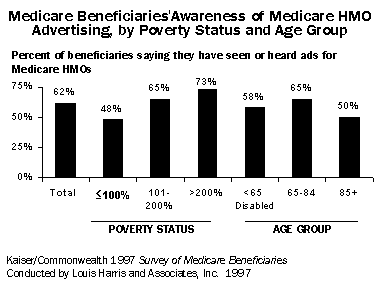
HMO advertising appears to have reached most Medicare beneficiaries. Roughly two-thirds (62%) said they had seen an advertisement for a Medicare HMO or received literature. Beneficiaries with incomes above 200 percent of poverty and those age 65 to 84 were the most likely to report having seen or received HMO advertisements. (Chart 29)
Medicare HMO enrollees reported that plan advertisements and marketing materials were their leading source of information about HMOs, followed by family and friends and employers. One-third (35%) said they first learned about their HMO from advertisements, while another 25 percent said they heard about their HMO from a family member or friend. Employers are also becoming a source of information: 14 percent reported learning about their HMO through their employer. (Chart 30)
Lower premiums and enhanced benefits coverage are the leading reasons HMO enrollees gave for making the decision to join an HMO. Almost one-third (32%) said premiums and another 18 percent said improved benefits were the main reason they joined their HMO. Beneficiaries were far less likely to cite an HMO s reputation for quality of care as the main reason for joining: only 2 percent mentioned quality, while 6 percent mentioned the plan’s reputation. (Chart 31)
Making the decision to join an HMO is often difficult and requires the help of others. Slightly more than half (56%) of beneficiaries said they made the decision on their own. However, a third made the decision jointly with a family member or friend, and one of 10 delegated the decision entirely (11%.) Medicare beneficiaries with low or modest incomes were more likely to report delegating the decision or seeking out help.
In general, beneficiaries appear to be content to remain with the coverage they already have. The majority of Medicare HMO enrollees (88%) plan to stay in their current plan; only 2 percent reported they intend to switch plans and one percent intend to return to the traditional program. The majority of fee-for-service beneficiaries (88%) have never considered joining a Medicare HMO. Only 4 percent of those in traditional Medicare said they intend to join a Medicare HMO in the future.
Implications
The survey findings confirm the wide popularity of the Medicare program among beneficiaries. Medicare has served the nation’s elderly and disabled well for more than 30 years. Yet the findings indicate the importance of reexamining the program to ensure that it will be able to provide health and economic security for the elderly and disabled into the 21st century. Probing beneath the averages, the survey found that a substantial proportion of Medicare beneficiaries, especially the poor, the under-65 disabled, and those in poor health, are struggling under the financial burden of medical bills or are finding it difficult to get care when needed. In the quest to ensure Medicare s future, the voices of these Medicare beneficiaries speak of a vulnerable and diverse population and highlight issues of concern for any consideration of restructuring Medicare.
With two of three beneficiaries living on low or modest incomes, having fair or poor health, or being disabled, Medicare insures a population that is at high risk for needing health care and, absent adequate health coverage, faces financial burdens. Policy officials face the dual challenge of designing strategies to protect or assist those at high risk and assuring the program s long-term fiscal soundness.
Today, one of four beneficiaries reports difficulties with access to care or paying medical bills despite high rates of supplemental coverage. Medicare s high cost-sharing requirements and limited coverage for prescription drugs impose notable financial burdens on beneficiaries living on low or modest incomes.
Past efforts to protect low-income beneficiaries have relied on Medicaid to supplement Medicare. The survey finding that only 43 percent of beneficiaries with incomes at or below poverty are covered by Medicaid indicates the need to increase outreach efforts to those likely to be eligible for Medicaid s additional protection. A possible policy option for the future could be to federalize supplements for low-income elderly and disabled people, with Medicare directly administering the program.
For beneficiaries with higher incomes, as access to affordable supplemental insurance erodes, the pressure on their ability to pay for care is likely to intensify in the future. Retiree health coverage currently helps fill in gaps in program benefits for one of four beneficiaries. This coverage, however, is expected to dwindle in the coming years owing to recent trends in declining employer-paid retiree benefits.13 In addition, rising Medigap premiums may limit access to supplements for another quarter of all beneficiaries who purchase policies individually. These trends, taken together, suggest that a growing proportion of beneficiaries will be forced to rely on their own incomes to supplement Medicare incomes that, in turn, may be limited by future constraints on private pension coverage.
Reexamination of Medicare s basic benefits package could directly address some of the gaps in coverage and exposure to financial insecurity. Prescription drugs are of particular concern: traditional Medicare does not cover outpatient prescription drugs and, according to this survey, only half of beneficiaries with a private supplement have coverage for their medications. Prescription drugs are now an integral component of medical care, and eight of 10 Medicare beneficiaries regularly use prescription medication. Those with high monthly costs put themselves at financial risk or must forego needed medication. The risk increases with poor health: one of five beneficiaries with health problems or disabilities is paying more than $100 per month for drug expenses.
Recent Medicare changes designed to expand plan choices, if successful, are likely to heighten the complexity of beneficiaries coverage decisions while creating the risk of introducing new access problems or financial burdens. The heterogeneous nature of the Medicare population, combined with higher-than-average health care risks, poses major challenges for choosing wisely among plans. In addition to advancing age and disabilities, almost a third of Medicare beneficiaries have less than a high school education. As Medicare choices grow more complex, making good decisions will become even more difficult for an aging and disabled population. Lower education or reading levels will only compound the difficulty of this challenge. The task of understanding network limitations as well as the nuances of benefits packages emphasizes the urgency of developing program standards to ensure high-quality plans and an administrative structure capable of supporting informed choice among a vulnerable, high-risk population.
The survey confirms the widespread support Medicare now enjoys among beneficiaries. Other surveys find similarly strong support for Medicare among the general population.14 By listening to and learning from the experiences of Medicare beneficiaries, the survey makes clear the need to improve protections for those who are vulnerable because of poor health, disabilities, or low incomes. Addressing beneficiary concerns for their health and economic security is central to the debate on how to ensure a more secure future for the Medicare program.
Survey and Study Methodology
The survey consisted of 25-minute telephone interviews with a random sample of 3,305 Medicare beneficiaries. Louis Harris and Associates, Inc., conducted the interviews from November 1996 through mid-June 1997.
The sample was drawn from a 5 percent random sample of all persons who were Medicare beneficiaries as of March 1996 according to Health Care Financing Administration (HCFA) records. The survey sample includes an over-sample of beneficiaries enrolled in Medicare risk-contract HMOs to permit comparisons of HMO enrollees with beneficiaries covered under the traditional Medicare program. The final unweighted sample consists of 1,579 HMO enrollees and 1,726 individuals enrolled in traditional Medicare.
To adjust for over-sampling and to produce nationally representative estimates for the Medicare population living in the community (not institutionalized), the final sample was weighted for the known demographic distribution of the Medicare population based on the March 1996 Medicare enrollment file (denominator file). Data were weighted for eligibility status; age, race, and ethnicity; Medicaid buy-in status; and the proportion enrolled in HMO risk contracts. All findings are based on the weighted sample.
Interviews were conducted in English or Spanish, depending on the preference of the respondent. Where the listed person could not participate in the interview owing to health or disability, interviews were conducted with a proxy, whenever possible, who was knowledgeable about the beneficiary. In total, 12 percent of the interviews were conducted with proxies.
The resulting sample has an overall margin of error of plus or minus two percentage points at the 95 percent confidence level. For subgroups of 500 or less, the margin of error increases to plus or minus five percentage points at the 95 percent confidence level.
Definitions of Key VariablesThe analysis used information from initial Medicare records on Medicare eligibility (disability and age), HMO enrollment, and Medicaid status, as well as information provided by beneficiaries to categorize different groups of Medicare beneficiaries. We drew on a variety of questions relating to access to health care and financial burdens to create summary variables indicating access and cost difficulties. Definitions of key variables are as follows:
Poverty: Respondents were asked to estimate annual family income within several income categories, with lower cutoffs based on 1996 average federal poverty levels for single-, two-person, and larger family sizes. We imputed one of three poverty classes for the 11 percent of the sample who did not provide income information based on other social and economic characteristics.
Difficulty getting care: The survey asked four questions regarding the ease or difficulty of getting care when needed. These included: whether getting care was “extremely,” “very,” “somewhat,” “not too” or “not at all” difficult; whether there was a time the respondent had delayed getting care in the past year; and whether there was a time the beneficiary had not received either needed medical care or specialty care in the past year. A composite variable indicating difficulty included any respondent who said getting care was extremely, very, or somewhat difficult, or who had delayed care or not received medical care or specialty care.
Bill-paying problems: The survey asked respondents whether, in terms of their family budget, paying medical bills was “very difficult,” “difficult but manageable,” or “not difficult.” Anyone who had difficulty was then asked about the consequences of these difficulties, including whether medical bills meant that they had spent all of their savings. In the analysis, anyone who said paying medical bills was “very difficult” and/or said that they had spent all of their savings as result of medical bills was classified as having a problem paying medical bills.
Insurance groups: The initial listing of Medicare beneficiaries indicated whether or not the beneficiary was currently enrolled in a risk-contract HMO. The HCFA listing also indicated those Medicare beneficiaries who were also covered by Medicaid through state buy-in status. The questionnaire verified coverage status, asked about other forms of supplemental coverage, and determined whether any beneficiaries had switched into or out of HMOs. Anyone answering “no” to all types of supplemental coverage and HMO coverage was classified as having Medicare only. The combination of initial HCFA records on Medicaid buy-in status and HMO enrollment plus responses to the questionnaire was used to group the survey sample into insurance categories.
Age groups: The HCFA file also indicated whether the beneficiary was eligible based on age or whether the beneficiary was eligible as someone who was under age 65 and disabled or who had end-stage renal disease. Interviewing took place a year or more after the March 1996 date of HCFA beneficiary listing. In the analysis, any beneficiary eligible on the basis of disability was categorized as under-65 disabled. All other beneficiaries were grouped according to their age at the time of the interview.
Appendix B: Charts
Appendix C: Tables
Footnotes
1To enable comparisons by type of insurance coverage, the study over-sampled Medicare HMO enrollees. Appendix A provides further description of the survey and sample design.
2 In Chart 1, which divides survey respondents by health status and income level, all beneficiaries under age 65 who are on Medicare owing to a disability or end-stage renal disease are grouped with those beneficiaries who rated their health as fair or poor, regardless of their self-assessed health status.
3The survey asked about six ADLs: dressing, bathing, getting in and out of bed or chairs, using the toilet, eating without help, and walking short distances. For each, the respondent indicated whether he or she could do the activity alone, without the help of another person.
4Based on comparisons with the federal Medicare Current Beneficiary Survey, the survey sample may understate the extent of supplemental coverage. Recent data indicate that only 11 percent of beneficiaries have neither an HMO nor private or public supplements that would cover benefits beyond basic Medicare. Franklin Eppig and George Chulis, “Trends in Medicare Supplementary Insurance 1992-1996,” Health Care Financing Review 19(Fall 1997):201-206.
5The survey was conducted in English and Spanish, depending on the preferences of the respondent. As a result, the sample underrepresents minorities who speak other languages.
6Cathy Schoen et al., Working Families at Risk: Coverage, Access, Costs, and Worries-The Kaiser/ Commonwealth 1997 National Survey of Health Insurance, April 1998; and Catherine Hoffman et al., Gaps in Health Coverage Among Working-Age Americans and Consequences, draft of a Kaiser/Commonwealth Fund paper, February 1998.
7Four questions were used to assess difficulty in getting care: whether there was a time the beneficiary had not received needed care in the past year, had not received needed specialty care in the past year, or had delayed getting care in past year, or whether getting care when needed was “extremely,” “very,” or “somewhat” difficult. Respondents answering “yes” to any one of the four questions were classified as having difficulty getting care.
8The survey also asked respondents to rate their ability to get specific services when needed as “excellent,” “good,” “fair,” or “poor.” Respondents giving a fair or poor rating to their ability to get home health, mental health, or specialist care were classified as having a problem getting specific services.
9Having health problems is defined as having rated health as fair or poor, or as being enrolled in Medicare as someone who is under age 65 and disabled.
10Lack of supplemental insurance coverage for prescription drugs likely reflects the cost of such coverage. Private supplements that include drugs are typically expensive and offer limited coverage. Lauren A. McCormack, Peter D. Fox, Thomas Rice, and Marcia L. Graham, “Medigap Reform Legislation of 1990: Have the Objectives Been Met?,” Health Care Financing Review 18 (Fall 1996):157-174.
11Medicaid beneficiaries without prescription coverage could qualify for Medicare cost-sharing assistance, but not full benefits, under the Qualified Medicare Beneficiary (QMB) program or the Specified Low-Income Medicare Beneficiary (SLMB) program.
12In logistic regressions controlling for education, health, income, and other demographic characteristics, we found that Medicare/Medicaid enrollees were somewhat more likely to rate health services as excellent than were beneficiaries with Medicare-only coverage.
13Hewitt Associates, Retiree Health Trends and Implications for Possible Medicare Reforms, The Henry J. Kaiser Family Foundation, September 1997. See also Pamela Loprest and Cori Uccello, Uninsured Older Adults: Implications for Changing Medicare Eligibility, The Commonwealth Fund, March 1998.
14Henry J. Kaiser Family Foundation/Harvard University School of Public Health, National Survey on Medicare, October 20, 1998.
Return to top
Report Appendix B: Charts Part 1 Appendix B: Charts Part 2Appendix C: Tables Part 1 Appendix C: Tables Part 2Medicare Beneficiaries: A Population at Risk