KFF designs, conducts and analyzes original public opinion and survey research on Americans’ attitudes, knowledge, and experiences with the health care system to help amplify the public’s voice in major national debates.
This document contains the detailed toplines from the October Kaiser Health Tracking Poll: Election 2008 poll. The poll involved a nationally representative random sample of 1,217 adults ages 18 and older, including 1,115 adults who say they are registered to vote, who were interviewed by telephone between October 8 and 13, 2008. The margin of sampling error for the full sample is plus or minus 3 percentage points and plus or minus 4 percentage points for the sample of registered voters. For results based on subgroups, the sampling error is somewhat higher.
Racial and ethnic disparities in health care – whether in insurance coverage, access, or quality of care – are one of many factors producing inequalities in health status in the United States.1Eliminating these disparities is politically sensitive and challenging in part because their causes are intertwined with a contentious history of race relations in America. Nonetheless, assuring greater equity and accountability of the health care system is important to a growing constituency base, including health plan purchasers, payers, and providers of care. To the extent that inequities in the health care system result in lost productivity or use of services at a later stage of illness, there are health and social costs that affect us all.
Why Health Care Disparities Are a Concern
One in three residents of the United States self-identify as either African American, American Indian/Alaska Native, Asian, Native Hawaiian/Pacific Islander, Hispanic/Latino, or multiracial. By 2050, this number is expected to increase to one in two.2
Despite significant advances in civil rights, race remains a significant factor in determining whether an individual receives care, whether an individual receives high quality care, and in determining health outcomes.
The Institute of Medicine (IOM) landmark report, Unequal Treatment, provides compelling evidence that racial/ethnic disparities persist in medical care for a number of health conditions and services.3 Numerous efforts are underway to reduce or eliminate racial and ethnic health care disparities, and to address some of the social factors that affect health care outcomes. Yet despite these many efforts, disparities in access to quality care remain, and for some measures being tracked, gaps in care are getting larger rather than smaller.4
Key Facts on Race, Ethnicity and Health Care in the U.S.
Racial/ethnic disparities in health persist today even when comparing groups of similar SES. For example, the infant mortality rate for college educated Black women is higher than that for White women with similar education (11.5 vs. 4.2 per 1,000 live births).
The rate of new AIDS cases in 2003 was 3 times higher among Hispanics and 10 times higher among African Americans than among Whites (26 and 75 per 100,000 vs. 7 per 100,000).
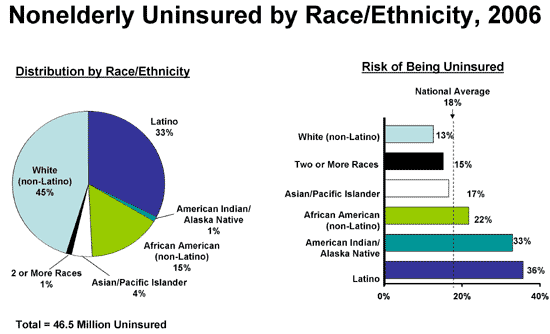
At least 1 in 3 nonelderly Latinos (36%) and AI/ANs (33%) is uninsured, as compared with 22% of African Americans, 17% of Asian and Pacific Islanders, and 13% of Whites.
Insurance matters, as evidence by the fact that uninsured adults across racial/ethnic groups are at least twice as likely to go without a doctor visit in the past year.
Black and Latino adults are less likely to rely on a private physician for their medical care than White adults (62% and 44% vs. 77%).
African American children have a rate of hospitalization for asthma that is 4 to 5 times higher than the rate for White children (527 per 100,000 vs. 144 per 100,000).
Disparities in quality of care are not getting smaller. Over time, the gap between Whites and African Americans, Hispanics, Asians, and AI/ANs has either remained the same or worsened for more than half of the core quality measures being tracked.
ADDRESSING HEALTH CARE DISPARITIES
Although attention to racial/ethnic disparities in care has increased among policymakers, there is little consensus on what can or should be done to reduce these disparities. The U.S. Congress provided early leadership on the issue by legislatively mandating the IOM study on health care disparities, creating the National Center on Minority Health and Health Disparities at the National Institutes of Health, and requiring DHHS to produce the National Healthcare Disparities Report.5 This brief examines four broad policy areas for addressing racial and ethnic health care disparities:
Raising public and provider awareness of racial/ethnic disparities in care;
Expanding health insurance coverage;
Improving the capacity and number of providers in underserved communities; and
Increasing the knowledge base on causes and interventions to reduce disparities.
Raising Public and Provider Awareness
Perceptions of a problem often influence the actions taken (or not taken) to change policy and practices. If the public or providers are unaware that a problem exists, or misunderstands the nature of the problem, it can be difficult to direct resources to address that problem.
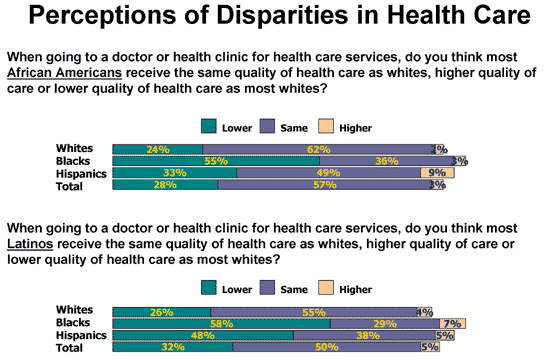
Efforts to raise the public’s awareness of racial/ethnic health care disparities have achieved modest success. In 2006, nearly 6 in 10 people surveyed believed African Americans received the same quality of care as Whites, and 5 in 10 believed Latinos received the same quality care as Whites (Figure 1).6 These estimates are similar to findings in the 1999 survey.7
Figure 1
NOTE: Does not total 100% because ‘don’t know/refused’ not included. SOURCE: Kaiser Family Foundation, March/April 2006 Kaiser Health Poll Report Survey, April 2006 (Conducted April 2006).
In contrast to the general public’s continued lack of awareness, the level of awareness among physicians has risen sharply. In 2002, the vast majority (69%) of physicians said that the health care system “rarely or never” treated people unfairly based on an individual’s racial/ethnic background.8 In 2005, less than a quarter (24%) of physicians disagreed with the statement “minority patients generally receive lower quality care than White patients.”9
Expanding Health Coverage
Health insurance matters in determining whether and when people get necessary medical care, where they receive care, and how healthy people are. However, racial/ethnic minority populations – who constitute only about one-third of the U.S. population – are disproportionately represented among those without any health coverage (Figure 2). Compared with the insured, the uninsured are less likely to have a regular doctor or to get timely and routine care, and are more likely to be hospitalized for preventable conditions. Thus, expansions to health insurance coverage are of particular importance to racial/ethnic minority groups.
Figure 2
NOTE: American Indian group includes Aleutian Eskimos. SOURCE: Urban Institute and Kaiser Commission on Medicaid and the Uninsured analysis of the March 2007 Current Population Survey
Minority Americans are much less likely to have health insurance offered through their jobs, and even after accounting for work status, minority Americans are still more likely than Whites to be uninsured.10 As such, Medicaid, a source of coverage for many of the nation’s poor and disabled, is an important safety net for about 1 in 4 nonelderly African Americans, American Indians/Alaska Natives, and Latinos, and about 1 in 10 Asian/Pacific Americans and Whites.11
Efforts are needed to assure that existing sources of coverage, such as Medicaid, are maintained while also working to expand other sources of coverage for those who are uninsured.
Improving the Number and Capacity of Providers in Underserved Communities
Despite efforts since the 1970s to increase the number of health professionals in medically underserved areas, members of racial/ethnic minority groups are still underrepresented in the health care workforce and are more likely than Whites to live in neighborhoods that lack adequate health resources.12 For example, 28% of Latinos and 22% of African Americans report having little or no choice in where to seek care, while only 15% of Whites report this difficulty.13 African Americans and Latinos are also twice as likely as Whites to rely upon a hospital outpatient department as their regular source of care, rather than a doctor’s office where opportunities for continuity of care and patient-centered care are greater.14 This is a result of many factors, including the higher rates of uninsured and the limited availability of primary care physicians in some communities of color.
Even when health care resources are geographically accessible, language and cultural barriers are sometimes a problem.15 Approaches to strengthening communication and relationships between patients and providers include greater use of medical interpretation services, expanding the racial/ethnic diversity of the health professions workforce, and developing provider training programs and tools in cross-cultural education. Since minority health professional are more likely than Whites to practice in minority and medically underserved areas, a more diverse health workforce could help to improve access and adherence to treatment.16
Increasing the Knowledge Base
Although evidence of racial and ethnic health care disparities is substantial, the evidence-base for developing interventions to eliminate these disparities remains limited. For example, efforts are currently underway to examine how training health care providers to offer culturally and linguistically appropriate services, increasing the use of electronic medical records to decrease medical errors and improve coordination of care, and increasing the use of financial incentives to promote high quality health care may reduce racial and ethnic health disparities. In addition, there is a growing effort to address factors outside the health care system, such as socioeconomic status, education and geography, which have been shown to impact health status and access health care.17
Increasing the knowledge base will require investing in routinely collecting and analyzing data on health care use across racial/ethnic groups. Data from national surveys, health insurers, and different health settings are needed to better understand the problems and impact of interventions. One reason we know so little about patterns of health care use for many racial/ethnic groups is that we have not collected the data or have insufficient sample sizes in publicly available data sources. Yet, at a time when the heterogeneity of the population is increasing, funding for national surveys that measure disparities and track the nation’s progress in addressing them is being cut.
ASSESSING CANDIDATE POSITIONS
The Democratic and Republican presidential nominees have proposed broad health reform plans; however, addressing racial and ethnic health care disparities has not been a priority issue in the 2008 election. Senator John McCain seeks to control health care costs and expand coverage, but does not specifically address health disparities between racial and ethnic groups.18 Senator Barack Obama’s health plan would expand coverage to improve access, and explicitly states intentions to address the “root causes” of health disparities. The plan would require hospitals and health plans to collect, analyze and report health care quality data for disparity populations, increase diversity in the health workforce to ensure culturally competent care, and support and expand the capacity of safety-net institutions which disproportionately serve minority populations.19 Senator Obama also calls for the creation of a national HIV/AIDS strategy and would focus on eliminating disparities in communities hardest hit by the epidemic, many of which are communities of color.20
The following questions will help you evaluate the candidates’ proposals for addressing racial/ethnic health care disparities:
What is the candidate’s general approach to reducing racial/ethnic disparities in health care?
What is the candidate’s proposal to expand sources of insurance coverage? What would its impact be on minority groups?
Does the candidate have a plan to increase prevention efforts for diseases that disproportionately impact communities of color?
What is the candidate’s stance on diversity in the healthcare workforce?
How does the candidate plan to hold government agencies accountable for monitoring and addressing racial/ ethnic disparities within the health care system?
Health spending in the United States is an estimated $2.4 trillion in 2008, an average of $7,868 per person
The share of the economy (GDP) devoted to national health spending has increased from 7.2% in 1970 to an estimated 16.6% in 2008
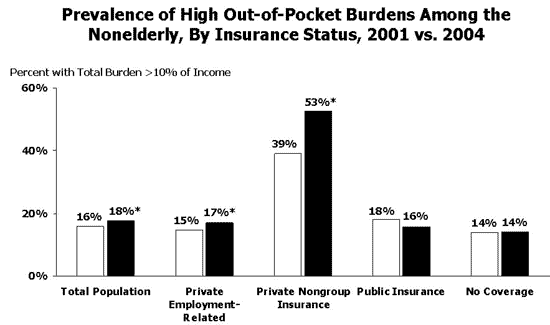
Eighteen percent of the nonelderly were in families that spent over 10% of their disposable on out-of-pocket health care premiums and cost sharing in 2004.
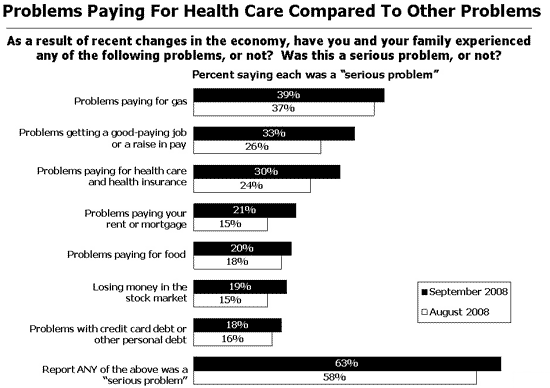
Almost one-in-four respondents in a recent Kaiser Poll reported experiencing a serious problem paying for health care and health insurance as a result of the recent economic turndown
The high and rapidly rising cost of health care affects the financial security of families and the economic health of the nation. Thirty percent of respondents in a recent Kaiser Poll reported that they had experienced a serious problem paying for health care and health insurance as a result of recent changes in the economy, and a recent study found that 10% of people with problems paying medical bills were denied care because of medical bills.1In 2004, 18% of the nonelderly population had out-of-pocket health costs that exceeded 10% of their disposable income.
At a national level, health care accounts for a large and growing slice of the overall U.S. economic pie. The growth in health expenditures routinely outpaces growth in income, making health insurance less affordable for all Americans and making it more costly to extend coverage to the over 45 million Americans who are uninsured. These rising health costs also make public health programs more difficult to sustain, straining federal and state budgets.
Finding a way to address high costs and cost growth without unreasonably reducing access to new and needed services is a significant challenge. How the candidates for the upcoming election propose to address the challenges posed by the increasing costs of health care is a critical component of the current political debates.
Source: Kaiser Health Tracking Poll: Election 2008 (conducted July 29-August 6, 2008 & Sep. 8-13, 2008) Background Expenditures on health care have outpaced the growth in national income over each of the recent decades. Between 1970 and 2008, the share of the economy going to health care rose from 7.2% to an estimated 16.6%, or from about $356 per person in 1970 to an estimated $7,868 per person in 2008. Total health spending in the United States in 2008 is an estimated $2.4 trillion.
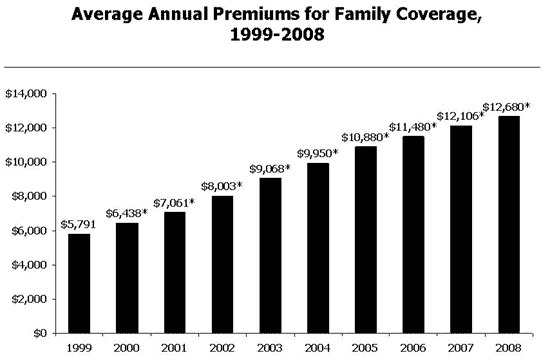
Impact on Health Insurance Costs Although Americans benefit from this increasing investment in health care, its high cost and persistent cost growth are placing great strains on the systems we use to finance health care, including private employer-sponsored health insurance coverage and public insurance programs such as Medicare and Medicaid. Employer-sponsored health coverage premiums for family coverage have increased by 97% since 2000, from $6,438 to $12,680 in 2008. Medicare and Medicaid spending have also been increasing. Medicare per enrollee expenditures for 2008 are estimated to be about $11,093, an increase of 96% over 2000 expenditures.2 Part of the reason for the increase in the Medicare spending was the implementation of the Medicare prescription drug benefit in 2005. Medicaid per enrollee expenditures increased from $5,763 in 2000 to an estimated $6,610 in 2006 (the latest year available), about a 15% increase.3 The rate of increase for Medicaid is relatively low because a portion of Medicaid drug spending for beneficiaries eligible for both Medicare and Medicaid was transferred to Medicare when the Medicare prescription drug benefit was enacted.
* Estimate is statistically different from estimate for the previous year shown (p<.05).
Source: Kaiser/HRET Survey of Employer-Sponsored Health Benefits, 1999-2008.
Impact on Families and Affordability of CoverageFamilies have seen significant increases in out-of-pocket costs in recent years. Since 2000, the average worker contribution for a family health insurance policy has increased 107%, from $1,619 to $3,354. In addition to premium contributions, families may face significant out-of-pocket costs when they seek services. Over the last three years (2006 to 2008), the percentage of workers with coverage in plans with a deductible of at least $1,000 for single coverage has risen from 10% to 18%; for covered workers in small firms the percentage has increased from 16% to 35%.
For families purchasing coverage directly from insurers (sometimes referred to as non-group or individual health insurance), a recent survey by America’s Health Insurance Plans (AHIP) found that the average costs for family coverage in 2006/2007 were $4,309 for a family headed by a person age 30-34 and $7,881 for a family headed by a person age 55 to 59.4
Deductibles for family policies in the individual health insurance market averaged $2,753 for preferred provider and point-of-service plans and $5,329 for plans that permit purchasers to have a health savings account or medical savings account.5 Premiums and point-of-service cost sharing can result in families paying a considerable share of their resources for health care. In 2004, 18% of the nonelderly population overall and one-half of the nonelderly with non-group health insurance had out-of-pocket health costs that exceeded 10% of their disposable income. In a recent Kaiser Poll, 30% of respondents (including the elderly) reported that they had experienced a serious problem paying for health care or health insurance as a result of recent changes in the economy.6 Another recent study found that people with problems paying medical bill are much more likely to report having unmet health care needs, and 10% reported being denied care due their medical bill problems.7
* Statistically significant change between 2001 and 2004 (p<.01).
Note: All amounts are in 2004 U.S. dollars. Total financial burden includes all out-of-pocket payments for health care, including premiums.Insurance status is based on monthly indicators and reflects coverage for the whole year. People with multiple coverage are assigned the coverage with the longest duration.Source: Banthin, J., Cunningham, P., and Bernard, D., “Financial Burden of Health Care, 2001-2004,” Health Affairs, vol. 27, no. 1, January/February 2008, pp. 188-195.
Why Health Care is Costly A variety of factors help explain why health care costs are so high and why they grow so rapidly. One factor is expanding wealth. Studies looking at the United States and other economies have found a strong correlation between wealth and health care spending – as nations become wealthier they choose to spend more of that wealth on health care.8
The availability of new treatment options is another important factor. Nations can spend more because the health care community continues to learn more every day about human health and health care conditions and is able to expand the inventory of health care products, techniques and services. Health experts point to the development and diffusion of medical technology as primary factors in explaining the persistent difference between health spending and overall economic growth, with some arguing that new medical technology may account for about one-half or more of real long-term spending growth.9 Some also suggest that the high prevalence of health insurance encourages technology development because those who develop new technologies know that insurance (and the government through public programs and health insurance tax subsidies) will bear a substantial share of any new costs.10
The prevalence of chronic diseases such as diabetes, asthma, and heart disease, coupled with growing ability of the health system to treat the chronically ill, also contributes to the high and growing levels of health spending. About 45% of Americans suffer from one or more chronic illnesses, which account for 70% of deaths and about 75% of all health care spending.11 Rising obesity levels have been identified as a factor in growing prevalence of some chronic diseases such as hypertension and diabetes. Other population trends however, such as lower levels of smoking and alcohol consumption, may be having a favorable impact on health and costs.12
Tax incentives that encourage workers to demand comprehensive health benefits also have been identified as a factor that increases health costs.13 People use more health care when insurance pays a high percentage of the cost.14 Generally across the whole population, the share of personal health expenditures paid directly out-of-pocket has fallen from about 40% in 1970 to about 15% in 2006.15 Although recently we have seen increases in out-of-pocket liability through higher deductibles and other cost-sharing, over the longer-term the share of total benefits paid by insurance has been increasing.
Inefficiencies in medical care delivery and financing also contribute to the high cost of medical care. Studies by the Dartmouth Atlas Working Group and others have shown wide variation across providers in the treatment and cost of patients with similar health care needs without comparable differences in outcomes. 16 The lack of integrated, efficient systems for electronically storing and transmitting health data results in service duplication, misdiagnosis, and high transaction costs, and also limits the data available to study the effectiveness of treatments.17
Addressing the Cost of Heath Care
A number of strategies have been offered to affect the high and growing cost of health care and its impacts on people and on private and public institutions. Some aim at reducing the need or demand for health care in order to reduce the amount of care that people use. Other strategies focus on making the delivery and financing of the care that people get more efficient and cost effective. All involve important tradeoffs and/or significant changes to the health care system.
Changing How Much Health Care People Use An important theme in health policy and in the marketplace has been increasing consumer responsibility in health care. New health care plans, often called “consumer-directed” health plans, are a combination of tax-favored savings accounts and catastrophic insurance for expenses beyond a high annual deductible. Proponents of these arrangements argue that providing consumers with more information about their health care choices, coupled with strong financial incentives to be prudent purchasers of services, will result in lower costs. Research shows that increasing consumer cost sharing reduces the amount of health care that people use,18 although higher out-of-pocket burdens also may increase consumer insecurity and place difficult burdens on low- and moderate-income families who may have difficulty meeting high out-of-pocket requirements if they become seriously or chronically ill.19
Another approach to reducing consumer demand for health care is to reduce the government tax subsidy (referred to as a tax exclusion) for employer-sponsored health insurance. Currently, workers do not pay income or payroll taxes on the value of the contributions that their employers make toward the cost of their employer-sponsored coverage. Critics argue that the open-ended nature of the current tax exclusion, which is estimated to cost more than $200 billion annually, encourages workers to demand very comprehensive benefits which lead to high levels of health spending.20 The current approach also has been criticized because it provides greater tax benefits to higher income workers than to lower income workers. Proposals have been offered by President Bush and others to cap or modify the current tax exclusion in ways that encourage workers to purchase less comprehensive coverage, leading to lower health care use. Changing the tax exclusion has potentially far-reaching implications for the large share of families that currently have employer-sponsored coverage, and could lead employers and employees to reassess whether health insurance is best provided through the workplace. Current alternatives to employer-sponsored coverage suffer from high administrative costs and are not necessarily accessible for people with health problems, issues that may need to be addressed if this is to be a viable option.
Finding ways to improve the health and health behaviors of Americans has received growing attention as important ways to reduce future health spending. As discussed above, chronic diseases account for a large share of health spending, and the growth in the prevalence of risk factors such as obesity and of chronic illnesses such as diabetes and asthma raises concerns about the health of Americans and the influence these trends will have on the future cost of health care. Strategies to address these issues include workplace and public health programs that: encourage people to adopt healthy behaviors and modify unhealthy ones; identify people with or at risk to develop chronic diseases and provide resources, incentives, and assistance to help them manage their health; provide case management and other services to people with chronic diseases when they use health care to help achieve better and more cost effective outcomes.
Improving Efficiency and Effectiveness of Delivery and Financing Reducing practice disparities and encouraging evidence-based medical practice are other potential strategies that proponents believe affect health care costs. As discussed above, research shows significant variation across providers and regions in health care spending for people with similar conditions with no resulting differences in quality. Strategies that give providers better information about appropriate practice and that better align provider payments with the provision of high quality cost-effective health care have the potential to reduce these variations and reduce unnecessary costs.21
Developing programs to comprehensively evaluate the effectiveness and costs of different medical treatments is an approach that proponents believe would reduce health spending by targeting practice and reimbursement to cost-effective interventions. New medical technologies and procedures are often developed and used without good information about whether they are better than existing interventions or, if they are better, whether the additional benefit is worth any additional cost. Comparative effectiveness studies also can be used to identify the types of patients who would most benefit from a procedure or practice. As discussed above, the development and dissemination of new medical technologies is a significant contributor to health care cost growth, and comparative effectiveness offers an opportunity to evaluate their benefits and costs in a systematic way.
Promoting the greater use of health information technology is another strategy that has been proposed to reduce longer-term costs, although a significant up-front investment may be required.22 Widespread adoption of electronic medical records could, among other things, reduce the provision of duplicate services, improve opportunities to coordinate care and disseminate information to providers, and provide information for research on provider quality and the cost effectiveness of clinical interventions.
Another option for affecting health costs is more government involvement in setting reimbursement rates or implementing new payment policies. For example, Medicare could serve as a model for payment reforms such as pay-for-performance or coordinated care. The government also could extend the prices it receives to other payers or take more direct actions to try to regulate costs. Less government regulation also is an option that could affect costs. Reducing requirements for providers or insurers could reduce the cost of supplying health care or health insurance generally, but less regulation also could leave some families exposed to higher out-of-pocket costs.
Reducing the Level of Spending or the Rate of Spending Growth Many of the policies under discussion in health policy circles to address costs – such as increasing the use of electronic medical records and other information technology, promoting evidence-based medicine, provider pay-for-performance, consumer-directed health care, or disease management – are aimed at improving the efficiency with which care is delivered. Successfully implementing these policies, which are not easy tasks, could reduce the amount that we pay on average for care, but may not slow how quickly the costs grow once lower, more efficient levels of spending have been reached. Over the long run, bringing health spending growth closer to the rate of overall economic growth may require finding ways to slow the development and diffusion of new health care technologies and practices. One approach, comparative effectiveness research, directly addresses one of the fundamental drivers of high cost growth, although its implementation presents serious practical and philosophical challenges. Practically, the sheer volume and pace of medical advance would make it difficult to actually assess many important changes before they were incorporated into medical practice. Philosophically, medical assessment requires people to make difficult decisions about whether a medical benefit for some is worth the cost to the broader system. Other ways of potentially reducing the development and diffusion of new health care technologies, such as much higher cost sharing that could reduce the ability of many to afford expensive treatments (which in turn would dissuade their development), are no less controversial.
There are a number of different strategies for influencing the cost of health care and its growth. Some are more focused on how care is delivered and others are more focused on how care is financed. Each of these involves meaningful change for consumers, providers, and payers. In some cases, the goal of reducing system cost growth may conflict with the goal of increasing family financial security. For example, increasing cost sharing in health insurance policies would likely reduce overall spending because people use less health care when faced with higher out-of-pocket liability. At the same time, this higher out-of-pocket exposure may make families feel less secure and less confident that they will be able to afford the health care that they need. Other approaches to reducing costs, such as implementing comparative effectiveness research to inform treatment and payment decisions, involve very difficult political and ethical decisions about the care that patients are eligible to receive.
Assessing the Candidates’ Positions
Senators McCain and Obama have each produced health care proposals that have a number of elements that would affect the cost of health care. Senator McCain’s approach emphasizes the role of consumers by eliminating the income tax exclusion for employer-sponsored coverage and introducing new flat tax credits that provide incentives for consumers to select less comprehensive coverage. He also stresses reduced regulation of insurance markets as a way to lower the cost of health insurance by reducing state insurance requirements. Senator Obama largely builds on the current financing system, but suggests new regulations that would change how insurance is offered to people who buy coverage on their own. He also proposes a reinsurance system to lower premiums and a new public program that would compete with and offer an alternative to plans offered by private insurers. Both candidates stress the need for promoting health information technology, preventing and managing chronic disease, and improving the health delivery system.
Included below are a series of questions to help evaluate the candidates’ proposals:
How can health care be made more affordable without limiting access to necessary care?
How would each candidate’s proposal affect the premiums and other out-of-pocket costs that people face? How would people with different incomes be affected?
What role should government play in controlling increases in the cost of care and the cost of health coverage?
What is the responsibility of individuals in the cost of their care? Are health savings accounts and high deductible insurance policies an approach that should be expanded?
What is the best approach to protect low-income Americans from unaffordable out-of-pocket costs for health care while containing health costs overall?
How would each candidate’s proposal change the health care delivery system?
Health care remains among the top three election issues voters want to hear the presidential candidates discuss. Kaiser’s new series of election briefs frame the challenges the heath care system faces, provide basic facts, and offer questions to assess the presidential candidates’ plans on key health policy issues. Check back for more issue briefs.
Women consistently cite health care as one of the top issues they want the Presidential candidates to address, reflecting their experiences with the health care system as patients, mothers, and caregivers for frail and disabled family members. Women’s priorities for health care reform cut across many critical topics, including health insurance coverage and affordability, the cornerstones of the candidates’ health proposals, as well as long-term care, delivery system issues, and reproductive health. This brief discusses each of these issue areas from a women’s perspective and summarizes the presidential candidates’ stated positions on these topics.
How do health care costs and coverage affect women’s access to care?
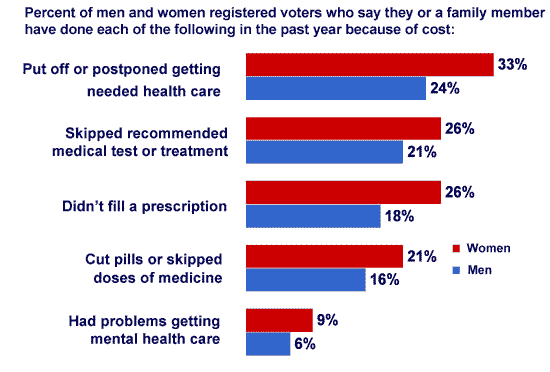
Affordability. The impact of health costs can be particularly acute for women, who are more likely to use health care services throughout their lives, yet have lower incomes and fewer resources than men. Women are more likely than men to report that cost is barrier to care (Figure 1) Even among privately insured women, 17% report delaying or going without needed health care because they could not afford associated costs such as co-payments or non-covered services.1The effects of costs are particularly acute for low-income women.2
Figure 1
Problems Accessing Health Care Due to Cost
Sources:Kaiser Health Tracking Poll: Election 2008 (conducted April 3-13, 2008).
Coverage. Almost 17 million women are uninsured, (18% of women) most of whom are in low-income working families. Many of these women lack access to employer-based coverage because they work part-time/year or in firms or industries that don’t offer insurance. Many women cannot purchase insurance on their own because they have pre-existing health conditions or cannot afford the monthly premiums. Nationally, 63% of women get insurance through their own (38%) or their spouses employer (25%), 10% are assisted by Medicaid, and 6 purchase coverage through the individual market.3
Scope of benefits. Maternity care, prescription drugs, contraceptives and mental health care are important benefits for women. Many of these benefits, especially mental health and contraceptives are limited in many job-based insurance plans and are typically excluded in the individual insurance market, particularly maternity care.4
The Candidates’ Positions:Senator McCain proposes providing tax credits to help individuals purchase insurance in the individual insurance market and reforming the tax code to include the value of employer sponsored health insurance plans as part of workers’ taxable income. The McCain proposal would create a federally-supported “Guaranteed Access Plan” to assist people who are denied coverage due to pre-existing conditions.5
The campaign has no stated official position on the benefits that are often limited in the individual market, including maternity care, mental health, and contraceptives.
Senator Obama would expand public program coverage of low-income families, particularly Medicaid and SCHIP, and broaden access to employer-sponsored coverage. For uninsured women who still would not qualify for Medicaid, Senator Obama’s proposal would provide subsidies for families to purchase coverage and provide a choice of plans through a health insurance exchange with a structure and benefits that would be similar to that offered to federal employees.6
What are the special long-term care concerns facing older women and their families?
Long-term care. Women have a longer life expectancy than men and comprise the vast majority of the oldest and frailest group of seniors. Half (49%) of women (compared to 28% of men) over 65 live on less than $20,000 a year, 17% have physical disabilities, one-fourth (23%) have cognitive limitations and 39% live alone. As a result, more than 75% of nursing home residents and two-thirds of home health users are women.7
Medicare offers very limited long-term care benefits (only after a hospitalization) and Medicaid pays for long-term care only for very poor women or those who have become impoverished from high health expenses. In the private sector, individually purchased long-term insurance policies can be unaffordable to most middle income families unless purchased well before there is need for assistance.
Caregiving. In the U.S., 12% of women are caregivers to frail or ill relatives, including children, parents, or other family members. While many women have taken advantage of the job protection provided by the Family and Medical Leave Act (FMLA), which allows workers to take up to 12 weeks of leave from their job to care for a new child, sick family member or for their own medical care, this law does not provide for paid leave. In addition, many women do not have paid sick leave and do not get paid when they need to stay home or care for a sick family member.
The Candidates’ Positions:Senator McCain has stated his support for a variety of state-based programs for delivering care to people in a home setting, and stated that he will take steps to provide individuals monthly stipends to hire care providers and purchase care-related services and goods.8 He would not expand the FMLA and argues that sick days should be negotiated between management and labor and opposes employer mandates.9
Senator Obama supports the creation of a national insurance program to provide people with functional needs the financial assistance to pay for the supports and services that will enable them to live independently in their communities. He also supports improving the quality of elder care, including training more nurses and health care workers in geriatrics.10 He would support a requirement that employers provide seven paid sick days per year and expand the FMLA to cover businesses with 25 or more employees (currently 50 or more) and broaden the eligibility for the leave benefit to include an expanded list of purposes including for parents to participate in school activities, elder care, and to address domestic violence and sexual assault.11
How is women’s health affected by the health care delivery system?
Provider Shortages. Experts predict that the current health care workforce will be insufficient to meet future health needs. This is particularly a concern for services that are important to women such as primary care, mammography, obstetrics/gynecology, abortion and mental health. Fewer medical graduates are choosing primary care specialties and in 2004, nearly 50% of U.S. counties had no obstetrician/gynecologist providing direct patient care, and 87% of counties (representing 35% of U.S. women) had no abortion provider. In some parts of the country, women wait more than 40 days for their first-time mammograms.12
Prevention and Chronic Disease. Rising rates of chronic illness and other preventable conditions indicate critical gaps in health promotion and delivery. The cost of managing chronic conditions, which has been estimated to account for over 75% of health spending,13 has emerged as a major health reform issue. Women are disproportionately affected by many chronic conditions such as asthma, obesity, arthritis, autoimmune diseases, and certain cancers. 14 For women, wellness and prevention initiatives are most successful when they are tailored to their biological needs and societal roles.
Information Technology. Enhanced use of information technology could benefit women by improving communication and coordination of care between providers. Women are more likely than men to rely on different providers, and women with multiple chronic conditions may visit as many as 16 different specialists in a year, often leading to duplicative diagnostic testing and confusion over care plans.15 Electronic records can also facilitate the transfer of sex- and gender-specific knowledge between researchers and clinicians, and enable tracking of individual patient outcomes. For women who make the overwhelming majority of family health decisions, access to a comprehensive medical record may enhance record-keeping and clarify choices.
Research. Sex- and gender-based clinical research continues to find major differences in how men and women experience many aspects of disease, including risk factors, symptoms, detection, and treatment. In addition to improving diagnosis and treatment, the identification of these differences can help shape effective policies on issues such as health care workforce development, prevention and chronic care initiatives, and the use of technology that better meet the health care needs of women.
The Candidates’ Positions: Senator McCain would promote public health initiatives that would include changing behavior, incentives to encourage screenings, and payment mechanisms that would reward outcomes and patient compliance. He also supports more federal research on chronic disease. He supports the rapid deployment of information systems and technology that will allow doctors to practice across state lines and argues that the market will respond to system demands and provide the health information technology infrastructure. 16
Senator Obama would expand funding to improve the primary care provider and public health practitioner workforce and would also establish community outreach programs to improve health care access in underserved areas. He supports legislation to encourage research examining gender and health disparities.17 He maintains that the broad adoption of standards-based electronic health information systems will generate large savings in the health care system which will help fund his coverage expansion proposals. 18
How do federal policies affect women’s access to reproductive health services?
Abortion. Federal and state laws have been used to restrict access to abortion services by banning intact D&E abortions (so-called “partial birth” abortions), imposing parental consent and waiting laws, exempting health care providers from performing abortions, restricting the use of public funds, and limiting services provided by U.S. funded non-governmental organizations. It is likely that the next President will be faced with the selection of at least one new Supreme Court justice as well as several lower court federal judges, with these appointments possibly tipping access to abortion in either direction.
Contraception. Contraception is one of the most widely used preventive care services for women. Insurance coverage of contraceptives increases access for women. Today, 27 states require private health plans to cover contraceptives, but a change in federal law would be needed to require that all employer-sponsored provide coverage. For low-income women, public financing of family planning services through Title X, the federal family planning program, and Medicaid provides both access to contraception and primary care. However, the level of Title X funding has not kept pace with medical inflation, straining the ability of providers to serve low-income women and teens.
Education and information. There have also been longstanding debates about the scope of information in teen sex education programs. Federal funding for abstinence-only sex education which prohibits information about contraception and condoms has more than tripled since 2001. In the wake of the recent rise in teenage births 19 and with increasing evidence that sexually transmitted infections are a significant health concern for many teens, new attention is being directed to these issues.
HIV. As women account for a growing share of the HIV epidemic, there is greater emphasis on HIV testing and knowing one’s status. The American College of Obstetricians and Gynecologists now recommends that all adult women be screened routinely for HIV. Given the epidemic’s disproportionate impact on minorities and the effectiveness of treatments in slowing the progress of AIDS, there is also greater emphasis on encouraging women of color to be screened.
The Candidates’ Positions: Senator McCain supports overturning the Roe v. Wade decision and allowing states to decide on abortion legality. He maintains that government should empower and strengthen pro-life organizations and efforts and supports the ban on the use of federal funds for abortion. 20 He also supports a complete federal ban on certain abortions (so-called “partial birth” abortions). 21
Senator Obama supports upholding Roe v.Wade and opposed the ban on use of federal funds for abortion.22 He contends that state-level bans on certain abortions (so-called “partial birth” bans) should include exceptions for the pregnant woman’s health. He supports requiring insurance companies to cover prescription contraceptives and would increase funding for the federal Title X program. He also supports comprehensive sex education that teaches about abstinence as well as contraception. 23
Included below are a series of questions to help further evaluate the candidates’ proposals.
What strategies will the candidate employ to improve the affordability of health insurance for families?
Will plans be required to cover services such as maternity care, mental health, and contraceptives?
How would the candidate’s health reform program affect Medicaid and SCHIP coverage for low-income women and kids?
How would the availability and affordability of long-term care services be improved?
What efforts would the candidate undertake to address existing and future health care workforce shortages especially in the areas of primary care, mental health, obstetrics and gynecology, and radiology for mammography?
How would the candidate encourage further research on gender and health disparities?
How would the candidate address the impact of the AIDS epidemic on women, particularly women of color of in the U.S.?
Prepared by the Kaiser Family Foundation and the Connors Center for Women’s Health and Gender Biology at the Brigham and Women’s Hospital.
This analysis, published in the November 6, 2008, New England Journal of Medicine (NEJM), finds that seven in ten registered voters say major changes are needed in the U.S. health care system. The article is the second in a series of reports published in NEJM examining how the election can provide insights about future health policy. The article examines the public’s perceptions of the state of the American health care system, the role of health care as a 2008 election issue, and the contrasting health policy views of registered voters who intend to vote for Senator McCain and Senator Obama. The findings are based on a Kaiser/Harvard survey of registered voters in September, as well as other surveys this year and historical Election Day exit polls.
The article, “,” was written by Harvard School of Public Health Professor of Health Policy Robert J. Blendon, Sc.D.; Kaiser Family Foundation President and CEO Drew E. Altman, Ph.D.; Harvard Opinion Research Program Managing Director John M. Benson, M.A.; Kaiser Vice President and Director of Public Opinion and Survey Research Mollyann Brodie, Ph.D.; Harvard Opinion Research Program Assistant Director Tami Buhr, A.M.; Kaiser Associate Director of Public Opinion and Survey Research Claudia Deane, M.A.; and Kaiser Public Opinion and Survey Research staff Sasha Buscho.
This document contains the detailed toplines from the “Pre-election Poll: Voters, Health Care and the 2008 Election” designed and analyzed by researchers at the Kaiser Family Foundation and Harvard School of Public Health. The study’s findings are featured in an article published in The New England Journal of Medicine. The survey was conducted September 10 through September 21, 2008, among a nationally representative random sample of 1,622 registered voters age 18 and older. Of these registered voters, 680 self-identified as “McCain voters” by saying if the election were held today, they would vote or lean toward voting for McCain-Palin. A total of 765 self-identified as “Obama voters” by saying if the election were held today, they would vote or lean toward voting for Obama-Biden.
Based on data from Kaiser’s Second Post-Katrina Survey, this Survey Brief profiles low-income adults in New Orleans in 2008, examining their demographics, personal recovery from the aftermath of Hurricane Katrina, worries and concerns, and financial and health care challenges. It finds that low-income adults in New Orleans are more likely than other adults in the city to still be dealing with recovery from the aftermath of Hurricane Katrina and facing financial and health care challenges.
The Kaiser Second Post-Katrina Survey was fielded house-to-house and by telephone from March 5 to April 28, 2008 among 1,294 randomly selected adults ages 18 and older residing in Orleans Parish.
Medicare is a valuable source of health insurance for nearly 45 million Americans – mainly seniors ages 65 and older, but also 7 million younger adults with permanent disabilities. Before Medicare was signed into law in 1965, about half of all seniors lacked hospital insurance. Today, virtually all people ages 65 and over are covered by Medicare. Medicare is a popular program, but faces a number of issues and challenges in the years to come. A critical challenge is how to finance care for future generations without unduly burdening beneficiaries, taxpayers, or the general economy. Another pressing issue relates to the role of private plans in Medicare, in light of rapid enrollment growth in recent years, and concerns about the current payment system for private plans. A third issue is the relatively new Medicare prescription drug benefit and how to address concerns about its current structure and further limit the burden of prescription drug spending. Lastly, there is the challenge of how to make health and long-term care more affordable for beneficiaries in light of rising health costs.
Medicare plays a central role in broader discussions about the future of entitlement programs. Together, Medicare, Medicaid and Social Security account for more than 40 percent of the federal budget. Given ongoing concerns about the state of the economy, the candidates’ positions on these popular but fiscally challenged programs are of profound importance to the retirement security of current and future retirees.
Background
What is Medicare? Medicare plays a central role in the U.S. health care system, providing health coverage to one in seven Americans. Like Social Security, Medicare is a social insurance program that provides health coverage to individuals, without regard to their income or health status. People pay into Medicare throughout their working lives, so they and their spouses will have Medicare when they turn 65. Medicare funding comes primarily from three sources: payroll tax revenues, general revenues, and premiums paid by beneficiaries.
Who is covered by Medicare? Medicare covers a population with diverse needs and circumstances. 1
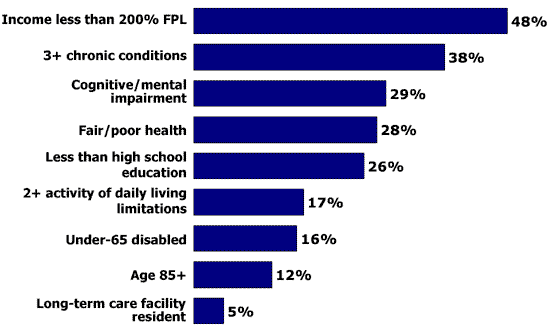
Characteristics of Medicare’s 45 Million Beneficiaries
SOURCE: Current Population Survey; CMS Medicare Current Beneficiary Survey, 2006.
While many beneficiaries enjoy good health, a quarter or more have serious health problems and live with multiple chronic conditions, including cognitive impairments and functional limitations. Although the majority of the Medicare population is over age 65, 16 percent are under age 65 and permanently disabled, and while most beneficiaries live at home, 5 percent live in a long-term care setting. Many Medicare beneficiaries live on modest incomes and most depend on Social Security as their primary source of income.
What benefits does Medicare cover? Medicare provides coverage of basic health services including care in hospitals and other settings, physician services, diagnostic tests, preventive services and, as of 2006, also includes an outpatient prescription drug benefit offered through private plans. However, gaps in coverage and potentially high out-of-pocket costs are a growing concern. Medicare generally does not pay for costs associated with long-term care, which can be prohibitively expensive, nor for dental care, vision, or hearing. The traditional fee-for-service Medicare program does not have an annual cap on out-of-pocket spending and the drug benefit has a significant gap in coverage before catastrophic coverage begins.
How are Medicare benefits provided? Medicare beneficiaries have the option to get their benefits through the traditional fee-for-service (FFS) program – sometimes called Original Medicare – or through private health plans, such as health maintenance organizations (HMOs) and preferred provider organizations (PPOs) – currently called Medicare Advantage. Under traditional FFS Medicare, beneficiaries can choose to be treated by virtually any hospital or doctor, while enrolling in a Medicare Advantage plan typically requires treatment from providers in a network, or paying a higher fee to receive care from an out-of-network provider. Medicare Advantage plans generally provide all benefits covered under traditional Medicare, but many plans offer additional benefits. Today, most Medicare beneficiaries are covered under FFS Medicare, although the number of enrollees in private Medicare Advantage plans has risen dramatically in recent years, now totaling more than 10 million of Medicare’s 45 million beneficiaries. In addition, as of 2006, Medicare beneficiaries have access to subsidized prescription drug coverage offered through private plans, either stand-alone prescription drug plans, or Medicare Advantage plans.
Policy Challenges Facing Medicare
Quick Facts on Medicare Financing Challenges
Medicare is 14% of the federal budget
Between 2010 and 2030, the number of people on Medicare is projected to rise from 46 million to 78 million
The Medicare Part A Hospital Insurance Fund will have insufficient funds to pay for full benefits beginning in 2019
Financing Care for Future Generations Financing care for future generations is perhaps the greatest challenge facing Medicare, due to sustained increases in health care costs, the aging of the U.S. population, and the declining ratio of workers to beneficiaries. Annual increases in health care costs are placing upward pressure on Medicare spending, as for other payers. Government experts warn that by 2019, there will be insufficient funds in the Medicare Part A (Hospital Insurance) Trust Fund to pay for benefits, 2 and most experts agree that current benefit levels cannot be sustained without additional revenue coming in to the program. Annual growth in Medicare spending is largely influenced by the same factors that affect health spending in general: increasing prices of health care services, increasing volume and utilization of services, and new technologies. In the past, provider payment reforms, such as the hospital prospective payment system, have helped to limit the growth in Medicare spending. Moving forward, system-wide efforts to curtail overall health care costs would help to improve Medicare’s financial outlook. There is general agreement among policymakers and experts that changes are needed to ensure the long-term viability of the Medicare program, but little consensus on how best to do so.
Assessing the Role of Private Plans and Providing Adequate Payments
Quick Facts on Medicare Advantage
10.1 million beneficiaries are now enrolled in a Medicare Advantage plan, up from 5.3 million in 2003
Between The government pays 113% more for beneficiaries enrolled in Medicare Advantage than for beneficiaries in traditional Medicare in 2008
Since the 1970s, many Medicare beneficiaries have had the option to receive their Medicare benefits through private health plans, mainly Medicare HMOs, as an alternative to original fee-for-service Medicare. Over the past decade, Congress has made several policy changes to encourage private plan participation in Medicare and enrollment growth. A relatively generous payment system for Medicare Advantage has encouraged greater plan participation in recent years, significantly expanding the number of private plans offered throughout the country and making extra benefits available to more beneficiaries. Currently, all beneficiaries have access to at least one Medicare Advantage plan, mainly due to the emergence of new types of private plans in rural areas. 3 While some have supported the expanded role of Medicare Advantage plans as a means to improve benefits and lower costs under Medicare, the role of private plans in Medicare has been called into question in part due to the fact that the government actually pays these plans more per enrollee than if they were in traditional FFS Medicare, according to analysis by government entities.4 This payment system increases Medicare expenditures, reduces the solvency of the Part A trust fund, and increases Part B premiums paid by all beneficiaries, according to Medicare actuaries. 5
In light of Medicare’s overall fiscal challenges, many policymakers have expressed concern about the current payment system. Another concern relates to the fairness of using Medicare Advantage to provide extra benefits to enrollees, in that the majority of beneficiaries are not enrolled in Medicare Advantage plans and therefore do not receive extra benefits these plans might offer. Achieving a reasonable balance among multiple goals for the Medicare program—including keeping Medicare fiscally strong, setting adequate payments to private plans, and meeting beneficiaries’ health care needs—will be critical issues for policymakers in the near future.
Improving the Medicare Prescription Drug Benefit
After years of discussion and debate, in 2003 Congress authorized a new outpatient prescription drug benefit (Medicare Part D) that took effect in 2006. Beneficiaries can get Medicare drug coverage by enrolling in either a private plan that offers the Medicare drug benefit only or a Medicare Advantage plan that offers prescription drug coverage along with Medicare’s other benefits. The law explicitly prohibits the federal government from negotiating drug prices directly with manufacturers, pharmacies, or plans; instead, the program relies on market-based competition between private insurance plans to drive down drug costs. Since 2006, annual costs for the program have been lower than initially projected and the development of the private drug plan market has been robust, with dozens of plans available in each state. Currently nearly 26 million people on Medicare are enrolled in a Part D drug plan. 6
Quick Facts on Medicare Part D
90% of all Medicare beneficiaries have prescription drug coverage in 2008, but 4.6 million still have no drug coverage
3.4 million beneficiaries enrolled in a Part D plan had drug spending high enough to reach the coverage gap or “doughnut hole” in their plan in 2007
The experiences of Medicare beneficiaries with Part D have not been free of challenges or confusion as they confront decisions about whether to enroll in a plan and which plan to choose and learn how the benefit works. A unique feature of the benefit that is of particular concern is known as the coverage gap, or “doughnut hole”, where beneficiaries whose total drug spending exceeds a certain amount each year pay 100 percent of the costs of their drugs until they reach the level that qualifies for catastrophic coverage. The coverage gap could be a major concern for beneficiaries with multiple health conditions who may not be able to afford their medications once they reach the gap.7
In response to ongoing concerns about certain features of the Part D program, many policymakers have called for reforms that would improve coverage or access to medications. Some would reduce or eliminate the coverage gap or “doughnut hole”, although doing so would likely result in an increase in Medicare spending which may be controversial given the fiscal challenges facing the program. Some favor changing the law to allow the federal government to use its buying power to negotiate with drug companies to try to get lower prices for prescription drugs for people on Medicare. However, proponents of the status quo are concerned that government negotiations will result in price controls that would ultimately drive U.S. drug companies to do less research and development. Another more significant change would involve the government creating its own Medicare drug plan option in which beneficiaries could choose to enroll in lieu of enrolling in a private plan.
Another issue related to Part D that continues to draw attention relates to whether people in the United States should be permitted to import lower-cost prescription drugs from other countries. Both Senator John McCain and Senator Barack Obama would allow importation of prescription drugs from other developed countries, provided the drugs are safe.
Keeping Medicare Benefits Adequate and Affordable
Quick Facts on Medicare Benefits and Affordability
Medicare covers less than half of beneficiaries’ total medical and long-term care expenses
Out-of-pocket spending on health care as a share of income for Medicare beneficiaries increased from 11.9% in 1997 to 15.5% in 2003 9
Despite significant protections offered by Medicare, the program is less generous than a typical large-employer plan. 8 Medicare has a relatively high deductible for inpatient care ($1,024 in 2008) and does not have a cap on out-of-pocket spending, potentially exposing people with serious medical problems to extremely high expenses. Medicare offers prescription drug coverage, but the standard benefit has a coverage gap which grows larger each year. Also Medicare does not cover long-term care expenses, which can be prohibitively expensive, nor does it pay for eyeglasses or hearing aids. As costs have risen over time, beneficiaries are spending a larger share of income on health care and premiums. 9
To help fill in Medicare’s benefit gaps and make care more affordable, many people on Medicare have some form of supplemental coverage. 10
Employer-sponsored retiree health plans are the primary source of supplemental coverage for people on Medicare, although these benefits have been eroding over time as employers grapple with rising health costs. Beneficiaries with very low incomes rely on Medicaid to supplement Medicare and Medicaid has become a critically important source of coverage for nursing home care, but beneficiaries typically have to spend down virtually all of their life savings in order to qualify for Medicaid assistance.
In the current fiscally constrained environment, there is little discussion about expanding Medicare to cover long-term care or in substantially reducing cost sharing for people covered by the program. In fact, some lawmakers have proposed changes that would reduce the growth in program spending by shifting additional costs onto beneficiaries. Examples of such policies include proposals to “means-test” benefits (that is, limit benefits only to those with low incomes), raise the age of eligibility, and increase premiums, deductibles, and cost sharing. Congress took a small step in this direction by charging higher Part B premiums for Medicare beneficiaries with higher incomes (over $82,000/single; $164,000/couple in 2008). A similar proposal would subject more beneficiaries to higher premiums for their Medicare Part D coverage.
Assessing Candidate Positions
Medicare has not emerged as a central issue in 2008 and neither of the presidential campaigns or major political parties has released a detailed set of Medicare policy proposals or specific measures to achieve long-term fiscal balance. Discussion of Medicare policy to date has focused generally on the role of private plans in Medicare, ways to lower the cost of prescription drugs, and system-wide changes to reduce health care costs overall, such as adopting electronic medical records, increasing preventive care, and improving chronic care delivery. However, the direction and pace of reform will be significantly affected by the election outcome. The future direction of the program appears to be governed by differences in ideology, particularly the role of government versus the role of the private sector. The broad visions of how Medicare should be designed in the future and how Medicare benefits should be provided will inform the policy choices made by Congress and the administration over the next four years. Therefore it is important to carefully consider the policy recommendations of the candidates to understand their vision for the future of Medicare.
The following questions are intended to help discern the candidates’ approaches to Medicare reform.
QUESTIONS FOR THE CANDIDATES
What specific strategies would you recommend to keep Medicare financially secure for future generations?
Would you support means-testing Medicare, limiting benefits only to those with low incomes?
Do you think higher-income people on Medicare should be asked to pay more than others for their Medicare benefits? How would you define “higher income?”
Would you support charging higher premiums to those with higher incomes for the Medicare drug benefit, as for Part B (physician services)?
What is the appropriate role of private health plans in Medicare? Do you support the current payment system for Medicare Advantage plans?
How would you propose to improve the Medicare drug benefit? Do you support eliminating the coverage gap, allowing the government to negotiate drug prices, or allowing beneficiaries to import drugs from abroad? How would you pay to eliminate the coverage gap?
How would you propose to help people on Medicare and their families with the rising cost of medical care and the high cost of long-term care?
1Data for this section come from Kaiser Family Foundation analysis of the Centers for Medicare and Medicaid Services Medicare Current Beneficiary Survey.
22008 Annual Report of the Boards of Trustees of the Federal Hospital Insurance and Federal Supplementary Medical Insurance Trust Funds.
4Medicare Payment Advisory Commission analysis of plan bid data from CMS, November 2007.
52008 Annual Report of the Boards of Trustees of the Federal Hospital Insurance and Federal Supplementary Medical Insurance Trust Funds.
6Centers for Medicare and Medicaid Services, Medicare Advantage, Cost, PACE, Demo, and Prescription Drug Plan Contract Report – Monthly Summary Report, September 2008.
7J. Hoadley, E. Hargrave, J. Cubanski, and T. Neuman, “The Medicare Part D Coverage Gap: Costs and Consequences in 2007,” Kaiser Family Foundation, August 2008; available athttp://www.kff.org/medicare/7811.cfm.
8D. Yamamoto, T. Neuman and M. Strollo, “How Does the Benefit Value of Medicare Compare to the Benefit Value of Typical Large Employer Plans?” Kaiser Family Foundation, September 2008; available at http://www.kff.org/medicare/7768.cfm.
9P. Neuman, J. Cubanski, K. Desmond, T. Rice, “How Much ‘Skin In The Game’ Do Medicare Beneficiaries Have? The Increasing Financial Burden of Health Care Spending, 1997-2003” Health Affairs, November/December 2007; available at http://www.kff.org/medicare/med110107oth.cfm; K. Desmond, T. Rice, J. Cubanski, P. Neuman, “The Burden of Out-of-Pocket Health Spending Among Older Versus Younger Adults: Analysis from the Consumer Expenditure Survey, 1998-2003”, Kaiser Family Foundation, September 2007; available at http://www.kff.org/medicare/7686.cfm.
10Kaiser Family Foundation, “Examining Sources of Coverage Among Medicare Beneficiaries: Supplemental Insurance, Medicare Advantage, and Prescription Drug Coverage — Findings from the Medicare Current Beneficiary Survey,” August 2008; available at http://www.kff.org/medicare/7801.cfm.
Health Affairs Article: Florida’s Medicaid Reform: Informed Consumer Choice?
Florida’s Medicaid reform program aims to encourage consumer choice and market competition by giving health plans new authority to vary benefits and having enrollees choose among the different plans. However, about three in 10 enrollees were not aware that they needed to make this health plan choice and over half of those who were aware reported difficulty making a plan choice, according to a Health Affairs article based on the Kaiser Family Foundation’s 2006-2007 Survey of Florida Medicaid Beneficiaries conducted during the first year of the state’s reform effort.
The study found that three-quarters of the enrollees who were unaware of their need to choose a plan said that they had not been told so by the state, suggesting that they either did not receive, did not read or did not understand the state’s letter and other communications about their transition.
The study, Florida’s Medicaid Reform: Informed Consumer Choice?, was written by Teresa Coughlin, Sharon K. Long and Timothy Triplett of the Urban Institute; Samantha Artiga and Barbara Lyons of the Kaiser Family Foundation; and Paul Duncan and Allyson Hall of the University of Florida.
The Foundation, in collaboration with the Urban Institute and the University of Florida, is conducting a follow-up survey in Florida to continue to track the experiences of beneficiaries in the reform program.
In addition, the Foundation released a separate policy brief that provides an overview of the Florida Medicaid reform and a summary of available research findings to date from various evaluators of the program.