KFF designs, conducts and analyzes original public opinion and survey research on Americans’ attitudes, knowledge, and experiences with the health care system to help amplify the public’s voice in major national debates.
With the open enrollment period for health insurance exchanges less than six months away, consumers are already asking questions about their new health care options under the Affordable Care Act (ACA). Even in the age of digital information, hands-on consumer assistance could play a key role in helping people understand their insurance choices come 2014 — a recent Kaiser Family Foundation poll showed that two thirds of the uninsured and a majority of Americans overall say they have too little information to know how the ACA will affect them.
This brief outlines the need for hands-on consumer assistance, the resources available under the ACA to fill this need, and the implementation issues that may impact the effectiveness of consumer assistance efforts. It lays out specific situations that may cause confusion for consumers, such as determining eligibility for subsidies; distinguishes between different sources of consumer assistance; and identifies factors that vary from state to state that could influence the effectiveness of these efforts.
With the open enrollment period for health insurance exchanges less than six months away, consumers are already asking questions about their new health care options under the Affordable Care Act (ACA). Even in the age of digital information, hands-on consumer assistance could play a key role in helping people understand their insurance choices come 2014 — a recent Kaiser Family Foundation poll showed that two thirds of the uninsured and a majority of Americans overall say they have too little information to know how the ACA will affect them.
This brief discusses some of the key policy decisions states are making and briefly describes these programs in a handful of states. This brief is not intended to offer comprehensive examination of all state activity, but rather provides a snapshot of key decisions in a few states. States were included in this snapshot if they had released a detailed RFP or other policy documents describing how these assistance programs would be structured.
This fact sheet highlights key issues about Medicaid, including the structure, financing and purpose of the program, its role for low-income beneficiaries, its share of the federal budget and state budgets and the significant implications of the coverage expansion under the Affordable Care Act.
White House Senior Advisor Valerie Jarrett, U.S. Rep. Barbara Lee Discuss Impact of HIV on Women.
New Kaiser Report Shows Progress in Stemming New HIV Infections among Women in U.S., though Only a Quarter have Virus Suppressed with Treatment
AIDS United Announces Community Grants Program to Support Efforts in Hard Hit Areas as Part of Response
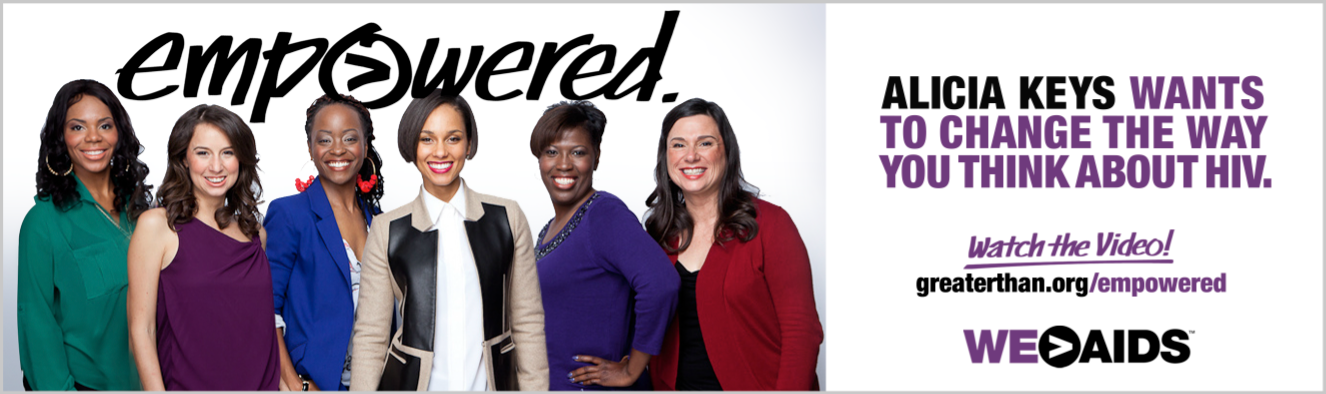
Fourteen-time Grammy Award-winning artist and HIV advocate Alicia Keys took part in a briefing at the Kaiser Family Foundation’s Washington, D.C. offices on Monday morning to introduce EMPOWERED, a new campaign to reach women in the U.S. about HIV — developed in partnership with the Foundation as part of the Greater Than AIDS initiative. Ms. Keys leads the campaign and is featured in conversations with women living with HIV.
Of the more than 1.1 million people living with HIV in the U.S. today, one in four is a woman. Black women have been disproportionately affected, accounting for majority of new infections among women.
Ms. Keys, who has dedicated her advocacy work to the urgency of HIV/AIDS and has long spoken of the power of women said: “Women and girls have been affected by HIV since the start, but that impact has not been recognized. And as the sisters, mothers, daughters, and caregivers, we are the backbones of families, communities and entire societies. We will never see an AIDS-free generation without harnessing the power and strength of women.”
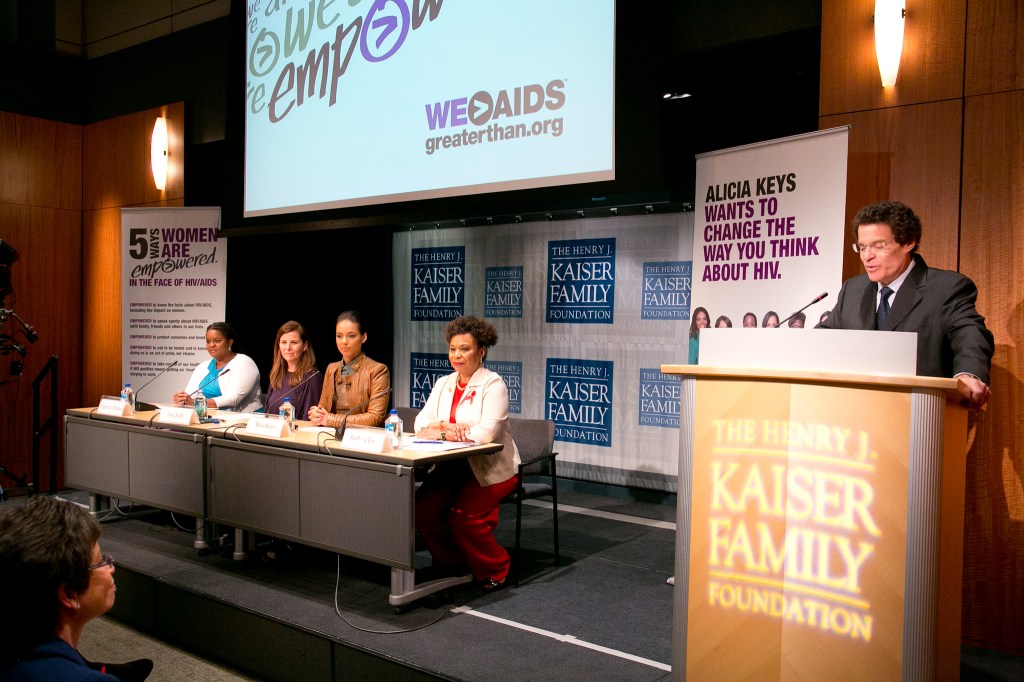
Alicia Keys, Greater Than AIDS EMPOWERED Campaign Launch, Kaiser Family Foundation, April 15, 2013. Photo credit: imagelinkphoto.com/Dennis Kan
The cross-platform campaign includes: TV, radio, outdoor, print and digital public service ads; special programming and editorial content; social media promotions and informational resources. In an effort to increase public dialog about HIV/AIDS, a half-hour video of Ms. Keys in conversation with women living with HIV is available for community screenings and discussion.
The Foundation released a new report on Women & HIV/AIDS in the U.S. that puts a spotlight on the epidemic today — in particular the crisis facing Black women. Despite recent encouraging trends showing a decrease in new infections among women in the U.S. — the most significant in two decades — HIV/AIDS continues to severely and disproportionately affect women of color who account for the majority of new infections among women. One in 32 Black women today is estimated to contract HIV in her life time. Just 26 percent of women who are HIV positive are in treatment and have the virus suppressed with ongoing antiretroviral therapy.
“Focusing our efforts on communities and populations where there is greatest need is the key to making greater progress on HIV,” said Drew E. Altman, President and CEO of the Foundation, adding that “EMPOWERED does that by focusing on women and HIV and the broader role women play in the response to the epidemic.”
Also as part of the EMPOWERED campaign, Alicia Keys announced her new community grants program to help advance community-level efforts focused on women and HIV/AIDS. The grants program will be administered by AIDS United with assistance from the Kaiser Family Foundation. Grants will be awarded via a competitive process steered by an advisory council comprised of leaders in the HIV field – representing the community, academia, and the private sector.
“We are taking action to help our most vulnerable populations of women protect themselves — and those they love — from continuing the spread of the virus and helping to create an AIDS-free generation in America,” said Dr. Vignetta Charles, Senior Vice President at AIDS United, a national organization supporting more than 400 local AIDS organizations.
On hand at Monday’s announcement to discuss the impact of HIV on women in the U.S. was White House Senior Advisor Valerie Jarrett — who chairs the President’s Council on Women and Girls and lost her sister-in-law to AIDS. Commenting on the progress of the President’s National HIV/AIDS Strategy, Ms. Jarrett said: “The role of this strategy is to prevent as many infections and save as many lives as possible, including reducing health disparities, improving health and wellness for everyone living with HIV.”
Congresswoman Barbara Lee (D-CA13), co-founding chair of the Congressional Caucus on HIV/AIDS, outlined policy priorities she sees facing the Congress in combatting HIV/AIDS, “Congress has an important role to play in creating and supporting legislation to empower women and to achieve an AIDS-free generation.”
The campaign spotlights conversation between Ms Keys and five HIV positive women from different parts of the country and walks of life. Among them are: Cristina, a graduate student from the San Francisco Bay Area who was born with HIV; Eva, a home health care worker living in Atlanta with her family; Kym, a young professional living in Texas who learned she was positive after her new husband became sick and died as a result of HIV; Jen, a wife and mother in the Pacific Northwest who has being living with HIV for over 20 years; and Stephanie, a recent college graduate from North Carolina who appeared in an MTV special on youth and HIV. They share their stories in the hopes of reaching other women and showing how, whether positive or negative, we are all empowered in this fight.
Tina Hoff, Senior Vice President and Director of the Health Communication and Media Partnerships program at the Foundation, commented: “Media campaigns, like EMPOWERED, play an important role as part of the public health response to HIV/AIDS by getting out information, connecting people in need with resources, keeping attention on the issue, and perhaps most significantly helping to confront the stigma that still surrounds the disease.”
(L-R) Vignetta Charles/AIDS United, Tina Hoff/KFF, Alicia Keys, Rep. Barbara Lee, Drew Altman/KFF, Greater Than AIDS EMPOWERED Campaign Launch, Kaiser Family Foundation, April 15, 2013. Photo credit: imagelinkphoto.com/Dennis Kan
About the Kaiser Family Foundation The Kaiser Family Foundation, a leader in health policy analysis, health journalism and communication, is dedicated to filling the need for trusted, independent information on the major health issues facing our nation and its people. The Foundation is a non-profit private operating foundation, based in Menlo Park, California.About Alicia Keys Alicia Keys is a 14 time Grammy Award®-winning singer/songwriter/producer, actress, New York Times best-selling author, entrepreneur and humanitarian. Since releasing her debut album, songs in A minor, Keys has built an unparalleled repertoire of hits with over 30 million albums sold worldwide. As an HIV advocate, Keys co-founded Keep a Child Alive (KCA) which provides AIDS treatment, support, nutrition and love to children and families affected by HIV/AIDS in Africa and India.About Greater Than AIDS Greater Than AIDS is a leading national public information response focused on the U.S. domestic epidemic. Launched in 2009 by the Kaiser Family Foundation and Black AIDS Institute, it is supported by a broad coalition of public and private sector partners, including: major media and other business leaders; Federal, state and local health agencies and departments; national leadership groups; AIDS service and other community organizations; and foundations, among others. Through targeted media messages and community outreach, Greater Than AIDS works to increase knowledge, reduce stigma and promote actions to stem the spread of the disease. While national in scope, Greater Than AIDS focuses on communities most affected.About AIDS United The mission of AIDS United is to end the AIDS epidemic in the United States, through national, regional and local policy/advocacy, strategic grantmaking, and organizational capacity building. With partners throughout the country, AIDS United works to ensure that people living with and affected by HIV/AIDS have access to the prevention and care services they need and deserve.
This report maps the trajectory of the HIV/AIDS epidemic among women in the United States (U.S.), including the following:
key historical epidemiological trends and the important role played by women in the response over time;
the current impact of HIV among women in the U.S., including a profile of those most affected by race/ethnicity, age, transmission risk, geography, and other demographics;
major sources of prevention, care, and treatment for women with and at risk for HIV;
attitudes toward and knowledge about HIV among women; and
ongoing challenges and opportunities.
While HIV has impacted women worldwide–globally, women comprise half of all those living with HIV–this report focuses on the impact of HIV on women in the U.S.
The White House released the FY 2014 budget request, which included funding for U.S. global health activities. Overall, funding for global health programs (at USAID and the State Department combined) increased in the FY 2014 request as compared to FY12 actual and FY13 estimated levels. This varied by specific global health program area (see below).
State Department & USAID – Global Health Programs (GHP)
Area
FY12 Actual
FY13 CR Estimated*(millions)
FY14 Request(millions)
Difference:FY14 – FY13 CR(millions)
Difference: FY14 – FY12(millions)
State Department – Global Health Programs (GHP)
HIV
$4,242.9
$3,865.7
$4,020.0
$154.3(4%)
$-222.9(-5.3%)
Global Fund
$1,300.0
$1,567.0
$1,650.0
$83(5.3%)
$350(26.9%)
Total
$5,542.9
$5,432.7
$5,670.0
$237.3(4.4%)
$127.1(2.3%)
USAID – Global Health Programs (GHP)
HIV
$350.0
$349.0
$330.0
$-19(-5.4%)
$-20(-5.7%)
Tuberculosis
$236.0
$235.3
$191.0
$-44.3(-18.8%)
$-45(-19.1%)
Malaria
$650.0
$648.1
$670.0
$21.9(3.4%)
$20(3.1%)
MCH
$605.6
$603.8
$680.0
$76.2(12.6%)
$74.5(12.3%)
of which GAVI
$130.0
Not yet available
$175.0
–
$45(34.6%)
Nutrition
$95.0
$94.7
$95.0
$0.3(0.3%)
$0(0%)
FP/RH
$528.8
$527.3
$534.0
$6.7(1.3%)
$5.2(1%)
NTDs
$89.0
$88.7
$85.0
$-3.7(-4.2%)
$-4(-4.5%)
Vulnerable Children
$17.5
$17.4
$13.0
$-4.4(-25.5%)
$-4.5(-25.7%)
Pandemic Influenza
$58.0
$57.8
$47.0
$-10.8(-18.7%)
$-11(-19%)
Total
$2,629.9
$2,622.2
$2,645.0
$22.8(0.9%)
$15.2(0.6%)
Total State & USAID GHP
$8,172.7
$8,054.9
$8,315.0
$260.1(3.2%)
$142.3(1.7%)
Other Global Health Funding
Area
FY12 Actual
FY13 CR Estimated*(millions)
FY14 Request(millions)
Difference:FY14 – FY13(millions)
Difference: FY14 – FY13(millions)
State Department & USAID
Tuberculosis
$20.3
Not yet available
$8.0
–
$-12.3(-60.6%)
UNFPA**
$30.2
Not yet available
$37.0
–
$6.8(22.5%)
National Institutes for Health (NIH)
HIV
$392.5
$372.1
$399.1
$27(7.3%)
$6.6(1.7%)
Malaria
$147.0
$139.4
$153.3
$13.9(10%)
$6.3(4.3%)
Centers for Disease Control and Prevention (CDC)
HIV
$131.2
$124.4
$131.9
$7.6(6.1%)
$0.8(0.6%)
Malaria
$9.3
$8.8
$10.7
$1.8(20.9%)
$1.4(14.6%)
Department of Defense (DoD)
HIV
$8.0
$8.0
$0.0
$-8(-100%)
$-8(-100%)
Malaria
$0.0
$0.0
$8.9
–
–
*FY13 are preliminary estimates that are likely to change. FY13 was calculated by using the FY13 Full-Year CR, which provided total GHP funding levels at USAID & State, applying a 0.032% across-the-board rescission (OMB estimate), and a 5% reduction due sequestration. For program estimates at USAID, the percentage increase in USAID funding between FY12 Final and FY13 CR was applied to each program area before applying reductions due to rescissions and sequestration.**In FY12, Congress approved $35m in funding for UNFPA. However, due to policy conditions put in place by Congress annually, the actual contribution to UNFPA totaled $30.2m.
Although relatively few Medicaid beneficiaries are in capitated managed long-term services and supports (LTSS) programs, significant expansion is anticipated as more than half of states are implementing or proposing new programs that would include a transition from fee-for-service (FFS) to capitated managed care in the LTSS delivery system. By definition, these Medicaid beneficiaries need assistance with activities of daily living. Thus poor transitions, particularly those that lead to gaps in services, can have dire consequences. This issue paper examines key policy and operational considerations related to the transition from FFS to risk-based capitated managed care for LTSS.
The more than 50 million Hispanics living in the United States make up 17 percent of the total population and are the nation’s fastest growing racial or ethnic group. Many Hispanics continue to face disparities in health coverage and care, and they have the highest uninsured rate among racial/ethnic groups, with nearly one in three lacking coverage.
The Affordable Care Act (ACA) could help many uninsured Hispanics through the law’s expansion of Medicaid and the creation of new health insurance exchange marketplaces with tax credits to help moderate-income people purchase coverage. This brief provides an overview of the Hispanic population in the U.S., their health coverage today and the potential impact of the ACA coverage expansions.
Medicare supplemental insurance, also known as “Medigap,” is an important source of supplemental coverage for nearly one in four people on Medicare. Traditional Medicare has cost-sharing requirements and significant gaps in coverage; Medigap helps make health care costs more predictable and stable for beneficiaries by covering some or all Medicare costs, including deductibles and cost-sharing.
This policy brief provides an overview of the Medigap market, national trends in enrollment and premiums, variations across plan types and states and by different beneficiary characteristics. Lastly, the brief examines whether Medigap policyholders are enrolled in the lowest-cost plans available in their states.
This brief, issued in April 2013, is a revision to an earlier brief from February 2013. The revisions reflect updated methods for estimating Medigap premiums and for comparing plans within states. It is authored by researchers at the Kaiser Family Foundation and the University of California at Los Angeles.