KFF designs, conducts and analyzes original public opinion and survey research on Americans’ attitudes, knowledge, and experiences with the health care system to help amplify the public’s voice in major national debates.
Only Six Percent of Adult Medicaid Enrollees Targeted by States’ New Work Requirements Are Not Already Working and Are Unlikely to Qualify for an Exemption
Nearly a Third of Medicaid Adults Say They Never Use a Computer, Potentially Putting Coverage at Risk in States Requiring Online Reporting
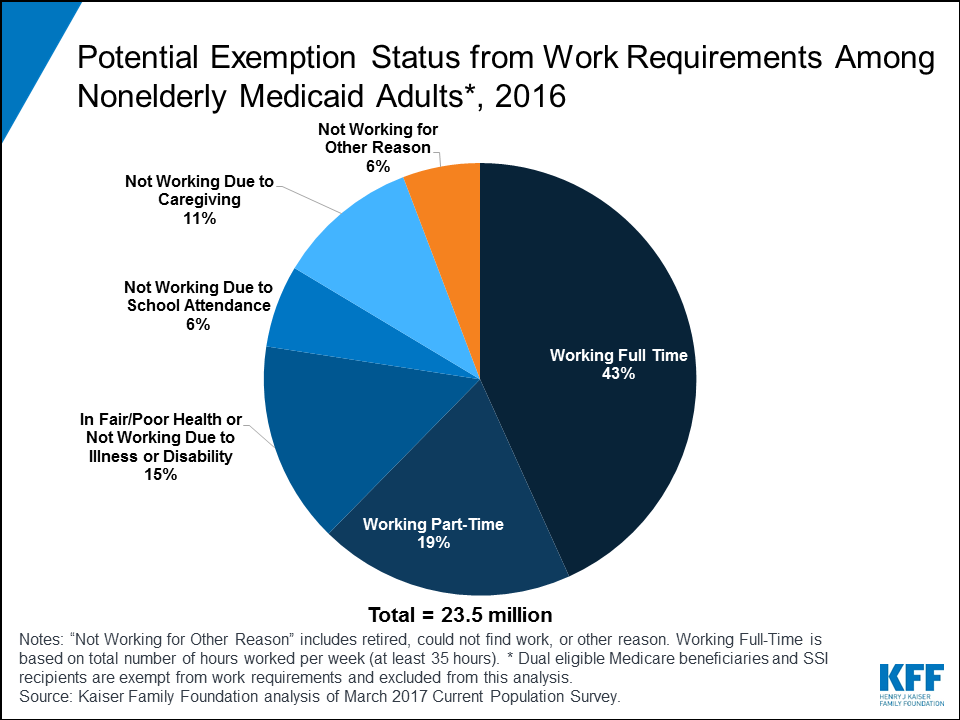
Among enrollees targeted in the push for work requirements for “able-bodied adults” in Medicaid, only 6 percent are not already working and unlikely to qualify for an exemption, according to an analysis from the Kaiser Family Foundation.
Nationally, more than 6 in 10 nonelderly adults in Medicaid who do not receive federal disability or Medicare coverage are already working full-time (43%) or part-time (19%), the analysis finds. Nearly a third of nonelderly adults in Medicaid who don’t receive disability payments report that they are in fair or poor health or are not working due to illness or disability (15%), or are not working because they are caregiving (11%) or in school (6%). All are reasons that could exempt them from work requirements. That leaves six percent who would have to get a job or participate in training or volunteer activities to meet the new rules being pursued in some states.
Among the majority who are already working, as well as among those who may qualify for an exemption, many could face administrative hurdles in documenting their status to maintain Medicaid coverage, the analysis finds. For example, while 3 in 10 Medicaid adults nationally say they never use a computer, Arkansas – which this month became the first state to implement work requirements – is requiring enrollees to use online accounts to verify work status.
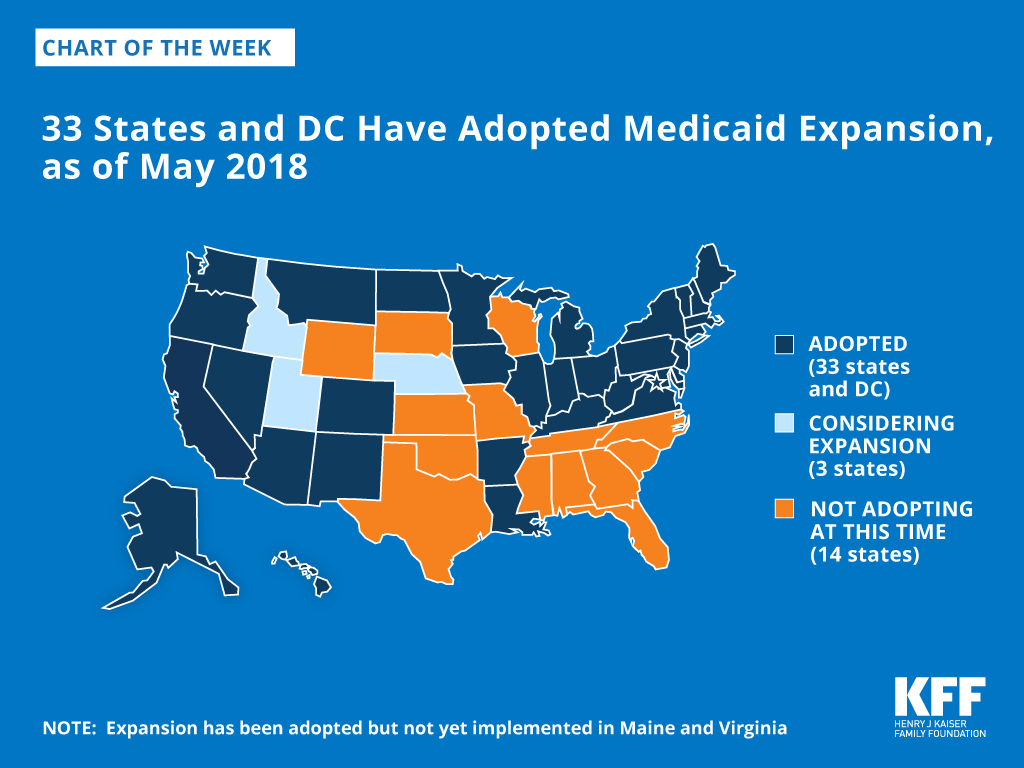
How work requirements will be implemented and whom they affect are key issues as nearly a dozen states have approved or pending federal waivers to add such requirements in their Medicaid programs, and other states are considering similar proposals.The latest is Virginia, where work requirements were central to a compromise to adopt the Affordable Care Act’s Medicaid expansion.
The new analysis examines who works in Medicaid and what types of jobs they hold, the relationship between work and financial stability for them and the potential challenges in fulfilling work requirements or navigating the exemption process.
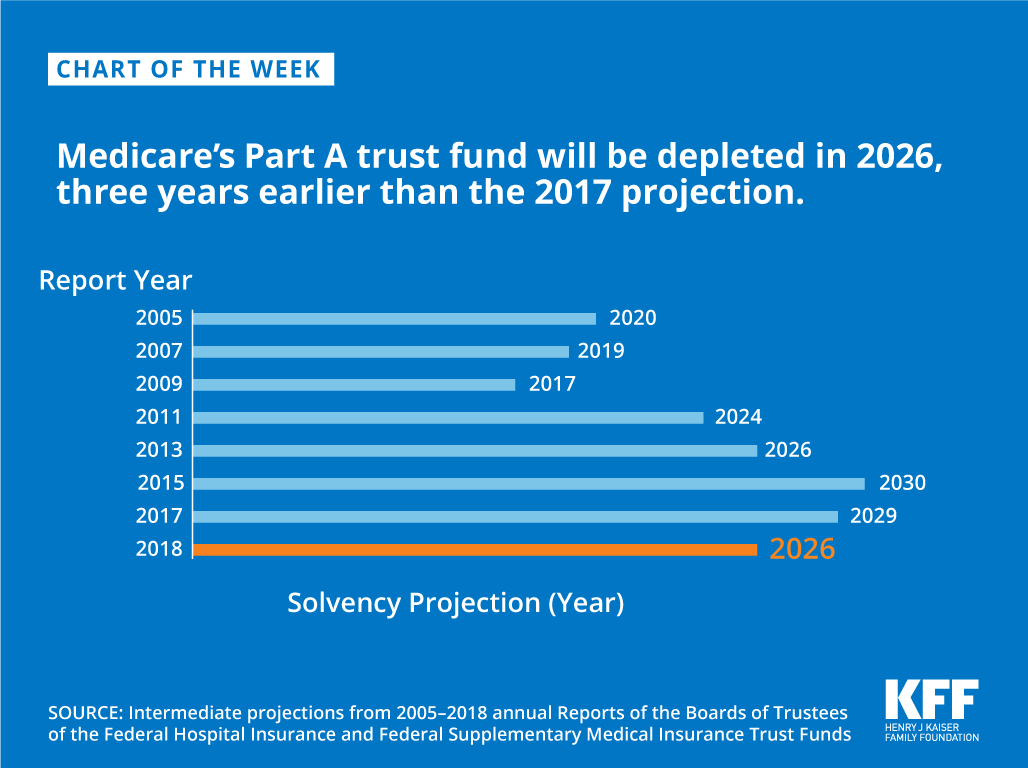
Intermediate projections from 2005-2018 annual Reports of the Boards of Trustees of the Federal Hospital Insurance and Federal Supplementary Medical Insurance Trust Funds
The Kaiser Family Foundation today launched a tracker to monitor preliminary 2019 premiums in the Affordable Care Act’s marketplaces as insurers file rate information with state regulators.
Beginning with data from eight states (Maine, Maryland, New York, Oregon, Rhode Island, Vermont, Virginia and Washington) plus the District of Columbia, the tracker shows preliminary premium information in nine major cities for the lowest-cost bronze plan and “benchmark” silver plan, which is used to determine the size of the premium tax credits available to low- and moderate-income enrollees. The tracker also shows how those premiums are changing from 2018 and what a 40-year-old enrollee making $30,000 annually would pay before and after available tax credits.
Based on insurers’ requested premium increases in the states available, benchmark premium increases before tax credits range from 7% to 36% in these 9 cities. The average increase in the benchmark silver premiums is 2% after tax credits for a 40-year-old enrollee with a $30,000 annual income.
The tracker also captures the number of insurers who plan to participate and the range for insurers’ average rate increases in each state. The tracker will update as quickly as possible as additional states release insurers’ preliminary rate filings.
The cost of prescription drugs continues to be a policy issue for the U.S. health system and for state Medicaid programs. Recent news stories have highlighted the high costs of life-saving drugs such as Sovaldi, EpiPen, Daraprim, insulin, and oncology drugs; the American public1 reports concern over high out-of-pocket spending for prescriptions; and many states are pursuing actions to try to lower drug costs.2 President Trump campaigned on the issue and has since repeatedly commented that lowering the cost of prescription drugs is one of his greatest priorities. On May 11th, 2018, the Trump Administration released “American Patients First: The Trump Administration Blueprint to Lower Drug Prices and Reduce Out-of-Pocket Costs” (“the Blueprint”), which reviews the issue of high cost drugs, presents actions the Administration has already taken, lists actions that the Administration may undertake or promote going forward, and seeks feedback on potential actions. The Blueprint includes provisions across the U.S. healthcare system; this issue brief focuses on how the Blueprint’s proposals could affect Medicaid drug spending.
How does the Trump administration’s #prescriptiondrug pricing Blueprint affect #Medicaid?
New Medicaid Proposals
The only new, Medicaid-specific proposal in the Blueprint is a technical provision related to the Medicaid Drug Rebate Program (MDRP). The Blueprint suggests that “HHS may […] [d]evelop proposals related to the Affordable Care Act’s Maximum Rebate Amount provision, which limits manufacturer rebates on brand and generic drugs in the Medicaid program to 100% of the Average Manufacturer Price.” This proposal is referring to the MDRP, which stipulates that in return for state Medicaid agency coverage of nearly all drugs produced by the manufacturer, the manufacturer must provide a rebate as described in federal Medicaid law. The amount of the federal rebate is based on both a non-inflationary component (based on whether the drug is a brand or a generic) and an inflationary component that accounts for the increase in the drug’s price relative to inflation. Currently, the total rebate is capped at 100% of Average Manufacturer Price (AMP).
The Blueprint provision is based on the idea that removing or significantly increasing the rebate cap would be a disincentive for a manufacturer to increase its list price for any drug for which Medicaid collects rebates.3 However, it would not directly affect drugs for which Medicaid does not collect rebates, such as physician-administered drugs provided on an inpatient basis. In addition, the rebate cap is currently secured in Medicaid statute4 and would require Congressional action to be modified.
Other Proposals
The Blueprint also includes two proposals related to Medicaid drug spending that the Administration first proposed in the FY 2019 White House Budget5 : removing ambiguity over how drugs are reported in Medicaid and calling for a new Medicaid demonstration authority for states to implement their own formularies instead of participating in the MDRP. The first proposal stems from the idea that, because the federal Medicaid rebates vary based on whether the drug is a brand or a generic, in addition to some other distinctions amongst brand drugs, for Medicaid to recoup the appropriate amount of money, the prescription drugs being provided need to be correctly categorized.6 The second proposal calls for a new Medicaid demonstration authority limited to five states and would allow for state Medicaid agencies to create their own Medicaid formularies. The proposal is based in the idea that, in contrast to the open formulary essentially created by the MDRP, allowing states to utilize their own formularies would enable them to negotiate directly with manufacturers.7 However, opponents worry that states would use this authority to limit or deny coverage of high-priced drugs.
Non-Medicaid Proposals
The Blueprint proposes a number of actions to address high drug costs that are broader in scope, affecting all payers including Medicaid. Over the past year, the FDA has taken a variety of actions to encourage generic competition to ease the high cost of prescription drugs. The Blueprint proposes continuing a number of ongoing FDA initiatives. It also proposes that HHS direct CMS to develop demonstration projects to encourage value-based care8 and to make prices more transparent to the public9 .
Looking Ahead
The Trump Administration is seeking comment on the Blueprint through July 16, 2018, and the Blueprint includes many questions for policymakers and stakeholders to consider as they develop actions based on the Blueprint. These questions include direct questions about the likely effect of proposed Medicaid policies (e.g., removing the rebate cap). Notably, the questions also ask if and how low prices in Medicaid (and other government programs) may incentivize manufacturers to increase prices for drugs overall to recoup perceived lost profits. The Blueprint also asks about pricing transparency and potential alternative prescription drug payment structures in Medicaid (and Medicare) including: pricing curative drugs to account for the fact that current payers may not realize long-term cost savings from lower treatment costs; pricing drugs based on the indication they are used for and how effective the drug is for that specific indication; and pricing drugs to remove disincentives to provide a drug in a particular setting (e.g., inpatient versus outpatient).
It is unclear what policy actions will ultimately emerge from the Blueprint, and not all proposals in the Blueprint can be implemented through administrative (versus Congressional) action. However, the document provides insight into the Administration’s areas of interest for lowering drug costs overall. While Medicaid-specific provisions focus on increasing manufacturer rebates, other discussion in the Blueprint suggests concern over Medicaid rebates leading to higher prices system-wide. The question of which provisions are priorities will be shaped by ongoing policy debate, politics, and stakeholder responses to the ideas in the Blueprint.
In August 2017, Mylan settled with the Department of Justice to resolve claims that they had intentionally classified the EpiPen product incorrectly as a generic drug to pay less money in rebates to Medicaid. See “Mylan Agrees to Pay $465 Million to Resolve False Claims Act Liability for Underpaying EpiPen Rebates,” Department of Justice, August 17, 2017, https://www.justice.gov/opa/pr/mylan-agrees-pay-465-million-resolve-false-claims-act-liability-underpaying-epipen-rebates. Additionally, a 2017 OIG report found that Medicaid lost over a billion dollars in rebates between 2012 and 2016 due to misclassification of drugs. See “Potential Misclassifications Reported by Drug Manufacturers May Have Led to $1 Billion in Lost Medicaid Rebates,” HHS, Office of Inspector General, December 2017, https://oig.hhs.gov/oei/reports/oei-03-17-00100.pdf. ↩︎
For more information on formularies in Medicaid, see Young and Garfield, op. cit. ↩︎
The Blueprint strongly favors value-based pricing, at one point saying “[v]alue-based transformation of our entire healthcare system is a top HHS priority.” Value-based pricing is a popular idea, and one that requires reconciling with the best price aspect of the MDRP. ↩︎
On May 15th 2018, CMS unveiled its “enhanced drug dashboard.” ↩︎
The United States played a leading role in the international response to the 2014 Ebola outbreak in West Africa, providing the most financial support, mobilizing U.S. staff across the federal government, and jumpstarting international efforts to strengthen global health security. As this month’s new outbreak unfolds in the Democratic Republic of Congo (DRC), the U.S. so far is playing a more limited role.
A new Kaiser Family Foundation brief examines key differences and changes since 2014 that are shaping how the U.S. and international community are responding in the DRC. These differences include:
Speedier response from the World Health Organization (WHO). WHO, which is the key international actor responding to global health emergencies, reorganized its emergency response offices after the 2014 outbreak to streamline the deployment of staff, supplies and funding during major disease outbreaks.
Local authorities have more experience with Ebola. The new outbreak is the ninth to strike the DRC since 1976 – more than in any other nation. In contrast, the 2014 outbreak was centered in the West African nations of Guinea, Liberia and Sierra Leone, which had not previously had any Ebola outbreaks and had limited medical resources, laboratories, clinicians and epidemiologists.
An Ebola vaccine is now available for emergency use. Since the 2014 outbreak, aggressive efforts led to the development of an experimental Ebola vaccine that is now being used in the DRC as part of the emergency response to help contain the outbreak.
While the current outbreak is in its early stages, the brief notes that the U.S. has been somewhat quicker to join the international response than in 2014. Multiple U.S. agencies, including the Centers for Disease Control and Prevention (providing epidemiological and laboratory support) and USAID (providing technical assistance such as mobile laboratories), are involved – though largely in a supporting role.
The brief also explores the U.S. budget for global health response efforts, including the Trump Administration’s May 8 request for Congress to rescind $252 million in remaining Ebola funds authorized in 2014 but not yet spent.
More than four years after the implementation of the Medicaid expansion included in the Affordable Care Act, debate and controversy around the implications of the expansion continue. Despite a large body of research that shows that the Medicaid expansion results in gains in coverage, improvements in access and financial security, and economic benefits for states and providers, some argue that the Medicaid expansion has broadened the program beyond its original intent diverting spending from the “truly needy”, offers poor quality and limited access to providers, and has increased state costs. New proposals allow states to implement policies never approved before including conditioning Medicaid eligibility on work or community engagement. New complex requirements run counter to the post-ACA movement of Medicaid integration with other health programs and streamlined enrollment processes. This brief examines evidence of the effects of the Medicaid expansion and some changes being implemented through waivers. Many of the findings on the effects of expansion cited in this brief are drawn from the 202 studies included in our comprehensive literature review that includes additional citations on coverage, access, and economic effects of the Medicaid expansion. Key findings include the following:
Coverage: Research and data show that Medicaid expansion has resulted in coverage gains without diverting coverage from traditional groups; for example, data do not support a relationship between states’ expansion status and community-based services waiver waiting lists. Reductions in Medicaid coverage would result in an increase in the uninsured population.
Access, Affordability, and Health Outcomes: Research demonstrates that Medicaid generally, and expansion specifically, positively affects access to care, utilization of services, the affordability of care, and financial security among the low-income population. While there is a growing body of evidence on Medicaid and outcomes, further research is needed to more fully determine the health effect of expansion on outcomes given that measureable changes take time to occur.
Economic Effects: Analyses find positive economic effects of expansion largely tied to the infusion of federal dollars, despite Medicaid enrollment growth initially exceeding projections in many states. Some studies look at 2014-2016 when expansion costs were 100% financed by the federal government, others studies project net fiscal gains even after states start to pay a share of expansion costs (up to 10% by 2020). Studies also show that Medicaid expansion resulted in reductions in uninsured visits and uncompensated care costs for hospitals, clinics, and other providers.
Expansion and Work: Studies find that Medicaid expansion has had positive or neutral effects on employment and the labor market and new work requirement proposals add complexity and could result in coverage losses for many who are working or face barriers to work.
Coverage
Research and data show that Medicaid expansion has resulted in coverage gains without diverting coverage from traditional groups.
Coverage changes: Studies show that Medicaid expansion states experienced significant coverage gains and reductions in uninsured rates compared to non-expansion states for the low-income population broadly (Figure 1).1,2,3 Under the original 1965 Medicaid law, Medicaid eligibility was tied to cash assistance, but over time, Congress has expanded federal minimum requirements and provided broader coverage options for states especially for children, pregnant women, and people with disabilities. The Medicaid expansion in the ACA built on earlier efforts to extend Medicaid coverage to low-income uninsured adults, many of whom are working but lack access to employer or other affordable health coverage. Studies also show that Medicaid expansion has resulted in coverage gains in a number of vulnerable populations, increased coverage for children as parents have gained coverage, and disproportionately positive coverage impacts in rural areas in expansion states.4,5,6,7,8 Coverage benefits of expansion have occurred across the major racial/ethnic categories.9,10
Figure 1: Medicaid expansion states show larger declines in the uninsured, 2013-2017
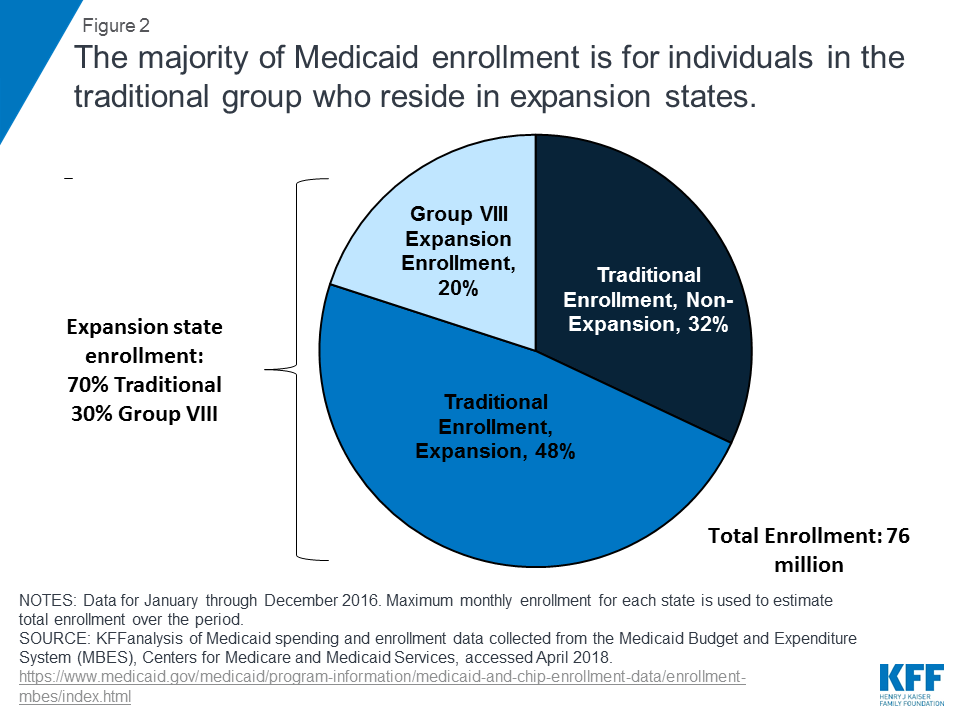
Distribution of Medicaid enrollees: The latest administrative data available show that there were 76 million Medicaid enrollees in 2016, with 15 million (20%) expansion (Group VIII) enrollees (including 12 million newly eligible enrollees). While expansion enrollment has increased since implementation of the ACA, the large majority (80%) of enrollees are in traditional (non-expansion population) enrollment categories. Expansion states account for 52 million Medicaid enrollees (68% of nationwide enrollment), and 70% of enrollees in expansion states are in traditional groups. The largest share of enrollees overall and in expansion states are traditional Medicaid enrollees that include children, low-income parents, elderly and people with disabilities (Figure 2).
Figure 2: The majority of Medicaid enrollment is for individuals in the traditional group who reside in expansion states.
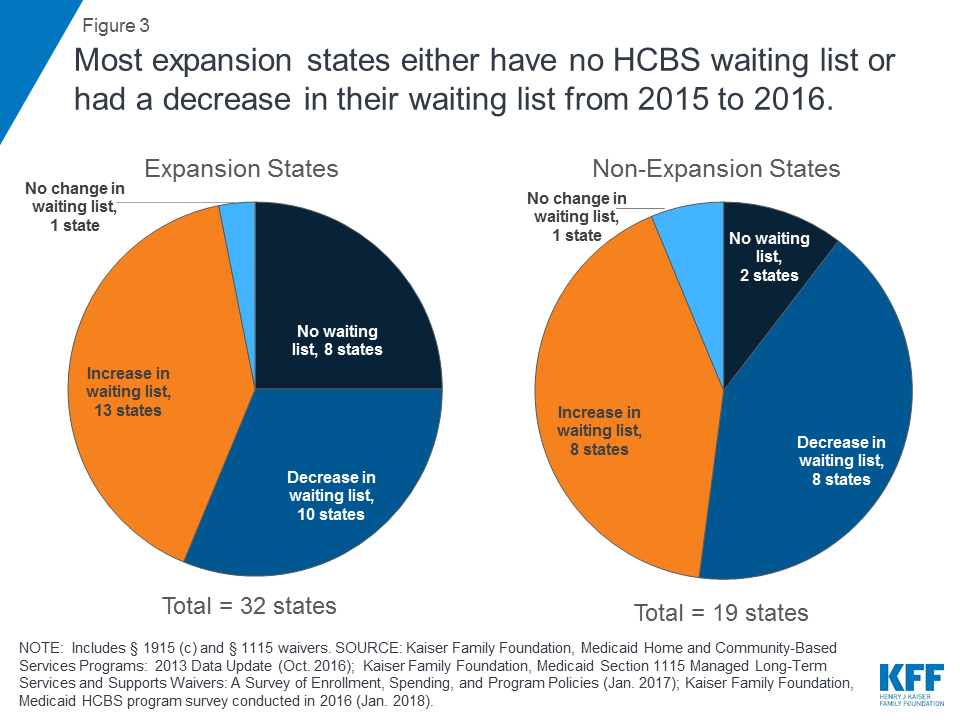
HCBS waiting lists: Nearly all home- and community-based services (HCBS) for long-term care are provided at state option, and all states offer at least one HCBS waiver for seniors and people with disabilities today. States choose how many people to serve under these waivers, and their ability to limit enrollment has resulted in waiting lists when the number of people seeking services exceeds the number of waiver slots. Such waiting lists predate the ACA Medicaid expansion. While some argue that state choices about whether to adopt the ACA’s Medicaid expansion come at the expense of providing Medicaid home and community-based services (HCBS), data do not support a relationship between states’ expansion status and community-based services waiver waiting lists. Among the 21 states that experienced an HCBS waiver waiting list increase from 2015 to 2016, the average increase was lower in expansion states compared to non-expansion states and most expansion states either had no HCBS waiver waiting list or had a decrease in their waiting list from 2015 to 2016 (Figure 3). In addition, the Medicaid expansion has enabled some people who were not previously eligible for coverage to access needed HCBS, such as home health or personal care state plan services.11
Figure 3: Most expansion states either have no HCBS waiting list or had a decrease in their waiting list from 2015 to 2016.
Access, affordability, and health outcomes
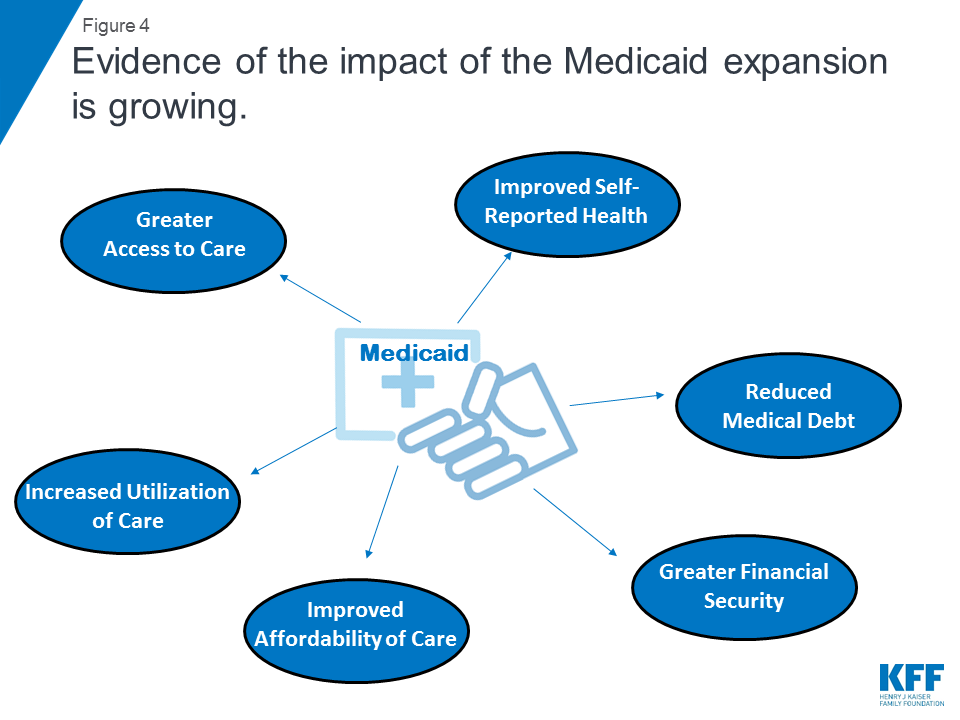
Research demonstrates that Medicaid expansion has positively affected access to care, utilization of services, the affordability of care, financial security, self-reported health, and certain measures of health outcomes among the low-income population (Figure 4). However, further research is needed to more fully determine effect of expansion on health outcomes given that measureable changes take time to occur.
Figure 4: Evidence of the impact of the Medicaid expansion is growing.
Access: A large body of research points to expansion-related improvements across a wide range of measures of access to care and utilization of medications and services. For example, studies find that Medicaid expansion was associated with increases in cancer diagnosis rates (especially early-stage diagnosis rates), improvements in access to medications and services for the treatment of behavioral and mental health conditions, increases in the number of adults receiving consistent care for a chronic condition, and improvements in surgical care.12,13,14,15,16 Findings on expansion’s effect on provider capacity are mixed, with some studies suggesting that provider shortages are a challenge in certain contexts and others suggesting that providers have expanded capacity and are meeting increased demands for care.17,18,19
Affordability: Research examining expansion enrollees or low-income populations more broadly suggests that Medicaid expansion results in significant reductions in out-of-pocket medical spending, unmet medical need due to cost, and trouble paying as well as worry about paying future medical bills.20,21,22 Medicaid expansion has significantly reduced the percentage of people with medical debt, reduced the average size of medical debt, reduced the average number of collections, improved credit scores, reduced the probability of having one or more medical bills go to collections in the past six months, and reduced the probability of a new bankruptcy filing, among other improvements in measures of financial security.23,24,25 For example, a study of Ohio’s Medicaid expansion found that the percentage of expansion enrollees with medical debt fell by nearly half since enrolling in Medicaid (55.8% had debt prior to enrollment, 30.8% had debt at the time of the study).26
Health outcomes: More broadly, the purpose of health insurance is to facilitate access to care and provide protection against high out-of-pocket costs. Direct evidence that Medicaid or any other type of health coverage improves not just access to care, but ultimately health outcomes, is limited. Research has documented that Medicaid coverage of pregnant women and children contributed to dramatic declines in infant and child mortality in the United States.27A growing number of studies show that Medicaid eligibility during childhood also has long-term positive impacts, including reduced teen mortality, reduced disability, improved long-run educational attainment, and lower rates of emergency department visits and hospitalization in later life.28 In addition, Medicaid eligibility during childhood appears to yield downstream benefits to the economy, in the form of reduced earned income tax credit payments and increased tax collections due to higher earnings in adulthood.29 With regard to expansion, studies show improved self-reported health following expansion, and multiple new studies demonstrate a positive association between expansion and health outcomes (including findings of improved outcomes for cardiac surgery patients and reduced infant mortality rates (especially among African-Americans)).30,31,32,33 Further research is needed to more fully determine expansion’s effects on outcomes given that it may take additional time for measureable changes in health outcomes occur over a longer time horizon.
Economic measures
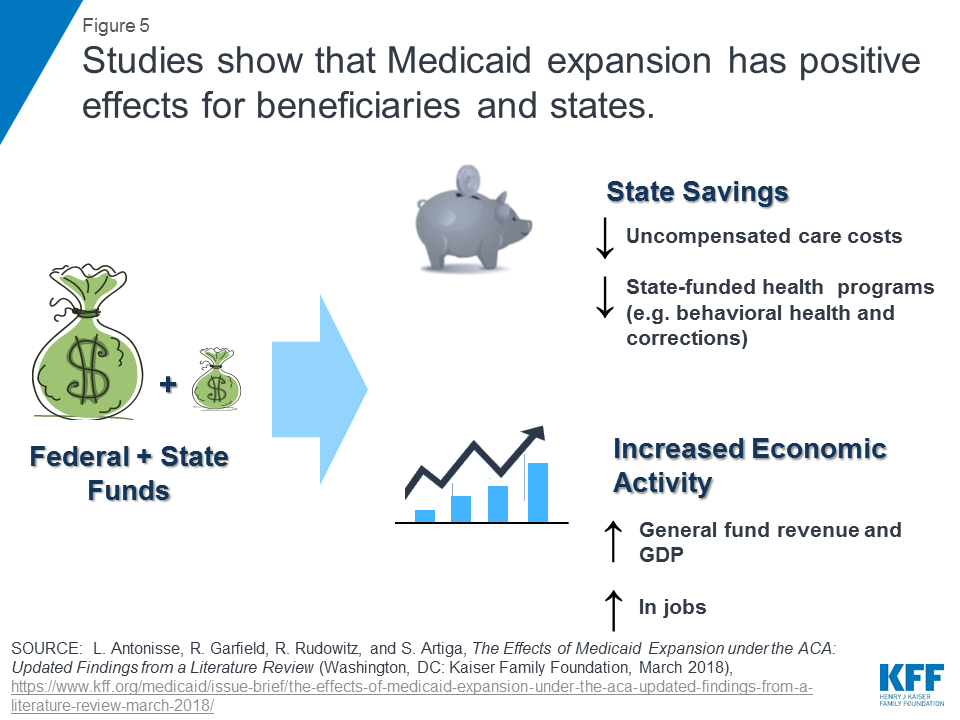
Analyses find positive effects of expansion on numerous economic outcomes, despite Medicaid enrollment growth initially exceeding projections in many states and Medicaid growing faster than other programs in state budgets (Figure 5). Studies show that Medicaid expansions result in reductions in uncompensated care costs for hospitals, clinics, and other providers.
Figure 5: Studies show that Medicaid expansion has positive effects for beneficiaries and states.
State budget effects: Data supports a net fiscal benefit for states from Medicaid expansion. National research found that there were no significant increases in spending from state funds as a result of Medicaid expansion and no significant reductions in state spending on education, transportation, or other state programs as a result of expansion during FYs 2010-2015.34 Multiple studies suggest that Medicaid expansion can result in state savings by offsetting state costs in other areas, including state costs related to behavioral health services, crime and the criminal justice system, and the Supplemental Security Income program.35,36,37,38,39 New state reports from Montana and Louisiana estimate positive economic effects tied to increased federal revenue from expansion.40,41 Some studies look at experience to date with the expansion when costs were 100% matched by the federal government (so savings estimates could change), but other studies project net fiscal benefit even when states begin to pay for a share of the costs. For example, the Montana study anticipates net fiscal benefit due to cost savings and increased revenue that hold even after the state share of expansion costs increases to 10 percent in 2020.
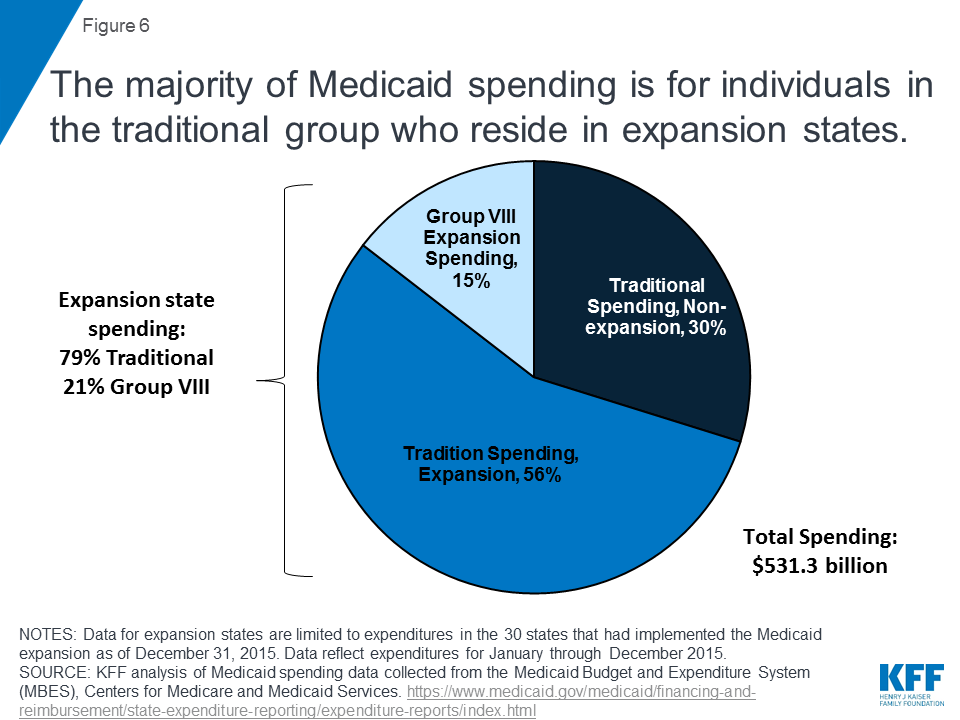
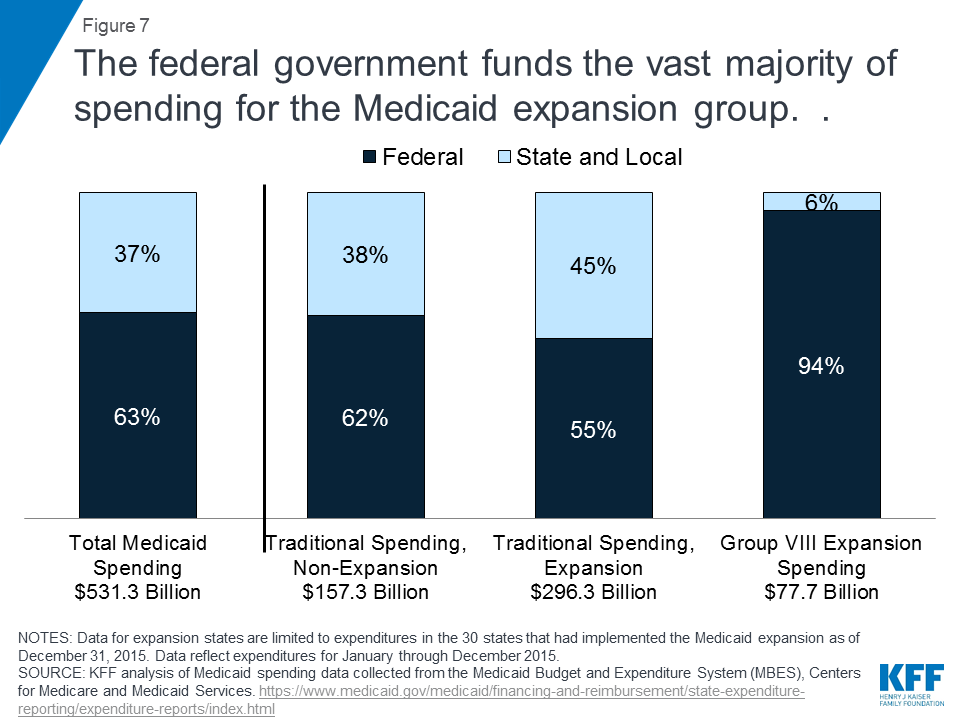
Medicaid expansion spending: In calendar year 2015, total Medicaid spending was $531 billion. Most spending (86%) was for traditional Medicaid populations and 15% ($78 billion) for the expansion group (Figure 6).42 Overall, the federal share of Medicaid spending in 2015was 63%, but the federal government pays the vast majority of spending for the expansion group.43 Under the ACA, the federal government paid 100% of the costs of those newly eligible from 2014-2016 and then the federal share gradually phases down from 95% in 2017 to 90% by 2020. Some states pay a small share of costs for individuals in the expansion group who are not newly eligible (Figure 7).
Figure 6: The majority of Medicaid spending is for individuals in the traditional group who reside in expansion states.Figure 7: The federal government funds the vast majority of spending for the Medicaid expansion group.
States report that that they are financing the state share of costs through general fund resources, offsetting savings in other budget areas, or dedicated provider taxes.44 In January, voters in Oregon voted on a ballot initiative to finance the state share of the Medicaid expansion through a provider tax; the vote ensured continuation of the Medicaid expansion.45 While other states use provider taxes, Oregon is the only state to put financing of the expansion to the voters.
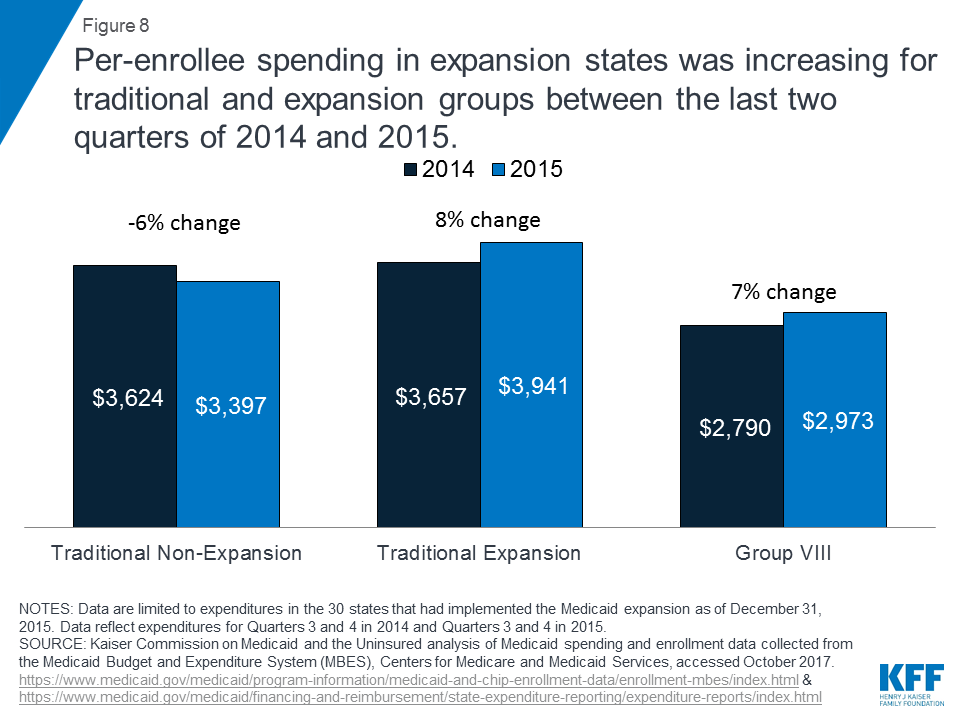
Medicaid spending per enrollee: Data also show that new coverage is not associated with diminished spending or coverage for traditional Medicaid populations. Rather, per enrollee spending increases for traditional populations in expansion states were larger than those for expansion populations or for traditional populations in non-expansion states. While per enrollee spending for expansion enrollees increased rapidly in Q1-2 2014 as the expansion ramped up, it had stabilized by Q3-4 2014. Between the last two quarters of 2015 and a similar period in 2015, per enrollee spending for Group VIII grew 7% compared to 8% for traditional enrollees in expansion states. (Figure 8).46
Figure 8: Per-enrollee spending in expansion states was increasing for traditional and expansion groups between the last two quarters of 2014 and 2015.
Providers: Studies also show that Medicaid expansions resulted in reductions in uncompensated care costs for hospitals, clinics, and other providers. The large body of literature supporting this finding includes studies pointing to declines in uninsured visits and uncompensated care (along with increases in Medicaid-covered visits) in hospitals broadly, hospital emergency departments, substance use disorder treatment facilities, community health centers, and physician offices.47,48,49 Medicaid expansion was also associated with improved hospital financial performance and significant reductions in the probability of hospital closure, especially in rural areas and areas with higher pre-ACA uninsured rates.50
Work
Studies find that Medicaid expansion can promote work and employment and has had positive or neutral effects on the labor market; however, new work requirements in Medicaid proposals could hamper coverage and increase complexity for many who are working or face barriers to work.
State-specific studies in Colorado, Kentucky, Michigan, Pennsylvania and most recently Montana and Louisiana have documented or predicted significant job growth resulting from expansion.51,52,53,54,55,56 No studies have found negative effects of expansion on employment or employee behavior. In an analysis of Medicaid expansion in Ohio, most expansion enrollees who were unemployed but looking for work reported that Medicaid enrollment made it easier to seek employment, and over half of expansion enrollees who were employed reported that Medicaid enrollment made it easier to continue working.57 Another study found an association between Medicaid expansion and increased volunteer work in expansion states.58
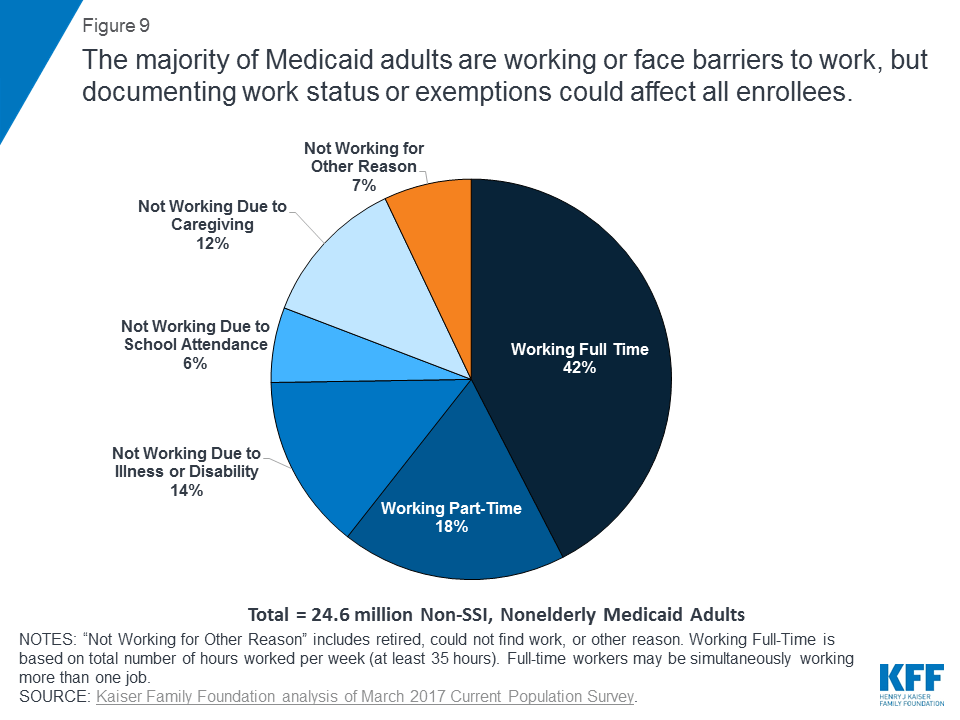
Six in ten Medicaid adults are already working. Among those who are not working, most report illness or disability, caregiving responsibilities, or going to school as reasons for not working.59 Many of these reasons would likely qualify as exemptions from work requirement policies. This would leave 7% of the population to whom work requirement policies could be directed, including those who report they are not working because they are looking for work and unable to find a job (Figure 9). However, work requirements have implications for all populations covered under these demonstrations. Those who are already working will need to successfully document and verify their compliance and those who qualify for an exemption also must successfully document and verify their exempt status, as often as monthly. States would incur costs to pay for the staff and systems to track work verification and exemptions.
Figure 9: The majority of Medicaid adults are working or face barriers to work, but documenting work status or exemptions could affect all enrollees.
While there is evidence to support an association of unemployment with poorer health status, researchers caution against using these findings to infer that the opposite relationship (employment causing improved health) exists.60,61 Studies on work and health have found that the quality and stability of work is a key factor in this relationship: low-quality, unstable, or poorly-paid jobs could have adverse effects on health.62,63,64 This may suggest that if there are not enough high-quality and stable employment opportunities available to the population subject to Medicaid work requirements, this population could face a difficult choice between accepting a low-wage, low-quality job option to meet the weekly/monthly hours requirement or losing access to health insurance coverage and care. As a 2006 literature review on the relationship between work, health, and well-being found, “Interventions which encourage and support claimants to come off benefits and successfully get them (back) into work are likely to improve their health and well-being; interventions which simply force claimants off benefits are more likely to harm their health and well-being.”65 In addition, studies point to negative impacts of work requirements in TANF and SNAP including modest increases in employment that faded over time; unstable employment, and disproportionate harm to people with disabilities and African Americans.66,67,68
Endnotes
Frederic Blavin, Michael Karpman, Genevieve Kenney, and Benjamin Sommers, “Medicaid Versus Marketplace Coverage for Near-Poor Adults: Effects on Out-Of-Pocket Spending and Coverage,” Health Affairs 37 no. 2 (January 2018): 122-129 https://www.healthaffairs.org/doi/abs/10.1377/hlthaff.2017.1166↩︎
Michael Dworsky, Carrie Farmer, and Mimi Shen, Veterans’ Health Insurance Coverage Under the Affordable Care Act and Implications of Repeal for the Department of Veterans Affairs, (RAND Corporation, 2017), https://www.rand.org/pubs/research_reports/RR1955.html↩︎
Thomas Buchmueller, Zachary Levinson, Helen Levy, and Barbara Wolfe, “Effect of the Affordable Care Act on Racial and Ethnic Disparities in Health Insurance Coverage,” American Journal of Public Health (May 2016), http://www.ncbi.nlm.nih.gov/pubmed/27196653↩︎
Aparna Soni, Kosali Simon, John Cawley, and Lindsay Sabik, “Effect of Medicaid Expansions of 2014 on Overall and Early-Stage Cancer Diagnoses,” American Journal of Public Health epub ahead of print (December 2017), http://ajph.aphapublications.org/doi/abs/10.2105/AJPH.2017.304166↩︎
United States Government Accountability Office (GAO), Medicaid Expansion: Behavioral Health Treatment Use in Selected States in 2014 (Washington, DC: GAO Report to Congressional Requesters, June 2017), https://www.gao.gov/assets/690/685415.pdf↩︎
Benjamin Sommers, Robert Blendon, E. John Orav, Arnold Epstein, “Changes in Utilization and Health Among Low-Income Adults After Medicaid Expansion or Expanded Private Insurance,” The Journal of the American Medical Association 176 no. 10 (October 2016): 1501-1509, http://jamanetwork.com/journals/jamainternalmedicine/article-abstract/2542420↩︎
Sarah Miller and Laura Wherry, “Health and Access to Care During the First 2 Years of the ACA Medicaid Expansions,” The New England Journal of Medicine 376 no. 10 (March 2017), http://www.nejm.org/doi/full/10.1056/NEJMsa1612890↩︎
Frederic Blavin, Michael Karpman, Genevieve Kenney, and Benjamin Sommers, “Medicaid Versus Marketplace Coverage for Near-Poor Adults: Effects on Out-Of-Pocket Spending and Coverage,” Health Affairs 37 no. 2 (January 2018): 122-129 https://www.healthaffairs.org/doi/abs/10.1377/hlthaff.2017.1166↩︎
Kenneth Brevoort, Daniel Grodzicki, and Martin Hackmann, Medicaid and Financial Health (National Bureau of Economic Research, Working Paper No. 24002, November 2017), http://www.nber.org/papers/w24002↩︎
Luojia Hu, Robert Kaestner, Bhashkar Mazumder, Sarah Miller, and Ashley Wong, The Effect of the Patient Protection and Affordable Care Act Medicaid Expansions on Financial Well-Being (Working Paper No. 22170, National Bureau of Economic Research, April 2016), http://www.nber.org/papers/w22170?utm_campaign=ntw&utm_medium=email&utm_source=ntw↩︎
Benjamin Sommers, Bethany Maylone, Robert Blendon, E. John Orav, and Arnold Epstein, “Three-Year Impacts of the Affordable Care Act: Improved Medical Care and Health Among Low-Income Adults,” Health Affairs epub ahead of print (May 2017), http://content.healthaffairs.org/content/early/2017/05/15/hlthaff.2017.0293↩︎
Deborah Bachrach, Patricia Boozang, Avi Herring, and Dori Glanz Reyneri, States Expanding Medicaid See Significant Budget Savings and Revenue Gains, (Manatt Health Solutions, prepared by the Robert Wood Johnson Foundation’s State Health Reform Assistance Network, March 2016), http://www.rwjf.org/content/dam/farm/reports/issue_briefs/2016/rwjf419097↩︎
Kaiser Family Foundation analysis of Medicaid spending and enrollment data collected from the Medicaid Budget and Expenditure System (MBES), Centers for Medicare and Medicaid Services, accessed October 2017. ↩︎
Robin Rudowitz and Allison Valentine, Medicaid Enrollment & Spending Growth: FY 2017 and 2018, (Washington, DC: Kaiser Family Foundation, October 2017), https://modern.kff.org/medicaid/issue-brief/medicaid-enrollment-spending-growth-fy-2017-2018/
At least six states (including AR, AZ, CO, IN, LA, NH) reported funding all or part of the state share of Medicaid expansion costs with provider taxes as of Summer 2017. Data on financing of the state share of expansion costs were collected as part of the FY 2017 and 2018 budget survey of Medicaid officials conducted by KFF and HMA but were not published in the associated spending and enrollment growth report. ↩︎
Kaiser Family Foundation analysis of Medicaid spending and enrollment data collected from the Medicaid Budget and Expenditure System (MBES), Centers for Medicare and Medicaid Services, accessed October 2017. ↩︎
Richard Lindrooth, Marcelo Perraillon, Rose Hardy, and Gregory Tung, “Understanding the Relationship Between Medicaid Expansions and Hospital Closures,” Health Affairs epub ahead of print (January 2018), https://www.healthaffairs.org/doi/abs/10.1377/hlthaff.2017.0976↩︎
The Colorado Health Foundation, Assessing the Economic and Budgetary Impact of Medicaid Expansion in Colorado, (The Colorado Health Foundation, March 2016). ↩︎
Deloitte Development LLC, Commonwealth of Kentucky Medicaid Expansion Report (February 2015). ↩︎
John Ayanian, Gabriel Ehrlich, Donald Grimes, and Helen Levy, “Economic Effects of Medicaid Expansion in Michigan,” The New England Journal of Medicine epub ahead of print (January 2017), http://www.nejm.org/doi/full/10.1056/NEJMp1613981↩︎
Heeju Sohn and Stefan Timmermans, “Social Effects of Health Care Reform: Medicaid Expansion under the Affordable Care Act and Changes in Volunteering,” Socius: Socialogical Research for a Dynamic World 3 (March 2017): 1-12, http://journals.sagepub.com/doi/full/10.1177/2378023117700903↩︎
Gordon Waddell and A. Kim Burton, Is Work Good for your Health and Well-Being?, (2006). ↩︎
Pekka Virtanen et al., “Temporary Employment and Health: A Review,” International Journal of Epidemiology 34 (2005): 610-622. ↩︎
Pekka Virtanen, Urban Janlert, and Anne Hammarstrom, “Exposure to temporary employment and job insecurity: A Longitudinal Study of the Health Effects,” Occupational and Environmental Medicine, 68, no. 8 (August 2011): 570-574. ↩︎
Gordon Waddell and A. Kim Burton, Is Work Good for your Health and Well-Being?, (2006). ↩︎
Gordon Waddell and A. Kim Burton, Is Work Good for your Health and Well-Being?, (2006). ↩︎