What Do the Midterm Election Results Mean for Health Care? 

Event Date:

Join KFF for a special post-election discussion and live podcast taping on these topics and more at noon ET on November 5. KFF experts and journalists will provide analysis and insights about what the election results could mean for health policy and take audience questions. Part of the discussion will focus on public opinion survey data on how voters weighed health care as they went to the polls nationally and in the four states with abortion-related ballot initiatives. 

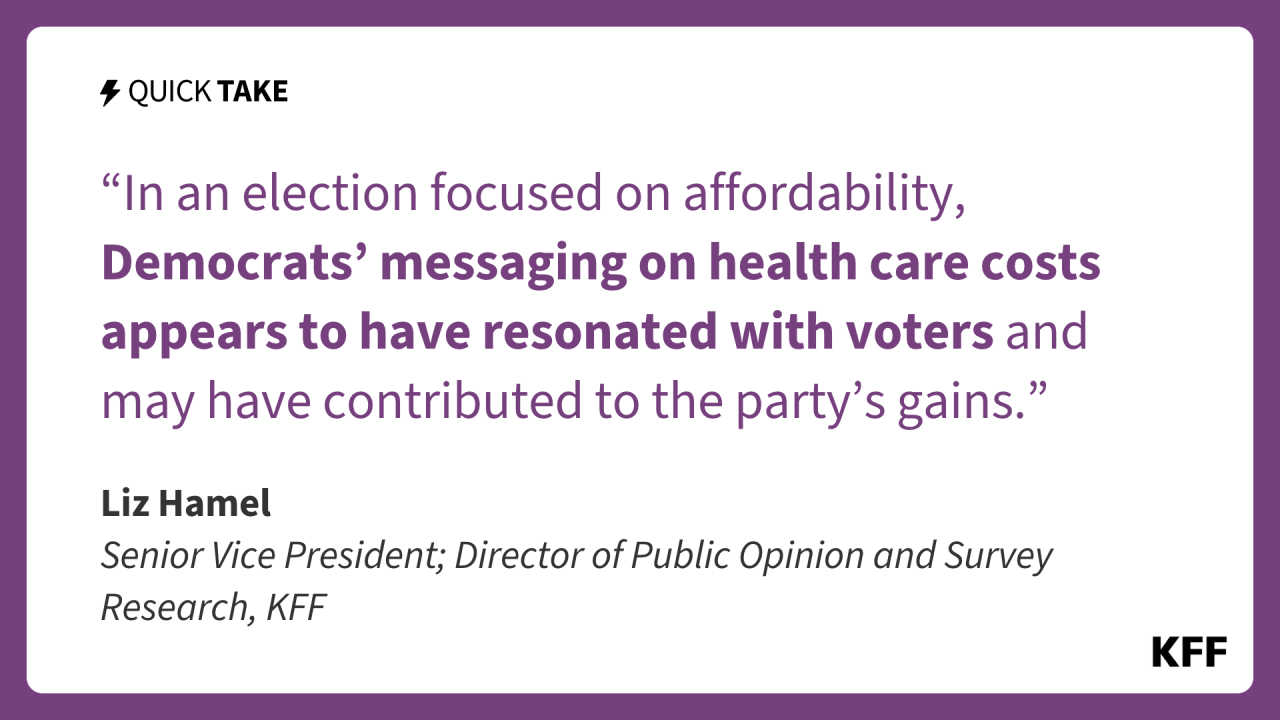
An image of text is an excerpt from Liz Hamel's quick take which reads, ""In an election focused on affordability, Democrats' messaging on health care costs appears to have resonated with voters and may have contributed to the party's gains."

Midterm Voters Give Democrats a Big Advantage to Handle Health Care

KFF’s analysis of the 2026 Voter Poll by SSRS shows midterm voters gave Democrats a 19-percentage-point advantage on which party is better able to handle health care. Voters also gave Democrats a narrow edge on handling the economy (43% vs. 37%), a reversal from Trump’s 10-point advantage over Harris in 2024.
Midterm Election Updates

These fact sheets offer background on election-related health care issues. See more from KFF’s Health in the Midterms series.

ACA Marketplaces

More people than ever got coverage through the Affordable Care Act Marketplaces in 2025, but the expiration of enhanced premium tax credits has driven up what people pay and contributed to declining enrollment in 2026.

Medicaid

Major federal changes to Medicaid eligibility and financing from the 2025 reconciliation law are coming, including new work requirements that will affect millions of Medicaid enrollees.

Vaccine Policy

Federal vaccine policy has shifted toward fewer recommended routine childhood vaccinations, more emphasis on individual decision-making, and greater skepticism about the safety and efficacy of some vaccines.

Immigrant Health Policy  

Immigration restrictions and enforcement are central to the Trump administration’s domestic agenda and a focus of debate in the 2026 midterm elections. These policies have ripple effects on health care.

Subscribe to KFF Emails

Choose which emails are best for you.
Sign up here