Racial Equity and Health Policy

the Essentials
  • How Experiencing Racial Discrimination Impacts Health

    This brief highlights research examining mechanisms underlying health outcomes linked to self-reported experiences of racial discrimination, including biological changes, chronic stress, mental health, substance use, pregnancy-related outcomes, and sleep.
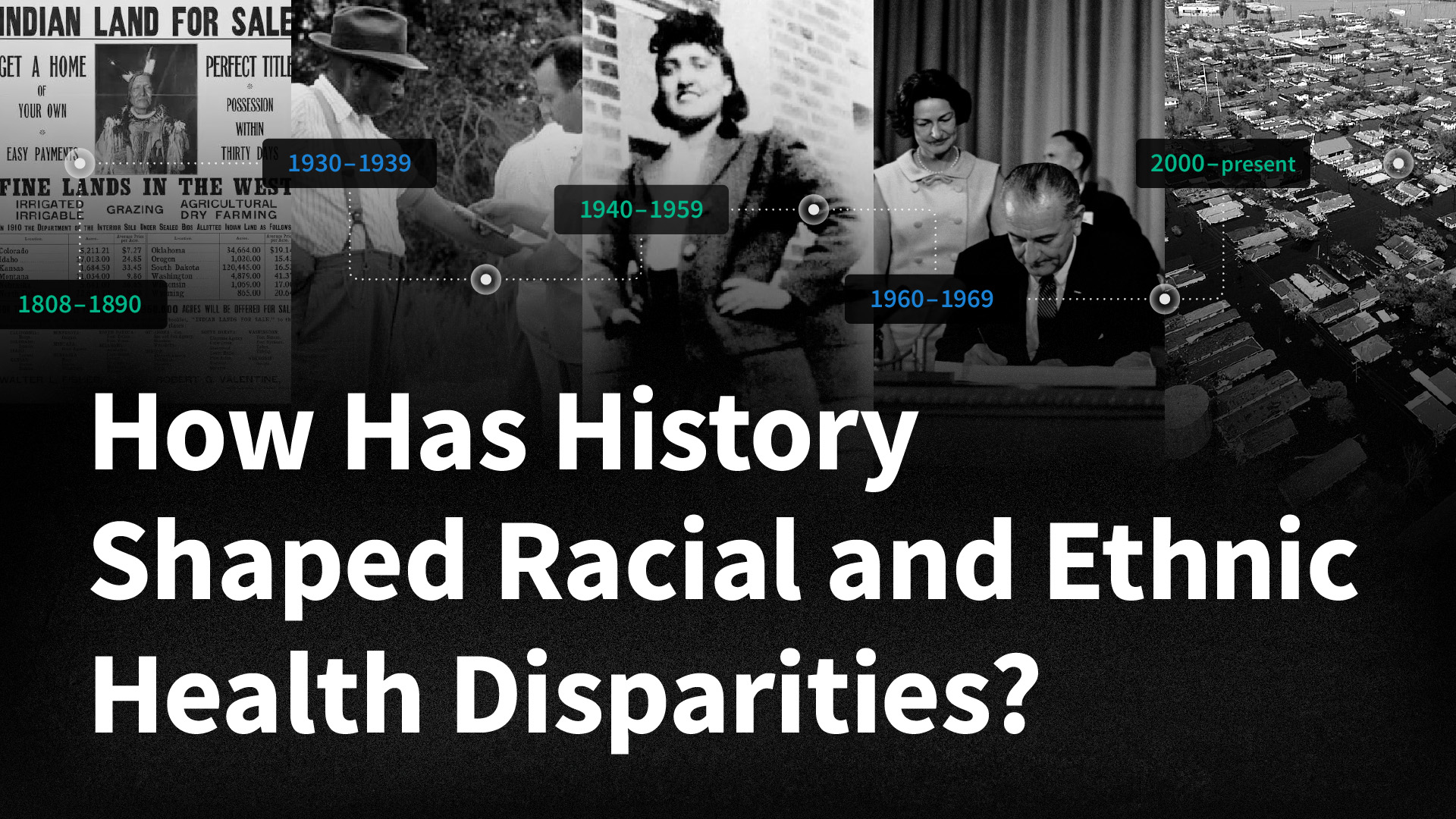
  • Timeline: How History Has Shaped Racial and Ethnic Health Disparities

    This timeline offers a historical view of significant U.S. federal policies and events spanning the early 1800s to today that have influenced present-day health disparities.
  • Health Policy 101: Chapter on Race, Inequality and Health

    Addressing persistent racial and ethnic disparities in health and health care is important for improving the nation’s health and economic prosperity. KFF explains such disparities and the factors that drive them, examines the actions to address them, and outlines future considerations.
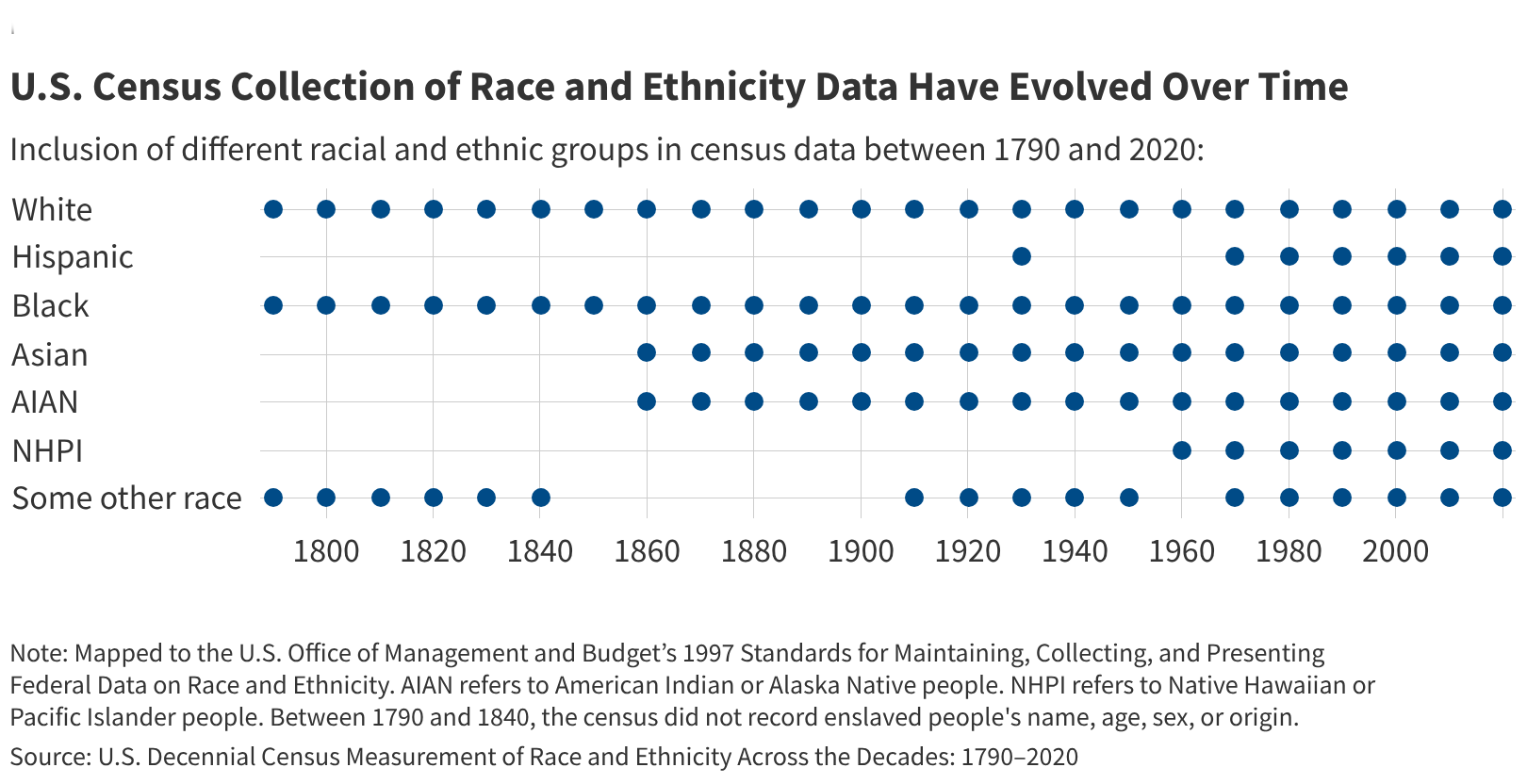
  • Key Data on Health and Health Care by Race and Ethnicity

    Racial and ethnic disparities in health and health care remain a persistent challenge in the United States. An updated KFF resource examines how people of color fare compared to White people across 64 measures of health, health care, and social determinants of health.

Survey of Immigrants

KFF-New York Times Survey: Immigrants Report Rising Fear, Negative Economic and Health Impacts, and Changing Political Views During the First Year of President Trump’s Second Term

The 2025 Survey of Immigrants, a partnership between KFF and The New York Times, takes an in-depth look at the experiences of immigrants during the first year of President Trump’s second term, including their worries related to increased immigration enforcement, their health and economic wellbeing, and the political views and preferences of immigrant voters. The survey paints a portrait of families under strain — where fear of detention and economic instability are negatively impacting immigrants’ health and reshaping immigrant families’ daily lives and views of U.S. political parties.

Read the News Release | Explore The New York Times’ Reporting
Stay informed.

Stay informed.

Filter

481-490 of 611 results

  • Rural and Urban Health Center Patients and Financing

    Issue Brief

    This brief reports on rural and urban health center patients and financing in 2025 using national data from the Uniform Data System (UDS) and examines potential impacts of recent federal policy changes.

  • National Survey of Physicians Part I: Doctors on Disparities in Medical Care

    Other Post

    Selected findings from the Kaiser Family Foundation's forthcoming National Survey of Physicians reveal that most physicians are aware of racial disparities in medical treatment for specific conditions, but they don't believe it is a widespread problem. In sharp contrast, African American physicians disagree with their fellow physicians with nearly eight in ten (77%) believing race and ethnicity impact how people are treated at least somewhat often. Physicians see insurance status as a key determinate of…

  • Racial/Ethnic Disparities in Access to Care Among Children: How Does Medicaid do in Closing the Gaps?

    Other Post

    While Medicaid and the Children's Health Insurance Program (CHIP) have become increasingly important sources of health coverage for low-income children in all racial and ethnic groups, the program plays an especially large role for children of color, who are more likely than white children to be low-income. In 2007, Medicaid and CHIP covered nearly one in five white children, but roughly two in five African American and Hispanic children. As policymakers engaged in health reform…

  • 2011 Survey of DC Residents

    Poll Finding

    The Washington Post and the Kaiser Family Foundation partnered to conduct a survey examining the opinions of Washington, D.C., residents on a wide range of issues including health care. This survey is the 22nd in a series of surveys dating back to 1995 that have been conducted as part of The Washington Post/Kaiser Family Foundation Survey Project. Toplines (.pdf) Data Note: Black Residents' Views on HIV/AIDS in the District of Columbia Read The Washington Post…

  • Summary of HHS’s Final Rule on Nondiscrimination in Health Programs and Activities

    Issue Brief

    On May 18, 2016, the Department of Health and Human Services (HHS) published a final rule to implement Section 1557 of the Affordable Care Act (ACA), which prohibits discrimination in health coverage and care based on race, color, national origin, age or disability, and, for the first time sex. This Issue Brief provides a technical summary of Section 1557 and the final rule and highlights new protections and provisions included in the law and rule.…

  • A Review of Multiple Analyses Documents Persistent Racial Disparities in COVID-19

    News Release

    A KFF review of a wide range of studies finds a consistent pattern that people of color are bearing a disproportionate burden of COVID-19 cases, deaths, and hospitalizations, and that they may face increased barriers to access testing. These disparities, brought to the fore in the pandemic, mirror and compound longstanding underlying disparities in health and health care in the U.S. that stem from structural and systemic barriers across sectors, including racism and discrimination. Other…

  • Health Policy Resources for Covering the 2020 Elections

    News Release

    As the 2020 Election Day approaches, many candidates continue to focus on health care issues, including on the public health and economic response to COVID-19, the future of the Affordable Care Act, health care costs and abortion. To help reporters understand and cover these issues, KFF offers independent, non-partisan policy analysis, polling and other research and has experts who can provide context, explain trade-offs and provide key data points on health care issues that may arise…

  • Loss of the Affordable Care Act Would Widen Racial Disparities in Health Coverage

    Policy Watch

    In November, the Supreme Court is scheduled to hear arguments on a legal challenge that seeks to overturn the Affordable Care Act (ACA). This analysis shows that new coverage options under the ACA have contributed to large gains in coverage, particularly among people of color, helping to narrow longstanding racial disparities in health coverage.

  • A Court Ruling Striking Down the ACA Would Eliminate the Medicaid Expansion and Cause Millions of Low-Income People to Become Uninsured

    News Release

    Millions of low-income Americans currently covered by Medicaid likely would become uninsured if the Supreme Court were to strike down the Affordable Care Act in California v. Texas, a legal challenge the high court is scheduled to hear in early November, KFF experts explain in a new Policy Watch post. Overturning the ACA would eliminate the expansion of Medicaid, which largely has been financed by the federal government, and eliminate eligibility for Medicaid for low-income…