Racial Equity and Health Policy

the Essentials
  • How Experiencing Racial Discrimination Impacts Health

    This brief highlights research examining mechanisms underlying health outcomes linked to self-reported experiences of racial discrimination, including biological changes, chronic stress, mental health, substance use, pregnancy-related outcomes, and sleep.
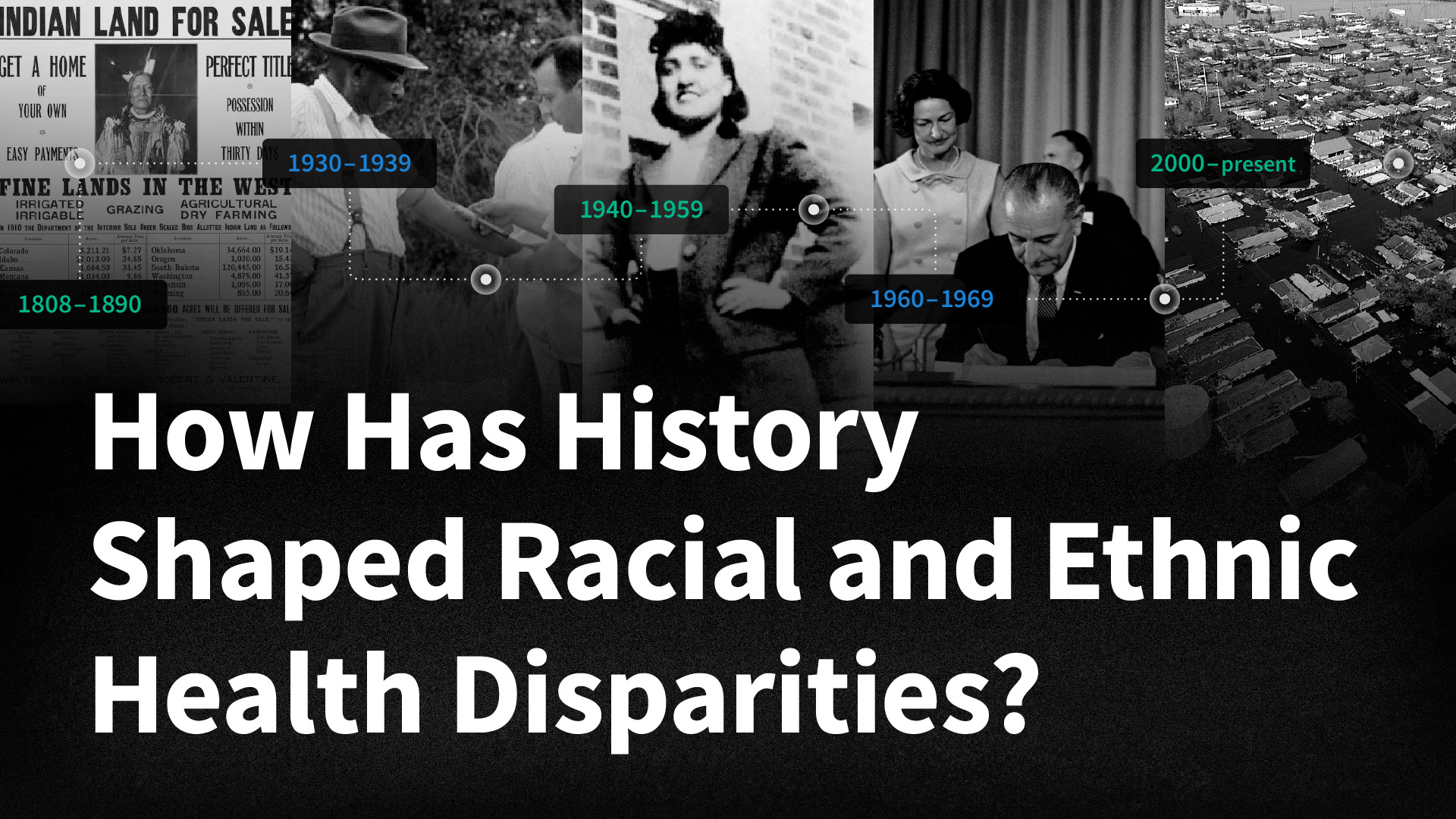
  • Timeline: How History Has Shaped Racial and Ethnic Health Disparities

    This timeline offers a historical view of significant U.S. federal policies and events spanning the early 1800s to today that have influenced present-day health disparities.
  • Health Policy 101: Chapter on Race, Inequality and Health

    Addressing persistent racial and ethnic disparities in health and health care is important for improving the nation’s health and economic prosperity. KFF explains such disparities and the factors that drive them, examines the actions to address them, and outlines future considerations.
  • Key Data on Health and Health Care by Race and Ethnicity

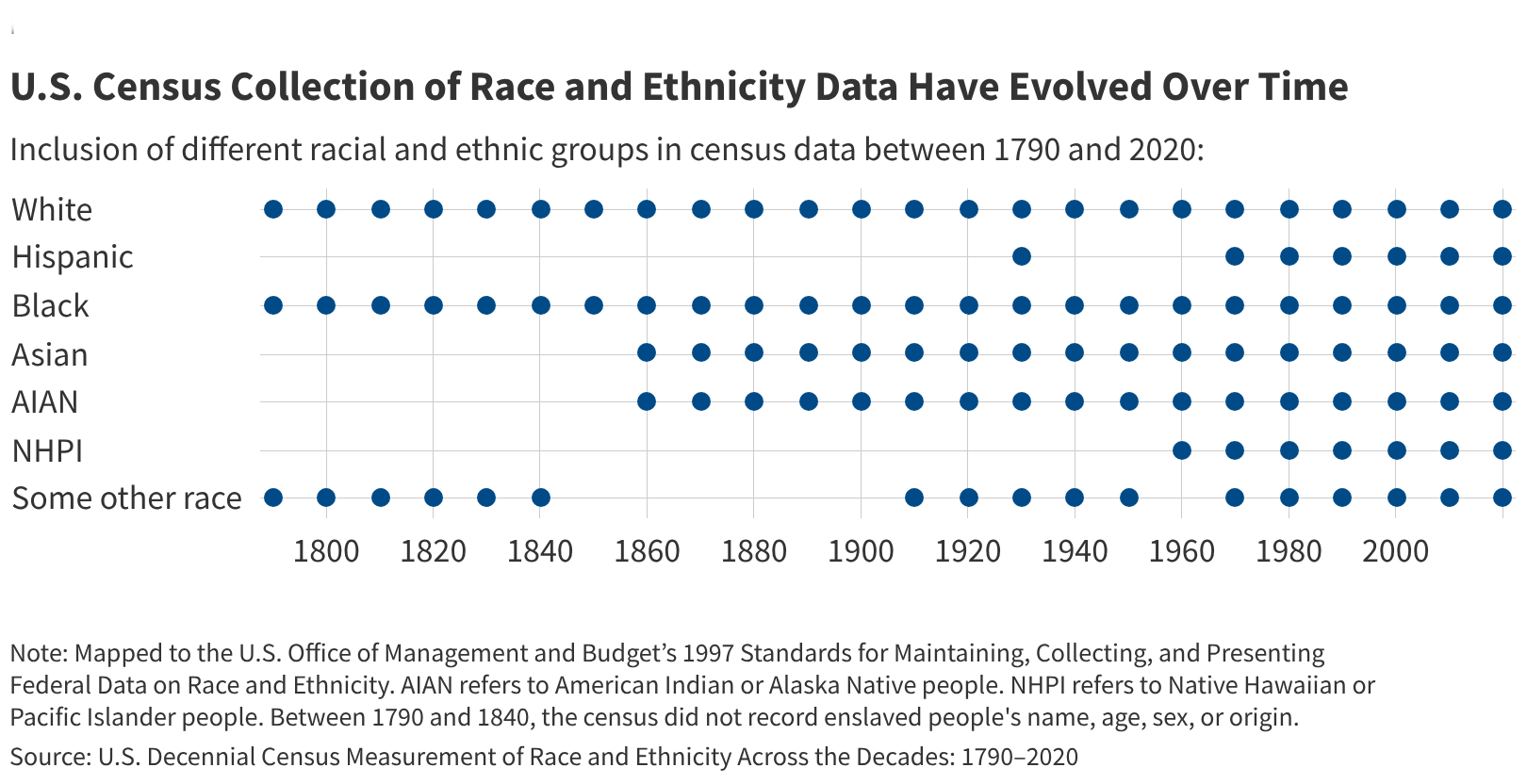
    Racial and ethnic disparities in health and health care remain a persistent challenge in the United States. An updated KFF resource examines how people of color fare compared to White people across 64 measures of health, health care, and social determinants of health.

Survey of Immigrants

KFF-New York Times Survey: Immigrants Report Rising Fear, Negative Economic and Health Impacts, and Changing Political Views During the First Year of President Trump’s Second Term

The 2025 Survey of Immigrants, a partnership between KFF and The New York Times, takes an in-depth look at the experiences of immigrants during the first year of President Trump’s second term, including their worries related to increased immigration enforcement, their health and economic wellbeing, and the political views and preferences of immigrant voters. The survey paints a portrait of families under strain — where fear of detention and economic instability are negatively impacting immigrants’ health and reshaping immigrant families’ daily lives and views of U.S. political parties.

Read the News Release | Explore The New York Times’ Reporting
Stay informed.

Stay informed.

Filter

141-150 of 606 results

  • State Health Coverage for Immigrants and Implications for Health Coverage and Care

    Issue Brief

    Noncitizen immigrants, particularly those who are undocumented, face significant barriers to accessing health coverage and care and are significantly more likely than citizens to be uninsured. This brief provides an overview of state health coverage programs for immigrants, including among states that have taken up options in Medicaid and the Children’s Health Insurance Program (CHIP) to expand coverage for lawfully present immigrants and/or established fully state-funded programs to fill gaps in coverage for immigrants.

  • Recent Research on How Experiencing Racial Discrimination Impacts Health

    Issue Brief

    This brief provides an overview of the relationship between racial discrimination and health and highlights research examining mechanisms underlying health outcomes linked to experiences of racial discrimination, including biological changes, chronic stress, mental health, substance use, pregnancy-related outcomes, and sleep.

  • Health Care in Puerto Rico and the U.S. Virgin Islands: A Six-Month Check-Up After the Storms (Report)

    Issue Brief

    Puerto Rico and the U.S. Virgin Islands suffered significant damage to their infrastructure and health care systems from Hurricanes Irma and Maria in September 2017. Drawing on interviews with residents and key stakeholders as well as public reports, this brief provides an overview of the status of the recovery efforts six months after the storms, with a focus on the health care systems.

  • Report and Video Highlight Challenges Facing Hurricane Maria’s Survivors in Puerto Rico

    News Release

    A new Kaiser Family Foundation report and video find residents across Puerto Rico facing a wide range of daily and long-term challenges as they struggle to rebuild their lives after Hurricane Maria swept across the island Sept. 20 as a powerful category 4 storm. Based on focus-group and individual interviews with 40 Puerto Ricans from 10 different regions of the island conducted in San Juan and Ponce in November 2017, the Voices from Puerto Rico:…

  • The Role of Race and Ethnicity in Health Services

    Other Post

    This is a special issue of Health Services Research on the role of race and ethnicity in health services research. Based on a December 1992 conference sponsored by the Association of American Medical Colleges, the issue contains eight papers and as editorial preface by Mark Smith and Pancho Chang. Note: This publication is no longer in circulation. However, a few copies may still exist in the Foundation's internal library that could be xeroxed. Please email…

  • The Biden Administration’s Final Rule on Section 1557 Non-Discrimination Regulations Under the ACA

    Issue Brief

    This brief overviews the Biden Administration’s 2024 final rule implementing Section 1557 of the ACA, which is home to the law’s major nondiscrimination provisions. It provides a brief background on 1557 rulemaking and identifies key differences between this rule and the 2020 rule from the Trump Administration. It highlights two areas of growing interest impacted by the rule – nondiscrimination protections related to pregnancy and nondiscrimination protections for transgender people. Table 2 summarizes the major…

  • KFF/ESPN Survey of 1988 NFL Players Finds the Vast Majority Say Pro Football Left Them With a Range of Serious Health Problems, but Most Would Play Again and Encourage Their Kids To Play

    News Release

    KFF and ESPN today jointly released a first-of-its-kind, in-depth polling and reporting project that sheds new light on the health issues and other challenges facing NFL players after they leave the game. The KFF/ESPN Survey of 1988 NFL Players draws on a novel survey of 546 respondents who were among the 1,532 players from the 1988 season. Now, at an average age of 62, large majorities of these former NFL players say pro football was bad…