Public Opinion

Health Information and Trust

Trust and Confidence in the CDC Remain at Low Point After Changes to Recommended Childhood Vaccines

Weeks after the Trump administration reduced the number of childhood vaccine recommended for routine use, public trust in the CDC is at its lowest since the COVID-19 pandemic, and less than half are confident in federal agencies’ ability to make such recommendations. Among those who have heard about the revised recommendations, more say they expect the changes to have a negative impact than a positive one on children’s health. Read the News Release.

Interactive Dashboard: KFF Polling on Health Information and Trust

Drawing on KFF’s poll findings, this interactive dashboard tracks the public’s trusted sources for health information, attitudes toward vaccines, and use of news, social media, and AI for health-related information. It provides visual representations of the key trends in the public’s trust in health information and tracks exposure to and belief in false and unproven health claims.

Health Tracking Poll

Health Care Costs Tops the Public’s Economic Worries as the Runup to the Midterms Begins

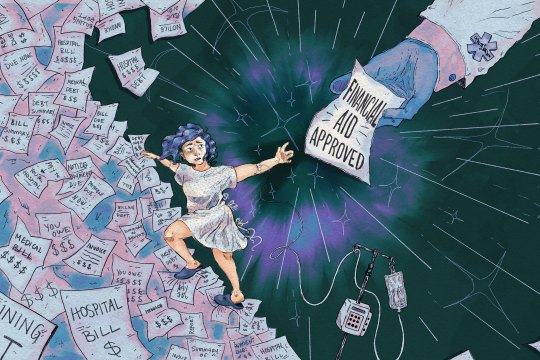
Heading into this midterm election year, the cost of health care tops the public’s economic anxieties and more than 4 in 10 voters say the issue will have a major impact on their vote. Voters, including independents, currently trust Democrats more than Republicans to address the cost of health care and most other health care issues, though neither party has an advantage on addressing the overall cost of living. Read the News Release.

Recent Polls

2025 KFF Marketplace Enrollees Survey

Poll Finding

This survey explores how ACA Marketplace enrollees expect to respond if their premium payments doubled as expected in 2026 when enhanced premium tax credits are set to expire. About a third would very likely look for a lower-cost plan, even if it had higher deductibles, and about a quarter would very likely end up uninsured. The survey also examines how increased health care costs may affect their finances and the potential impact in next year’s elections.

Knowledge and Views of Medication Abortion

This KFF Health Tracking Poll finds that many, including women of reproductive age, remain unfamiliar with key facts about mifepristone. Fewer than half of all adults say they believe abortion pills are safe now, compared to over half of all adults two years ago. This poll explores awareness and perception of the recent FDA review of the medication, and support for policies aimed at restricting it.

KFF-Washington Post Survey Explores Parents’ Trust In, and Confusion About, Childhood Vaccines

The KFF-Washington Post partnership Survey of Parents explores experiences and views pertaining to childhood vaccines. The Survey of Parents also sheds light on school vaccination requirements, views on federal health agencies and policy changes, and the views of parents with children diagnosed with autism spectrum disorder. This poll comes as the Trump administration revamps federal policies, and HHS Secretary Robert F. Kennedy Jr. continues to question the childhood vaccine schedule.

KFF/New York Times Survey of Immigrants

KFF-New York Times Survey: Immigrants Report Rising Fear, Negative Economic and Health Impacts, and Changing Political Views During the First Year of President Trump’s Second Term

The 2025 Survey of Immigrants, a partnership between KFF and The New York Times, takes an in-depth look at the experiences of immigrants during the first year of President Trump’s second term, including their worries related to increased immigration enforcement, their health and economic wellbeing, and the political views and preferences of immigrant voters. The survey paints a portrait of families under strain — where fear of detention and economic instability are negatively impacting immigrants’ health and reshaping immigrant families’ daily lives and views of U.S. political parties.

Read the News Release | Explore The New York Times’ Reporting

the essentials

Health Tracking Poll

Our signature survey project provides up-to-date data on the public’s health care views, knowledge, and experiences.

Survey Question Finder

Search all KFF polls since 1992 by keyword and date to find full question wording and results.

Health Information and Trust Tracking Poll

The Health Information and Trust Tracking Poll is part of KFF’s Health Information and Trust Initiative, which tracks health misinformation and analyzes its impact on the public.

Polls in Health Policy

This chapter of our digital “textbook” explores why surveys are essential for understanding health policy issues. 

Subscribe to KFF Emails

Choose which emails are best for you.
Sign up here

Filter

1,201 - 1,210 of 1,820 Results

  • Key Findings: Kaiser Health Tracking Poll — April 2009

    Poll Finding

    This document contains the key findings from the April Health Tracking Poll. The survey was designed and analyzed by public opinion researchers at the Kaiser Family Foundation and was conducted April 2 through April 8, 2009, among a nationally representative random sample of 1,203 adults ages 18 and older.

  • The Public and the Health Care Delivery System

    Poll Finding

    This survey by NPR and researchers at the Kaiser Family Foundation and the Harvard School of Public Health highlights the public’s attitudes and experiences with the American health care delivery system.

  • Chartpack: Kaiser Health Tracking Poll — April 2009

    Poll Finding

    This document contains the chartpack from the April Health Tracking Poll. The survey was designed and analyzed by public opinion researchers at the Kaiser Family Foundation and was conducted April 2 through April 8, 2009, among a nationally representative random sample of 1,203 adults ages 18 and older.

  • Toplines: Kaiser Health Tracking Poll — April 2009

    Poll Finding

    This document contains the toplines from the April Health Tracking Poll. The survey was designed and analyzed by public opinion researchers at the Kaiser Family Foundation and was conducted April 2 through April 8, 2009, among a nationally representative random sample of 1,203 adults ages 18 and older.

  • 2009 Survey of Americans on HIV/AIDS — Toplines

    Poll Finding

    This report contains the toplines from the 2009 Survey of Americans on HIV/AIDS. The survey was designed and analyzed by public opinion researchers at the Kaiser Family Foundation and was conducted January 26 through March 8, 2009, among a nationally representative random sample of 2,554 adults ages 18 and older.

  • 2009 Survey of Americans on HIV/AIDS: Summary of Findings on the Domestic Epidemic

    Poll Finding

    This report contains the key findings and charts from the 2009 Survey of Americans on HIV/AIDS. The survey was designed and analyzed by public opinion researchers at the Kaiser Family Foundation and was conducted January 26 through March 8, 2009, among a nationally representative random sample of 2,554 adults ages 18 and older.

  • Pulling It Together: America Has Gone Quiet on HIV/AIDS

    Other Post

    Kaiser has had a focus on HIV/AIDS since we remade the Foundation in the early nineties. It cuts across all of our program activities, from policy analysis, to our large scale media campaigns in the U.S. and around the world, to our web initiatives, to our public opinion research program.

  • The Future of Health Care Journalism

    Event Date:
    Event

    A new report examining the state of health care journalism and a survey of the members of the Association of Health Care Journalists (AHCJ) were released at a Washington, D.C., discussion about the future of health care journalism.

  • Survey of AHCJ Members, March 2009

    Poll Finding

    A survey of members of the Association of Health Care Journalists about the future of health care journalism reports the tremendous turmoil and huge cutbacks that are roiling the news business have created increasingly challenging conditions with staff cutbacks, less time for reporting, fewer resources for training, and more pressure to produce short, quick-hit stories.