Medicare

NEW AND NOTEWORTHY

Decoding Medicare Advantage Coding Intensity

Federal payments to Medicare Advantage plans, and adjustments for health status, have come under increased scrutiny. This brief answers key questions about coding intensity, recent steps taken by CMS, the effects on beneficiaries, and other proposals to improve payment accuracy.

Data Visualization

The Facts About Medicare Spending

This interactive provides the facts on Medicare spending. Medicare, which serves 67 million people and accounts for 12 percent of the federal budget and 21 percent of national health spending, is often the focus of discussions about health expenditures, health care affordability and the sustainability of federal health programs. Explore data on enrollment growth, Medicare spending trends overall and per person, growth in Medicare spending relative to private insurance, spending on benefits and Medicare Advantage, Part A trust fund solvency challenges, and growth in out-of-pocket spending by beneficiaries.

Read More

Stay informed.

Stay informed.

Filter

1,591 - 1,600 of 1,610 Results

  • Seniors and Income Inequality: How Things Get Worse With Age

    From Drew Altman

    In this column for The Wall Street Journal’s Think Tank, Drew Altman discusses why seniors need to be included in the national discussion on income inequality, especially as proposals to change Medicare and Social Security are considered.

  • A Status Report on Prescription Drug Policies and Proposals at the Start of the Biden Administration

    Issue Brief

    This brief provides a status update on prescription drug final rules advanced by the Trump Administration in its final months related to Medicare, importation, and 340B pricing for insulin and epinephrine, and an overview of key drug pricing proposals related to Medicare and prescription drug prices generally that were voted on but not enacted in the previous Congress that may return to the forefront of health policy discussions in the coming years.

  • The COVID-19 Pandemic Has Hit People of Color the Hardest, Including Among People With Medicare

    News Release

    The COVID-19 pandemic has underscored the stark racial and ethnic health inequities in the U.S., including among Medicare beneficiaries. Among this group, people of color, including older adults and others on Medicare, account for disproportionate shares of COVID-19 cases, hospitalizations and deaths, according to data presented in a new KFF report about racial and ethnic disparities in health among people with Medicare. Older Black, Hispanic, and American Indian/Alaska Native adults were nearly twice as likely…

  • Is the End of the Long-Term Care Crisis Within Sight? New COVID-19 Cases and Deaths in Long-Term Care Facilities Are Dropping

    Policy Watch

    This analysis compares trends in new COVID-19 cases and deaths among nursing facility residents with trends in all other new COVID-19 cases and deaths excluding nursing facility residents through February 7, 2021. This analysis shows a marked divergence in new cases and deaths per week between nursing facility residents and the rest of the US population since December 2020. This drop in new deaths and cases in nursing facility residents coincides with the start of…

  • States Have Made Progress in Vaccinating Older Adults Against COVID-19 in Recent Weeks, But No State Has Vaccinated At Least Half of its Older Population

    News Release

    Twenty-two states and the District of Columbia have vaccinated at least one-third of their residents who are 65 and older against COVID-19, an updated KFF analysis finds, but no state has crossed the threshold of vaccinating 50 percent or more of its older population. The share of adults 65 and older who have received at least one dose of a vaccine ranges from 49 percent in North Carolina to 27 percent in Pennsylvania. (The relatively low…

  • Medicare Advantage 2022 Spotlight: First Look

    Issue Brief

    For 2022, the average Medicare beneficiary has access to 39 Medicare Advantage plans, the largest number of options available in the last decade, and can choose from plans offered by nine firms. Among the majority of Medicare Advantage plans that cover prescription drugs, 59 percent will charge no premium in addition to the monthly Medicare Part B premium. As in previous years, the vast majority of Medicare Advantage plans will offer supplemental fitness, dental, vision,…

  • Medicare Part D: A First Look at Medicare Prescription Drug Plans in 2022

    Issue Brief

    This issue brief provides an overview of the Medicare Part D prescription drug benefit market for 2022, with a primary focus on stand-alone drug plans. It includes national and state-level data on plan availability, premiums, benefit design, cost sharing, information about premium-free plans for low-income beneficiaries, and information about the national Part D drug plans available in 2022.

  • FDA’s Approval of Biogen’s New Alzheimer’s Drug Has Huge Cost Implications for Medicare and Beneficiaries

    Issue Brief

    The question of what would happen when a new, expensive prescription drug comes to market for a disease like Alzheimer’s that afflicts millions of people has loomed large in discussions over drug prices in the U.S. This brief analyzes the cost implications for Medicare and beneficiaries associated with Biogen's new FDA-approved Alzheimer's drug, which will cost $56,000 per year.

  • Medicare Advantage in 2021: Star Ratings and Bonuses

    Issue Brief

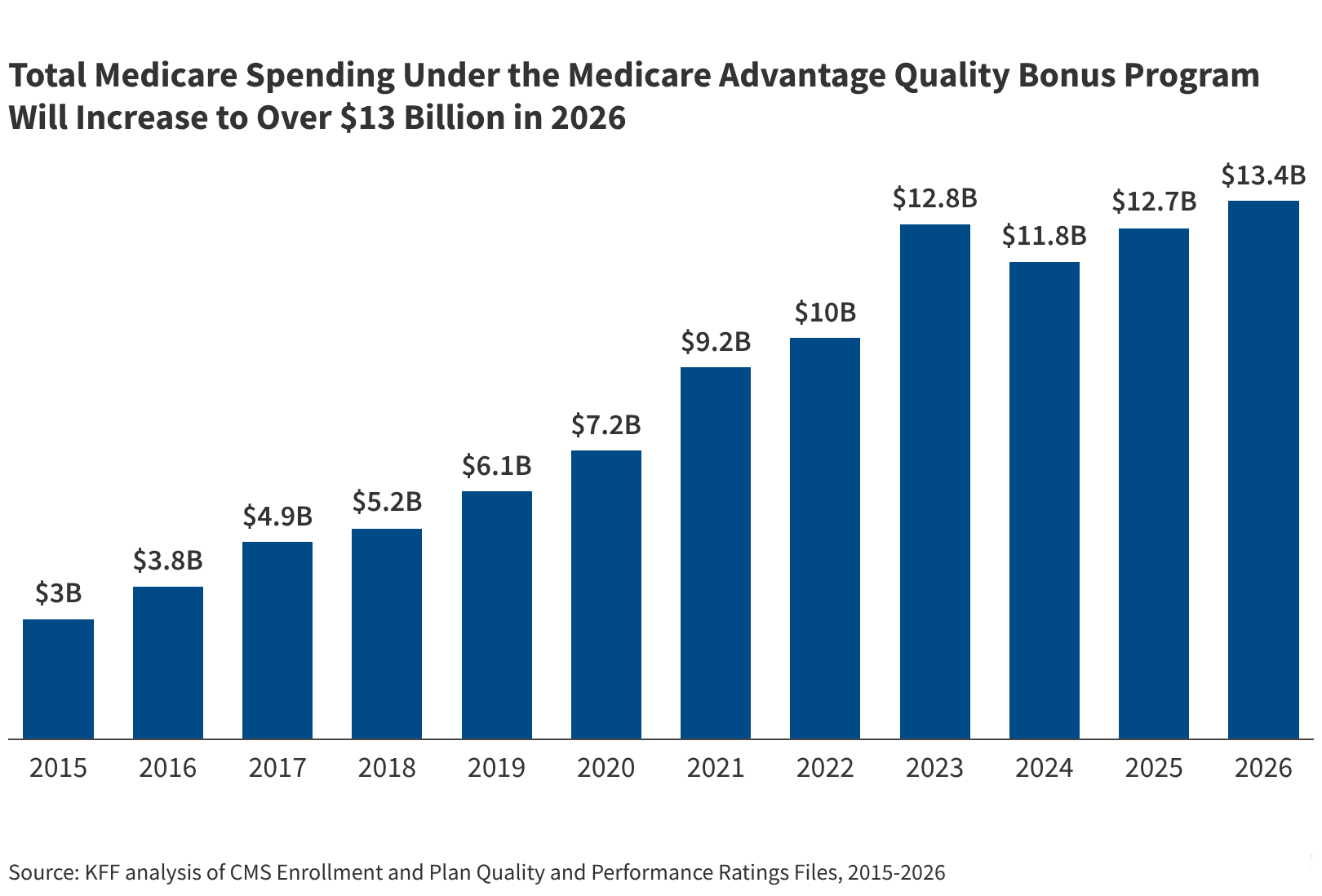
    In 2021, 81 percent of all Medicare Advantage enrollees are in plans that receive a bonus payment from Medicare based on star quality ratings (or because they are new), substantially higher than the share in 2015 (55 percent). Annual bonus payments from the federal government to Medicare Advantage insurers have increased correspondingly, quadrupling from $3 billion in 2015 to $11.6 billion in 2021.