KFF Health Tracking Poll: Public Views on Fraud in Government Health Programs
Findings
Key Takeaways
- As the 2026 midterm elections approach, health care costs remain the public’s top economic worry, and rank among the top health issues voters most want to hear candidates discuss this election cycle. Majorities of Democratic and independent voters say it is extremely important that candidates talk about health costs (60% and 55%). However, recent Trump administration actions on fraud may be registering with Republicans, as the largest share of Republican voters (55%) say it is extremely important for candidates to discuss fraud in government health programs.
- A majority of voters believe there is at least some fraud in government health programs and most say that addressing fraud would lead to reductions in federal spending overall, though fewer say it would lead to reductions in their own health care costs. Still, larger shares of voters perceive fraud in areas other than health: about half of voters say there is “a lot” of fraud in the federal tax system (52%), federal military and defense contracts (46%), and foreign aid programs (46%), compared to about four in ten who say there is “a lot” of fraud in government health programs such as Medicaid (40%) and Medicare (36%). About three in ten voters say there is “a lot” of fraud in Affordable Care Act (ACA) marketplaces (29%), the lowest share of all the areas asked about in this survey. Across party lines, larger shares of voters say fraud in Medicare and Medicaid is mostly perpetrated by health care providers and institutions rather than individual patients.
- The Trump administration has recently deferred federal Medicaid payments in a few states with claims that these actions will save money and root out fraud. But voters are skeptical: fewer than half say these deferrals are “very” or “somewhat likely” to save taxpayers money (43%) or that it is likely to lower health care costs for people like them (31%). However, most voters – including majorities across partisans – say the deferrals are likely to cause eligible low-income people to lose access to care they rely on. About two-thirds of voters (65%) believe this approach is mostly motivated by politics, though most Republican voters say it is mostly motivated by a genuine effort to reduce fraud and protect Medicaid (69%).
- Although a majority of voters say there is at least some fraud in Medicaid, most (71%) say ensuring Medicaid beneficiaries can access the care they need should be a higher priority than preventing fraud, even if it means some fraud may occur. Republican voters are closely split on this trade-off, with about half (52%) saying access to care should be a priority and about half (47%) saying preventing fraud should be a priority.
Health Care Costs Remain Voters’ Top Worry Heading Into the Midterms
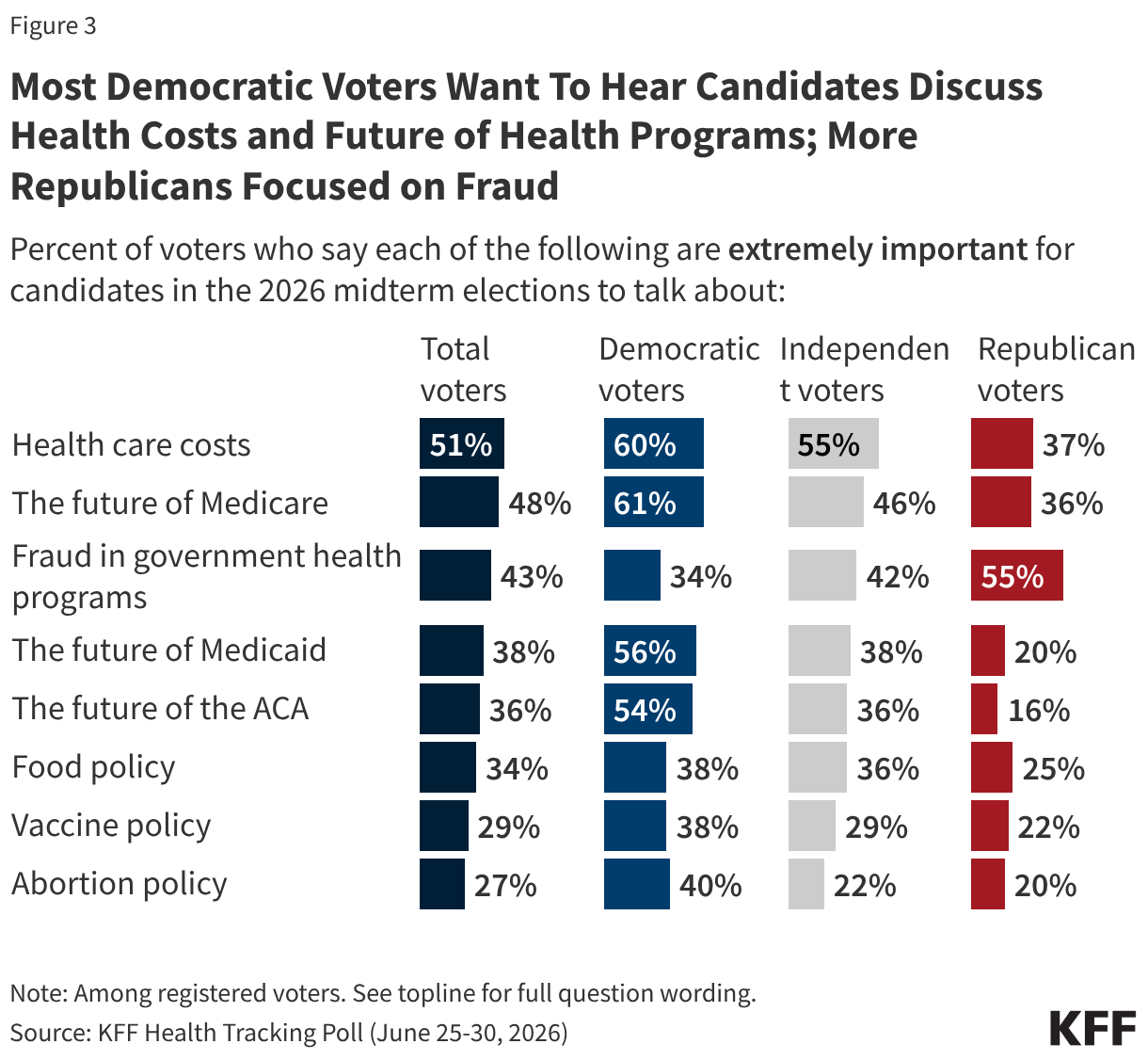
With the midterm elections approaching, health care costs continue to top the list of the public’s economic anxieties. About six in ten adults say they are “very” (27%) or “somewhat worried” (35%) about affording health care costs for themselves and their families, including the cost of health insurance and out-of-pocket costs for things like office visits and prescription drugs.
This is followed by about one in five adults who are “very worried” about affording other household expenses, such as gasoline and transportation costs (22%), their rent or mortgage (21%), food and groceries (20%), or monthly utilities (19%).
This year, health costs have consistently topped the public’s list of economic worries, even as worries about gas prices have fluctuated. In April, worry about gasoline and transportation costs had risen to nearly match worry about health care costs, as the conflict with Iran drove gas prices sharply higher: 29% of adults said they were “very worried” about affording gas and transportation costs, compared to 30% who said the same about affording health care costs. Fewer adults now say they are very worried about affording gas (22% vs. 29% in April), as gas prices have fallen slightly amid U.S.-Iran negotiations.
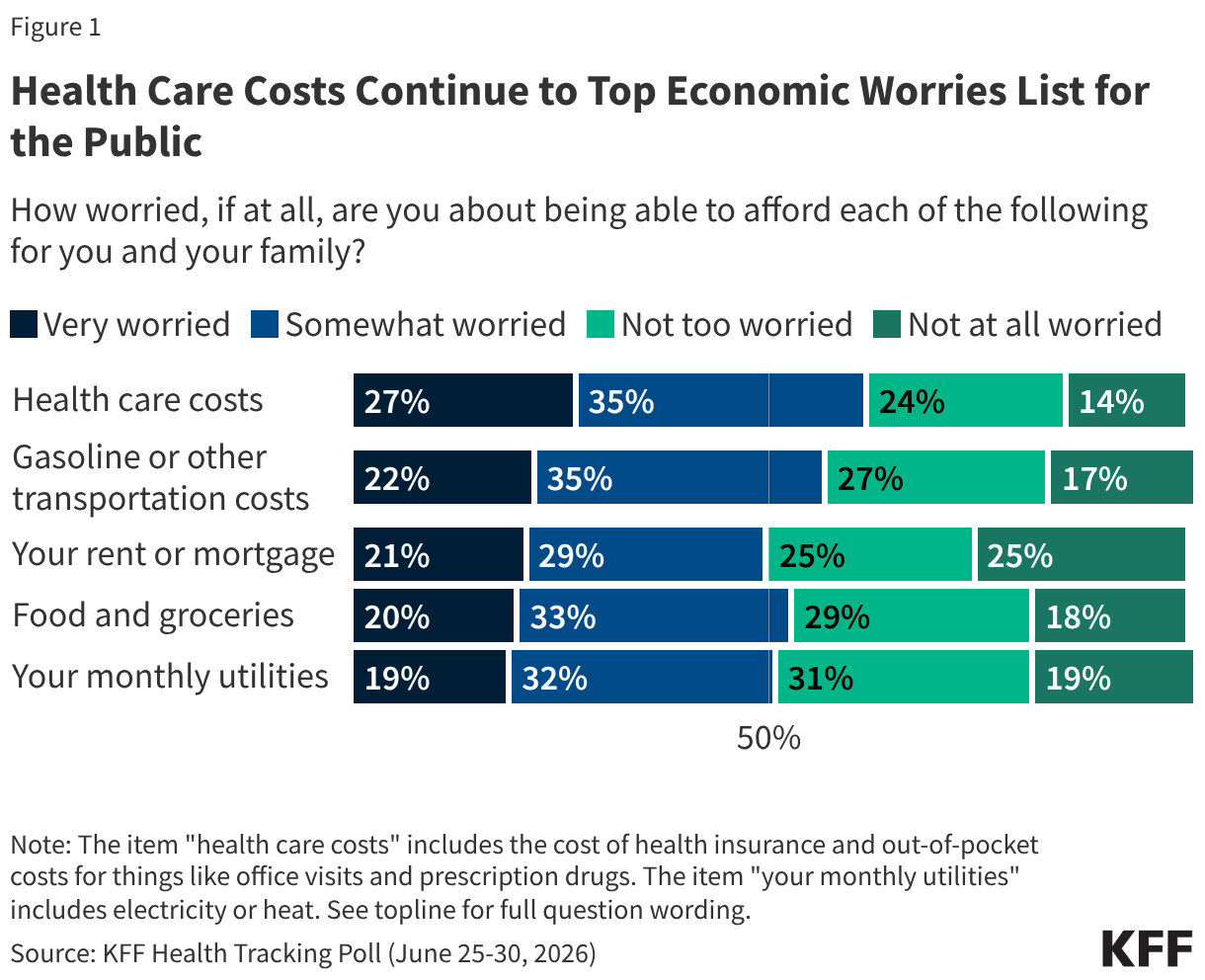
Beyond ranking as the top economic worry for the public, costs rank among the most important health care issues voters want to hear candidates talk about. Half (51%) of voters say it is “extremely important” for candidates to talk about health care costs, and a similar share says the same about the future of Medicare (48%). About four in ten say it is extremely important for candidates to discuss fraud in government health programs (43%) and the future of Medicaid (38%), and about a third say the same about the Affordable Care Act (36%) and food policy, including regulation of chemical food additives and pesticides (34%). About three in ten voters say it is extremely important that candidates talk about vaccine policy, including which vaccines are recommended for children (29%), or abortion policy (27%).
Across each of these areas, a majority say they are at least “very important” and few – one in seven or fewer – say any are “not important” for candidates to talk about, highlighting the salience of health care issues in the upcoming elections.
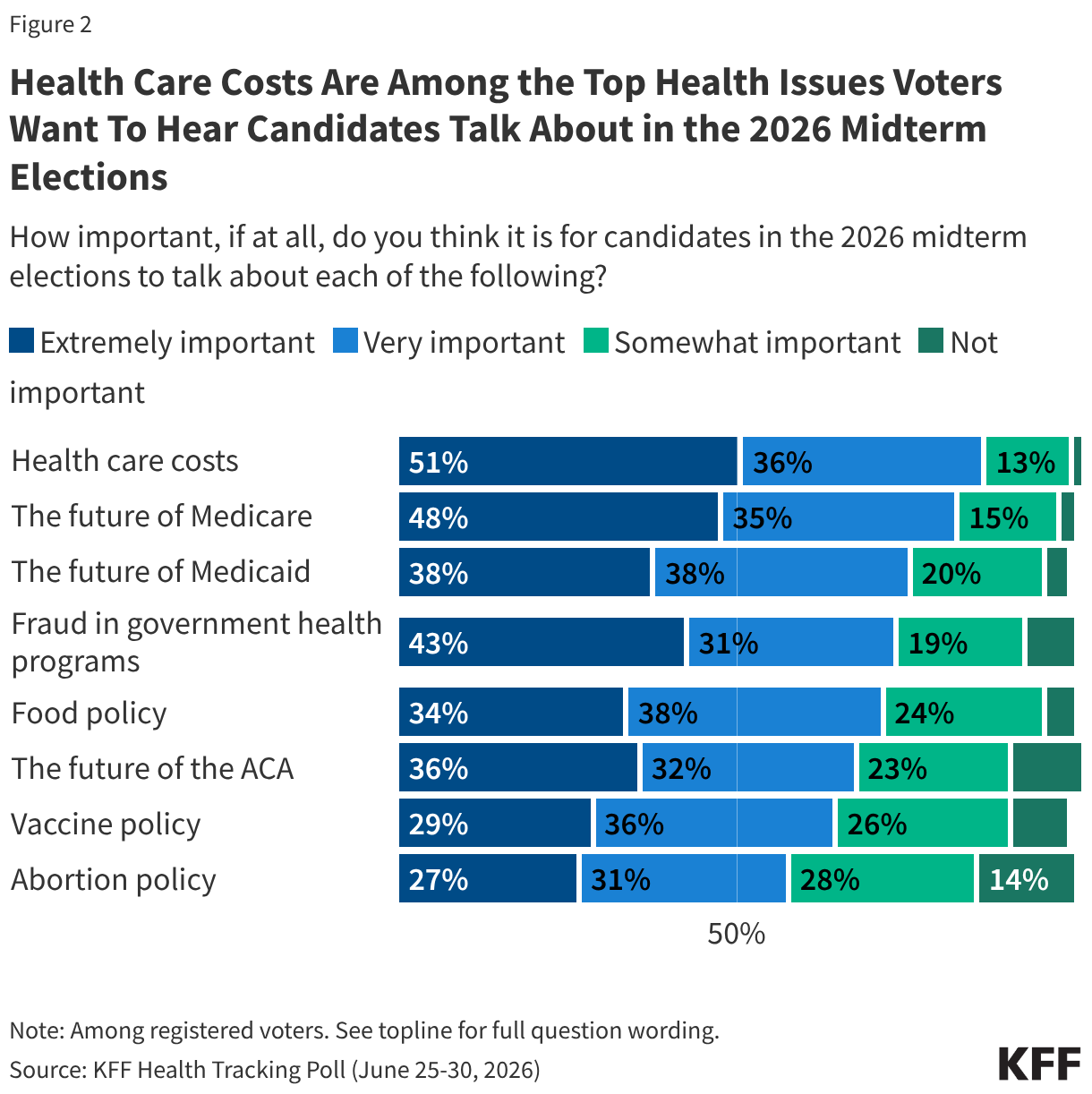
Partisans differ in what they see as the top health care priorities for the upcoming midterms. Large shares of Democratic voters say they want to hear from candidates about health costs and the future of health programs, with majorities saying the future of Medicare (61%), health care costs (60%), the future of Medicaid (56%), and the future of the Affordable Care Act (ACA) (54%) are extremely important issues for candidates to discuss. Fraud is the top health care issue for Republican voters, with a majority (55%) saying fraud in government health programs is extremely important for candidates to discuss, more than any other health issue and 18 percentage points higher than health care costs (37%), their second-ranked issue. Health care costs top the list for independent voters (55%), followed by the future of Medicare (46%), and fraud in health programs (42%).
Voters’ Perceptions and Attitudes Toward Fraud in Health Programs
Republican voters’ interest in hearing about fraud comes as the Trump administration has made fraud a key talking point in discussions of lower health care costs. The administration has announced several new actions aimed at combatting fraud in government health care programs, including a March 2026 Executive Order establishing the Task Force to Eliminate Fraud chaired by Vice President J.D. Vance, nationwide and state-specific actions against suspected fraud in Medicare and Medicaid, and a Department of Justice (DOJ) National Health Care Fraud Takedown that resulted in hundreds of charges across 45 states. Most recently, the administration froze federal funding for New York’s state agency responsible for prosecuting fraud in its Medicaid program.
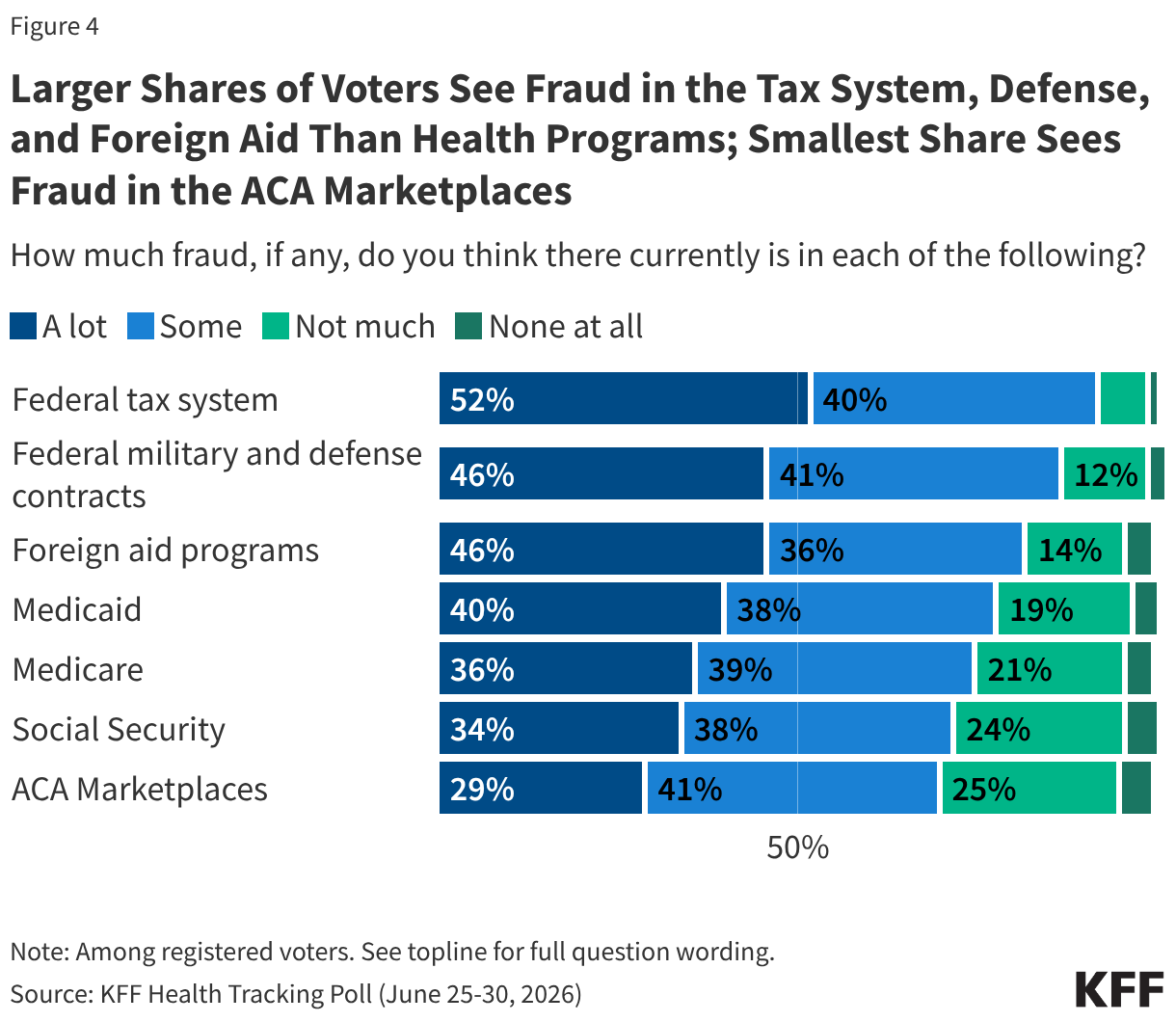
Most voters think there is at least some fraud in government health programs, though there are other areas of government where even larger shares see fraud as widespread. About half of voters say there is “a lot” of fraud in the federal tax system (52%), foreign aid programs (46%), and federal military and defense contracts (46%). Between three and four in ten voters say there is “a lot” of fraud in government health programs such as Medicaid (40%), Medicare (36%), and Affordable Care Act Marketplaces (29%), and about one-third of voters say there is “a lot” of fraud in Social Security (34%).
In each of these areas, roughly four in ten voters say there is “some fraud,” while 4% or fewer say there is no fraud at all.
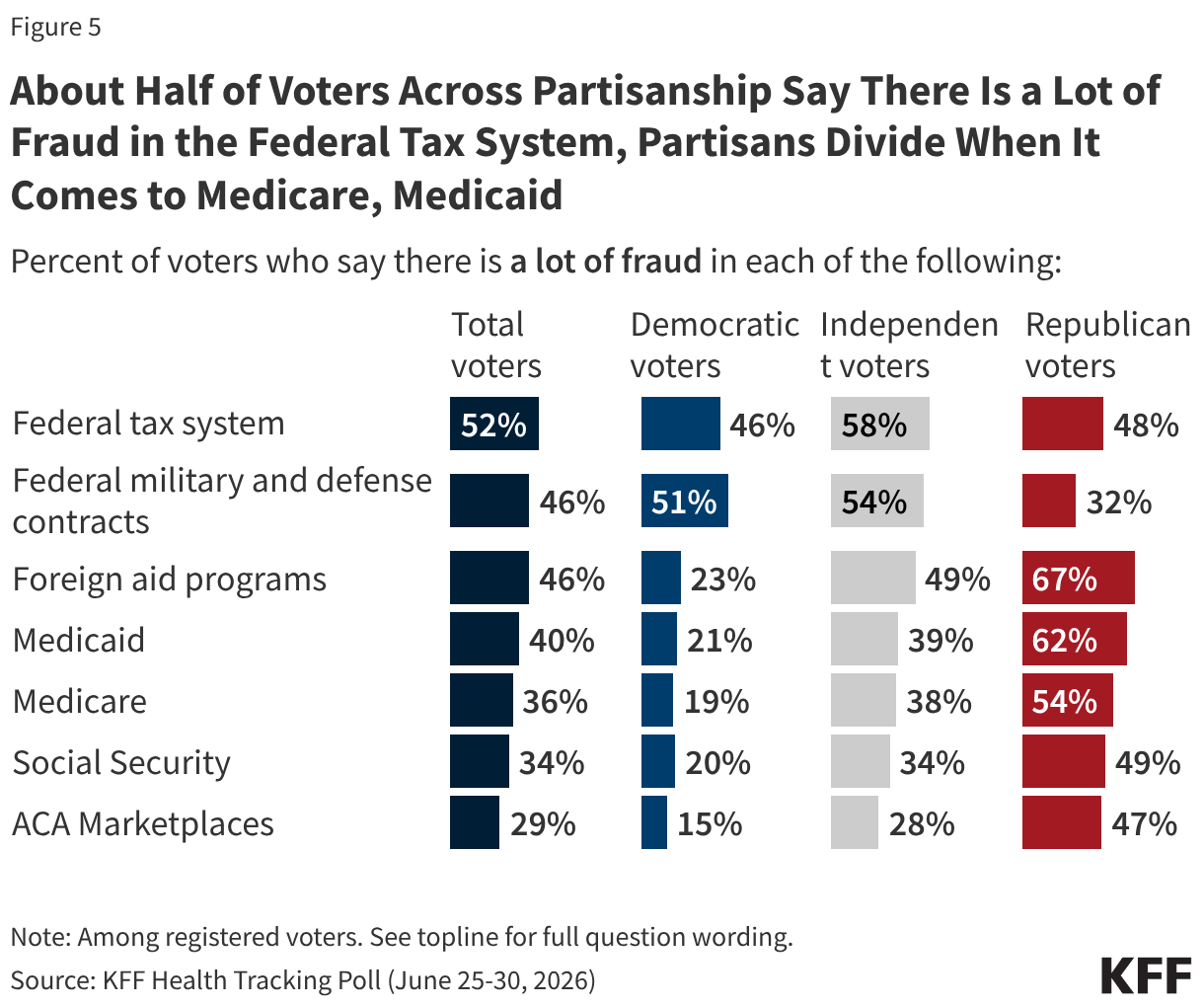
Voters’ perceptions of fraud in various areas of government are divided along partisan lines. Republican voters are more than twice as likely as Democratic voters to say there is “a lot” of fraud in foreign aid programs (67% vs. 23%), Medicaid (62% vs. 21%), Medicare (54% vs. 19%), Social Security (49% vs. 20%), and ACA Marketplaces (47% vs. 15%). About half of independent (54%) and Democratic (51%) voters say there is “a lot” of fraud in federal military and defense contracts, compared to about one-third (32%) of Republican voters.
The federal tax system is one area where partisans are more united in their perceptions of fraud; about half of Republican (48%) and Democratic (46%) voters say there is “a lot” of fraud in the tax system, as do nearly six in ten independent voters (58%).
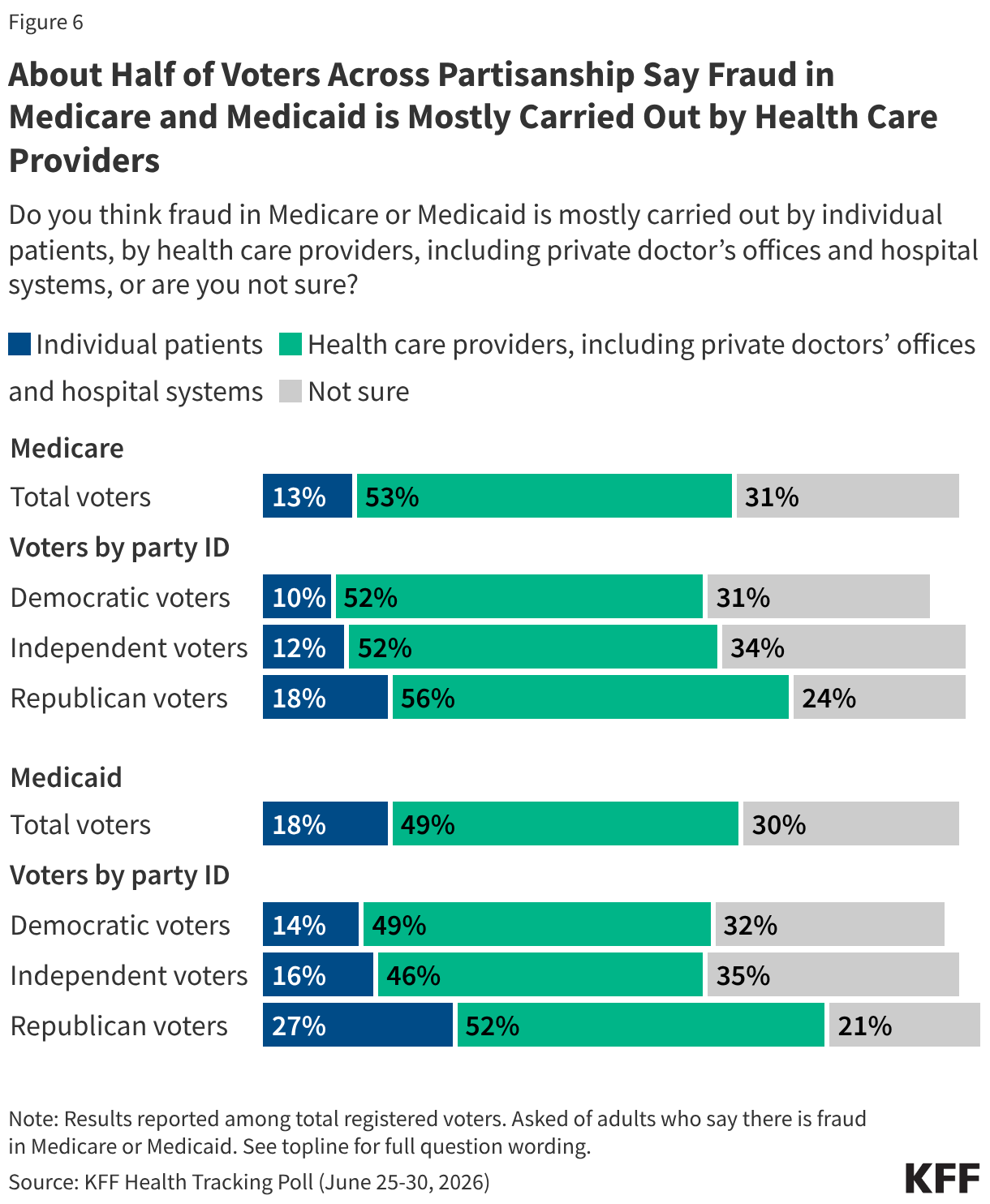
When asked who is mostly carrying out fraud in Medicare and Medicaid, voters are more likely to say health care providers – including private doctors’ offices and hospital systems – rather than individual patients, but many are unsure. About half of voters overall say Medicare fraud is mostly carried out by providers (53%), compared to 13% who say it is carried out by individual patients. The pattern is similar for Medicaid, where about half of voters say providers are the main perpetrators of fraud (49%), compared to 18% who say individual patients are. In both areas, three in ten voters say they are not sure (31% and 30% respectively).
Across partisans, about half of voters attribute fraud primarily to health care providers in both Medicare (Republican voters 56%, Democratic voters 52%, independent voters 52%) and Medicaid (Republican voters 52%, Democratic voters 49%, independent voters 46%). However, Republican voters are more likely than Democratic or independent voters to say fraud is carried out mostly by individual patients in Medicaid (27% vs. 14% and 16% respectively) and Medicare (18% vs. 10% and 12%). About one in five Republican voters and one-third of Democratic and independent voters say they are not sure who is most responsible for fraud in each of these programs.
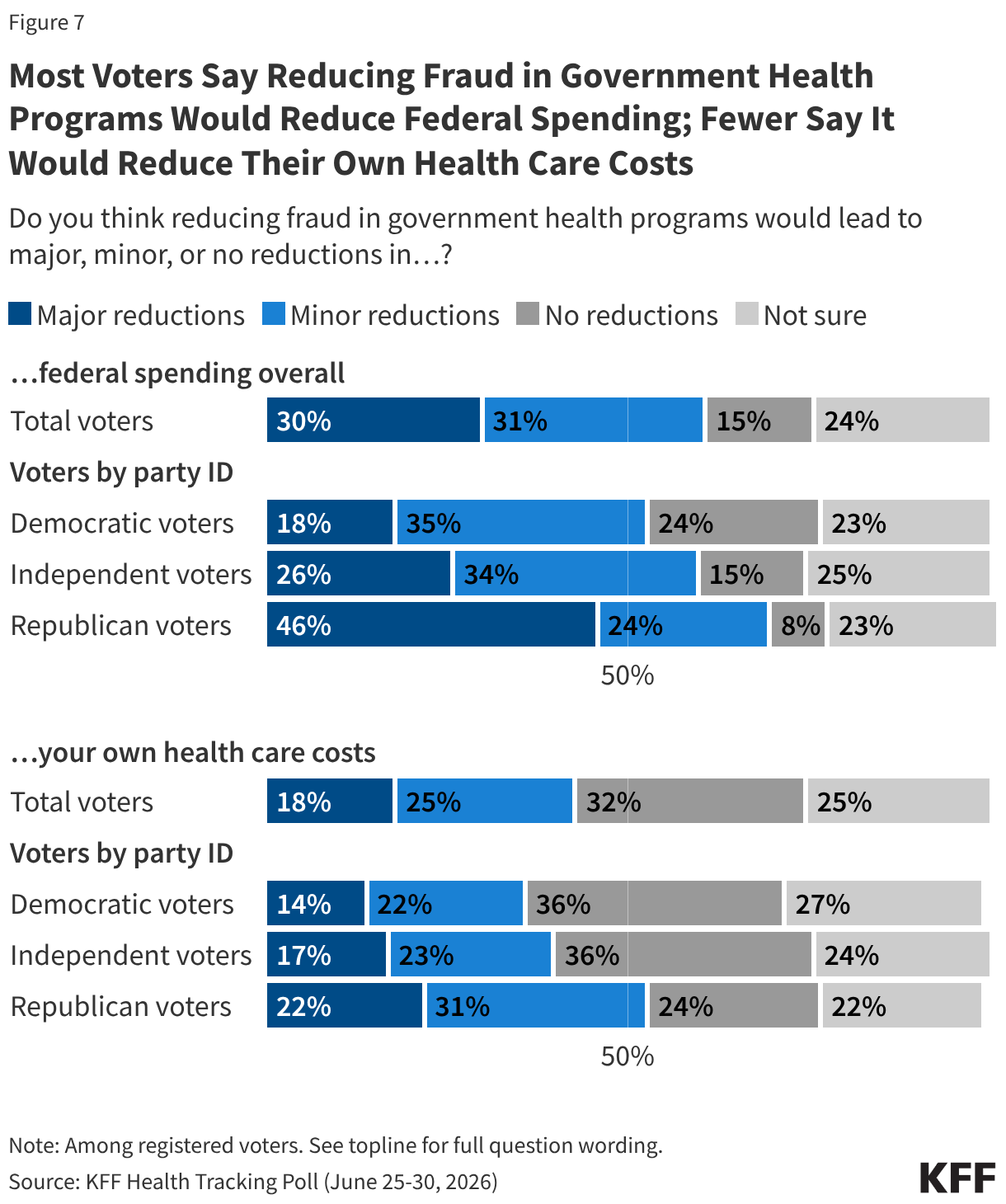
Most voters say reducing fraud in government health programs would lead to reductions in federal spending overall, but fewer say it would reduce their own health care costs. Overall, about six in ten voters say reducing fraud in government health programs would lead to major (30%) or minor (31%) reductions in federal spending overall. Fewer – about four in ten – expect reducing fraud to have major (18%) or minor (25%) reductions in their own health costs. The Trump administration argues that cracking down on suspected health care fraud will save taxpayer dollars. KFF analyses show that recovered fraud dollars in Medicaid are a small percentage of health spending overall, and savings in the federal programs are unlikely to result in substantial individual out-of-pocket savings.
While majorities of voters across partisans expect fraud reductions in government health programs to reduce federal spending overall, Republicans (46%) are much more likely than independents (26%) and Democrats (18%) to expect “major reductions.” Fewer expect major reductions in their own health care costs, including about one in five Republican voters (22%), one in six independent voters (17%), and one in seven Democratic voters (14%). Majorities of independent and Democratic voters say reducing fraud would result in no reductions in their own health costs, or they are not sure.
Voters Prioritize Access to Care for Medicaid Enrollees Over Fraud Prevention
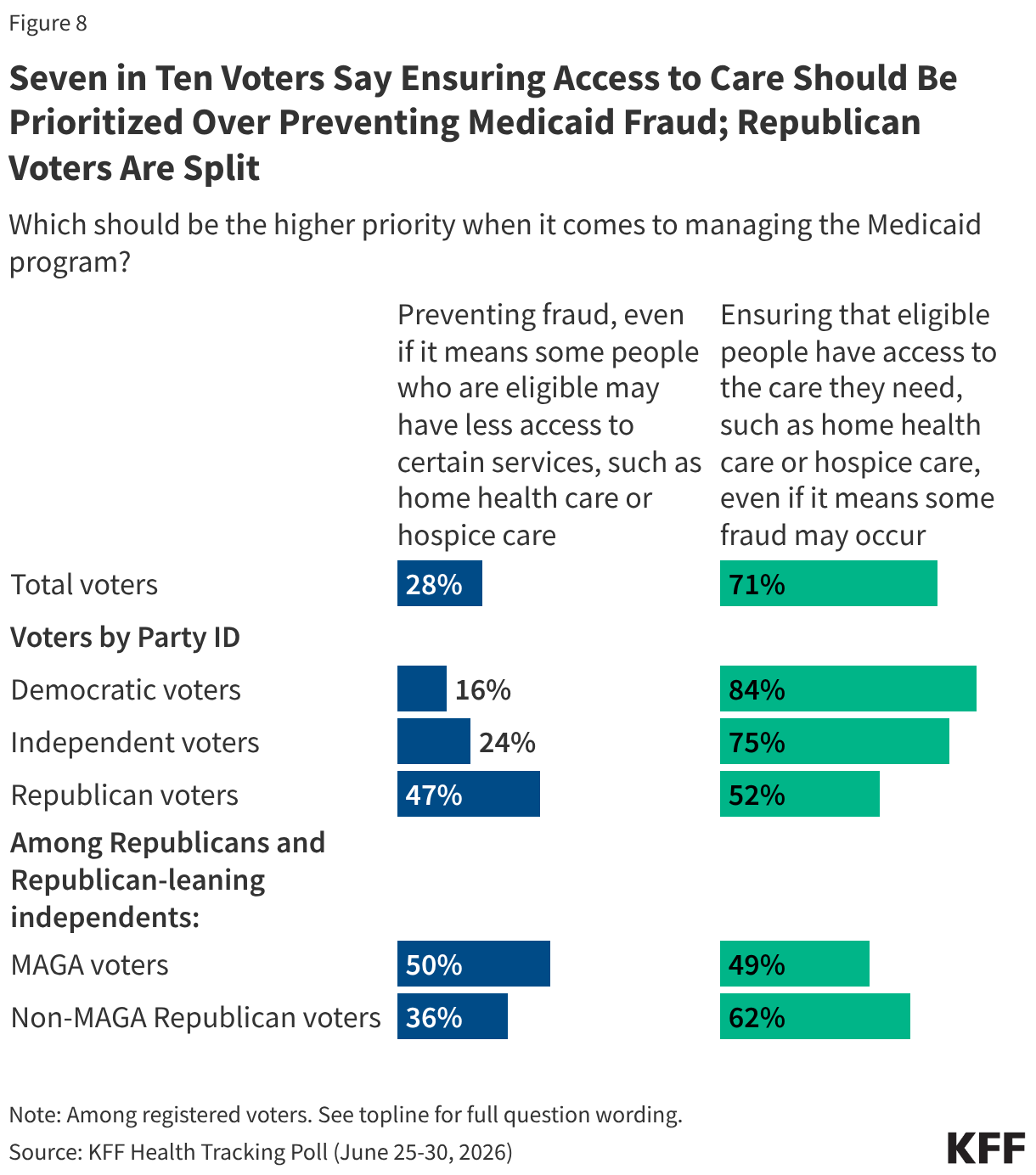
The Trump administration has taken recent actions that aim to combat fraud in the Medicaid program. These actions, such as requesting that states revalidate providers deemed high risk for fraud, have the potential to delay or disrupt access to care for people who rely on it while cases are evaluated. Although a majority of voters say there is at least some fraud in Medicaid, when asked to choose a priority, most prioritize protecting access to care for eligible people over rooting out fraud. Seven in ten voters (71%) say the higher priority for managing the Medicaid program should be ensuring that eligible people have access to the care they need, even if it means some fraud may occur, while three in ten (28%) say preventing fraud should be the priority, even if it means some people who are eligible may have less access to certain services.
More than eight in ten Democratic voters (84%) and three in four independent voters say ensuring access to care should be prioritized over preventing fraud. Republican voters are more evenly split, with about half prioritizing access (52%) and half prioritizing fraud prevention (47%). Notably, Republican and Republican-leaning voters who do not support the Make America Great Again (MAGA) movement lean toward prioritizing access to care (62%), while about half of MAGA Republican voters say preventing fraud should be prioritized and about half say ensuring access to care should be prioritized (50% and 49%).
Anti-Fraud Actions and Their Impact on Medicaid
The Trump administration’s focus on rooting out fraud, waste, and abuse in Medicaid includes 50-state initiatives such as asking states to revalidate high risk providers and review all state Medicaid Fraud Control Units (MFCUs) as well as targeted actions that focus on issues in specific states. The administration has deferred federal Medicaid payments in Minnesota and California and denied recertification of the MFCUs in Hawaii and New York. Notably, these actions have focused on states with Democratic governors, even though fraud may occur across all states.
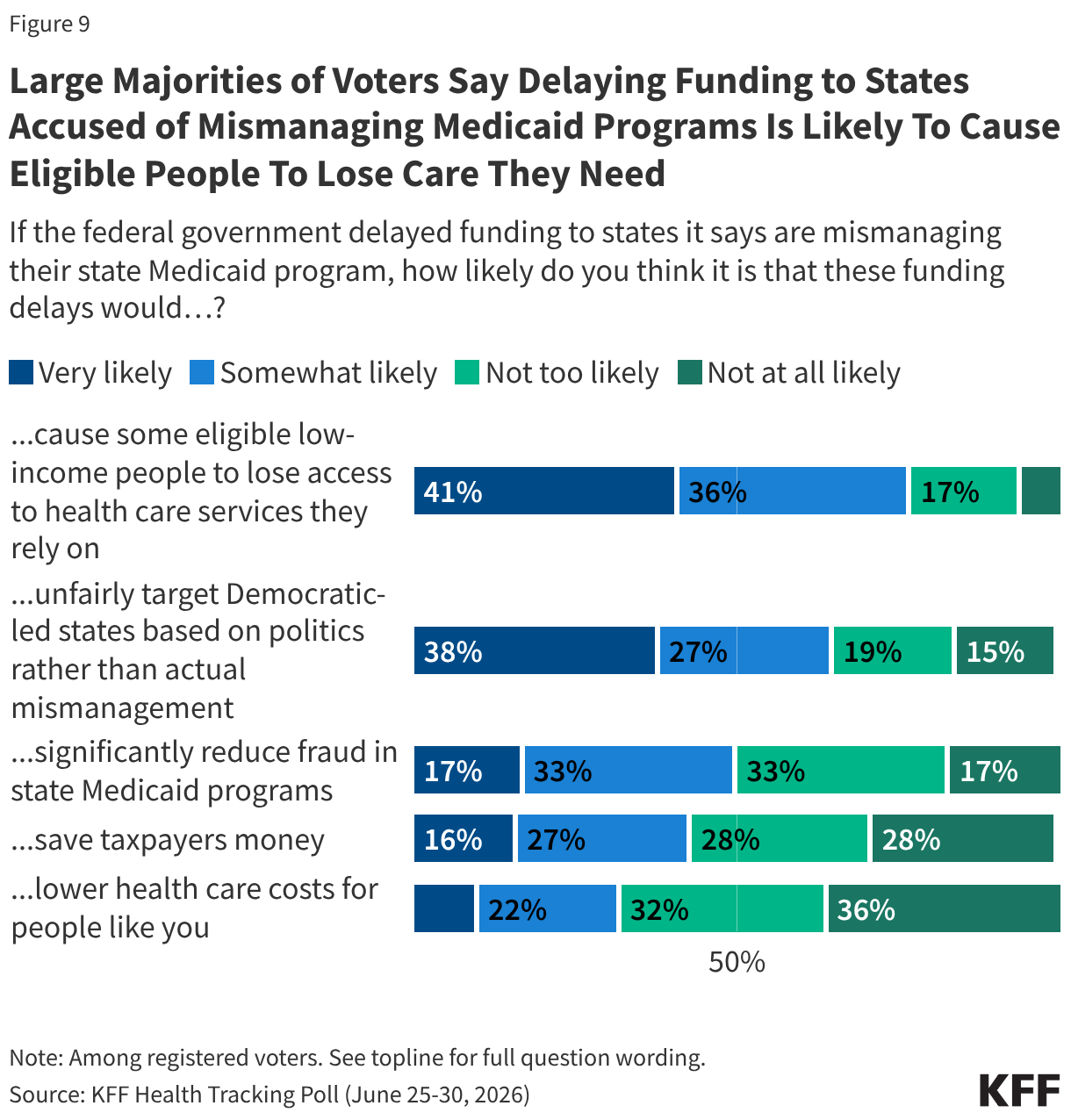
Asked about the potential impact of these deferrals, voters are much more likely to say these actions will harm beneficiaries and unfairly target states based on politics than reduce fraud or lower costs. About three in four voters (77%) say funding delays to states that the federal government says are mismanaging their Medicaid programs would likely cause some eligible low-income people to lose access to health care services, including about four in ten (41%) who say this is very likely. About two-thirds of voters (65%) say federal payment deferrals are likely to unfairly target Democratic-led states based on politics rather than actual mismanagement. Voters are evenly split in their assessment of whether delaying federal funding to states would be likely to significantly reduce fraud in state Medicaid programs (50% likely vs. 50% not likely). Fewer voters say it is likely that payment deferrals would save taxpayers money (43%) or address their top economic concern by lowering health care costs for people like them (31%).
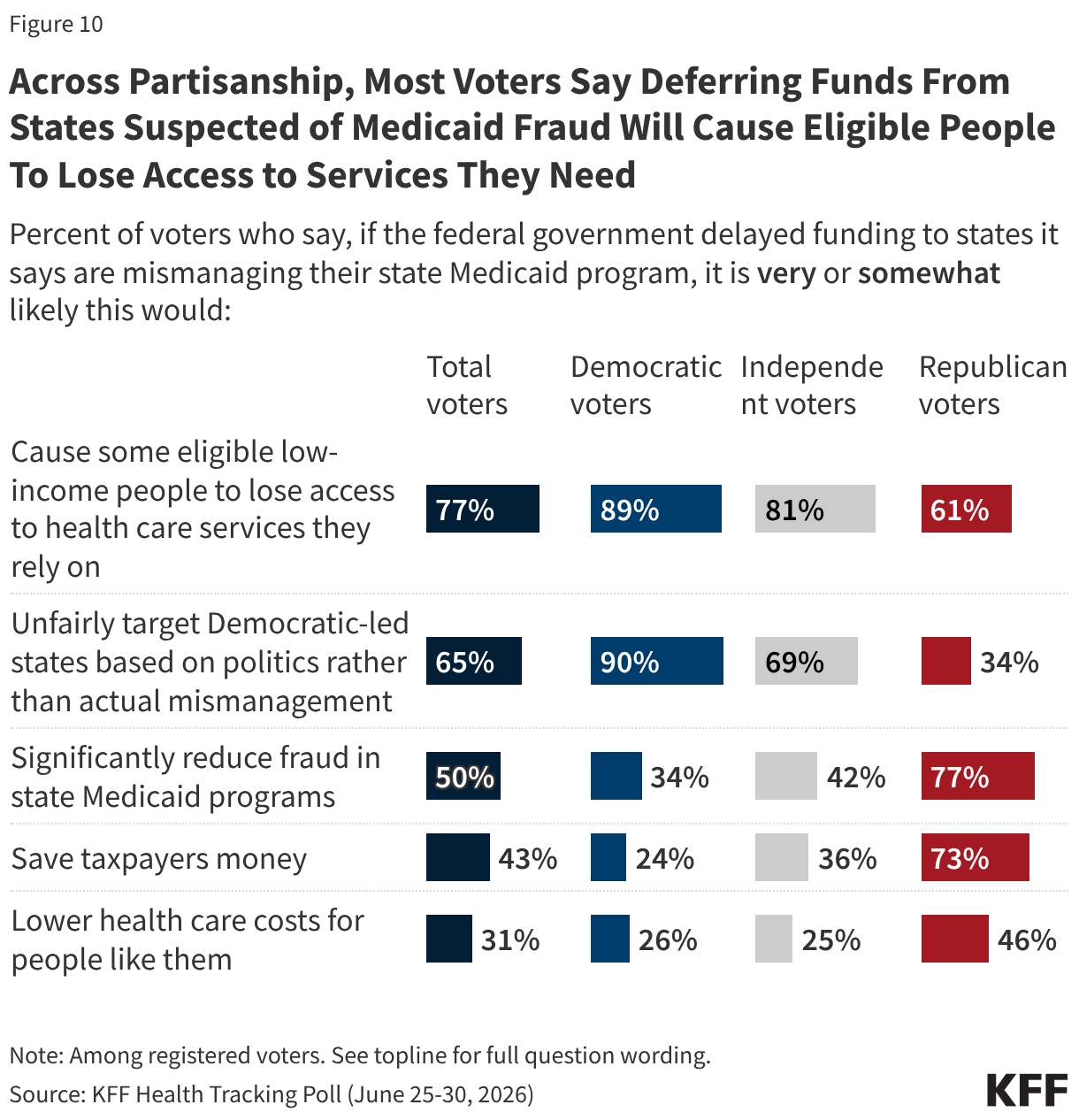
Majorities of Democratic (89%), independent (81%), and Republican (61%) voters say this approach is “very” or “somewhat likely” to cause some eligible low-income people to lose access to health care services they rely on. At the same time, fewer than half of voters across partisans say it is likely to lower health costs for people like them, including 46% of Republican voters, and smaller shares – about one in four – of Democratic (26%) and independent (25%) voters.
Partisans divide sharply when it comes to other expectations. Republican voters are more than twice as likely as Democratic voters to say the funding delays would significantly reduce fraud in state Medicaid programs (77% vs. 34%) and save taxpayers money (73% vs. 24%). Democratic voters, meanwhile, are much more likely to say the delays would unfairly target Democratic-led states based on politics (90%) than Republican voters (34%).
Seven in ten independent voters (69%) say the actions would unfairly target Democratic-led states based on politics, and four in ten or fewer say it is likely to significantly reduce fraud in state Medicaid programs (42%) or save taxpayers money (36%).
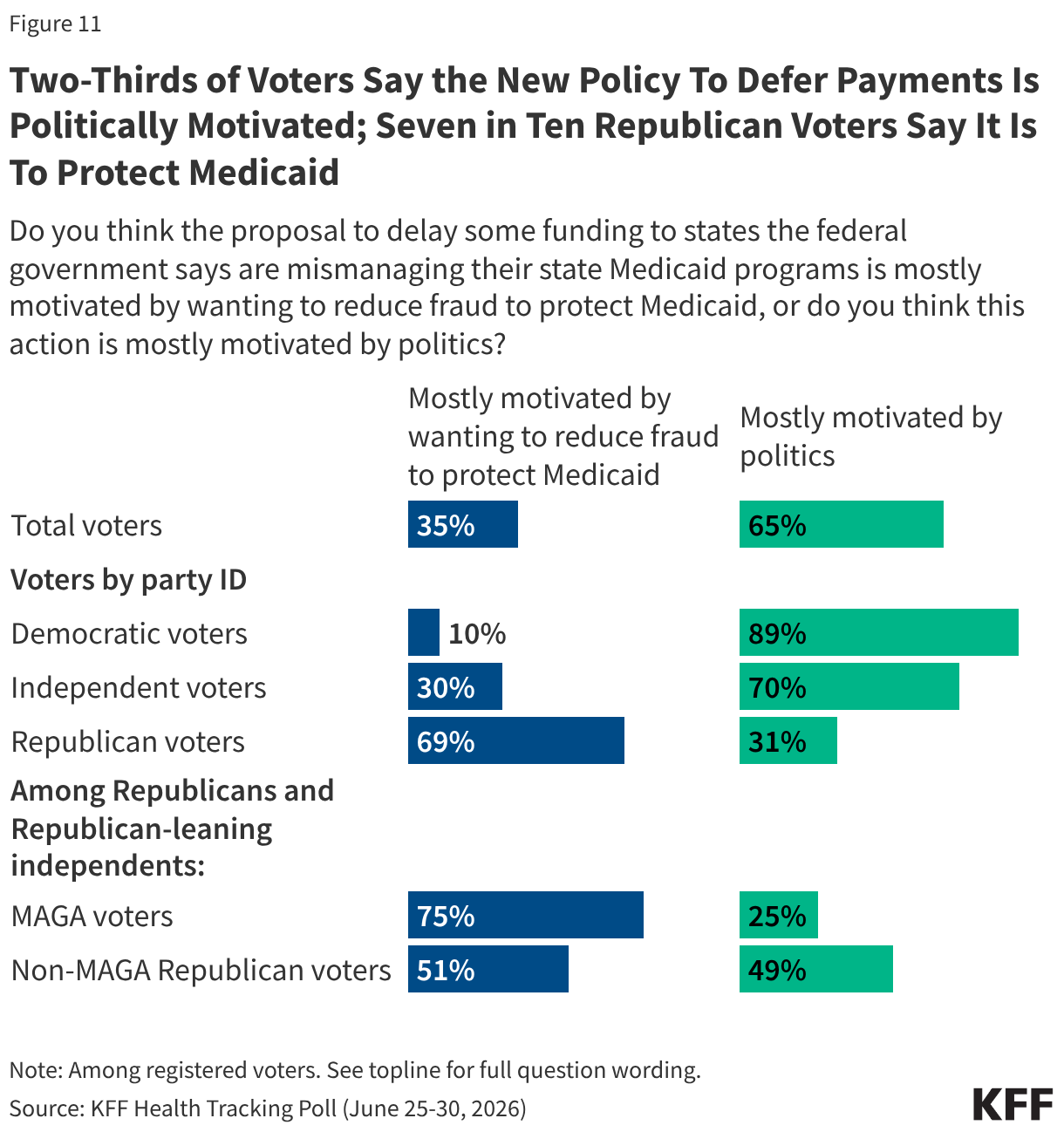
Beyond skepticism about the potential impacts of deferrals, nearly two-thirds of voters (65%) say this action to delay Medicaid funding is mostly motivated by politics, while one-third say it is mostly motivated by wanting to reduce fraud to protect Medicaid (35%). Partisans are once again divided, with large majorities of Democratic (89%) and independent (70%) voters saying the approach is motivated by politics, while most Republican voters say it is motivated mostly by wanting to reduce fraud (69%). Non-MAGA Republican voters are evenly split (51% say it is motivated by wanting to reduce fraud, 49% say it is motivated by politics), while three in four MAGA Republican voters say the policy is mostly motivated by wanting to reduce fraud to protect Medicaid.
Methodology
This KFF Health Tracking Poll was designed and analyzed by public opinion researchers at KFF. The survey was conducted June 25 – June 30, 2026, online and by telephone among a nationally representative sample of 1,321 U.S. adults in English (n=1,238) and in Spanish (n=83). The sample includes 1,015 adults (n=69 in Spanish) reached through the SSRS Opinion Panel either online (n=990) or over the phone (n=25). The SSRS Opinion Panel is a nationally representative probability-based panel where panel members are recruited randomly in one of two ways: (a) Through invitations mailed to respondents randomly sampled from an Address-Based Sample (ABS) provided by Marketing Systems Groups (MSG) through the U.S. Postal Service’s Computerized Delivery Sequence (CDS); (b) from a dual-frame random digit dial (RDD) sample provided by MSG. For the online panel component, invitations were sent to panel members by email followed by up to three reminder emails.
Another 306 (n=14 in Spanish) adults were reached through random digit dial telephone sample of prepaid cell phone numbers obtained through MSG. Phone numbers used for the prepaid cell phone component were randomly generated from a cell phone sampling frame with disproportionate stratification aimed at reaching Hispanic and non-Hispanic Black respondents. Stratification was based on incidence of the race/ethnicity groups within each frame. Among this prepaid cell phone component, 142 were interviewed by phone and 164 were invited to the web survey via short message service (SMS).
Respondents in the prepaid cell phone sample who were interviewed by phone received a $15 incentive via a check received by mail or an electronic gift card incentive. Respondents in the prepaid cell phone sample reached via SMS received a $10 electronic gift card incentive. SSRS Opinion Panel respondents received a $5 electronic gift card incentive (some harder-to-reach groups received a $10 electronic gift card). In order to ensure data quality, cases were removed if they failed two or more quality checks: (1) attention check questions in the online version of the questionnaire, (2) had over 30% item non-response, or (3) had a length less than one quarter of the mean length by mode. Based on this criterion, 1 case was removed.
The combined cell phone and panel samples were weighted to match the sample’s demographics to the national U.S. adult population using data from the Census Bureau’s 2025 Current Population Survey (CPS), September 2023 Volunteering and Civic Life Supplement data from the CPS, and the 2026 KFF Benchmarking Survey with ABS and prepaid cell phone samples. The demographic variables included in weighting for the general population sample are gender, age, education, race/ethnicity, region, civic engagement, frequency of internet use and political party identification. The weights account for differences in the probability of selection for each sample type (prepaid cell phone and panel). This includes adjustment for the sample design and geographic stratification of the cell phone sample, within household probability of selection, and the design of the panel-recruitment procedure.
The margin of sampling error including the design effect for the full sample is plus or minus 3 percentage points. Numbers of respondents and margins of sampling error for key subgroups are shown in the table below. For results based on other subgroups, the margin of sampling error may be higher. Sample sizes and margins of sampling error for other subgroups are available on request. Sampling error is only one of many potential sources of error and there may be other unmeasured error in this or any other public opinion poll. KFF public opinion and survey research is a charter member of the Transparency Initiative of the American Association for Public Opinion Research.
| Group | N (unweighted) | M.O.S.E. |
| Total | 1,321 | ± 3 percentage points |
| Total voters | 1,055 | ± 4 percentage points |
| Democrats | 426 | ± 6 percentage points |
| Independents | 439 | ± 6 percentage points |
| Republicans | 358 | ± 6 percentage points |
| Democratic voters | 372 | ± 6 percentage points |
| Independent voters | 316 | ± 7 percentage points |
| Republican voters | 312 | ± 7 percentage points |