Racial/Ethnic Differences in Cardiac Care: The Weight of the Evidence

Published: Sep 29, 2002

Numerous studies over the past two decades have documented racial and ethnic differences in care for heart conditions. To assess the quality of the evidence and to summarize the information for a physician audience, the Henry J. Kaiser Family Foundation collaborated with the American College of Cardiology Foundation to review the body of research on racial/ethnic differences in cardiac care.

There is credible evidence that minority patients are less likely than white patients to receive invasive cardiac procedures such as catheterization, angioplasty, bypass surgery and thrombolytic therapy even when patient characteristics are similar. These disparities remain even after adjusting for such factors as age, sex, insurance status and heart disease severity. Of the 81 studies investigating racial/ethnic differences in care over the past two decades, 68 found disparities in care for at least one of the racial/ethnic minority groups under study.

This report is one component of an initiative to raise physician awareness about disparities in medical care.
Racial/Ethnic Differences in Cardiac Care: The Weight of the Evidence

Published: Sep 29, 2002

Numerous studies over the past two decades have documented racial and ethnic differences in care for heart conditions. To assess the quality of the evidence and to summarize the information for a physician audience, the Henry J. Kaiser Family Foundation collaborated with the American College of Cardiology Foundation to review the body of research on racial/ethnic differences in cardiac care.

There is credible evidence that minority patients are less likely than white patients to receive invasive cardiac procedures such as catheterization, angioplasty, bypass surgery and thrombolytic therapy even when patient characteristics are similar. These disparities remain even after adjusting for such factors as age, sex, insurance status and heart disease severity. Of the 81 studies investigating racial/ethnic differences in care over the past two decades, 68 found disparities in care for at least one of the racial/ethnic minority groups under study.

Fact Sheet (.pdf)Summary Report (.pdf)Full Report (.pdf)

Medicaid’s Role in Covering Families

Published: Sep 2, 2002

Medicaid’s Role in Covering Families

Twelve years ago, the U.S. Congress passed the law requiring that by the end of fiscal year 2002, states would complete a series of incremental steps to ensure all children in families with incomes at or below the federal poverty line would have Medicaid coverage. The day, September 30, has arrived and the Commission put together a brief description of how Medicaid assists low-income American families with their health coverage.

Medicaid Spending Growth: Results from a 2002 Survey

Published: Aug 31, 2002

The report presents the findings of a 50 state survey of Medicaid directors, identifying state Medicaid spending trends and how states are responding to them for FY 2003 budgets.

Recent Publications on Medicaid and State Budgets

Published: Aug 31, 2002

Medicaid is a joint federal-state program in which Federal Medicaid matching payments are projected to be $147 billion FY 2002, while state spending is estimated at about $100 billion.

Because Medicaid is such a large part of state budgets and states are struggling with their overall fiscal situations, the Kaiser Commission on Medicaid and the Uninsured continues to follow developments in Medicaid progams related to state budgets. Below are the most recent publications on this important topic.

Medicare’s Disabled Beneficiaries: The Forgotten Population in the Debate Over Drug Benefits

Published: Aug 31, 2002

About 5 million Americans under age 65 qualify for Medicare coverage because they are totally and permanently disabled. They are more likely than the elderly to live in poverty, to be in poor health, and to experience difficulties living independently and performing basic daily tasks. A new study from The Commonwealth Fund and the Henry J. Kaiser Family Foundation, reports that the disabled have few options other than Medicaid for obtaining prescription coverage. In , Becky Briesacher, Bruce Stuart, Jalpa Doshi, and Sachin Kamal-Bahl of the University of Maryland, and Dennis Shea of the Pennsylvania State University, conclude that a Medicare drug benefit designed for the elderly will not suffice for the disabled unless their particular needs are assessed and addressed.

Medicare+Choice in California: Lessons and Insights

Published: Aug 31, 2002

Thirty-five percent of all California Medicare beneficiaries are enrolled in a M+C plan, far in excess of the 14 percent rate nationwide. This report seeks to identify what lessons for the nation can be drawn from the California M+C experience, as Congress debates the implications of major withdrawals from the M+C program and potential policy changes aimed at reversing this trend. The report is based largely on analysis of M+C data on plan participation, withdrawals, and enrollment by county from year-end 1997 (when M+C was enacted) through 2001, including reported withdrawals in 2002.

2002 Civil Liberties Update

Published: Aug 30, 2002

NPR/Kaiser/Kennedy School Poll: 2002 Civil Liberties Update

According to a new poll by NPR, the Kaiser Family Foundation, and Harvard s Kennedy School of Government, the nation is evenly divided on the question of tradeoffs between civil liberties and security. However, a small but statistically significant number of Americans have shifted toward the civil liberties side of the issue since last year, although majorities still support some government actions that could be seen as curtailing such liberties.

loveLife Photo Gallery: Y-Centres, loveTrain, Former Presidents Clinton and Mandela

Published: Aug 30, 2002

loveLife: The Foundation’s Largest Initiative Ever Aims To Curb HIV Infection Among South African Youth

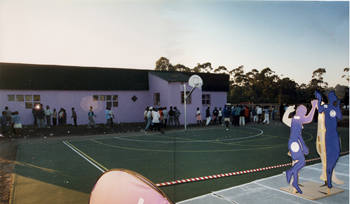
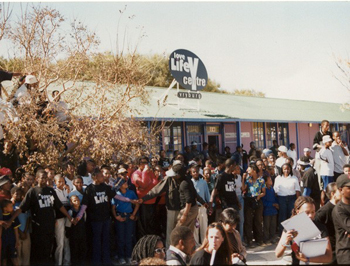
loveLife’s Y-Centres

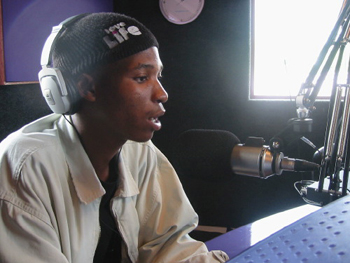
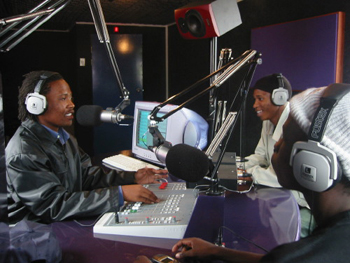
The Radio Studio at the Hibberdene Y-Center in Kwa-Zulu Natal. The loveLife Y-Centres are multi-purpose facilities for young people, providing a range of entertainment, sports and educational opportunities.”Learn more about the Y-Centres…

lovelife1.jpg
lovelife2.jpg
lovelife3.jpg
lovelife4.jpg

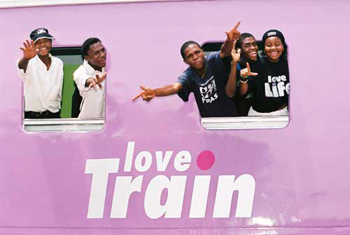
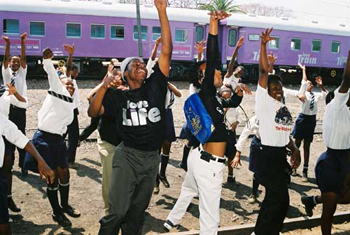
loveTrain

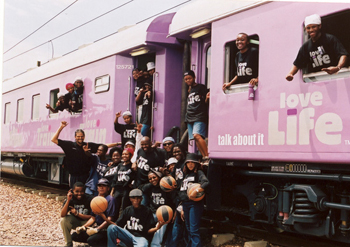
The work of loveLife is supported by the loveTrain a sexual health education center and clinic on rails and the loveTours a mobile radio broadcast unit.Learn more about the loveTrain…

lovelife5.jpg
lovelife6.jpg
lovelife7.jpg
lovelife8.jpg

lovelife9.jpg

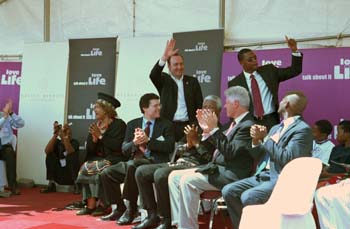
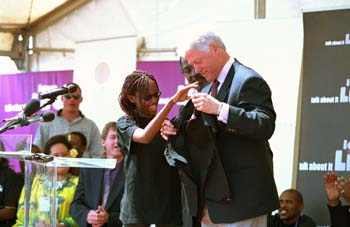
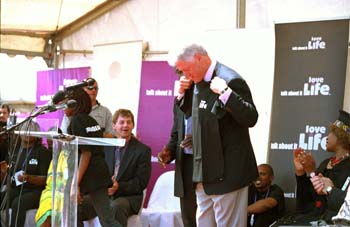
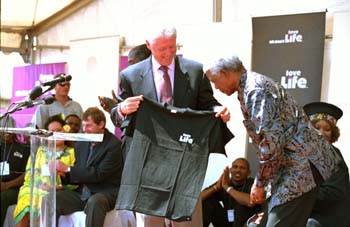
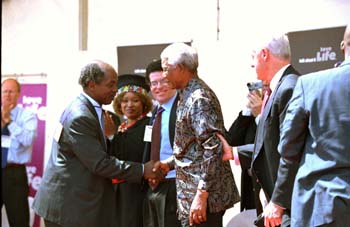
Former Presidents Clinton and Mandela Appeal for Increased Effort to Combat HIV Infection Among Young People

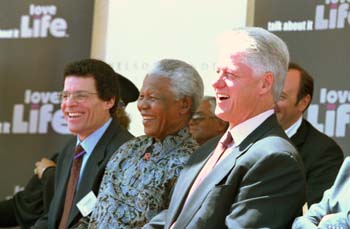
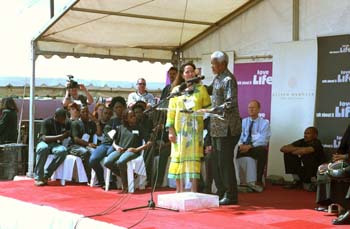
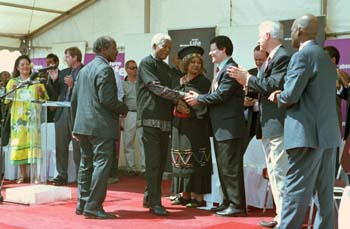
Two of the world’s most prominent elder statesmen have made a joint appearance in support of loveLife, South Africa’s national HIV prevention program for youth, hailing loveLife as the model for HIV prevention among youth globally.

10.jpg
11.jpg
7236865.jpg
13.jpg
14.jpg
15.jpg
16.jpg
17.jpg

<–Back to Main loveLife page

Poll Finding

NPR/Kaiser/Kennedy School Poll: 2002 Civil Liberties Update

Published: Aug 30, 2002

According to a new poll by NPR, the Kaiser Family Foundation, and Harvard s Kennedy School of Government, the nation is evenly divided on the question of tradeoffs between civil liberties and security. However, a small but statistically significant number of Americans have shifted toward the civil liberties side of the issue since last year, although majorities still support some government actions that could be seen as curtailing such liberties.