KFF designs, conducts and analyzes original public opinion and survey research on Americans’ attitudes, knowledge, and experiences with the health care system to help amplify the public’s voice in major national debates.
This brief is based on a survey conducted this summer by The Washington Post, the Kaiser Family Foundation, and Harvard University to focus on the experiences and challenges facing the lowest paid members of the American workforce.
Low-wage workers rate “getting more affordable health insurance” as the top priority for the federal government to improve people’s financial situation. Sixty-two percent of low-wage workers find it “very” or “somewhat” difficult to afford health care and health insurance.
The Survey of Low-Wage Workers is the 17th in a series generated under this three-way partnership. The partners worked together to pick the survey topics, design the survey instruments, and analyze the results. This telephone poll was conducted from June 18 to July 7, 2008 among 1,350 randomly selected low-wage workers nationwide. The Washington Post is featuring findings from the survey in a series of articles that began August 3 with the most recent article published on October 16.
This Medicare Part D data spotlight analyzes the premiums charged by the 1,689 stand-alone Medicare Part D plans that will be offered in markets across the country in 2009. The analysis finds premiums charged for Part D plans range widely, from $10.30 per month to $136.80 per month. If current enrollees remain in their current plan for next year, the weighted average monthly premium for PDPs would increase by $7.40 per month, from $29.89 in 2008 to $37.29 in 2009. The data spotlight also looks at premium changes in the stand-alone plans with the highest enrollment this year and shifts in the overall marketplace.
The spotlight is one in a series analyzing key aspects of the Medicare Part D drug plans that will be available to beneficiaries in 2009. The analysis was conducted jointed by Jack Hoadley and Jennifer Thompson of Georgetown University, Elizabeth Hargrave of NORC at the University of Chicago, and Juliette Cubanski and Tricia Neuman of the Kaiser Family Foundation.
This Medicare Part D data spotlight examines the coverage gap, or “doughnut hole,” in Medicare drug plans available in 2009. While in the gap in coverage, Part D enrollees (other than those receiving low-income subsidies) are required to pay 100 percent of total drug costs until they reach the catastrophic coverage level.
In 2009, nearly all Part D plans have a coverage gap, though one in four plans offer limited coverage in the gap — generally coverage for all or some generic drugs, though some plans also cover some or a few brand-name drugs.
The spotlight is one in a series analyzing key aspects of the Medicare Part D drug plans that will be available to beneficiaries in 2009. The analysis was conducted jointed by Jack Hoadley and Jennifer Thompson of Georgetown University, Elizabeth Hargrave of NORC at the University of Chicago, and Juliette Cubanski and Tricia Neuman of the Kaiser Family Foundation.
This Medicare Part D Data Spotlight focuses on the availability of drug plans for beneficiaries receiving the Part D low-income subsidy in 2009 and changes since 2006. For 2009, fewer than one in five plans qualify for automatic or facilitated enrollment of low-income subsidy beneficiaries, the lowest share since the inception of the Part D benefit. These plans have monthly premiums below a benchmark amount calculated for each region, enabling low-income subsidy beneficiaries to enroll and pay no monthly premium. The number of benchmark plans for 2009 varies greatly across regions, from one in Nevada and two in Arizona to 16 in Wisconsin.
The spotlight is one in a series analyzing key aspects of the Medicare Part D drug plans that will be available to beneficiaries in 2009. The analysis was conducted jointed by Jack Hoadley and Laura Summer of Georgetown University, Elizabeth Hargrave of NORC at the University of Chicago, and Juliette Cubanski and Tricia Neuman of the Kaiser Family Foundation.
To better understand the private plans providing drug coverage to Medicare beneficiaries under the Part D benefit, the Kaiser Family Foundation has issued a series of data spotlights analyzing key elements of Medicare’s private drug plans. Each spotlight focuses on a key aspect of the drug plans available to Medicare beneficiaries each year and examines relevant trends since the Medicare drug benefit took effect in 2006.
This document contains the key findings from the October Kaiser Health Tracking Poll: Election 2008 poll. The poll involved a nationally representative random sample of 1,217 adults ages 18 and older, including 1,115 adults who say they are registered to vote, who were interviewed by telephone between October 8 and 13, 2008. The margin of sampling error for the full sample is plus or minus 3 percentage points and plus or minus 4 percentage points for the sample of registered voters. For results based on subgroups, the sampling error is somewhat higher.
The final Kaiser Health Tracking Poll: Election 2008 finds more people are reporting problems with health care bills, and paying for health care retains a solid hold on the public’s list of their top economic concerns.
About one in three Americans now report their family has had problems paying medical bills in the past year, up from about a quarter saying the same two years ago. Almost one in five (18%) of Americans report household problems with medical bills amounting to more than $1,000 in the past year.
Nearly half (47%) of the public reports someone in their family skipping pills, postponing or cutting back on medical care they said they needed in the past year due to the cost of care. For example, just over one-third say they or a family member put off or postponed needed care and three in ten say they skipped a recommended test or treatment – increases of seven percentage points from last April’s tracking poll which asks the same question.
The October Kaiser Health Tracking Poll: Election 2008, the eleventh and final in a series designed and analyzed by the Foundation’s public opinion research team, also examines voters’ specific health care issue interests and perceptions of the major presidential candidates’ positions on health care and reform.
This document contains the detailed toplines from the October Kaiser Health Tracking Poll: Election 2008 poll. The poll involved a nationally representative random sample of 1,217 adults ages 18 and older, including 1,115 adults who say they are registered to vote, who were interviewed by telephone between October 8 and 13, 2008. The margin of sampling error for the full sample is plus or minus 3 percentage points and plus or minus 4 percentage points for the sample of registered voters. For results based on subgroups, the sampling error is somewhat higher.
Racial and ethnic disparities in health care – whether in insurance coverage, access, or quality of care – are one of many factors producing inequalities in health status in the United States.1Eliminating these disparities is politically sensitive and challenging in part because their causes are intertwined with a contentious history of race relations in America. Nonetheless, assuring greater equity and accountability of the health care system is important to a growing constituency base, including health plan purchasers, payers, and providers of care. To the extent that inequities in the health care system result in lost productivity or use of services at a later stage of illness, there are health and social costs that affect us all.
Why Health Care Disparities Are a Concern
One in three residents of the United States self-identify as either African American, American Indian/Alaska Native, Asian, Native Hawaiian/Pacific Islander, Hispanic/Latino, or multiracial. By 2050, this number is expected to increase to one in two.2
Despite significant advances in civil rights, race remains a significant factor in determining whether an individual receives care, whether an individual receives high quality care, and in determining health outcomes.
The Institute of Medicine (IOM) landmark report, Unequal Treatment, provides compelling evidence that racial/ethnic disparities persist in medical care for a number of health conditions and services.3 Numerous efforts are underway to reduce or eliminate racial and ethnic health care disparities, and to address some of the social factors that affect health care outcomes. Yet despite these many efforts, disparities in access to quality care remain, and for some measures being tracked, gaps in care are getting larger rather than smaller.4
Key Facts on Race, Ethnicity and Health Care in the U.S.
Racial/ethnic disparities in health persist today even when comparing groups of similar SES. For example, the infant mortality rate for college educated Black women is higher than that for White women with similar education (11.5 vs. 4.2 per 1,000 live births).
The rate of new AIDS cases in 2003 was 3 times higher among Hispanics and 10 times higher among African Americans than among Whites (26 and 75 per 100,000 vs. 7 per 100,000).
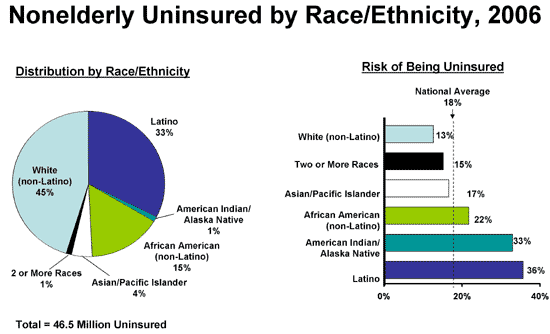
At least 1 in 3 nonelderly Latinos (36%) and AI/ANs (33%) is uninsured, as compared with 22% of African Americans, 17% of Asian and Pacific Islanders, and 13% of Whites.
Insurance matters, as evidence by the fact that uninsured adults across racial/ethnic groups are at least twice as likely to go without a doctor visit in the past year.
Black and Latino adults are less likely to rely on a private physician for their medical care than White adults (62% and 44% vs. 77%).
African American children have a rate of hospitalization for asthma that is 4 to 5 times higher than the rate for White children (527 per 100,000 vs. 144 per 100,000).
Disparities in quality of care are not getting smaller. Over time, the gap between Whites and African Americans, Hispanics, Asians, and AI/ANs has either remained the same or worsened for more than half of the core quality measures being tracked.
ADDRESSING HEALTH CARE DISPARITIES
Although attention to racial/ethnic disparities in care has increased among policymakers, there is little consensus on what can or should be done to reduce these disparities. The U.S. Congress provided early leadership on the issue by legislatively mandating the IOM study on health care disparities, creating the National Center on Minority Health and Health Disparities at the National Institutes of Health, and requiring DHHS to produce the National Healthcare Disparities Report.5 This brief examines four broad policy areas for addressing racial and ethnic health care disparities:
Raising public and provider awareness of racial/ethnic disparities in care;
Expanding health insurance coverage;
Improving the capacity and number of providers in underserved communities; and
Increasing the knowledge base on causes and interventions to reduce disparities.
Raising Public and Provider Awareness
Perceptions of a problem often influence the actions taken (or not taken) to change policy and practices. If the public or providers are unaware that a problem exists, or misunderstands the nature of the problem, it can be difficult to direct resources to address that problem.
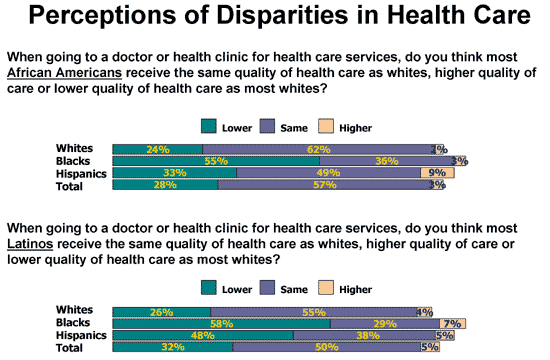
Efforts to raise the public’s awareness of racial/ethnic health care disparities have achieved modest success. In 2006, nearly 6 in 10 people surveyed believed African Americans received the same quality of care as Whites, and 5 in 10 believed Latinos received the same quality care as Whites (Figure 1).6 These estimates are similar to findings in the 1999 survey.7
Figure 1
NOTE: Does not total 100% because ‘don’t know/refused’ not included. SOURCE: Kaiser Family Foundation, March/April 2006 Kaiser Health Poll Report Survey, April 2006 (Conducted April 2006).
In contrast to the general public’s continued lack of awareness, the level of awareness among physicians has risen sharply. In 2002, the vast majority (69%) of physicians said that the health care system “rarely or never” treated people unfairly based on an individual’s racial/ethnic background.8 In 2005, less than a quarter (24%) of physicians disagreed with the statement “minority patients generally receive lower quality care than White patients.”9
Expanding Health Coverage
Health insurance matters in determining whether and when people get necessary medical care, where they receive care, and how healthy people are. However, racial/ethnic minority populations – who constitute only about one-third of the U.S. population – are disproportionately represented among those without any health coverage (Figure 2). Compared with the insured, the uninsured are less likely to have a regular doctor or to get timely and routine care, and are more likely to be hospitalized for preventable conditions. Thus, expansions to health insurance coverage are of particular importance to racial/ethnic minority groups.
Figure 2
NOTE: American Indian group includes Aleutian Eskimos. SOURCE: Urban Institute and Kaiser Commission on Medicaid and the Uninsured analysis of the March 2007 Current Population Survey
Minority Americans are much less likely to have health insurance offered through their jobs, and even after accounting for work status, minority Americans are still more likely than Whites to be uninsured.10 As such, Medicaid, a source of coverage for many of the nation’s poor and disabled, is an important safety net for about 1 in 4 nonelderly African Americans, American Indians/Alaska Natives, and Latinos, and about 1 in 10 Asian/Pacific Americans and Whites.11
Efforts are needed to assure that existing sources of coverage, such as Medicaid, are maintained while also working to expand other sources of coverage for those who are uninsured.
Improving the Number and Capacity of Providers in Underserved Communities
Despite efforts since the 1970s to increase the number of health professionals in medically underserved areas, members of racial/ethnic minority groups are still underrepresented in the health care workforce and are more likely than Whites to live in neighborhoods that lack adequate health resources.12 For example, 28% of Latinos and 22% of African Americans report having little or no choice in where to seek care, while only 15% of Whites report this difficulty.13 African Americans and Latinos are also twice as likely as Whites to rely upon a hospital outpatient department as their regular source of care, rather than a doctor’s office where opportunities for continuity of care and patient-centered care are greater.14 This is a result of many factors, including the higher rates of uninsured and the limited availability of primary care physicians in some communities of color.
Even when health care resources are geographically accessible, language and cultural barriers are sometimes a problem.15 Approaches to strengthening communication and relationships between patients and providers include greater use of medical interpretation services, expanding the racial/ethnic diversity of the health professions workforce, and developing provider training programs and tools in cross-cultural education. Since minority health professional are more likely than Whites to practice in minority and medically underserved areas, a more diverse health workforce could help to improve access and adherence to treatment.16
Increasing the Knowledge Base
Although evidence of racial and ethnic health care disparities is substantial, the evidence-base for developing interventions to eliminate these disparities remains limited. For example, efforts are currently underway to examine how training health care providers to offer culturally and linguistically appropriate services, increasing the use of electronic medical records to decrease medical errors and improve coordination of care, and increasing the use of financial incentives to promote high quality health care may reduce racial and ethnic health disparities. In addition, there is a growing effort to address factors outside the health care system, such as socioeconomic status, education and geography, which have been shown to impact health status and access health care.17
Increasing the knowledge base will require investing in routinely collecting and analyzing data on health care use across racial/ethnic groups. Data from national surveys, health insurers, and different health settings are needed to better understand the problems and impact of interventions. One reason we know so little about patterns of health care use for many racial/ethnic groups is that we have not collected the data or have insufficient sample sizes in publicly available data sources. Yet, at a time when the heterogeneity of the population is increasing, funding for national surveys that measure disparities and track the nation’s progress in addressing them is being cut.
ASSESSING CANDIDATE POSITIONS
The Democratic and Republican presidential nominees have proposed broad health reform plans; however, addressing racial and ethnic health care disparities has not been a priority issue in the 2008 election. Senator John McCain seeks to control health care costs and expand coverage, but does not specifically address health disparities between racial and ethnic groups.18 Senator Barack Obama’s health plan would expand coverage to improve access, and explicitly states intentions to address the “root causes” of health disparities. The plan would require hospitals and health plans to collect, analyze and report health care quality data for disparity populations, increase diversity in the health workforce to ensure culturally competent care, and support and expand the capacity of safety-net institutions which disproportionately serve minority populations.19 Senator Obama also calls for the creation of a national HIV/AIDS strategy and would focus on eliminating disparities in communities hardest hit by the epidemic, many of which are communities of color.20
The following questions will help you evaluate the candidates’ proposals for addressing racial/ethnic health care disparities:
What is the candidate’s general approach to reducing racial/ethnic disparities in health care?
What is the candidate’s proposal to expand sources of insurance coverage? What would its impact be on minority groups?
Does the candidate have a plan to increase prevention efforts for diseases that disproportionately impact communities of color?
What is the candidate’s stance on diversity in the healthcare workforce?
How does the candidate plan to hold government agencies accountable for monitoring and addressing racial/ ethnic disparities within the health care system?
Health spending in the United States is an estimated $2.4 trillion in 2008, an average of $7,868 per person
The share of the economy (GDP) devoted to national health spending has increased from 7.2% in 1970 to an estimated 16.6% in 2008
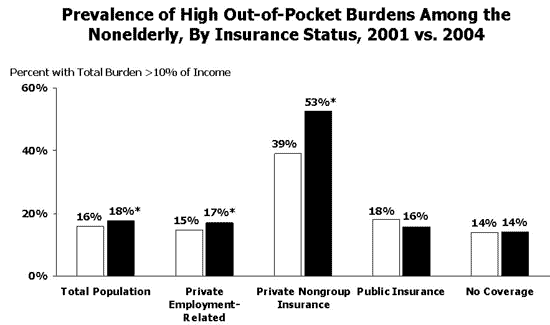
Eighteen percent of the nonelderly were in families that spent over 10% of their disposable on out-of-pocket health care premiums and cost sharing in 2004.
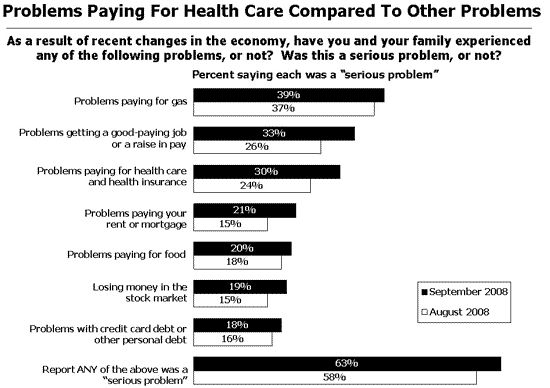
Almost one-in-four respondents in a recent Kaiser Poll reported experiencing a serious problem paying for health care and health insurance as a result of the recent economic turndown
The high and rapidly rising cost of health care affects the financial security of families and the economic health of the nation. Thirty percent of respondents in a recent Kaiser Poll reported that they had experienced a serious problem paying for health care and health insurance as a result of recent changes in the economy, and a recent study found that 10% of people with problems paying medical bills were denied care because of medical bills.1In 2004, 18% of the nonelderly population had out-of-pocket health costs that exceeded 10% of their disposable income.
At a national level, health care accounts for a large and growing slice of the overall U.S. economic pie. The growth in health expenditures routinely outpaces growth in income, making health insurance less affordable for all Americans and making it more costly to extend coverage to the over 45 million Americans who are uninsured. These rising health costs also make public health programs more difficult to sustain, straining federal and state budgets.
Finding a way to address high costs and cost growth without unreasonably reducing access to new and needed services is a significant challenge. How the candidates for the upcoming election propose to address the challenges posed by the increasing costs of health care is a critical component of the current political debates.
Source: Kaiser Health Tracking Poll: Election 2008 (conducted July 29-August 6, 2008 & Sep. 8-13, 2008) Background Expenditures on health care have outpaced the growth in national income over each of the recent decades. Between 1970 and 2008, the share of the economy going to health care rose from 7.2% to an estimated 16.6%, or from about $356 per person in 1970 to an estimated $7,868 per person in 2008. Total health spending in the United States in 2008 is an estimated $2.4 trillion.
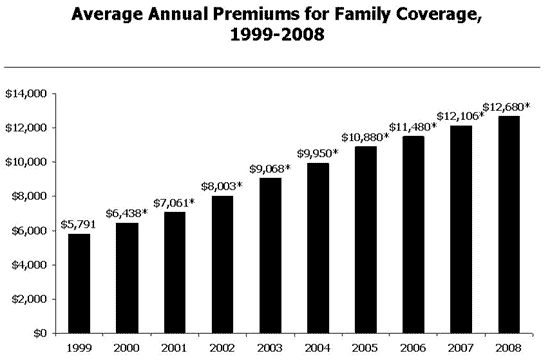
Impact on Health Insurance Costs Although Americans benefit from this increasing investment in health care, its high cost and persistent cost growth are placing great strains on the systems we use to finance health care, including private employer-sponsored health insurance coverage and public insurance programs such as Medicare and Medicaid. Employer-sponsored health coverage premiums for family coverage have increased by 97% since 2000, from $6,438 to $12,680 in 2008. Medicare and Medicaid spending have also been increasing. Medicare per enrollee expenditures for 2008 are estimated to be about $11,093, an increase of 96% over 2000 expenditures.2 Part of the reason for the increase in the Medicare spending was the implementation of the Medicare prescription drug benefit in 2005. Medicaid per enrollee expenditures increased from $5,763 in 2000 to an estimated $6,610 in 2006 (the latest year available), about a 15% increase.3 The rate of increase for Medicaid is relatively low because a portion of Medicaid drug spending for beneficiaries eligible for both Medicare and Medicaid was transferred to Medicare when the Medicare prescription drug benefit was enacted.
* Estimate is statistically different from estimate for the previous year shown (p<.05).
Source: Kaiser/HRET Survey of Employer-Sponsored Health Benefits, 1999-2008.
Impact on Families and Affordability of CoverageFamilies have seen significant increases in out-of-pocket costs in recent years. Since 2000, the average worker contribution for a family health insurance policy has increased 107%, from $1,619 to $3,354. In addition to premium contributions, families may face significant out-of-pocket costs when they seek services. Over the last three years (2006 to 2008), the percentage of workers with coverage in plans with a deductible of at least $1,000 for single coverage has risen from 10% to 18%; for covered workers in small firms the percentage has increased from 16% to 35%.
For families purchasing coverage directly from insurers (sometimes referred to as non-group or individual health insurance), a recent survey by America’s Health Insurance Plans (AHIP) found that the average costs for family coverage in 2006/2007 were $4,309 for a family headed by a person age 30-34 and $7,881 for a family headed by a person age 55 to 59.4
Deductibles for family policies in the individual health insurance market averaged $2,753 for preferred provider and point-of-service plans and $5,329 for plans that permit purchasers to have a health savings account or medical savings account.5 Premiums and point-of-service cost sharing can result in families paying a considerable share of their resources for health care. In 2004, 18% of the nonelderly population overall and one-half of the nonelderly with non-group health insurance had out-of-pocket health costs that exceeded 10% of their disposable income. In a recent Kaiser Poll, 30% of respondents (including the elderly) reported that they had experienced a serious problem paying for health care or health insurance as a result of recent changes in the economy.6 Another recent study found that people with problems paying medical bill are much more likely to report having unmet health care needs, and 10% reported being denied care due their medical bill problems.7
* Statistically significant change between 2001 and 2004 (p<.01).
Note: All amounts are in 2004 U.S. dollars. Total financial burden includes all out-of-pocket payments for health care, including premiums.Insurance status is based on monthly indicators and reflects coverage for the whole year. People with multiple coverage are assigned the coverage with the longest duration.Source: Banthin, J., Cunningham, P., and Bernard, D., “Financial Burden of Health Care, 2001-2004,” Health Affairs, vol. 27, no. 1, January/February 2008, pp. 188-195.
Why Health Care is Costly A variety of factors help explain why health care costs are so high and why they grow so rapidly. One factor is expanding wealth. Studies looking at the United States and other economies have found a strong correlation between wealth and health care spending – as nations become wealthier they choose to spend more of that wealth on health care.8
The availability of new treatment options is another important factor. Nations can spend more because the health care community continues to learn more every day about human health and health care conditions and is able to expand the inventory of health care products, techniques and services. Health experts point to the development and diffusion of medical technology as primary factors in explaining the persistent difference between health spending and overall economic growth, with some arguing that new medical technology may account for about one-half or more of real long-term spending growth.9 Some also suggest that the high prevalence of health insurance encourages technology development because those who develop new technologies know that insurance (and the government through public programs and health insurance tax subsidies) will bear a substantial share of any new costs.10
The prevalence of chronic diseases such as diabetes, asthma, and heart disease, coupled with growing ability of the health system to treat the chronically ill, also contributes to the high and growing levels of health spending. About 45% of Americans suffer from one or more chronic illnesses, which account for 70% of deaths and about 75% of all health care spending.11 Rising obesity levels have been identified as a factor in growing prevalence of some chronic diseases such as hypertension and diabetes. Other population trends however, such as lower levels of smoking and alcohol consumption, may be having a favorable impact on health and costs.12
Tax incentives that encourage workers to demand comprehensive health benefits also have been identified as a factor that increases health costs.13 People use more health care when insurance pays a high percentage of the cost.14 Generally across the whole population, the share of personal health expenditures paid directly out-of-pocket has fallen from about 40% in 1970 to about 15% in 2006.15 Although recently we have seen increases in out-of-pocket liability through higher deductibles and other cost-sharing, over the longer-term the share of total benefits paid by insurance has been increasing.
Inefficiencies in medical care delivery and financing also contribute to the high cost of medical care. Studies by the Dartmouth Atlas Working Group and others have shown wide variation across providers in the treatment and cost of patients with similar health care needs without comparable differences in outcomes. 16 The lack of integrated, efficient systems for electronically storing and transmitting health data results in service duplication, misdiagnosis, and high transaction costs, and also limits the data available to study the effectiveness of treatments.17
Addressing the Cost of Heath Care
A number of strategies have been offered to affect the high and growing cost of health care and its impacts on people and on private and public institutions. Some aim at reducing the need or demand for health care in order to reduce the amount of care that people use. Other strategies focus on making the delivery and financing of the care that people get more efficient and cost effective. All involve important tradeoffs and/or significant changes to the health care system.
Changing How Much Health Care People Use An important theme in health policy and in the marketplace has been increasing consumer responsibility in health care. New health care plans, often called “consumer-directed” health plans, are a combination of tax-favored savings accounts and catastrophic insurance for expenses beyond a high annual deductible. Proponents of these arrangements argue that providing consumers with more information about their health care choices, coupled with strong financial incentives to be prudent purchasers of services, will result in lower costs. Research shows that increasing consumer cost sharing reduces the amount of health care that people use,18 although higher out-of-pocket burdens also may increase consumer insecurity and place difficult burdens on low- and moderate-income families who may have difficulty meeting high out-of-pocket requirements if they become seriously or chronically ill.19
Another approach to reducing consumer demand for health care is to reduce the government tax subsidy (referred to as a tax exclusion) for employer-sponsored health insurance. Currently, workers do not pay income or payroll taxes on the value of the contributions that their employers make toward the cost of their employer-sponsored coverage. Critics argue that the open-ended nature of the current tax exclusion, which is estimated to cost more than $200 billion annually, encourages workers to demand very comprehensive benefits which lead to high levels of health spending.20 The current approach also has been criticized because it provides greater tax benefits to higher income workers than to lower income workers. Proposals have been offered by President Bush and others to cap or modify the current tax exclusion in ways that encourage workers to purchase less comprehensive coverage, leading to lower health care use. Changing the tax exclusion has potentially far-reaching implications for the large share of families that currently have employer-sponsored coverage, and could lead employers and employees to reassess whether health insurance is best provided through the workplace. Current alternatives to employer-sponsored coverage suffer from high administrative costs and are not necessarily accessible for people with health problems, issues that may need to be addressed if this is to be a viable option.
Finding ways to improve the health and health behaviors of Americans has received growing attention as important ways to reduce future health spending. As discussed above, chronic diseases account for a large share of health spending, and the growth in the prevalence of risk factors such as obesity and of chronic illnesses such as diabetes and asthma raises concerns about the health of Americans and the influence these trends will have on the future cost of health care. Strategies to address these issues include workplace and public health programs that: encourage people to adopt healthy behaviors and modify unhealthy ones; identify people with or at risk to develop chronic diseases and provide resources, incentives, and assistance to help them manage their health; provide case management and other services to people with chronic diseases when they use health care to help achieve better and more cost effective outcomes.
Improving Efficiency and Effectiveness of Delivery and Financing Reducing practice disparities and encouraging evidence-based medical practice are other potential strategies that proponents believe affect health care costs. As discussed above, research shows significant variation across providers and regions in health care spending for people with similar conditions with no resulting differences in quality. Strategies that give providers better information about appropriate practice and that better align provider payments with the provision of high quality cost-effective health care have the potential to reduce these variations and reduce unnecessary costs.21
Developing programs to comprehensively evaluate the effectiveness and costs of different medical treatments is an approach that proponents believe would reduce health spending by targeting practice and reimbursement to cost-effective interventions. New medical technologies and procedures are often developed and used without good information about whether they are better than existing interventions or, if they are better, whether the additional benefit is worth any additional cost. Comparative effectiveness studies also can be used to identify the types of patients who would most benefit from a procedure or practice. As discussed above, the development and dissemination of new medical technologies is a significant contributor to health care cost growth, and comparative effectiveness offers an opportunity to evaluate their benefits and costs in a systematic way.
Promoting the greater use of health information technology is another strategy that has been proposed to reduce longer-term costs, although a significant up-front investment may be required.22 Widespread adoption of electronic medical records could, among other things, reduce the provision of duplicate services, improve opportunities to coordinate care and disseminate information to providers, and provide information for research on provider quality and the cost effectiveness of clinical interventions.
Another option for affecting health costs is more government involvement in setting reimbursement rates or implementing new payment policies. For example, Medicare could serve as a model for payment reforms such as pay-for-performance or coordinated care. The government also could extend the prices it receives to other payers or take more direct actions to try to regulate costs. Less government regulation also is an option that could affect costs. Reducing requirements for providers or insurers could reduce the cost of supplying health care or health insurance generally, but less regulation also could leave some families exposed to higher out-of-pocket costs.
Reducing the Level of Spending or the Rate of Spending Growth Many of the policies under discussion in health policy circles to address costs – such as increasing the use of electronic medical records and other information technology, promoting evidence-based medicine, provider pay-for-performance, consumer-directed health care, or disease management – are aimed at improving the efficiency with which care is delivered. Successfully implementing these policies, which are not easy tasks, could reduce the amount that we pay on average for care, but may not slow how quickly the costs grow once lower, more efficient levels of spending have been reached. Over the long run, bringing health spending growth closer to the rate of overall economic growth may require finding ways to slow the development and diffusion of new health care technologies and practices. One approach, comparative effectiveness research, directly addresses one of the fundamental drivers of high cost growth, although its implementation presents serious practical and philosophical challenges. Practically, the sheer volume and pace of medical advance would make it difficult to actually assess many important changes before they were incorporated into medical practice. Philosophically, medical assessment requires people to make difficult decisions about whether a medical benefit for some is worth the cost to the broader system. Other ways of potentially reducing the development and diffusion of new health care technologies, such as much higher cost sharing that could reduce the ability of many to afford expensive treatments (which in turn would dissuade their development), are no less controversial.
There are a number of different strategies for influencing the cost of health care and its growth. Some are more focused on how care is delivered and others are more focused on how care is financed. Each of these involves meaningful change for consumers, providers, and payers. In some cases, the goal of reducing system cost growth may conflict with the goal of increasing family financial security. For example, increasing cost sharing in health insurance policies would likely reduce overall spending because people use less health care when faced with higher out-of-pocket liability. At the same time, this higher out-of-pocket exposure may make families feel less secure and less confident that they will be able to afford the health care that they need. Other approaches to reducing costs, such as implementing comparative effectiveness research to inform treatment and payment decisions, involve very difficult political and ethical decisions about the care that patients are eligible to receive.
Assessing the Candidates’ Positions
Senators McCain and Obama have each produced health care proposals that have a number of elements that would affect the cost of health care. Senator McCain’s approach emphasizes the role of consumers by eliminating the income tax exclusion for employer-sponsored coverage and introducing new flat tax credits that provide incentives for consumers to select less comprehensive coverage. He also stresses reduced regulation of insurance markets as a way to lower the cost of health insurance by reducing state insurance requirements. Senator Obama largely builds on the current financing system, but suggests new regulations that would change how insurance is offered to people who buy coverage on their own. He also proposes a reinsurance system to lower premiums and a new public program that would compete with and offer an alternative to plans offered by private insurers. Both candidates stress the need for promoting health information technology, preventing and managing chronic disease, and improving the health delivery system.
Included below are a series of questions to help evaluate the candidates’ proposals:
How can health care be made more affordable without limiting access to necessary care?
How would each candidate’s proposal affect the premiums and other out-of-pocket costs that people face? How would people with different incomes be affected?
What role should government play in controlling increases in the cost of care and the cost of health coverage?
What is the responsibility of individuals in the cost of their care? Are health savings accounts and high deductible insurance policies an approach that should be expanded?
What is the best approach to protect low-income Americans from unaffordable out-of-pocket costs for health care while containing health costs overall?
How would each candidate’s proposal change the health care delivery system?