KFF designs, conducts and analyzes original public opinion and survey research on Americans’ attitudes, knowledge, and experiences with the health care system to help amplify the public’s voice in major national debates.
This issue brief examines the recent boom in Medicare Advantage enrollment attributable to employers contracting with Private Fee-for-Service (PFFS) plans to cover their Medicare-eligible retirees. Between 2006 and 2008, the number of Medicare beneficiaries enrolled in Medicare Advantage group plans nearly doubled from 900,000 to nearly 1.7 million as of June 2008; most of this growth is attributable to contracts between employers and PFFS plans.
The issue brief, prepared for the Foundation by Avalere Health, highlights changes in regulation, statute and the marketplace that appear to be influencing employers’ interest in PFFS plans as an option for their retirees, drawing on interviews with employers, benefit consultants, insurers and consumer representatives.
The guide explains the key strategies for expanding coverage to the nation’s 45 million uninsured people and explains and how different policy options can be combined to form comprehensive reform proposals. It organizes the various policy strategies under four overall approaches: strengthening current coverage arrangements, improving the affordability of coverage, improving the availability of coverage and changing the tax treatment and financing of health insurance.
Employer Sponsored Health Insurance – A Comparison of the Availability and Cost of Coverage for Workers in Small Firms and Large FirmsNovember 2008
The majority of businesses in the United States are small businesses. Of the over three million firms with three or more workers, roughly 98% have between three and 199 employees. Small firms employ about 40% of all workers and about 34% of workers who receive health insurance through their own job.1
Small and large firms vary substantially on health insurance sponsorship rates and costs. Small firms are less likely to offer coverage, and health plan benefits often differ between small and large firms. This Snapshot expands on information presented in the 2008 Kaiser/HRET Survey of Employer-Sponsored Health Benefits to look exclusively at the differences in offer rates, plan costs and cost sharing for small firms and large firms and includes an analysis of out-of-pocket payments from 2004 and 2005 Medical Expenditure Panel Survey data.
We generally use “small firms” to describe firms with three to 199 workers and “large firms” to describe firms with 200 or more workers. Information on the survey’s methodology can be found in the 2008 Kaiser/HRET Employer Health Benefits Survey full report.2 Family coverage is defined as health coverage for a family of four. Differences noted in the text are statistically significant at the 0.05 confidence level.
Health Insurance Offer Rates
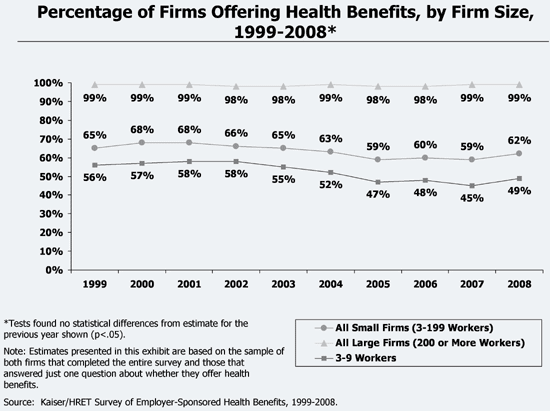
Small firms are much less likely to offer health insurance than large firms. Of firms with 3 to 199 employees, 62% offer health insurance to their employees, a stark contrast to the estimated 99% of firms with 200 or more employees that offer coverage (Exhibit 1). Very small firms (3-9 workers) are least likely to offer health insurance to employees, with only 49% of these firms offering coverage in 2008. Small firms may not offer coverage for a variety of reasons, including inability to afford premiums, employees may be covered elsewhere, or the firm may feel that the benefit does not impact their ability to recruit and retain qualified employees.3
Exhibit 1:
Premiums
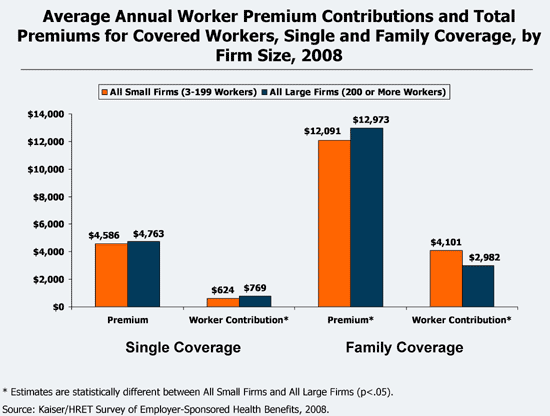
Workers in small firms have lower average premiums for family coverage than workers in large firms ($12,091 vs. $12,973) in 2008 (Exhibit 2). Average premiums for single coverage are not statistically different for workers in small firms compared to workers in large firms. Given that health insurance provided to small firms has higher administrative and marketing costs than health insurance provided to large firms, the lower average small firm premium for family coverage and similar premium level for single coverage suggests that health insurance benefits are probably less generous on average in small firms. Several indicators of benefit levels are discussed later in this report.
Exhibit 2:
Differences in average premiums between small and large firms vary by geographic region. Average premiums are lower for workers in small firms than for workers in larger firms in the South and the West for both single and family coverage (Exhibit 3). Premium differences in other regions are not statistically significant.
Exhibit 3:
Average Annual Premiums for Covered Workers, Single and Family Coverage, by Size and Region, 2008
Single Coverage Family Coverage NORTHEAST All Small Firms (3-199 Workers) $5,187 $13,371 All Large Firms (200 or More Workers) $4,996 $13,771 Total $5,052 $13,656 MIDWEST All Small Firms (3-199 Workers) $4,957 $13,022 All Large Firms (200 or More Workers) $4,610 $12,707 Total $4,723 $12,809 SOUTH All Small Firms (3-199 Workers) $4,271* $11,461* All Large Firms (200 or More Workers) $4,617* $12,607* Total $4,509 $12,252 WEST All Small Firms (3-199 Workers) $4,293* $11,321* All Large Firms (200 or More Workers) $4,969* $13,104* Total $4,683 $12,351 ALL FIRMS All Small Firms (3-199 Workers) $4,586 $12,091* All Large Firms (200 or More Workers) $4,763 $12,973* Total $4,704 $12,680 *Estimates are statistically different within region between Small Firms and Large Firms (p<.05). Source: Kaiser/HRET Survey of Employer-Sponsored Health Benefits, 2008.
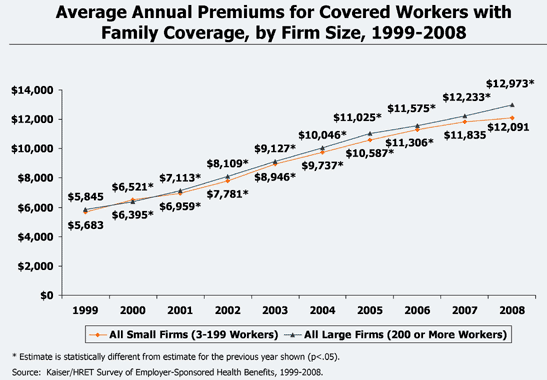
Premiums for workers in small and large firms have had similar premium increases over the last decade (Exhibit 4). Since 1999, family premiums have increased 113% for small firms, similar to the increase of 122% for large firms. Since 2004, average family premiums have grown 24% for small firms, similar to the 29% growth for large firms.
Exhibit 4:
The distribution of premiums is also different for small and large firms. Workers in small firms are much more likely to be employed by firms that have a single premium that is less than 80% of the average, compared to workers in large firms (34% vs. 16%) (Exhibit 5). However, workers in small firms are also more likely than workers in large firms to have a premium that is greater than 120% of the average single premium (22% vs. 16%).
We could be headed for a new schism in the debate about health reform. Not the familiar gulf between advocates of the market and government, or the predictable one between deficit hawks and spenders, but a new one that crosses traditional partisan and ideological lines between advocates of long-term reform of the health care delivery system, and immediate help for the uninsured and insured struggling with health care costs. This new rift is most likely to develop if tight money and a crowded agenda force the focus to shift from comprehensive to incremental reform and choices need to be made about what goes into a smaller, cheaper legislative package. It’s a rift that could stand in the way of progress on health reform if care is not taken to avoid it.
For one group, I will call them the “Delivery System Reformers,” true health reform lies in making the actual delivery of care more cost effective over the long term. Delivery System Reformers champion health IT, comparative effectiveness research, practice guidelines, and payment incentives to encourage more cost-effective care such as pay for performance. They believe that only if we can weed out unnecessary care, promote more cost effective and scientifically proven therapies, and distinguish between new technologies that produce new benefits and not just new profits will we be able to get a handle on health care costs and produce value for the health care dollar. The recent op-ed in the New York Times by baseball executive Billy Beane, Newt Gingrich, and John Kerry exemplified the delivery system reform movement, and notably did not mention the uninsured once. Indeed some delivery reformers believe it would be a mistake to put more money into the current system through expanded coverage until more fundamental changes in the system are made.
The other group, I will call them the “Financing Reformers,” is focused on an entirely different set of problems. Its major concern is the problem of the 46 million Americans without health insurance coverage and the serious problems all Americans are having today paying for health care and health insurance. For these reformers the health care crisis is fundamentally a problem of economic security and ensuring that everyone has access to affordable health care. Financing Reformers may differ on solutions — tax credits, expanding public programs, building on the existing employment based system, single payer — but their primary objective is to fix what they see as a growing crisis in the health insurance system that harms people’s economic well-being and access to care.
Obviously many in our field advance both agendas simultaneously, but there are also two very distinct camps. They think about different problems and often attend different conferences. The health reform field is like a Venn diagram with circles that intersect (though not by a lot).
The two agendas clearly fit nicely together in almost any comprehensive health reform plan and in fact elements of each were included in virtually every candidate’s plan and are advanced by many organizations. If major health reform legislation becomes the subject of serious debate next year, there’s no doubt that it will include expanded coverage for the uninsured, financial relief for many of the middle-class insured, and efforts to make the delivery of health care more efficient and improve quality. Over the long term both financing reform and delivery reform are needed.
But, let’s assume that money is very tight in the new Congress and that choices have to be made about the makeup of an incremental health reform package. For example, assume that the President and Congress operate under so-called “pay go” rules where every new program has to be tied to a way to pay for it. Assume that the Congressional Budget Office will not score savings for delivery reforms in the short term, which will make it tougher to pay for a health reform plan. And assume that Congress will have to find money for other health care priorities too such as to reauthorize SCHIP and restore Medicare physician payment cuts. It is in a tight money environment like this where the focus shifts to an incremental health reform package that the schism could develop. Delivery System Reformers might advance an incremental package that focuses on their long-term agenda. They would have an advantage in pressing their case because the reforms they favor are much cheaper than expanding or subsidizing coverage. But Financing Reformers would be completely unsatisfied with a plan that did not offer coverage expansions and substantial help to consumers struggling with health care costs. Elected officials might be tempted to go with the delivery reform agenda: it’s critical to do; it could be sold as a first step; and its price tag will be very appealing compared to the much higher costs of coverage subsidies. But politicians would have to worry that such an agenda responds more to the interests of health care experts than of the public, which is mostly worried about its own costs and the affordability of health care and not the quality of care.
We deal with similar tensions in other areas of health. One example is HIV, where it has long been a challenge to keep those who champion HIV treatment and those who champion HIV prevention under the same tent when resources are being allocated. When I was a state welfare commissioner I dealt with a similar tension in poverty policy between advocates for the poor who favored services strategies – providing job training and child care for example – and those who favored direct income transfers. These differences in social policy are not unique to health reform and always emerge when it comes down to allocating money through legislation when money is scarce.
The old gulf between left and right on how to reform health care, about government vs. the market, has not gone away and will remain a challenge in crafting health reform legislation. But now that Democrats are in control of the White House and the Congress and will be trying to advance a health reform agenda in an environment where new money will be scarce, the health community needs to be on guard for this new rift which could undermine the chances for action. If it does come to an incremental effort it will be important to preserve elements of both health reform agendas to keep the health reform coalition together and to advance the twin causes of short term consumer relief and longer term delivery reform in tandem. And if it comes to it, it will also be important to plan an incremental effort carefully and not stitch it together as a last minute fallback if more comprehensive legislation collapses. Little attention seems to be directed to that challenge today for fear of undermining a broader effort, but that’s a subject for another column.
The economic downturn has strained family finances and prompted some Americans to cut back on medications and forgo preventive care and visits to the doctor. At the same time, the downturn has triggered declines in tax revenue that inhibit states’ ability to meet rising Medicaid program costs as enrollment spikes during economic hard times. Many states are expected to struggle to close budget gaps despite moves by Congress and the Obama Administration to temporarily boost federal matching money for state Medicaid programs.
The Foundation has created a number of resources that shed light on how Americans and states are faring and provide background on the uninsured, employer-sponsored health insurance costs, trends in states’ Medicaid enrollment and spending and prior efforts to shore up the Medicaid program during a slumping economy.
Public Opinion: Kaiser Tracking Polls
The March Health Tracking Poll finds that 57 percent of all adults say they have put off some sort of needed medical care over the past 12 months because of costs, and one third say they or someone in their household has had problems paying medical bills over the past year.
The COBRA Subsidy and Health Insurance for the UnemployedThis issue brief and related fact sheet examine the workings, potential impact and limitations of temporary subsidies created by the American Recovery and Reinvestment Act of 2009 to help people maintain their employer-sponsored health coverage after a layoff.
Families Turn to Medicaid and SCHIPThis brief, based on focus group discussions, examines the experiences of families who have lost jobs and health coverage.
Rising Health Pressures in a Recession: A Look at Four Communities This report draws on interviews and focus groups to examine at the grassroots levels the experiences of families, employers, safety-net providers and community organizations in four U.S. communities: Beloit, Wisc.; Tampa-St. Petersburg, Fla.; Long Island, N.Y.; and Sonoma, Calif. There is a companion video.
How Families Affected By Cancer Are Faring in the RecessionThis report profiles six cancer patients and survivors and the challenges they face to help gauge how the recession and rising unemployment is affecting workers who are most in need of ongoing medical care.
Snapshots from the Kitchen TableThis report and video on family budgets and health care illustrate the financial struggles of many families in the U.S. and show the central role of health care costs and coverage in a household’s economic stability.
Rising Unemployment, Medicaid and the Uninsured examines how increases in the unemployment rate changes health coverage and the financial implications for state budgets. A separate snapshot projects state financing effects into fiscal 2011.
Impact of Unemployment: A one percent rise in the nation’s unemployment rate is projected to increase the number of uninsured by 1.1 million people. See the chart.
Changes in Health Insurance Coverage, 2007–2008: Early Impact of the RecessionThis issue brief examines trends in health insurance coverage from 2007 to 2008, a period marked by the start of a deep recession. It finds that the share of the nonelderly population covered by employer-provided insurance declined, the share covered by public programs increased and the number of uninsured people continued to rise. The downturn affected coverage for adults differently that it affected coverage for children.
Implications for States and People on Medicaid and SCHIP
The Crunch Continues: Medicaid Spending, Coverage and Policy in the Midst of a RecessionThe annual 50-state survey by the Foundation’s Kaiser Commission on Medicaid and the Uninsured finds sharp rises in Medicaid enrollment and spending during the economic downturn, straining state budgets and pressuring officials to curb program costs despite extra financial help from the federal government.
Aging Out of Medicaid: What is the Risk of Becoming Uninsured?This policy brief uses the most recent available data to examine the patterns of health coverage for young adults after they turn 19 and typically are no longer eligible for Medicaid or the Children’s Health Insurance Program.
Medicaid and State Budgets: From Crunch to Cliff This fact sheet discusses the status of Medicaid and state budgets in light of the continuing recession and the federal fiscal relief provided to state Medicaid programs through the American Recovery and Reinvestment Act (ARRA).
Webinar: Health Policy Provisions of ARRAThis webinar provides an overview of key health policy aspects of the American Recovery and Reinvestment Act (ARRA), including provisions on Medicaid, COBRA and health information technology.
The Role of Medicaid in State EconomiesThis new analysis of 29 studies in 23 states examines the economic stimulus derived from Medicaid spending, and the adverse effects of Medicaid spending cuts.
Employer-Sponsored Health Insurance Costs
2009 Kaiser/HRET Employer Health Benefits Survey This annual survey of employers provides a detailed look at trends in employer-sponsored health coverage, including changes in premiums, employee contributions, cost-sharing provisions, and other relevant information.
The Uninsured: A Primer This primer reviews the basic profile of the uninsured population, how they receive care, the latest trends in health insurance coverage, and what the options are for increasing coverage.
Five Basic Facts on the UninsuredThis brief provides basic facts that explain why so many people lack coverage and how being uninsured affects their health and financial security.
During the 2008 Presidential campaign now President Barack Obama announced a comprehensive health care reform proposal and laid out his positions on a number of other key health care issues.
The two documents below summarize these campaign policies and positions. They were prepared by the Kaiser Family Foundation with the assistance of Health Policy Alternatives, Inc., and are based on information compiled from Obama’s campaign Web site, speeches, campaign debates and news reports. They are adapted from the side-by-side comparisons examining the positions of the presidential candidates.
The Kaiser Family Foundation and the Pew Research Center’s Project for Excellence in Journalism conducted this study of how the U.S. news media covered health issues over an 18-month period from January 2007 through June 2008. The study finds that news about health and health care made up less than four percent (3.6%) of all news content from January 2007 through June 2008.
The study also examines the type of health coverage in the news, and finds that the largest proportion (42%) of the stories were about specific diseases or conditions. Thirty-one percent of health news focused on public health issues, including potential epidemics and contamination of food and drugs. The smallest category of stories focused on health policy or the health care system (27%) of all health news, or less than one percent (.9%) of all news content.
This analysis shows that employer-sponsored coverage began declining after 2000 due to an economic downturn that saw rising unemployment, declining family incomes and more workers moving into temporary work, part-time work and other employment arrangements where health benefits were not provided. Employer-sponsored coverage continued to decline after 2003 despite improvements in the economy and slower growth in health care costs. The decline in coverage was due both to falloffs in the share of employees with access to employer insurance and decreasing take-up rates among workers. As a result, the uninsured rate for employees increased, and it also went up for low-income children with access to employer-coverage. Employer coverage is likely to continue to decline as increasing premiums and the souring economy will likely lead more employers to drop coverage. And employees will probably face greater challenges to taking up coverage as they face increasing contribution amounts and growing strains on family budgets. In the absence of other affordable health coverage options, these trends can be expected to result in further growth in the number of uninsured employees.
Vermont’s Choices for Care experiment in long-term services, created through a five-year Medicaid waiver in 2005, was designed to increase access to home and community-based services while reducing the use of institutional services and controlling overall costs. In exchange for agreeing to a federal funding cap, Vermont was able to expand access to community-based services and extend some services to a “moderate need” group for the first time to test the theory that early interventions can be cost-effective and help keep people in community settings. In the three years since, the state has seen a shift of people and money toward community settings, but also the return of waiting lists for some populations. Because of circumstances unique to Vermont, it is unclear how appropriate this waiver approach would be for other states.
This report highlights states’ innovative use of health information technology in their Medicaid and SCHIP programs to improve their ability to reach and enroll eligible children, improve the quality of care for children, increase communications with families, and continue to modernize their programs.
Although many of these efforts are still in their early stages, findings to date indicate improvements in access to care, care coordination, case management, and administrative efficiency. States are pursuing ways to overcome financing and other challenges to getting new health information technology efforts off the ground, but federal leadership and funding is key for continuing to support and advance state Medicaid and SCHIP health information technology efforts.