Women at Risk: A View from the Safety Net

Published: May 31, 2009

This video provides a snapshot of the Arlington (Va.) Free Clinic where, four times a month, medical personnel provide care and screenings exclusively to women. The video explores the hurdles that uninsured women face in accessing health care and the social issues, including work and family responsibilities, that create challenges for them. It is a companion to the report, “Putting Women’s Health Care Disparities On The Map: Examining Racial and Ethnic Disparities at the State Level.”

Low-Income Adults Under Age 65 – Many are Poor, Sick, and Uninsured

Published: May 30, 2009

This policy brief from the Kaiser Commission on Medicaid and the Uninsured examines the characteristics and insurance coverage of low-income adults under age 65, a group numbering more than 50 million people.

Members of this group are more likely to be in poor health than other Americans and are the least likely to have health insurance. Nearly a third are from families earning less than twice the poverty level. Fifteen percent live in poverty.

Although Medicaid covers most low-income children, it has limited coverage for their parents and generally does not cover childless adults, leaving uninsured a large share of low-income adults with significant health needs.

Overview (.pdf)

Policy Brief (.pdf)

Examing the Role of Private Long-Term Care Insurance in the Financing of Long-Term Care

Published: May 30, 2009

As the long-standing gap between Americans’ need for long-term care services and the public and private funding available to pay for them grows ever wider, this policy brief from the Kaiser Commission on Medicaid and the Uninsured examines the fundamentals of private long-term care insurance.

The brief describes the results of a study exploring how consumers buy policies, how much policies cost and how they work, and what regulations exist to protect consumers. It also discusses some key challenges that policymakers face when considering whether to enlarge the role of private long-term care insurance in financing long-term care.

Also available is related testimony, “Filling In the Long-Term Care Gaps,” from Diane Rowland, Executive Vice President of the Foundation and the Executive Director of KCMU, who testified June 3 at a U.S. Senate Special Committee on Aging hearing on the role of private insurance in long-term care.

Report

Testimony

Closing the Long-Term Care Funding Gap: The Challenge of Private Long-Term Care Insurance

Published: May 30, 2009

This policy brief from the Kaiser Commission on Medicaid and the Uninsured examines the fundamentals of private long-term care insurance. It describes the results of a study exploring how consumers buy policies, how much policies cost and how they work, and what regulations exist to protect consumers. It also discusses some key challenges that policymakers face when considering whether to enlarge the role of private long-term care insurance in financing long-term care.

Policy Brief (.pdf)

How Does Health Coverage and Access to Care for Immigrants Vary by Length of Time in the U.S.?

Published: May 30, 2009

This analysis, based on data from the 2007 Health Tracking Household Survey, examines how health coverage and access to care for non-elderly adults vary based on immigrants’ length of time in the U.S. and between immigrants, second generation Americans and third generation and higher Americans. It also identifies the primary factors contributing to lower health coverage rates and greater access barriers among immigrants.

While, overall, immigrants have a high uninsured rate and face greater access barriers relative to U.S.-born residents, the findings suggest that many immigrants eventually gain insurance and improved access to health care as they acquire language and job skills, improve their economic standing and become more familiar with the U.S. health care system. Recent immigrants are most at risk for lacking coverage and facing access problems. Addressing coverage and access barriers for this group will be important to any effort to reduce overall disparities between immigrants and U.S.-born residents.

Executive Summary (.pdf)

Issue Brief (.pdf)

In Depth Analysis of Health Reform Issues

Published: May 15, 2009

These reports provide in-depth analysis related to the health reform debate. Additional reports will be added as they become available.

Medicaid Expansion in Health Reform: National and State Estimates of Coverage and CostsThis analysis and public briefing examine the potential national and state-by-state impacts on Medicaid enrollment and spending of the expansion of coverage for low-income adults under the health reform law.

Reform Calculator Estimates Premiums and Subsidies Available In 2014The Foundation’s interactive health reform calculator has been updated to illustrate how government assistance for insurance premiums could work under the health reform law enacted this year.

2010 Kaiser/HRET Employer Health Benefits SurveyThis annual survey of employers provides a detailed look at trends in employer-sponsored health coverage, including changes in premiums, employee contributions, cost-sharing policies and other relevant information.

Side-by-Side Comparison of Major Health Care Reform ProposalsThe Foundation’s interactive side-by-side health reform comparison tool reflects provisions of the final health reform law, as well as earlier versions of the legislation considered by Congress and other comprehensive reform proposals put forwarded during the debate.

Survey of People Who Purchase Their Own InsuranceThis survey examines the premiums, rate increases and deductibles for people who buy health insurance on their own currently in the non-group market.

Alternatives for Financing Medicaid Expansions in Health ReformThis report examines alternative ways of financing Medicaid expansions that potentially would be more equitable and less complicated than those included in leading health reform legislation under consideration in Congress.

Health Reform Lessons From MassachusettsTwo reports and an updated fact sheet examine state-level health reform in Massachusetts and the lessons it offers for policymakers in Washington.

Health Care and the Middle Class: More Costs and Less CoverageThis issue brief examines the availability, affordability and stability of the health insurance coverage of the American middle class, defined as those with incomes of $44,000 to $88,000 for a family of four.

The Coverage and Cost Impacts of Expanding MedicaidThis paper quantifies the impacts on coverage and cost of expanding Medicaid to cover more of the low-income uninsured, including adults, at various income levels and with improved participation rates.

Rising Unemployment, Medicaid and the UninsuredThis report analyzes the relationship between increases in the unemployment rate and changes in the number of people covered by employer-sponsored health insurance, Medicaid, the Children’s Health Insurance Program and non-group insurance policies, as well as the financial implications for government budgets.

Pulling it Together: The Experts vs. The Public on Health Reform

Published: May 14, 2009

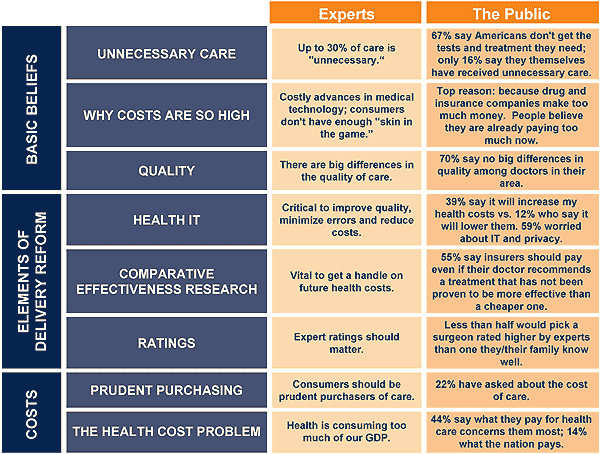
In repeated Kaiser polls, we see a divide between what experts believe and what the public believes about some of the key issues in health reform. They don’t disagree on everything; far from it. But there is a wide gulf on basic beliefs about what is behind the problems in the health care system and key elements of reform, especially delivery reform.

Experts believe the health care system is full of unnecessary care and troubling variations in care, and are committed to the long-term reform of the health care delivery system to make it more efficient, smooth out variations and produce greater value for the health care dollar. In this they (we) are of course right; it will not make sense over the long run to put more money into such an inefficient health care system. The public has a very different world view: People think that underservice is a bigger problem than overservice. They want relief from the problems they are having now paying for health care and health insurance in very tough economic times. Under no circumstances do they want to pay more for their care. And many are worried that they will not be able to afford their health insurance in the future or may lose it altogether.

People are likely to be perplexed when they hear experts say controlling health care costs may mean difficult tradeoffs in the high tech care they get or how much they have to pay out of pocket, because they don’t see the need for tradeoffs; more than anything else they blame waste and fraud and high profits made by insurance and drug companies for high health care costs. They don’t relate well to delivery reform because they don’t see problems in health care as systems failures as experts do and can’t easily see how delivery reform will help them with their day-to-day problems paying for care.

This chart shows a few of the areas where the experts and the public are at odds on basic beliefs about underlying problems, delivery reform, and health care costs.

pit051809gif_5.gif

These differences between experts and the public matter because key elements of health reform which elected officials expect to resonate with the public could get a decidedly less enthusiastic reception than expected if more is not done to close the gap in basic premises and beliefs between experts and the public. Most fundamentally, the challenge is to educate the public about why health costs are rising as fast as they are in the U.S. As long as people think we can solve the problem of rising health care costs simply by eliminating waste, fraud and profiteering, the hard choices they hear experts and leaders talking about will not make much sense to them.  But it’s a lot easier to rail against the latest rip-off in the health care system if you are a politician or do another news story on Medicare fraud if you are a journalist than it is to talk about why medical technologies people want cost us so much.  Perhaps we need Ross Perot back with his charts and graphs, this time with basic facts about why we have the problems we do in the health care system.

Another challenge is to explain how IT, and comparative effectiveness research, and pay for performance and the whole panoply of health systems changes that need to be made will help address the everyday problems of cost and access people care about most. Taking this communications challenge seriously is a necessary first step towards closing some of the gaps between experts and the public on health reform.  Otherwise, key elements of reform will be susceptible to demagoguery and may not have the public support they deserve.

Pulling it Together: The Health Care Industry’s Second Voluntary Effort

Published: May 12, 2009

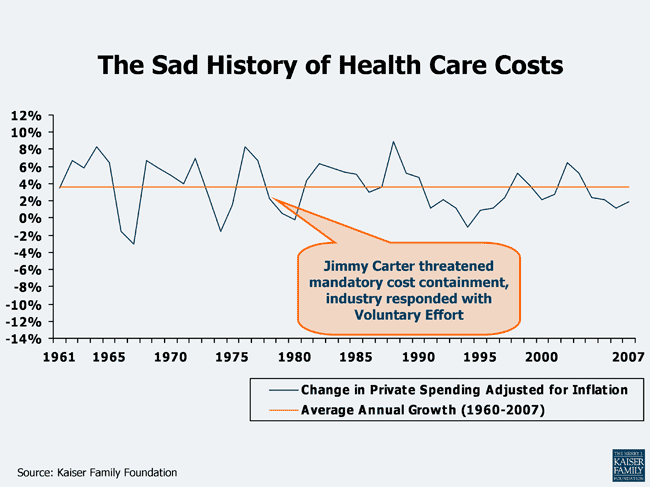
The announcement that health care industry groups plan to put on the table voluntarily a package of proposals to shave $2 trillion off the rate of increase in health spending over the next ten years immediately conjures up the image of the Voluntary Effort or VE launched with similar fanfare in the Carter administration.  Back then the industry used the VE to fend off Jimmy Carter’s efforts to aggressively control the costs of hospital care by offering to do it themselves on a voluntary basis.  The VE helped defeat Carter’s plan and actually worked for a few years.  As the chart shows, the rate of increase in health care costs fell for a few years, but then spiked again, and resumed its upward trajectory. This has been the history of efforts to control health costs; we sometimes achieve temporary successes, but higher rates of increases, at least in the past, have always returned.

Ever since the Carter years (I worked for Jimmy Carter in what was then the Health Care Financing Administration) the VE has been viewed in health policy circles as something of a farce; a president diverted by an industry trying to fend off cost containment actions it saw as more harmful to its bottom line by promising to regulate itself.  While today’s voluntary actions by health care groups are not intended to block action on health reform legislation like the earlier VE was—far from it, the industry is at the table in an unprecedented way—they do underscore how the prospect of broader action by a president and congress, including specific ideas industry groups don’t like such as a public plan option, can sometimes motivate an industry to do more on its own than it would otherwise do.

pit051209pres.gif

But the new announcement need not be viewed cynically.  The President was very clear in his remarks that the private effort is a parallel one, not to be confused with the challenge of designing and paying for health reform legislation, scored by the CBO, on Capitol Hill. The new move by the health care industry groups also reflects a very public recognition on their part that the rate of growth in health spending needs to be reduced, even if the goals they announced may not prove fully achievable, either because national associations cannot deliver their members or expected savings do not materialize. The recognition by the industry itself that current rates of increase in health spending are unsustainable is a good thing and will provide cover for other efforts to reduce health spending not just this one.

The bigger test will come soon: once there is health reform legislation on the table will the industry remain supportive or will they revert to form and protect their bottom line?  At that point, the health reform debate will enter a new and critical phase. If the industry is still at the table then, that could truly be a game changer.