KFF designs, conducts and analyzes original public opinion and survey research on Americans’ attitudes, knowledge, and experiences with the health care system to help amplify the public’s voice in major national debates.
This document summarizes the discussion of a roundtable that took place at the Foundation in November 2010 examining the women, girls and gender equality principle of the U.S. Global Health Initiative (GHI). This principle, the first of seven core principles of the GHI, aims to sharpen the focus on women and girls across U.S. government global health efforts.
The roundtable included experts from a variety of organizations, including officials from the U.S. government, and gender experts from NGOs and U.S. government implementing partners. Much of the discussion centered on the draft guidance developed by the U.S. government to inform the implementation of the principle in countries by U.S. teams.
In addition to the summary, the Foundation has also issued a matrix with country-level indicators related to women, girls and gender across all GHI countries. The matrix was designed to inform discussions related to the GHI principle. These materials are part of a series of projects being undertaken by the Foundation exploring the application of the women, girls and gender equality principle of the GHI.
Health insurance premiums have increased rapidly over the recent past, growing a cumulative 138% between 1999 and 2010 and outpacing cumulative wage growth of 42% over the same period.1 These figures, which have been widely cited to demonstrate the growing burden of health insurance costs on employers and employees, illustrate overall trends in health benefit costs, but they do not show how this growing burden is affecting employers and employees in different settings. To address this issue, this analysis shows employer costs for payroll and health benefits over an eleven-year period for workers in different occupations and at different establishment sizes.
Our analysis focuses on employer costs for health insurance for workers with access to health benefits and updates our earlier snapshot published in 2008. Employer costs for health insurance increased significantly as a percentage of payroll between 1999 and 2010, and varied meaningfully across the workforce when viewed as cost per hour worked or as a percentage of payroll. Employer costs per hour for health insurance were higher for workers in higher wage occupations than for workers in lower wage occupations, likely because more highly compensated employees want relatively generous health benefits at work and because existing tax subsidies favor those employees.2 Viewed as a percentage of payroll, however, employer costs for health benefits are greater for workers in lower wage occupations than for workers in high wage occupations. This means that workers in lower wage occupations on average get relatively less in employer contributions measured in cost per hour worked, but that what they get represents a relatively higher share of their payroll.
This information can be used by policy makers trying to understand the affordability of employer-sponsored coverage. By showing the large variation in health benefit costs across establishments and occupations, this information helps policy makers better understand the issues facing different types of businesses and workers. We show that employer costs as percentage of payroll vary significantly across workers and settings, highlighting the challenge facing policy makers trying to encourage and provide support for the offering by employers and acceptance by employees of affordable coverage in the workplace.
Our analysis is based on data from the National Compensation Survey (NCS), which is a nationwide survey of labor costs in private and public establishments conducted quarterly by the Bureau of Labor Statistics (BLS).3 Information is provided on employer costs for health insurance for employees with access to health benefits through their employer. Details about the NCS and our analysis are available in a methodological appendix at the end of this analysis, although several facts should be highlighted upfront. First, the data reflect employer costs for health insurance and do not include additional amounts that employees might contribute toward the costs of their coverage. Second, employer costs are affected by enrollment in, and in some cases by eligibility for, health benefits offered by employers. For example, employers may impose a waiting period before newly hired employees are eligible to enroll for health benefits, but these employees are treated as having access to health benefits in the data because most similar workers would be eligible after some period of tenure with the firm.
Definitions of key terms:
Payroll costs include employer payments for wages, salary, overtime, vacation, holiday, sick days, bonus, and other cash compensation to employees, excluding severance payments and unemployment benefits.
Health costs include all employer payments for health coverage, excluding employee contributions to premiums or out-of-pocket medical cost-sharing.
Non-health fringe benefits include employer payments for life and short-term disability insurance, defined benefit and defined contribution plans, worker’s compensation, Social Security, and Medicare.
Total compensation is defined as the sum of payroll and all fringe benefit costs including health.
Establishment size is the number of employees at a selected plant or office. Firms may be made up of one or more establishments.
Employer Costs for Health Insurance
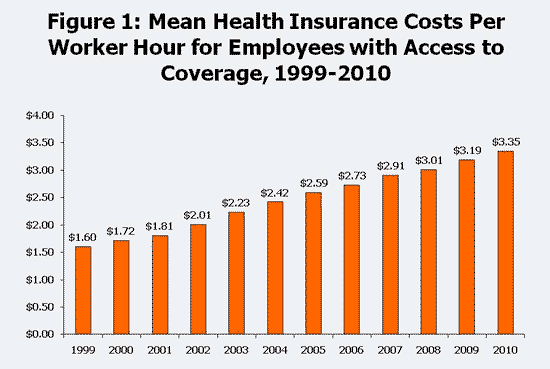
Among workers with access to health benefits, average employer costs for health insurance per employee hour rose from $1.60 to $3.35 during the 1999 to 2010 period (Figure 1). This almost 110% increase in average costs per hour is much larger than the 39% increase in average employer payroll costs per hour for these workers.
Source: Kaiser Family Foundation calculations based on data from the National Compensation Survey, 1999-2010, conducted by the Bureau of Labor Statistics.
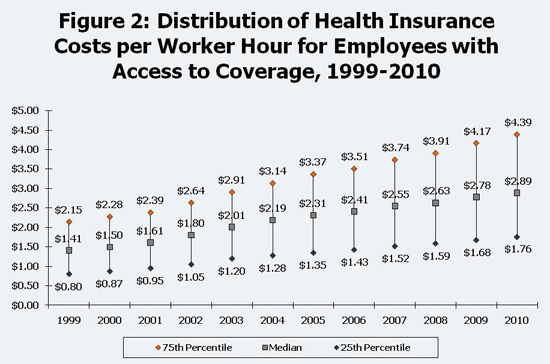
Employer hourly costs varied significantly across workers in each of the years (Figure 2). Looking at 2010 for example, the difference between employer costs at the 25th percentile ($1.76) and 75th percentile ($4.39) was just over $2.50 per hour. These costs per hour may vary for a number of reasons, including: differences across plans in benefits and cost sharing, differences in premium shares borne by employers, differences in the demographic characteristics of workers in sampled establishments (e.g., average age, health status), differences in employee and dependent participation in health benefits, and geographic differences in the costs of health care. For example, workers may have relatively higher employer costs per hour for health insurance because they receive generous benefits, they have an employer that pays a large share of the premium, or they work for an employer with an older workforce or located in an area with relatively expensive costs for health care and/or other goods.
Source: Kaiser Family Foundation calculations based on data from the National Compensation Survey, 1999-2010, conducted by the Bureau of Labor Statistics.
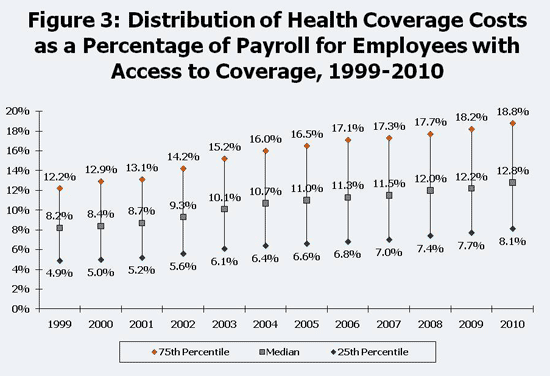
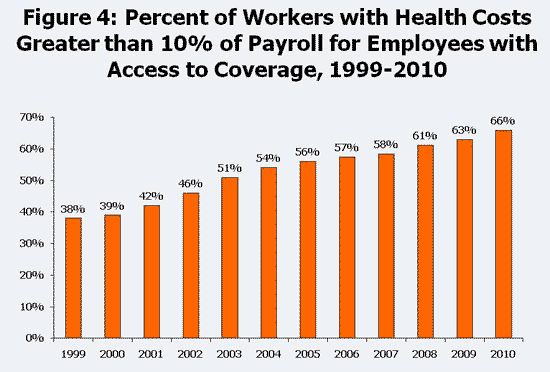
Employer costs for health insurance viewed as a percentage of payroll also showed significant variation (Figure 3). In 2010, the median employer cost was 12.8% of payroll, but 25% of workers with access to health benefits had employer costs for health insurance that were equal to or less than 8.1% of their payroll costs and another 25% had employer costs for health insurance that were equal to or exceeded 18.8% of their payroll costs. Overall, the percentage of workers in jobs where employer costs for health insurance exceeded 10% of payroll rose from 38% to 66% between 1999 and 2010 (Figure 4).
Source: Kaiser Family Foundation calculations based on data from the National Compensation Survey, 1999-2010, conducted by the Bureau of Labor Statistics.
Source: Kaiser Family Foundation calculations based on data from the National Compensation Survey, 1999-2010, conducted by the Bureau of Labor Statistics.
Figures 3 and 4 help to demonstrate the difficulty of summarizing employer costs for health benefits in simple terms. The wide variation in employer costs, both in costs per hour and as a percentage of payroll, suggests that arguments and policy proposals based on “average costs” may be misleading because there is not a typical or common contribution level or percentage of payroll for health care that relates to most jobs.4 Further, the steady increase over time throughout the distributions for costs per hour and percentage or payroll shows the importance of using current information to analyze affordability and other cost issues related to work-based coverage.
Employer Health Costs by Establishment Size
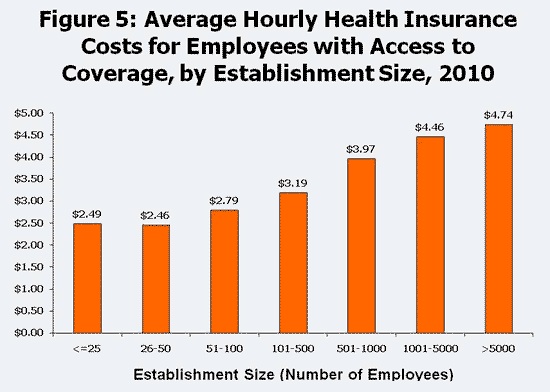
In 2010, average employer costs per worker hour for health insurance generally rose with establishment size (Figure 5). This pattern may indicate that benefits are more generous in larger establishments, which would be consistent with the overall higher average levels of compensation in large establishments.5 Participation by employees and dependents in health benefit offerings may also be higher in large establishments. Results from the Kaiser/HRET Annual Employer Health Benefits Survey show that the percentage of workers covered by their firm who elect family coverage (rather than single coverage) rises with firm size.6 Employer costs for a family policy are usually larger than for single coverage.
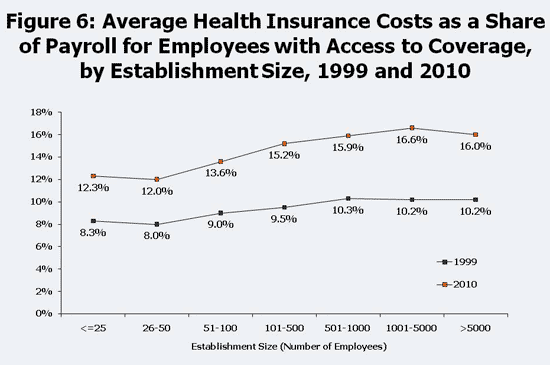
Between 1999 and 2010, employer costs for health insurance increased as a percentage of payroll for all establishment sizes, with increases ranging from 4 to about 6.5 percentage points (Figure 6). While costs as a percentage of payroll generally were higher at larger establishments than for smaller ones, there were some exceptions to the pattern and the differences are not as large as those for costs per hour (Figure 5). An important factor here is that compensation other than health insurance also tends to rise with establishment size.7 So, while employer costs per hour for health insurance were higher for larger establishments, so were their other costs, making the relationship between the two less straightforward.
Source: Kaiser Family Foundation calculations based on data from the National Compensation Survey, 2010, conducted by the Bureau of Labor Statistics.
Source: Kaiser Family Foundation calculations based on data from the National Compensation Survey, 1999 and 2010, conducted by the Bureau of Labor Statistics.
Employer Health Costs by Occupation
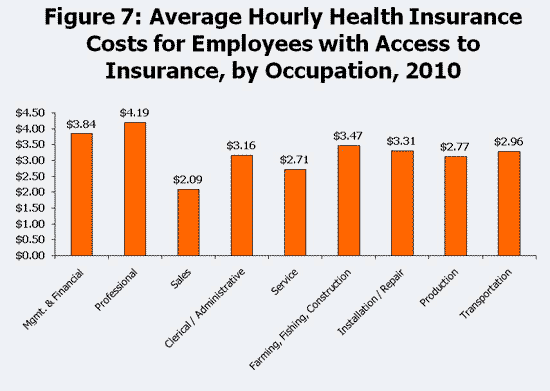
Average employer costs for health insurance varied in 2010 from $2.09 per hour for workers in sales-related occupations to $3.16 for clerical / office support staff and $4.19 for professionals (Figure 7). As discussed above, these differences may be driven by a number of factors, including benefit generosity and differences in benefit participation by workers and dependents.
Source: Kaiser Family Foundation calculations based on data from the National Compensation Survey, 2010, conducted by the Bureau of Labor Statistics.
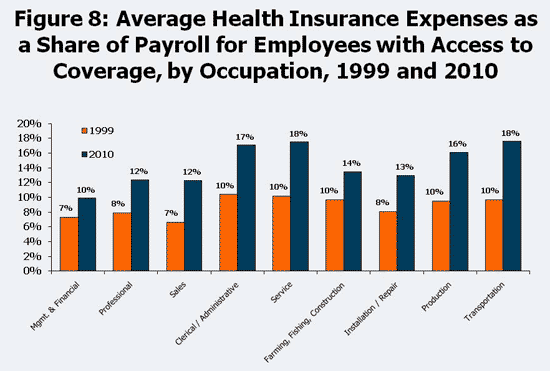
Figure 8 shows, for both 1999 and 2010, average health insurance costs as a percentage of payroll costs by occupation. It is worth noting that although technical and professional occupations had some of the highest health costs per hour (Figure 7), as a share of payroll their costs were relatively low, reflecting the relatively higher wages in these jobs. For service and laborer/cleaner/helper occupations, the levels of costs were relatively low, but comparatively high as a percentage of payroll. Looking at the change over the 1999 to 2010 period, health costs increased relative to payroll for all occupations. However, the size of this change was largest for those with health costs that were large relative to payroll, such as transportation, production, service, and clerical/administrative support occupations.
Source: Kaiser Family Foundation calculations based on data from the National Compensation Survey, 1999 and 2010, conducted by the Bureau of Labor Statistics.
Discussion
The data presented in this paper explore the much-noted increase in health care costs as it relates to worker compensation. Although rising health costs have affected all employers and employees with health benefits, there is still a relatively wide range of cost exposure over time and by occupation and establishment size. Health insurance costs for employees in lower paid occupations were smaller in hourly dollar amounts, but made up a larger percentage of payroll due to their lower average earnings. Larger establishments had greater health benefit costs, both on an hourly basis and relative to payroll costs, even though their payroll costs were greater.
The charts above show the significant differences in employer costs for health benefits across establishment size, wage levels and industries, and demonstrate the difficulty in capturing this information by referring to average or typical levels of costs.Policy makers concerned with developing policies to support employer-sponsored coverage and improve its availability and affordability should be mindful of the significant variation in the marketplace today. One thing that employers share, however, is the impact of rising health care costs, where increases across all levels of the distributions show that employers and employees in every circumstance are affected by rising costs.
This paper was prepared by Gary Claxton and Anthony Damico of the Kaiser Family Foundation’s Health Care Marketplace Project, and is an update to an analysis originally published in 2008. Paul Jacobs, who formerly worked for the Foundation, helped to prepare the prior version. The Kaiser Family Foundation gratefully acknowledges assistance provided by Michael Lettau, Ph.D. of the Office of Compensation and Working Conditions at the Bureau of Labor Statistics in accessing, analyzing, and understanding the Employment Cost Index data.
Methodological Appendix
The Employment Cost Index (ECI) is a nationwide survey of labor costs in private and public establishments conducted quarterly by the Bureau of Labor Statistics (BLS). The ECI was developed in the mid-1970s to track changes in the costs of employment. Later modifications added data about health and other fringe benefits. Since about 2003, the ECI sample was merged with a broader group of surveys on employer benefits and payroll costs collectively referred to as the National Compensation Survey (NCS).8
ECI/NCS data are constructed by first choosing establishments in private industry and in state and local governments in the 50 states and the District of Columbia. Federal government, agriculture, and private household establishments are excluded from the sample. Then the survey collects information about the costs of employment for up to eight job classifications in each establishment that is surveyed. The data are collected for job classifications, rather than for individual workers, so that continuity within establishments may be maintained over time as individual workers enter and exit the establishment. Jobs are sampled proportional to their prevalence at the establishment. For instance, in a plant which produces coal, separate wage and benefits costs for miners, engineers, and truck drivers may be obtained by the survey, whereas other jobs with fewer employees, such as for accountants and crane operators, may be excluded. The data we use are nevertheless representative of all workers in the United States as of June of each calendar year. The exhibits and calculations are presented on a per-worker-hour basis and include all employees in sampled jobs where health benefits are available, including those that are seasonal, part-time, or temporary. We use data each year from 1999 to 2010.
The data reflect contributions by employers for the cost of health insurance and do not include amounts that employees are required to contribute for their share of the premiums. Thus, the costs shown above do not comprise the full costs of health coverage for employees, and readers should be mindful of this factor when interpreting results. For example, occupations where employers tend to pay a higher share of the total premium cost would have higher employer costs per hour than occupations with lower employer shares, even if benefits levels (e.g., deductibles) and other factors did not differ across the occupations. Readers also should be aware that employer costs for benefits in a job classification are averaged over all of the workers in that job classification, even if workers do not participate in the benefit. As examples, employees offered health benefits may choose not to take them up and new employees may face an exclusion period before they are eligible for benefits from the employer. Thus, differences in employer costs across job classifications or over time may to some extent reflect different participation rates for workers and their dependents.
Hourly costs for payroll and health insurance are provided by the Bureau of Labor Statistics and we used these estimates because they adjust for differences in the number of hours worked annually among employees. Hourly cost of payroll was calculated by combining hourly costs for wages, overtime, vacation pay, sick pay, as well as bonuses and other paid leave. Because the data are collected from establishments, not firms, firm-level characteristics, e.g. firm size, are not available. The paper avoids the use of the term firm, although it uses the terms “employer” and “establishment” synonymously although they may not be equal.
The BLS provides survey weights which enable the researcher to calculate statistics which are representative of workers in the United States in a given year. An adjustment to these weights was made to correct for changes in the composition of industries and occupations in the United States over time. This adjustment allows for a more accurate comparison of figures over time, but only very marginally affected the results presented in this paper.
BLS researchers impute missing data for hourly values when respondents do not provide sufficient data to calculate them. 5.9 percent of observations were missing a response to the question of whether health insurance was offered to workers holding that particular job. Rather than impute a value for these observations, for all statistics, these observations were excluded from our sample.
The Kaiser Family Foundation obtained access to the ECI/NCS through an agreement with the BLS. All analyses were performed on site at the BLS headquarters in Washington D.C. from August to October of 2010 by Kaiser Family Foundation staff.
Notes:
1. Kaiser Family Foundation/Health Research and Educational Trust, Employer Health Benefits 2010 Annual Survey. Available online at: http://ehbs.kff.org/.
3. As part of the National Compensation Survey, the Bureau of Labor Statistics collects these data quarterly to develop the Employment Cost Index (ECI) which is designed to measure changes in compensation costs for the civilian workforce. Other details on how the statistics were derived from the ECI data are reported in the Methodological Appendix at the back of this report.
4. Variation at the employer level is somewhat different than the worker-level variation in costs shown here (because many employers have multiple job classifications that may “average-out” some of the worker-level variation). For an establishment-level analysis of health costs using the NCS data, see: Christine Eibner, Kanika Kapur, and M. Susan Marquis, “Employer Health Insurance Costs in the United States,” California HealthCare Foundation, July 2007, available online at: http://www.chcf.org/documents/insurance/EmployerHICostsUS.pdf.
5. In our sample of workers with access to health benefits in 2010, the mean hourly rate of payroll was $23.22 for establishments with less than 25 employees and $37.21 for those with more than 5000 employees. These mean compensation rates grew more or less steadily as establishment size increased.
6. About 30% of workers in firms with 3-199 employees enrolled in family coverage, while about 36% of workers in firms with 200 or more employees did the same. Kaiser Family Foundation/Health Research and Educational Trust, Employer Health Benefits 2010 Annual Survey.
7. See, e.g., Julia I. Lane, Laurie A. Salmon, and James R. Spletzer, “Establishment wage differentials,”Monthly Labor Review, April 2007. Available online at: http://www.bls.gov/opub/mlr/2007/04/art1abs.htm.
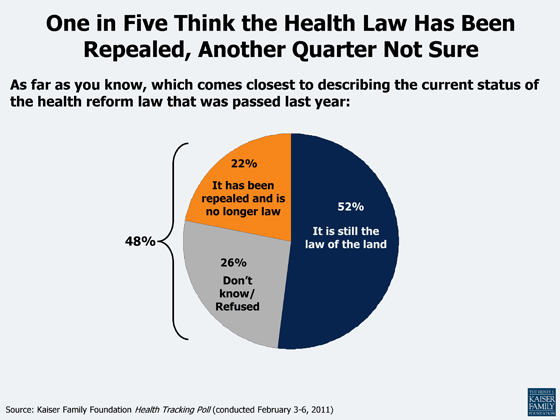
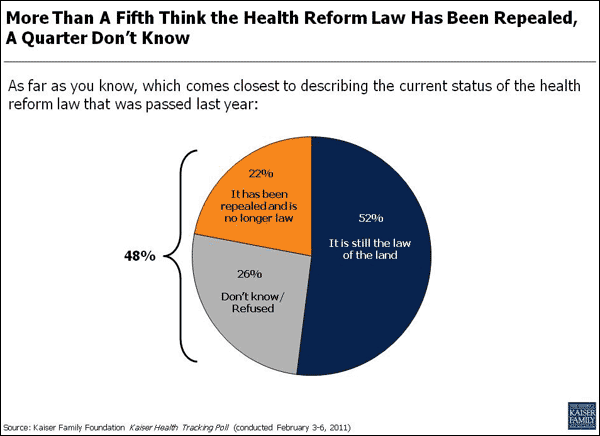
In the latest Kaiser Health Tracking Poll, nearly half of Americans say they are confused about the status of the health reform law. While 52 percent of the public is aware that health reform is still law, 22 percent think the law has been repealed and is no longer law and another 26 percent are not sure.
Americans are still divided about what they want lawmakers to do on health reform. Three in ten say Congress should expand the law, and two in ten vote for the status quo – leaving the law to be implemented as enacted. On the other hand, four in ten want it repealed – with half of those hoping to see it replaced with a “Republican-sponsored alternative” and the other half wanting no further action. Even as the GOP vows to block the law by stripping funding for implementation, most Americans (61 percent) – including majorities of Democrats and independents – continue to oppose this tactic, although most Republicans (59 percent) favor it. The most common reason people choose for their opposition to defunding health reform is that it doesn’t seem like “the way our government should work”.
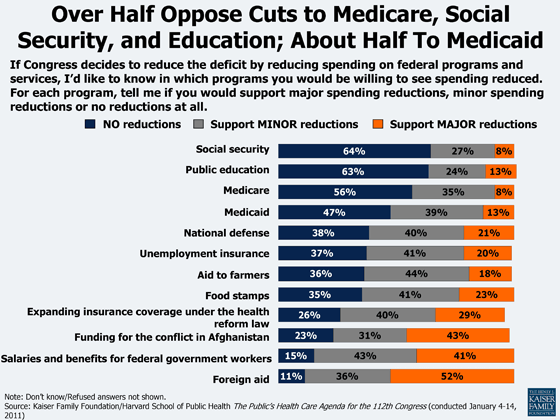
As President Obama and Congress begin to hash out the 2012 budget, it is a good time to revisit results from our January 2011 survey showing that in spite of the fact that most Americans report being very concerned about the budget deficit, there is little public support for major reductions across a number of program areas. Majorities said they would not support any reductions in Social Security (64 percent), public education (63 percent), or Medicare (56 percent), and nearly half (47 percent) do not support reductions in Medicaid. In other areas of spending, results are more mixed. For example, when it comes to national defense, unemployment insurance, aid to farmers, and food stamps, about four in ten would support “minor” reductions and another roughly two in ten would support “major” reductions. The only program in which the majority of Americans would accept major cuts: foreign aid.
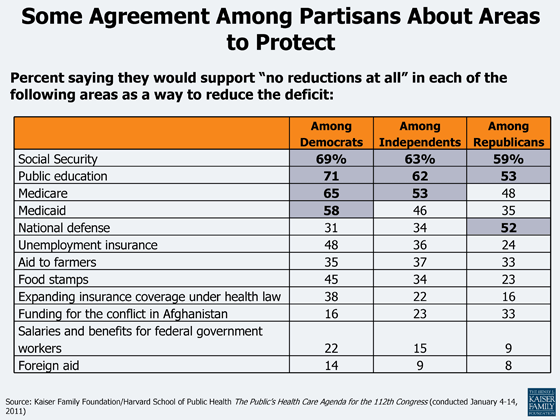
Republicans are more likely than Democrats to support spending reductions. While clear majorities of Democrats are opposed to cuts in Medicare (65 percent) or Medicaid (58 percent), Republicans are more willing to see some reductions. On the flip side, Republicans are more protective of national defense, with 52 percent supporting no reductions, compared to only 31 percent of Democrats. Independents generally fall in between Democrats and Republicans in their support for funding cuts.
The complete report, including more questions about the budget deficit, chartpack and methodology of the poll can be viewed online.
Tomorrow at ARCO Arena, the Sacramento Kings join with Mayor Kevin Johnson, a former NBA player, and Sacramento Center for AIDS Research, Education Services (CARES) to encourage fans to be “Greater Than AIDS.” The special game night is organized as part of a national partnership between NBA Cares and Greater Than AIDS, a national movement to respond to AIDS in America developed by the Menlo Park-based Kaiser Family Foundation together with the Black AIDS Institute.
“I’m so pleased that the NBA and the Kings have stepped up in the fight against AIDS. Their leadership will make a real difference in helping our community prevent the spread of this growing epidemic,” said Sacramento Mayor Kevin Johnson.
“We are proud to recognize and support the NBA’s longstanding commitment to supporting social causes related to health and wellness through the ‘KINGS>AIDS’ game,” said Kings President of Business Operations Matina Kolokotronis. “The Kings are committed to making a positive difference in the lives of those throughout the Sacramento region, and this important initiative is another way to assist in that cause.”
As part of a locally-focused partnership with funding and support from Sierra Health Foundation, Greater Than AIDS has teamed up with the Sacramento Kings for “KINGS>AIDS” night to mobilize NBA fans and Sacramento communities in response to AIDS in the United States and reduce the stigma associated with the disease. In addition to in-arena messaging and co-branded giveaways at tomorrow’s Kings game against the Oklahoma City Thunder, Mayor Johnson will address the crowd during halftime to introduce a NBA/Greater Than AIDS public service message. The KINGS>AIDS game is developed as part of an ongoing partnership between Greater Than AIDS and the NBA/WNBA.
“We believe strongly in the power of partnership and gladly join the Sacramento Kings, Mayor Johnson, Greater Than AIDS and CARES to help build awareness about HIV/AIDS in our region,” said Sierra Health Foundation President and CEO Chet Hewitt. “We all win when health and quality of life improve for all members of our communities.”
“Everyday in ways large and small, individuals, communities and businesses have deciding moments about critical issues of our day,” said Phill Wilson, Founder & Executive Director of the Black AIDS Institute.
Staff and volunteers from a leading Sacramento organization — Center for AIDS Research, Education & Services — will be on-hand at ARCO Arena to distribute custom informational materials that connect fans with local services. All materials distributed to fans at the game feature these local resources.
“We are thrilled to be a part of the Greater Than AIDS campaign and to partner with the NBA for this important national effort. We know how important it is to make sure everyone understands how to protect themselves against HIV. Sadly it seems that young people are unaware of the causes of HIV. We are alarmed at the number of new infections among young people under the age of 24 and feel that this event can help raise awareness,” said Bob Kamrath, Executive Director of CARES.
More than 1.1 million Americans are living with HIV/AIDS today — more than at any time in the 30-year history of the epidemic. According to the U.S. Centers for Disease Control and Prevention (CDC), one in five of those who are positive does not know it. Early diagnosis and treatment are known to improve the lives of those living with the disease. Stigma also remains a major barrier to stemming the spread of HIV. The Sacramento area remains disportionately impacted, with higher than national prevalence rates in Sacramento.
Tomorrow’s KINGS>AIDS night tips off at 7 PM at ARCO Arena in Sacramento as the Kings host the Oklahoma City Thunder. Tickets are available at http://www.kings.com.
About Greater Than AIDSGreater Than AIDS is an unprecedented collaboration among a broad coalition of public and private sector partners united in response to the HIV/AIDS crisis in the United States, in particular among Black Americans and other disproportionately affected groups. Through a national media campaign and targeted community outreach, Greater Than AIDS aims to increase knowledge and understanding about HIV/AIDS and confront the stigma surrounding the disease. http://www.greaterthan.org
The Kaiser Family Foundation — a leader in health policy and communications — provides strategic direction and day-to-day management, as well as oversees the production of the media campaign. The Kaiser Family Foundation is not associated with Kaiser Permanente or Kaiser Industries. The Black AIDS Institute — a think tank exclusively focused on AIDS in Black America — provides leadership and expert guidance and directs community engagement. Greater Than AIDS is developed in support of Act Against AIDS, an effort by the U.S. Centers for Disease Control and Prevention (CDC) to refocus attention on the domestic epidemic. Additional, financial and substantive support is provided by the Elton John AIDS Foundation, Ford Foundation and MAC AIDS Fund, among others.About Greater Than AIDS / NBA Cares PartnershipGreater Than AIDS and the National Basketball Assocation have teamed up to mobilize NBA fans and local communities in response to AIDS in the United States and reduce the stigma associated with the disease. The partnership includes television and radio public service ads (PSAs) featuring NBA/WNBA players, including Pau Gasol (Los Angeles Lakers), Al Horford (Atlanta Hawks), Russell Westbrook (Oklahoma City Thunder) and Candice Wiggins (Minnesota Lynx), whose father, former professional baseball player Alan Wiggins, died of AIDS in 1991. The partnership also includes targeted activations, community events, and special “Greater Than AIDS” in-arena nights to bring attention to HIV/AIDS in priority markets. Learn more: http://www.greaterthan.org/nba
I am seldom surprised by our poll findings, but this month’s tracking poll produced a doozy. Twenty-two percent of the American people think the Affordable Care Act has been repealed, and another 26 percent aren’t sure. Those are surprisingly large numbers even with the 52 percent who still know it is the law of the land.
How could a repeal “vote” in the House — however dramatic but still, only symbolic — be misunderstood as an actual repeal by so many Americans?First, people are very busy just getting through the day and they don’t have a lot of time to sort through news reports about the policymaking process. They see the word “repeal” in the local paper or hear it on TV and think the law has been repealed. Second, there may be some partisan wishful thinking going on; 30 percent of Republicans think the law has been repealed while only 12 percent of Democrats do. But overall, it is obvious that the knowledge of basic civics is pretty low. Maybe it’s because “Schoolhouse Rock” is no longer airing on Saturday morning TV explaining how government works.
(Coincidentally, a district court judge in Florida ruled at about the same time that the individual requirement to buy insurance in the health reform law is unconstitutional. One other district judge has ruled similarly on the individual requirement, while two others have now upheld the law at the time of our survey. The legal questions are a long way from being settled. We did not ask the public whether they believe the law has been overturned in the courts and is now void.)
People who follow politics every day know that the U.S. Senate and the President will block any attempts to repeal the health law, and that the legal process will take a long and winding road to a conclusion. But they were not the audience for the House repeal vote. Opponents of the health law succeeded in capturing public attention with the repeal vote, just as they did during the town hall meetings in the summer of 2009 when the terms “government takeover” and “death panels” rose to prominence.
With the repeal vote behind them, congressional Republicans face some choices. Do they continue their assault, pushing for repeal and defunding? This would appeal to their political base and sow doubt about the law but probably not achieve big changes in the legislation or win over many new voters for 2012. (Remember, while those of us in health policy live the issue day-to-day, health has almost never been a voting issue). Or, do they aim for smaller changes to the law, potentially with some crossover Democratic votes?
Health reform proponents face strategic and tactical decisions as well. Do they engage in a continuing war on health reform by responding forcefully to Republican attacks on the law, touting its popular benefits but keeping the assault on health reform in the news? Or, are they better off changing the subject to more central public concerns such as jobs and the economy, allowing implementation to proceed in a less confrontational environment?
No matter how this plays out, we might need a new installment of “Schoolhouse Rock” to explain the legislative process a little better to the public. As a part time pollster I should not be too surprised by these results, but as someone who once taught a course called “The Policymaking Process” in a political science department at a major university, it is a little jarring to learn that almost half the American people do not know the difference between a symbolic repeal vote in the House and the actual repeal of the law.
LOS ANGELES — Tonight at the Staples Center, the Los Angeles Clippers will encourage fans and all Los Angeles residents to be “Greater Than AIDS” as part of a national partnership with NBA Cares. Greater Than AIDS is new national movement to respond to AIDS in America developed by the Los Angeles-based Black AIDS Institute together with the Kaiser Family Foundation.
“Everyday in ways large and small, individuals, communities and businesses have deciding moments about critical issues of our day. HIV and AIDS continue to be a major health threat in Los Angeles,” said Phill Wilson, Founder & Executive Director of the Black AIDS Institute.
As part of a locally-focused partnership with The California Endowment, Greater Than AIDS has teamed up with the LA Clippers for “LOS ANGELES > AIDS” night to mobilize NBA fans and Los Angeles communities in response to AIDS in the United States and reduce the stigma associated with the disease. In addition to in-arena messaging and co-branded giveaways at tonight’s Clippers game against the Chicago Bulls, an NBA/Greater Than AIDS public service message will be presented during halftime, to be broadcast on national NBA TV. The LOS ANGELES > AIDS game is developed as part of an ongoing partnership between Greater Than AIDS and the NBA/WNBA.
“HIV/AIDS doesn’t discriminate based on sexual orientation, gender, race and ethnicity and neither should we discriminate against or stigmatize individuals living with HIV and AIDS,” said Robert K. Ross, M.D., president & CEO of The California Endowment. “By reducing stigma around HIV/AIDS more people will get tested and seek out treatment so they can continue to lead healthy, productive lives.”
Staff and volunteers from two leading Los Angeles organizations — Black AIDS Institute and AIDS Project Los Angeles — will be on-hand at the Staples Center to distribute custom informational materials and connect fans with local services. All materials distributed to fans at the game feature these local resources.
“As one of the hardest-hit urban areas, Los Angeles is a critical front in the fight against new HIV infections,” said APLA Executive Director Craig E. Thompson. “We’re honored to join this important effort to end the stigma that continues to surround, and drive, the epidemic.”
More than 1.1 million Americans are living with HIV/AIDS today — more than at any time in the 30 year history of the epidemic. According to the U.S. Centers for Disease Control and Prevention (CDC), one in 5 of those who are positive does not know it. Early diagnosis and treatment are known to improve the lives of those living with the disease. Stigma also remains a major barrier to stemming the spread of HIV. The Los Angeles area remains disportionately impacted, with higher than national prevalence rates in Los Angeles.
Tonight’s LOS ANGELES > AIDS night tips off at 7:30 PM at the Staples Center in Los Angeles as the Clippers host the Chicago Bulls. Tickets are available at www.clippers.com.
About Greater Than AIDSGreater Than AIDS is an unprecedented collaboration among a broad coalition of public and private sector partners united in response to the HIV/AIDS crisis in the United States, in particular among Black Americans and other disproportionately affected groups. Through a national media campaign and targeted community outreach, Greater Than AIDS aims to increase knowledge and understanding about HIV/AIDS and confront the stigma surrounding the disease. www.greaterthan.org
The Kaiser Family Foundation — a leader in health policy and communications — provides strategic direction and day-to-day management, as well as oversees the production of the media campaign. The Kaiser Family Foundation is not associated with Kaiser Permanente or Kaiser Industries. The Black AIDS Institute — a think tank exclusively focused on AIDS in Black America — provides leadership and expert guidance and directs community engagement. Greater Than AIDS is developed in support of Act Against AIDS, an effort by the U.S. Centers for Disease Control and Prevention (CDC) to refocus attention on the domestic epidemic. Additional, financial and substantive support is provided by the Elton John AIDS Foundation, Ford Foundation and MAC AIDS Fund, among others.
About Greater Than AIDS/NBA Cares PartnershipGreater Than AIDS and the National Basketball Assocation have teamed up to mobilize NBA fans and local communities in response to AIDS in the United States and reduce the stigma associated with the disease. The partnership includes television and radio public service ads (PSAs) featuring NBA/WNBA players, including Pau Gasol (Los Angeles Lakers), Al Horford (Atlanta Hawks), Russell Westbrook (Oklahoma City Thunder) and Candice Wiggins (Minnesota Lynx), whose father, former professional baseball player Alan Wiggins, died of AIDS in 1991. The partnership also includes targeted activations, community events, and special “Greater Than AIDS” in-arena nights to bring attention to HIV/AIDS in priority markets. Learn more: www.greaterthan.org/nba
Based on the December Kaiser Health Tracking Poll, the latest KFF data note explores Americans’ awareness of what the Affordable Care Act (ACA) will do. As the 112th Congress prepared to take office and the discussion of repeal was on the rise, we ‘quizzed’ Americans on whether they thought a series of ten provisions were included in the new law, ranging from five items that are part of the law (i.e., Medicaid expansion, changes in private health insurance), to five items that popped up at times in the larger debate but are not in the ACA, such as coverage for illegal immigrants and so-called ‘death panels.’ Majorities of Americans can identify certain provisions as being part of the new health care law, but the quiz also shows smaller but still significant proportions have misperceptions about the law.
In the wake of the health reform repeal vote in the U.S. House and the ongoing legal challenges over the individual mandate, nearly half the country either believes that the Patient Protection and Affordable Care Act (ACA) has been repealed and is no longer law (22 percent) or doesn’t know enough to say whether it is still law (26 percent). Roughly half of Americans (52 percent) accurately report that the ACA is still the law of the land.
Meanwhile, views on repeal continue to be very mixed: with four in ten backing repeal (but half of those hoping the law will be replaced with a Republican alternative), three in ten backing an expansion of the law, and two in ten hoping to see it implemented as is. And most Americans continue to report they want to keep many of the key provisions of the law. There is more agreement when it comes to the strategy of using the legislative budgeting process to stop implementation of the law: six in ten continue to oppose the idea.
Overall opinion on the law is largely unchanged from January, with the public roughly divided and partisans on opposite sides of the issue, though negative views having risen among senior citizens in recent months. Finally, the survey finds little evidence that the public is suffering from issue fatigue when it comes to health reform.
The February poll is the latest in a series designed and analyzed by the Foundation’s public opinion research team.
The Affordable Care Act (ACA) is coming up on a year old, but in the midst of continuing debate over the merits of the landmark health care overhaul, how well do Americans understand what the new law will actually do? As the 112th Congress prepared to take office and the discussion of repeal was on the rise, the Foundation included a ten-question “quiz” on the December Kaiser Health Tracking poll to try to answer this question. The quiz asked Americans whether they thought a series of ten provisions were included in the new law, ranging from five items that are part of the law (i.e., Medicaid expansion, changes in private health insurance), to five items that popped up at times in the larger debate but are not in the ACA, such as coverage for illegal immigrants and so-called “death panels.” This Data Note looks at the public’s familiarity with the ACA through the lens of their quiz results.